Disclosure

Kitchen tools and equipment: names, pictures and uses

A complete list of kitchen tools and equipment with a picture of each one, all 93 grouped by the job rather than alphabetically, so the page reads in the order you work: cut, prep, measure, mix, cook, bake, finish.

45 are marked essential: the set that will let you cook almost anything.
Knives 8

Three knives do almost everything: a big one for chopping, a small one for fiddly jobs in your hand, and a serrated one for anything with a crust or a slippery skin. The rest are worth buying only if you do that job a lot.

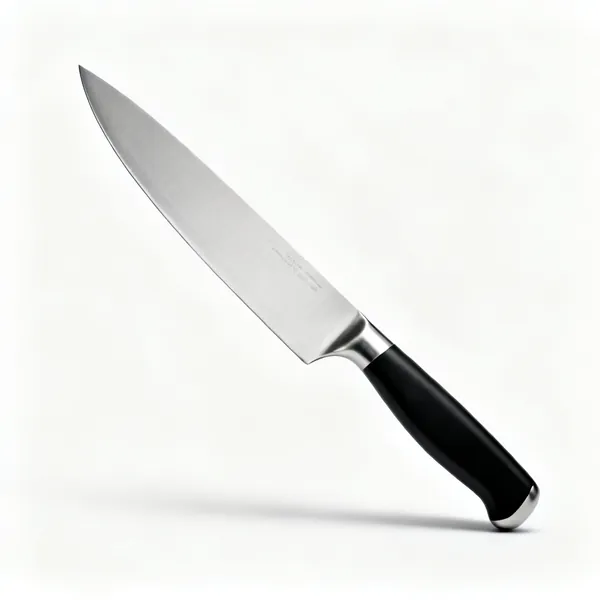
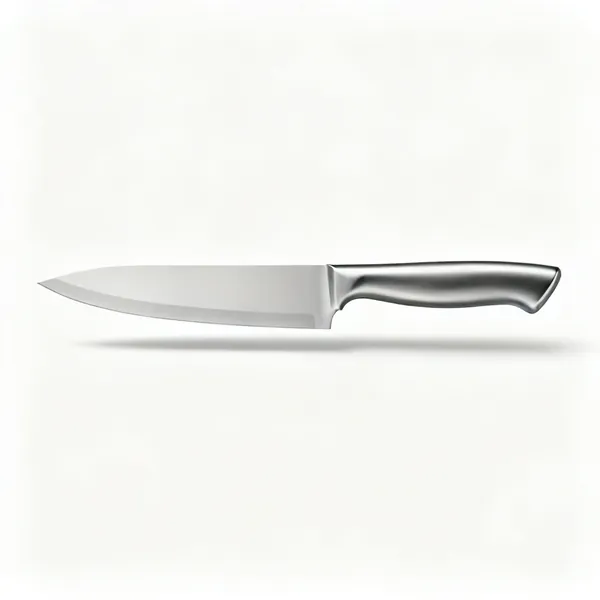
  • A chef's knife with a stainless steel blade and black handleEssential

    Chef's knife

    This is the knife you will reach for nearly every time you cook. The curved blade rocks on the board so chopping is fast, and it slices vegetables and meat cleanly. If you buy one good knife, buy this one.

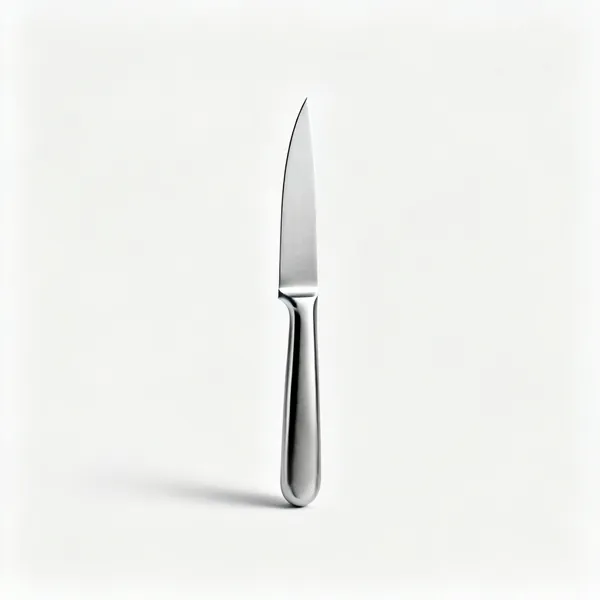
  • A small paring knife with a short pointed stainless bladeEssential

    Paring knife

    A little knife for the jobs you do in your hand instead of on the board. Peeling an apple, hulling strawberries, trimming fat. Too small for chopping, but you will miss it when it is in the dishwasher.

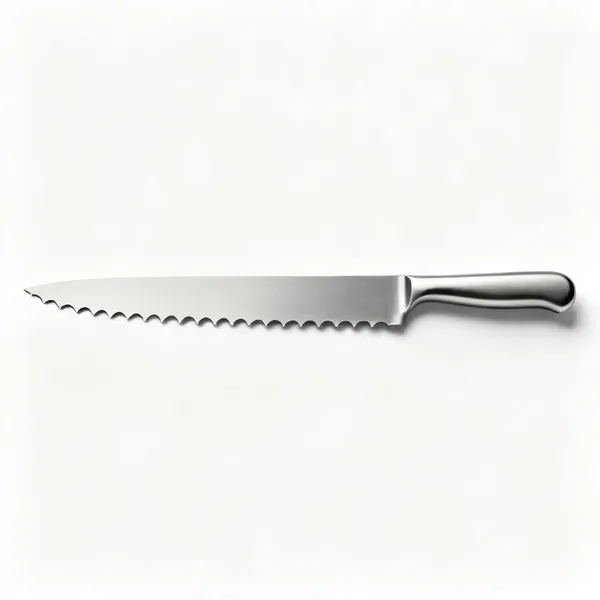
  • A long serrated bread knife with scalloped teeth along the bladeEssential

    Serrated bread knife

    The saw-like teeth cut through a hard crust without squashing the soft bread inside. It is also the best knife for tomatoes, oranges and cakes, because a straight blade just slides off a shiny skin.

  • A santoku knife with a flat blade edge and rounded blunt tip

    Santoku

    A Japanese all-rounder. The edge is flatter than a chef's knife, so you chop straight up and down instead of rocking. Worth trying if a chef's knife feels big and awkward in your hand.

  • A narrow flexible boning knife with a thin curved blade

    Boning knife

    A thin bendy blade that follows bones and joints, so you get more meat off and waste less. The bendiness is the whole point. A stiff blade would just cut straight through.

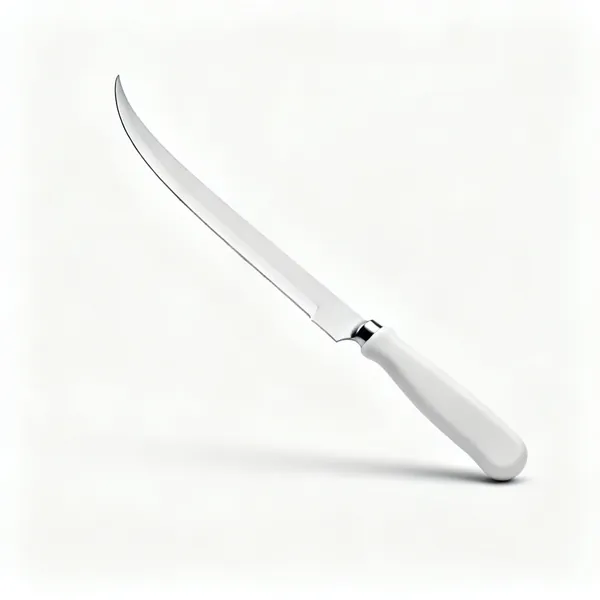
  • A long thin carving knife with a pointed tip

    Carving knife

    Long and thin, so it slices a roast in one smooth pull. No sawing back and forth, which is what tears the meat and lets all the juice run out.

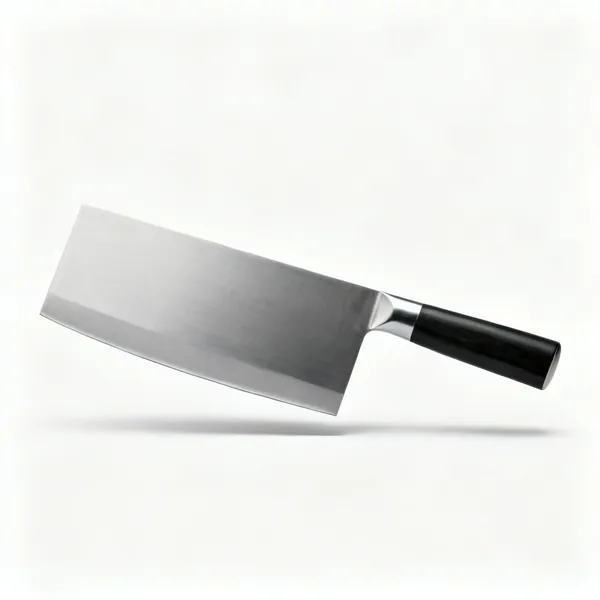
  • A heavy rectangular Chinese cleaver with a wide flat blade

    Cleaver

    A heavy rectangular blade that chops through chicken bones and tough squash using its own weight. The wide flat side is also handy for scooping everything you just chopped into the pan.

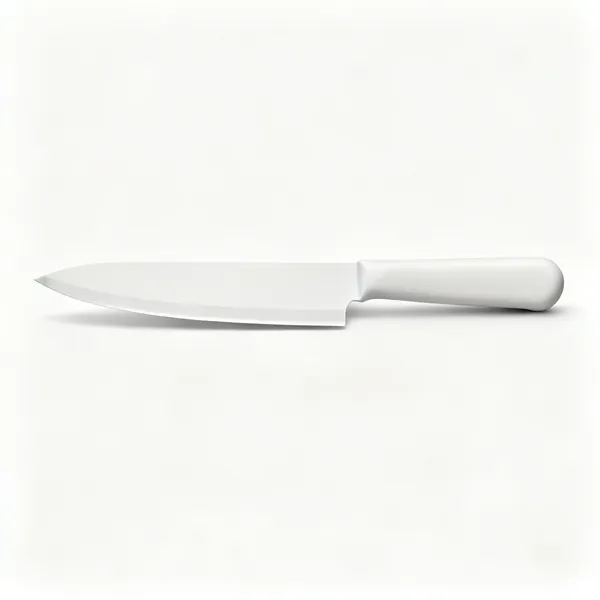
  • A medium-sized kitchen utility knife with a straight blade

    Utility knife

    Sits between a chef's knife and a paring knife. Good for jobs that feel too big for one and too fiddly for the other, like slicing a sandwich or cutting up cheese.

Cutting boards & sharpeners 5

A blunt knife is the dangerous one, because it slides instead of biting. Honing straightens the edge and you do it often. Sharpening grinds a new edge and you do it rarely.

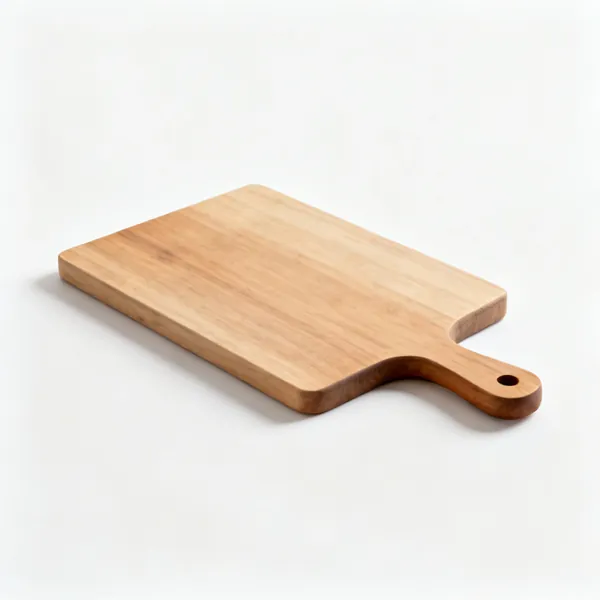
  • A rectangular wooden cutting boardEssential

    Cutting board

    Protects your worktop and your knife at the same time. Stick to wood or plastic. Glass and stone boards look smart but will blunt a good knife in a few uses. Keep a separate one for raw meat.

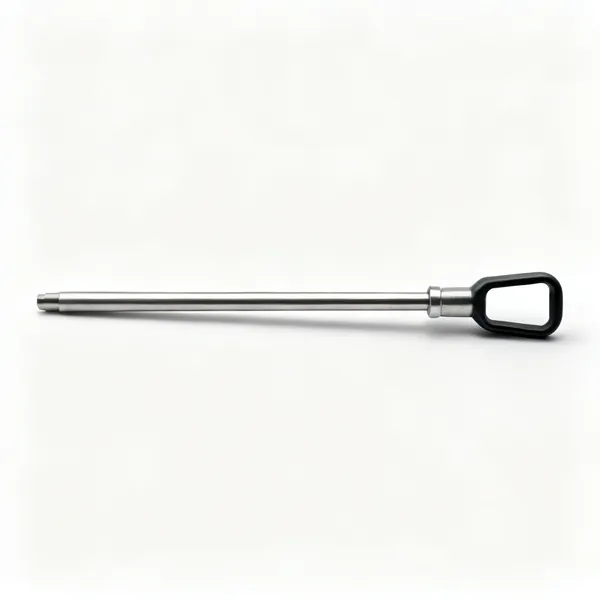
  • A long cylindrical honing steel rod with a handleEssential

    Honing steel

    The metal rod that comes with most knife sets. It does not sharpen. It straightens an edge that has rolled over to one side, which is why a few strokes before cooking makes a knife feel new again.

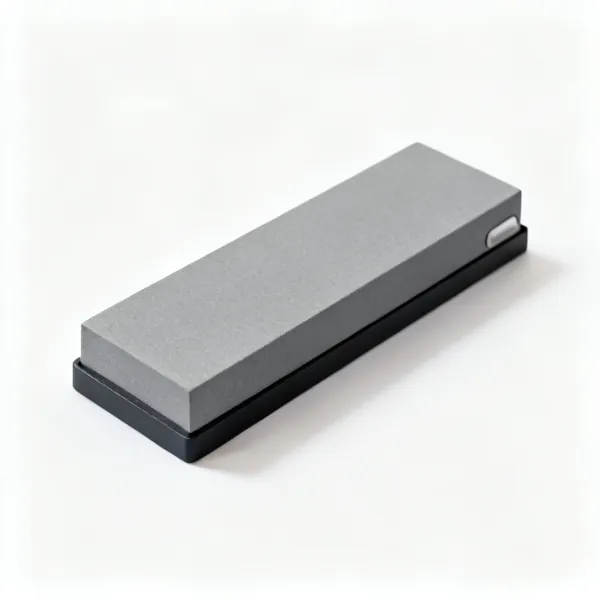
  • A rectangular grey sharpening whetstone block

    Whetstone

    A stone you soak in water and rub the blade along to create a genuinely new edge. It takes practice, but it is the only method that will not slowly eat your knife away.

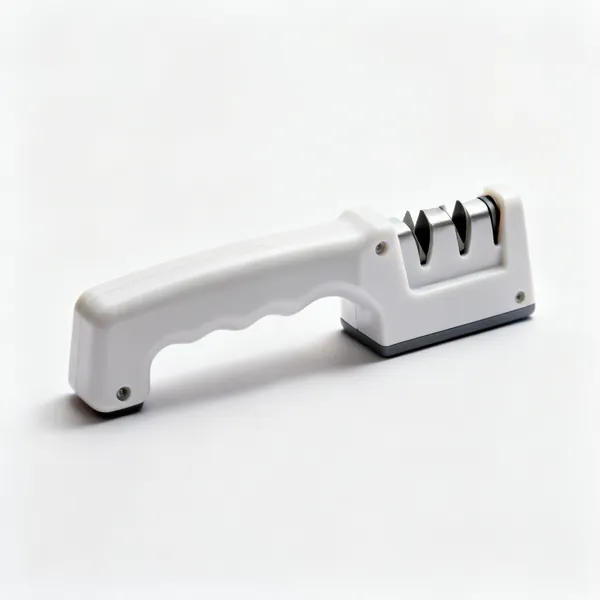
  • Pull-through sharpener: A handheld pull-through knife sharpener with a plastic body

    Pull-through sharpener

    The pull-through kind with slots you drag the blade through. Quick and needs no skill, but it removes more metal than a stone and you do not get to choose the angle.

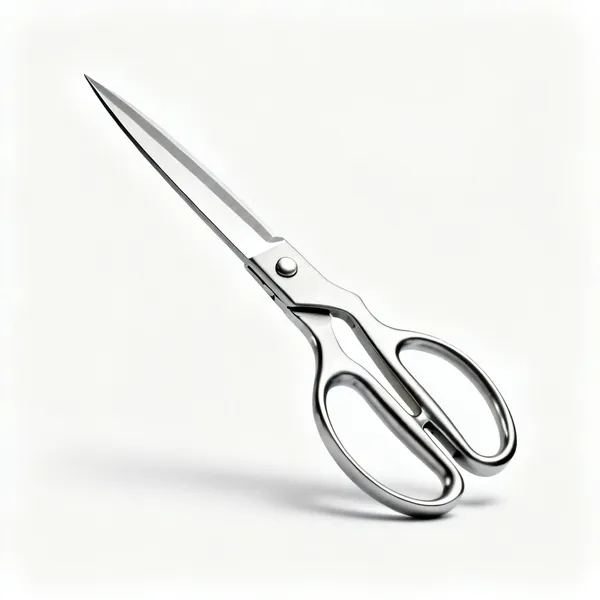
  • A pair of heavy stainless steel kitchen shears, blades openEssential

    Kitchen shears

    Heavy scissors that cut up a whole chicken, snip herbs straight into the pan and open stubborn packaging. Get the type that pulls apart at the middle, because they need a proper wash.

Peelers, graters & slicers 9

Everything here does a job a knife could do, just faster and more evenly. Even pieces cook at the same rate, and that is most of the difference between a good result and a patchy one.

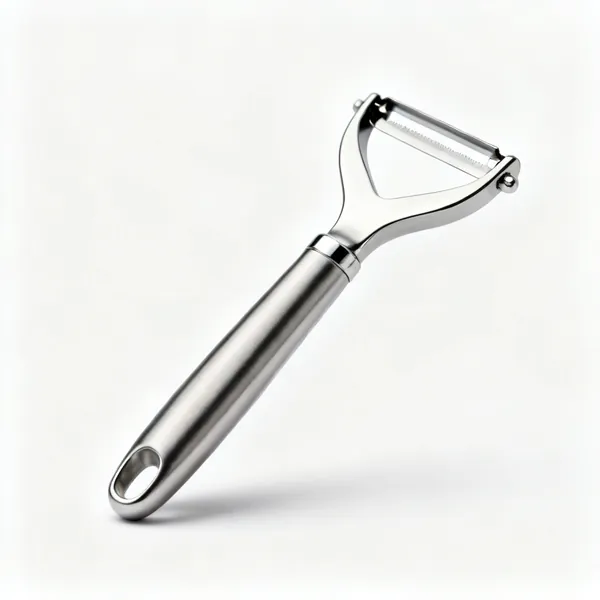
  • A Y-shaped vegetable peeler with a stainless bladeEssential

    Vegetable peeler

    Takes the skin off potatoes, carrots and apples in a thin strip without wasting the good bit underneath. A Y-shaped one works in long pulls. A swivel one follows curves better.

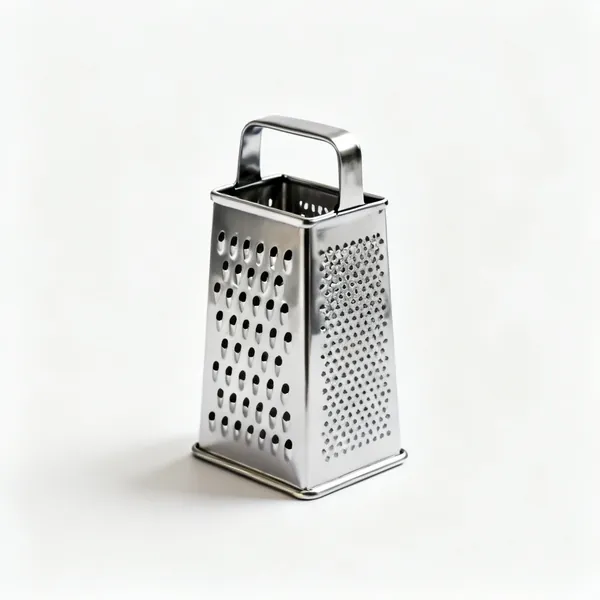
  • A four-sided stainless steel box graterEssential

    Box grater

    Four tools in one. A coarse side for cheese, a fine side for hard cheese, a slicer and a rasp. Standing it in a bowl means you grate into the bowl instead of into your knuckles.

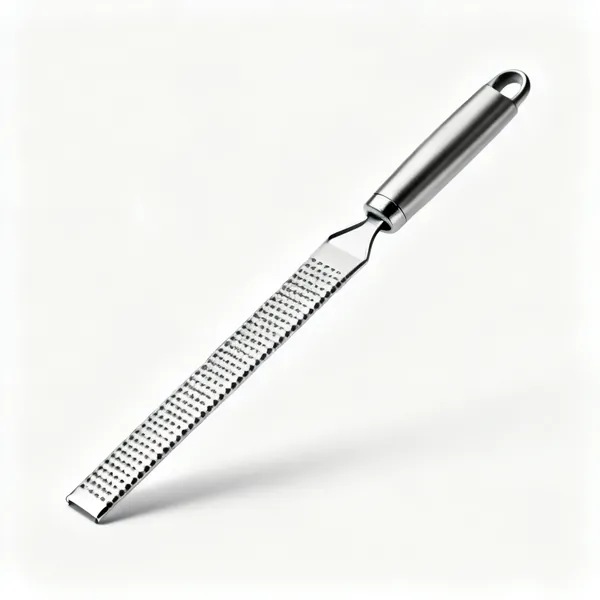
  • A long narrow microplane zester with a fine rasp surface and handleEssential

    Microplane / zester

    A very fine rasp that turns garlic and ginger into paste and takes the zest off a lemon without the bitter white bit. It melts into a sauce in a way chopped garlic never does.

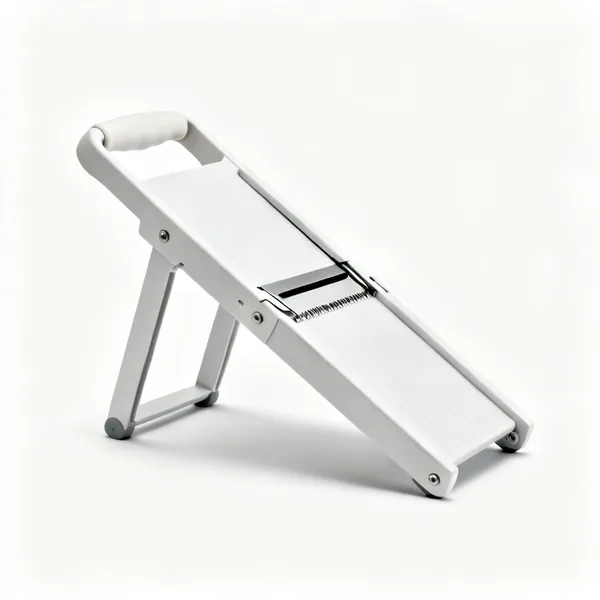
  • Mandoline

    Mandoline

    Cuts perfectly even slices much thinner than you could manage with a knife, which is what makes a good gratin or crisp. Please use the guard. This is the most dangerous thing in most kitchens.

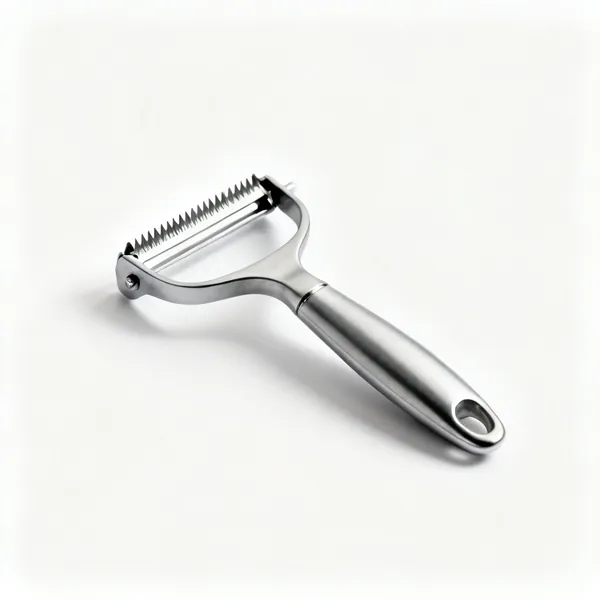
  • A julienne peeler with a toothed serrated blade

    Julienne peeler

    A peeler with teeth that turns vegetables into thin matchsticks in one pull. Saves a lot of careful knife work when you are making a stir fry or a slaw.

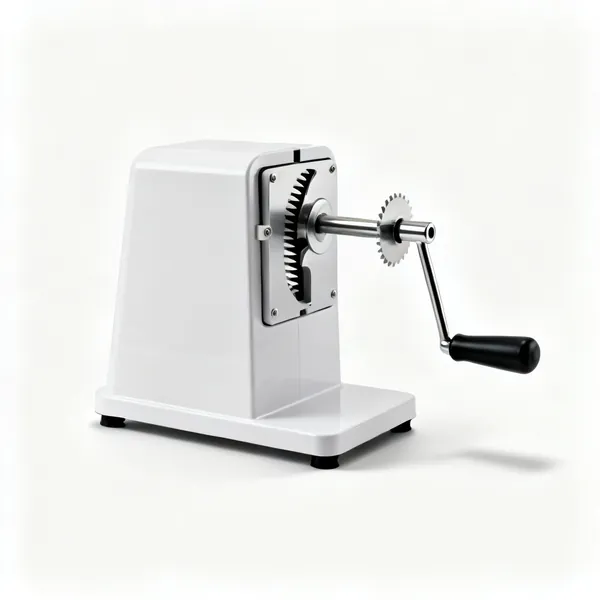
  • A countertop spiralizer with a crank handle and blade housing

    Spiralizer

    Turns courgettes and carrots into long noodle shapes. It only does one thing, but nothing else makes that shape, and it does make vegetables behave a bit like pasta.

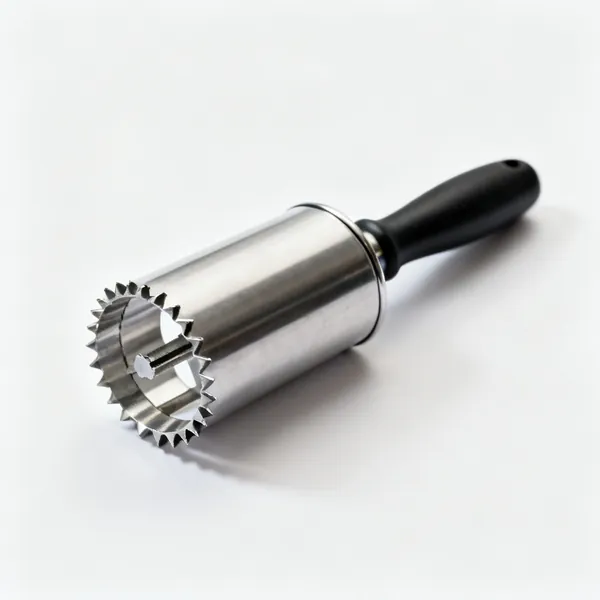
  • An apple corer with a serrated cylindrical tube and handle

    Apple corer

    A tube with a serrated end that you push through the middle of a fruit. Out comes the core and the pips, and the fruit keeps its shape for baking whole.

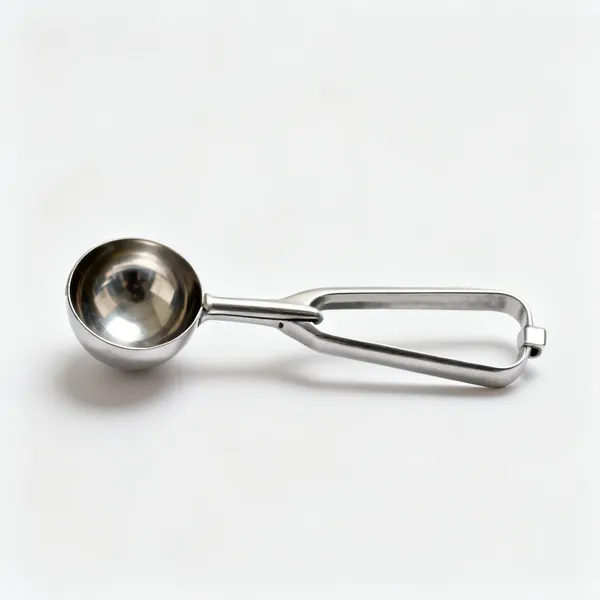
  • A metal melon baller scoop with a small hemispherical bowl

    Melon baller

    Scoops neat little balls out of soft fruit. More usefully, it is the tidiest way to hollow out a tomato or take the core out of a pear.

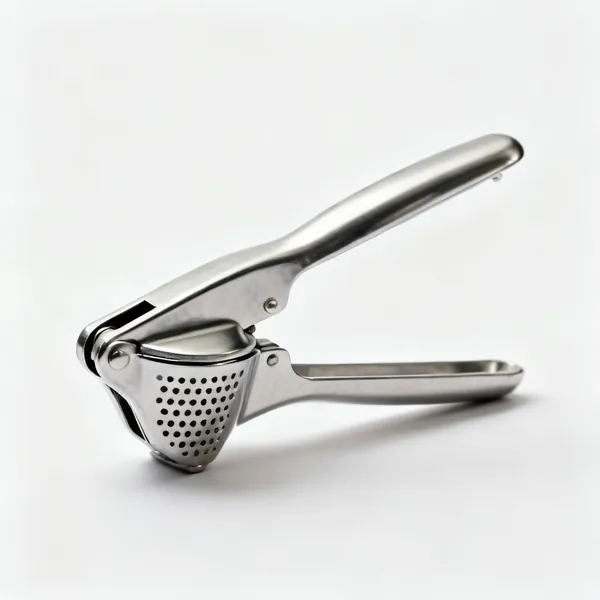
  • A metal garlic press with hinged handles and a perforated chamber

    Garlic press

    Squashes a clove through small holes so it spreads evenly through the food. People either love it or hate it. It is quicker than chopping but more annoying to wash.

Scales & measuring tools 7

Cooking is forgiving about amounts. Baking is not. Weighing is more accurate than measuring by cup, which is why a scale is the cheapest way to make your baking better.

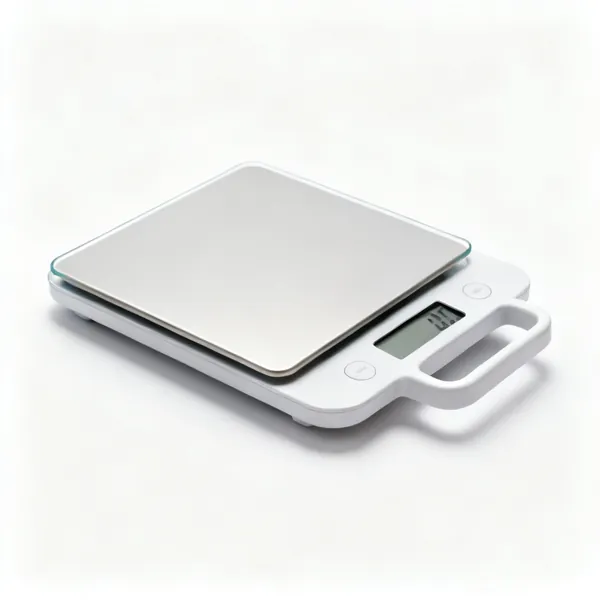
  • A flat digital kitchen scale with an LCD displayEssential

    Digital kitchen scale

    Weighs things to the gram, and the tare button lets you add straight into the bowl without dirtying a cup. Flour can pack down in a cup by a fifth, so a scale fixes a lot of baking problems on its own.

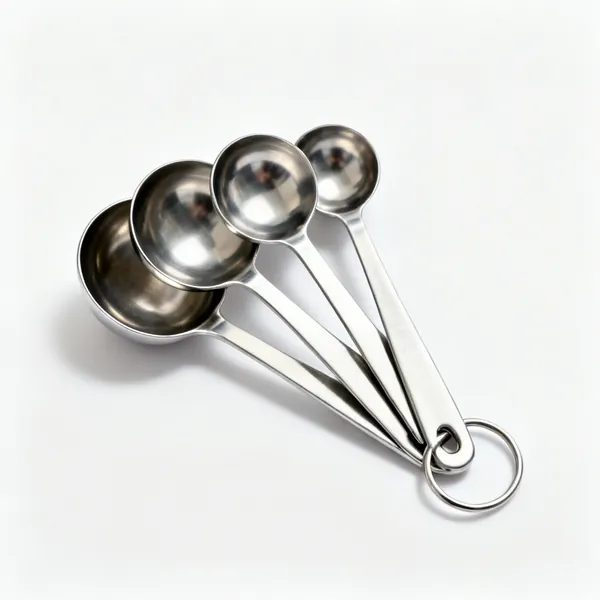
  • A nested set of four stainless steel measuring spoons on a ringEssential

    Measuring spoons

    A set that clips together, from a quarter teaspoon up to a tablespoon. For salt, spices, baking powder and vanilla, where the amounts are too small for a scale to read properly.

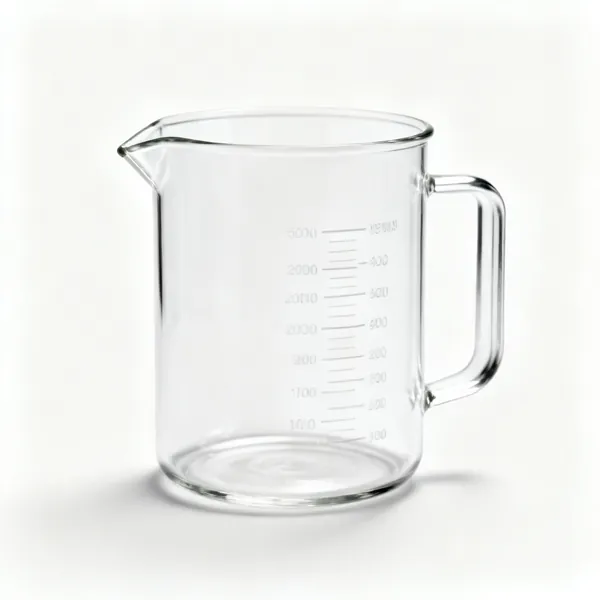
  • A clear glass liquid measuring jug with printed graduation markingsEssential

    Liquid measuring jug

    A clear jug with lines up the side for stock, milk and oil. Read it at eye level. Liquids need a jug rather than a cup because you have to see the level from the side.

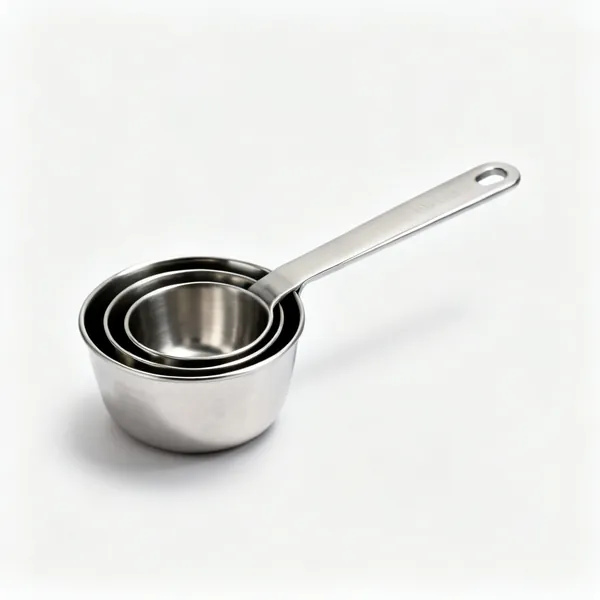
  • A nested set of stainless steel dry measuring cups

    Dry measuring cups

    Cups you fill and level off flat, for flour, sugar and rice. You mainly need these for American recipes, which measure dry things by cup instead of by weight.

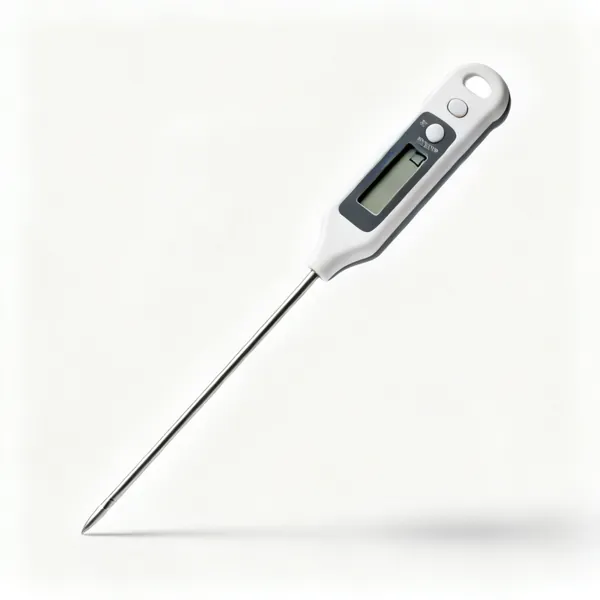
  • Instant-read thermometer: A digital instant-read food thermometer with a thin metal probeEssential

    Instant-read thermometer

    Tells you the temperature inside meat in a couple of seconds. It is the only reliable way to know something is cooked but not overcooked, and it saves a lot of guessing about juices.

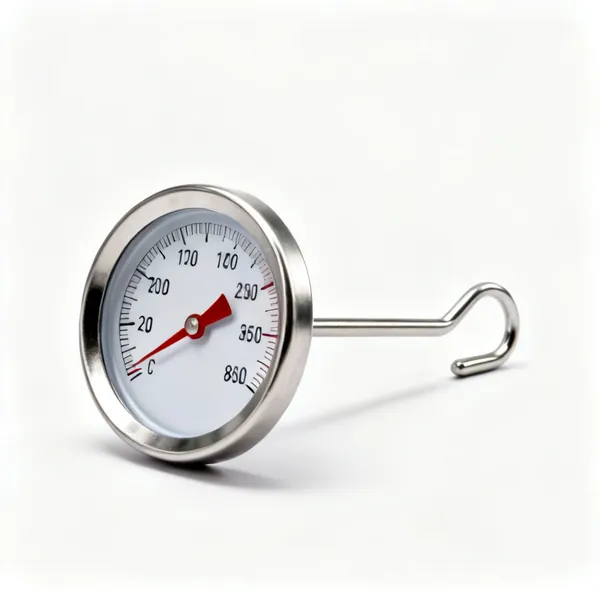
  • A round dial oven thermometer with a metal stand and hook

    Oven thermometer

    Sits on the shelf and tells you what your oven is really doing. Most home ovens are out by 15 or 20 degrees, which quietly ruins baking without you knowing why.

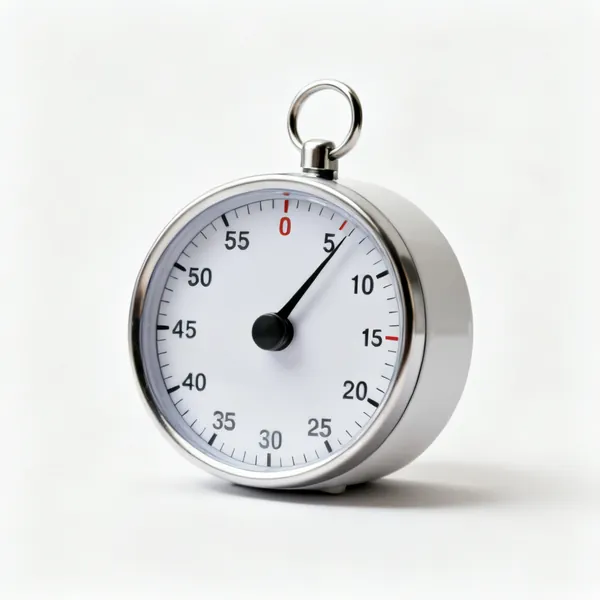
  • A simple round mechanical kitchen timer

    Kitchen timer

    A timer you can carry with you when you leave the kitchen. Sounds unnecessary until it is the difference between caramel and a burnt pan.

Bowls, whisks & spatulas 7

Air counts as an ingredient. Most of these tools are for beating air in or folding it in gently, and the shape of the bowl matters as much as the thing you stir with.

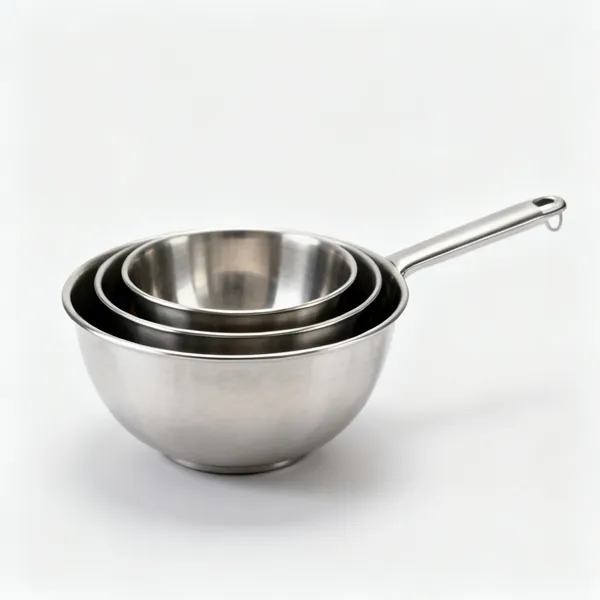
  • A nested set of three stainless steel mixing bowlsEssential

    Mixing bowls

    A set of three or four sizes that stack inside each other. Deep and round at the bottom, so a whisk reaches everything instead of leaving dry flour in a corner. Metal ones chill quickly, which helps with cream.

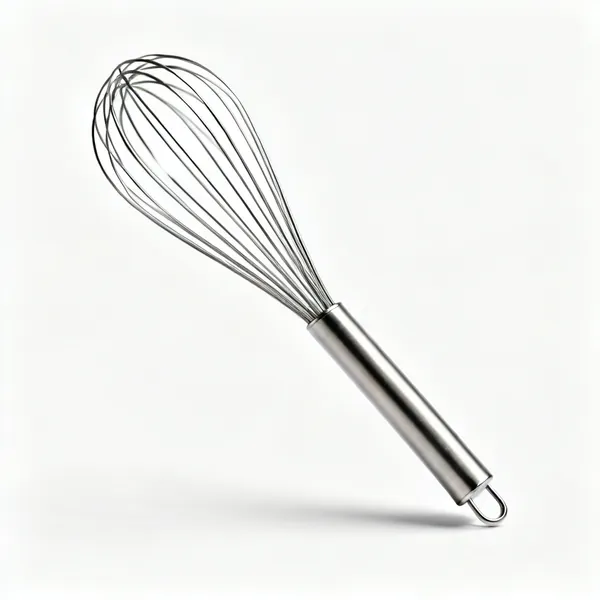
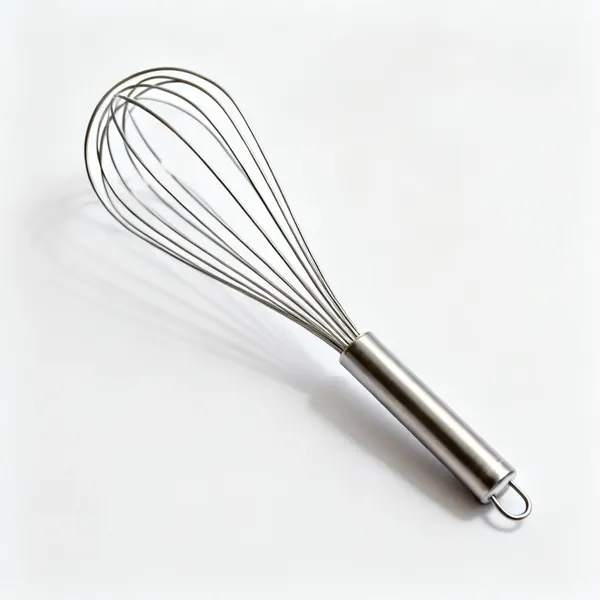
  • A stainless steel balloon whisk with many thin wiresEssential

    Balloon whisk

    Lots of thin wires in a wide bulb shape, built to beat air into cream and egg whites. The number of wires is what does the work. A stiff whisk just stirs.

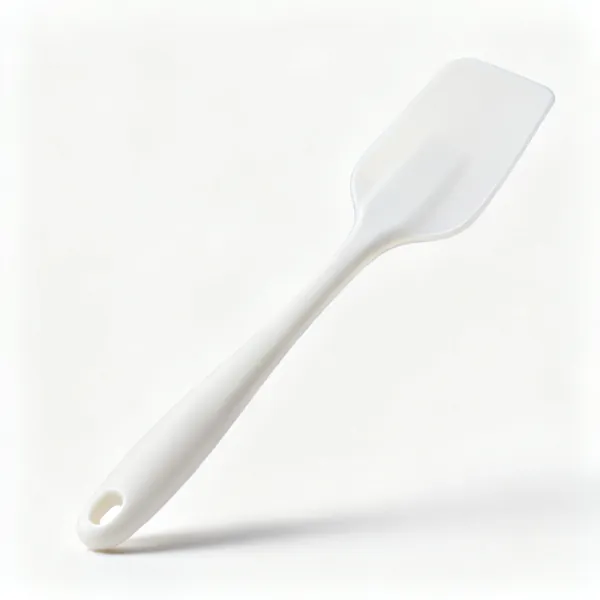
  • A silicone spatula with a flexible white blade and handleEssential

    Silicone spatula

    A bendy heatproof blade for folding batter and scraping a bowl properly clean. Folding gently keeps the air you just whisked in, which a spoon would knock straight back out.

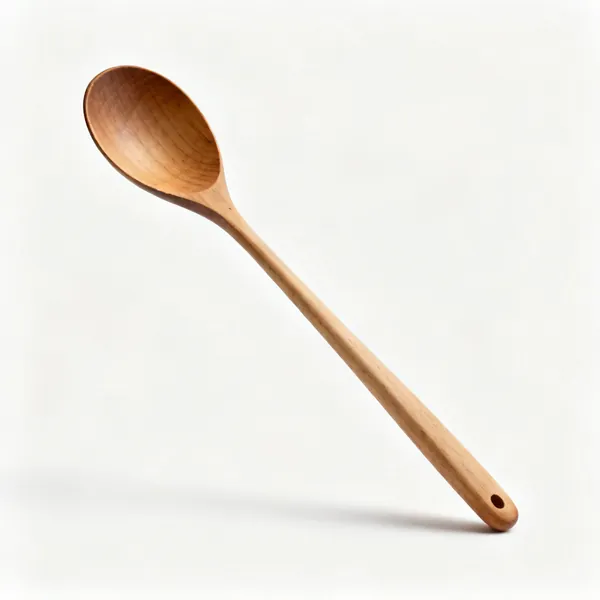
  • Wooden spoon: A wooden cooking spoon with a long handleEssential

    Wooden spoon

    Will not scratch a non stick pan, will not get hot in your hand, and is stiff enough for thick dough or scraping the tasty brown bits off the bottom of a pan.

  • A pastry blender with curved stiff wires and a handle

    Pastry blender

    Stiff curved wires that cut cold butter into flour without warming it up. Warm butter melts into the flour instead of staying in flakes, and flakes are what make pastry short instead of tough.

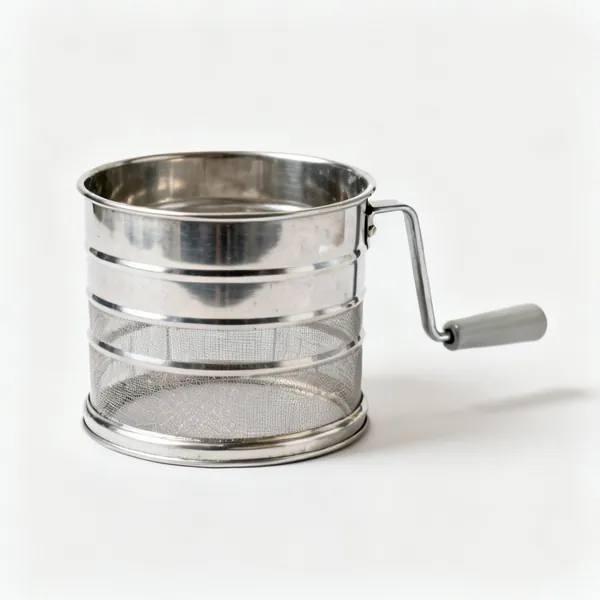
  • A metal flour sifter with a crank handle and mesh base

    Sifter

    Breaks up lumpy flour and cocoa and fluffs it up before mixing, so it blends in smoothly. A fine sieve does exactly the same job if you already have one.

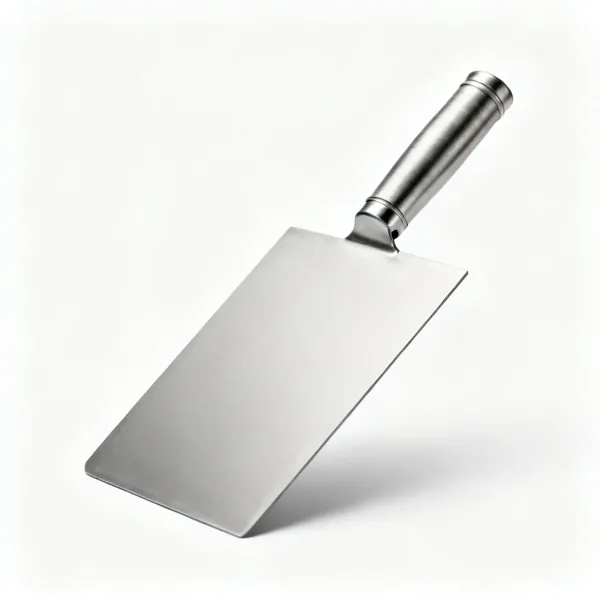
  • A rectangular stainless steel bench scraper with a rolled handle

    Bench scraper

    A flat steel rectangle. Lifts sticky dough off the worktop, cuts it into portions and then scrapes the whole surface clean. Much better than trying to do all that with your hands.

Tongs, turners & ladles 9

These are what you put into a hot pan. What matters is how far they reach, whether they melt, and whether they will scratch whatever they touch.

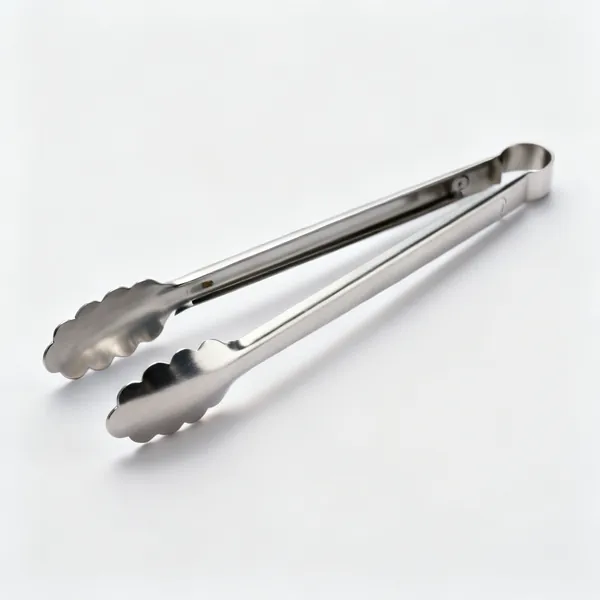
  • A pair of stainless steel kitchen tongs with scalloped endsEssential

    Tongs

    Basically heatproof fingers. Turn a steak, lift pasta out of the water, plate up roast vegetables. Better than a fork because they do not stab the meat and let the juice out.

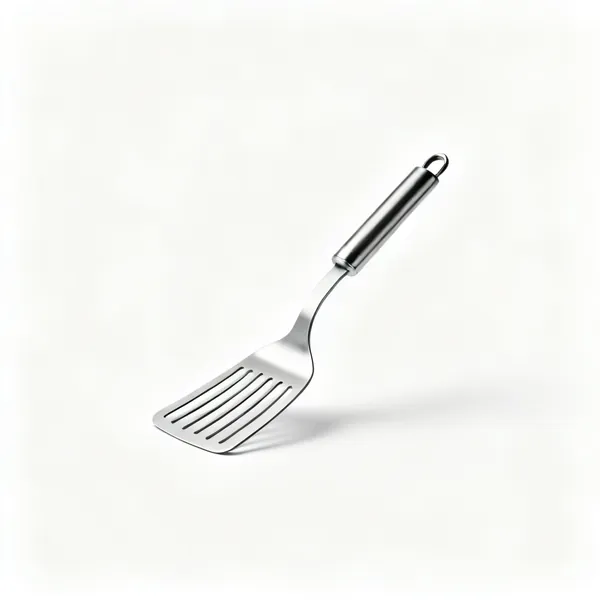
  • Fish spatulaEssential

    Fish spatula

    A thin bendy slotted blade angled to slide under delicate things without breaking them. Ignore the name. It is the best all purpose turner most kitchens have.

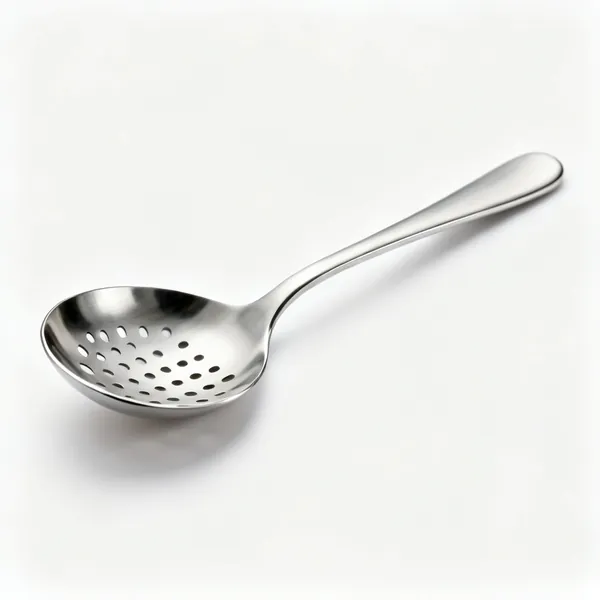
  • Slotted spoon: A stainless steel slotted serving spoonEssential

    Slotted spoon

    Lifts food out and lets the water drain back into the pan. For dumplings, poached eggs and blanched vegetables, so you are not carrying cooking water to the plate.

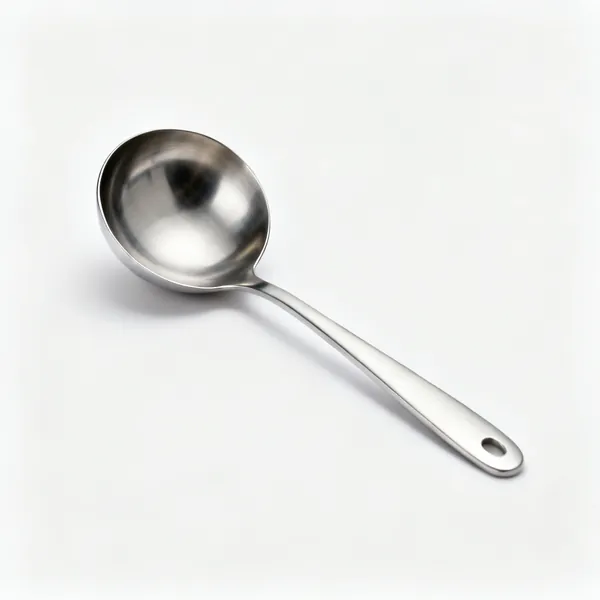
  • A stainless steel soup ladle with a deep round bowlEssential

    Ladle

    A deep bowl on a long handle so you can serve soup without putting your hand in the pot. Most hold a set amount, which makes it easy to give everyone the same.

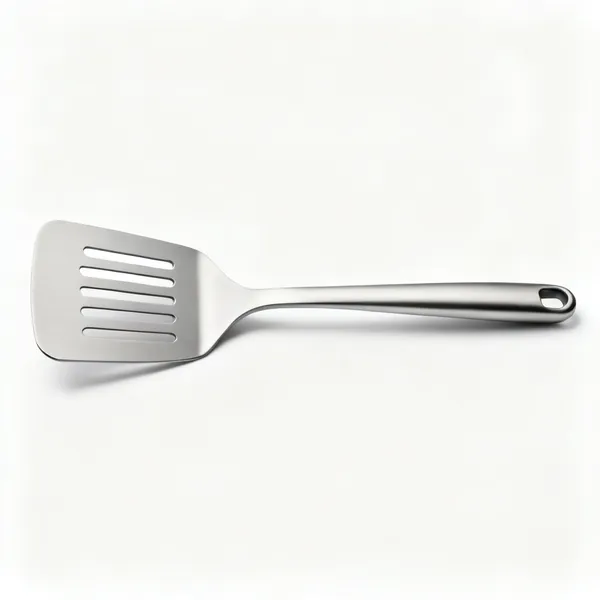
  • A wide flat kitchen turner spatula with a slotted bladeEssential

    Turner

    A wide flat blade for flipping pancakes, burgers and fried eggs. The width matters, because it supports the whole thing so it does not fold over halfway through the flip.

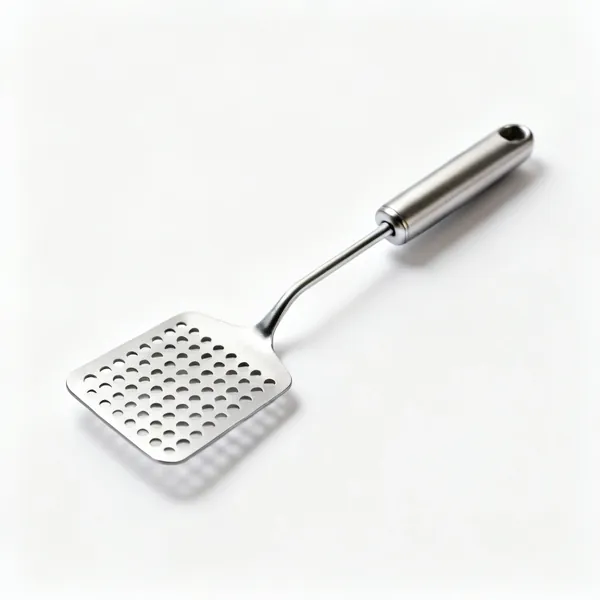
  • A potato masher with a perforated flat metal head

    Potato masher

    A plate with holes that crushes cooked potatoes and other root veg. Crushing is the important bit. A food processor turns potato into glue.

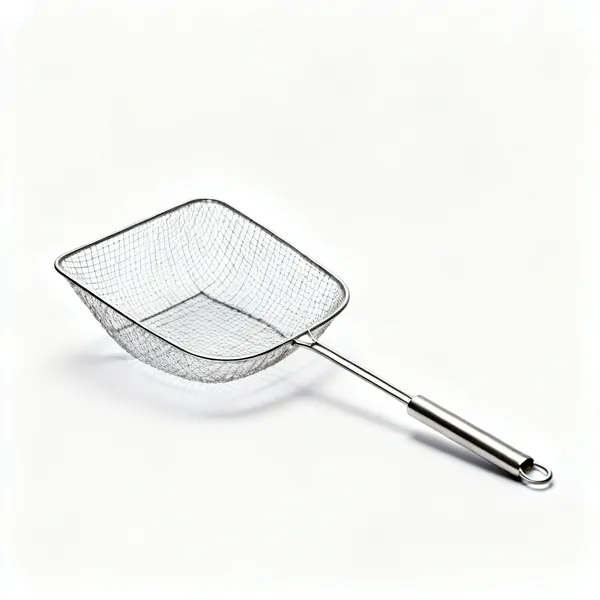
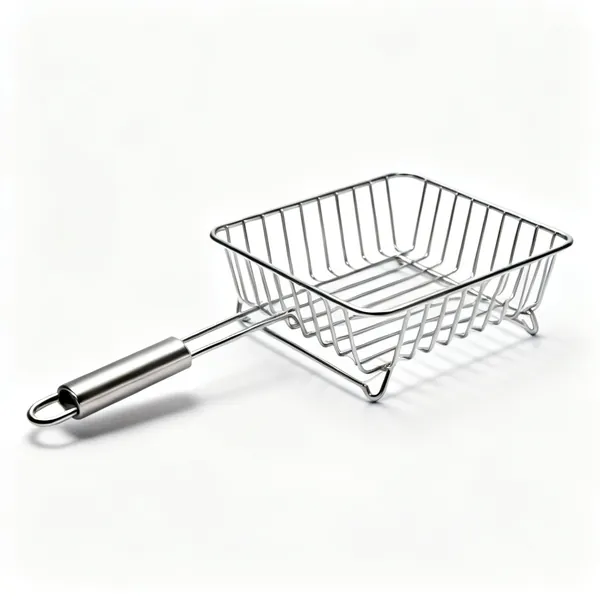
  • A wire mesh skimmer with a wide flat basket and long handle

    Skimmer

    Wide fine mesh for lifting the scum off stock or getting food out of hot fat. It drains much faster than a slotted spoon because there is more hole than spoon.

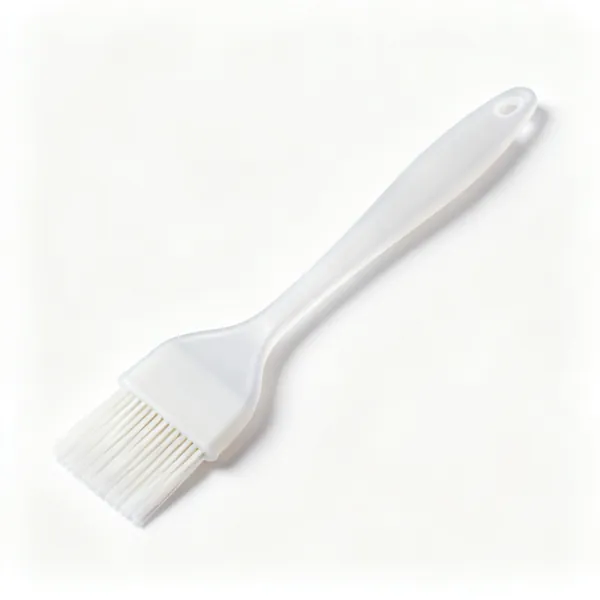
  • A silicone basting brush with white bristles

    Basting brush

    Spreads butter, glaze or egg wash in a thin even layer. Silicone bristles handle heat and wash properly. Natural bristles hold onto old flavours and drop hairs in your food.

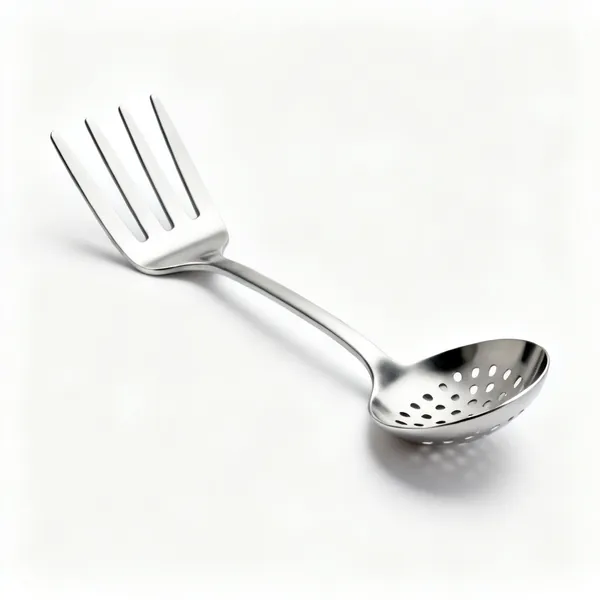
  • A pasta server spoon with long prongs and a slotted bowl

    Pasta server

    Long teeth that grab spaghetti and lift it out of the water without it sliding off. Also gives everyone a more even amount than tongs do.

Pots & pans 10

Match the pan to the job. Thin and light when you need to react fast, thick and heavy when you need steady heat for hours. Size matters more than people expect, because a crowded pan steams food instead of browning it.

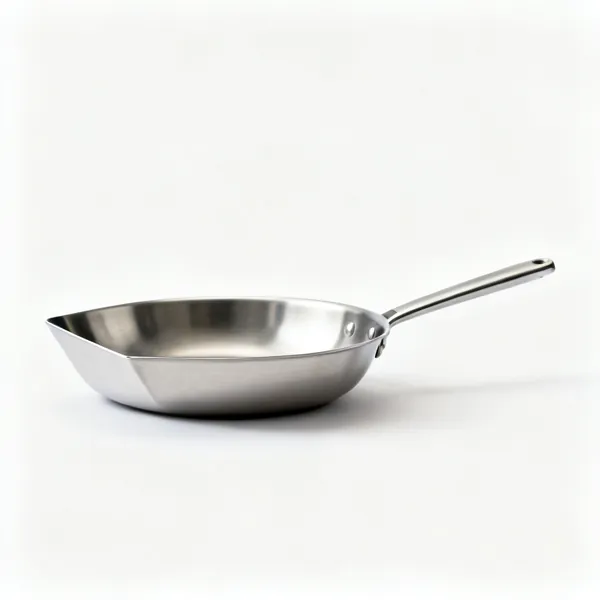
  • Frying pan / skillet: A stainless steel frying pan with sloped sides and a long handleEssential

    Frying pan / skillet

    The shallow sloped sides let steam escape, so food browns instead of going grey and soggy. A 24 to 28cm pan covers most jobs, and the slope is what lets you flip things without a spatula.

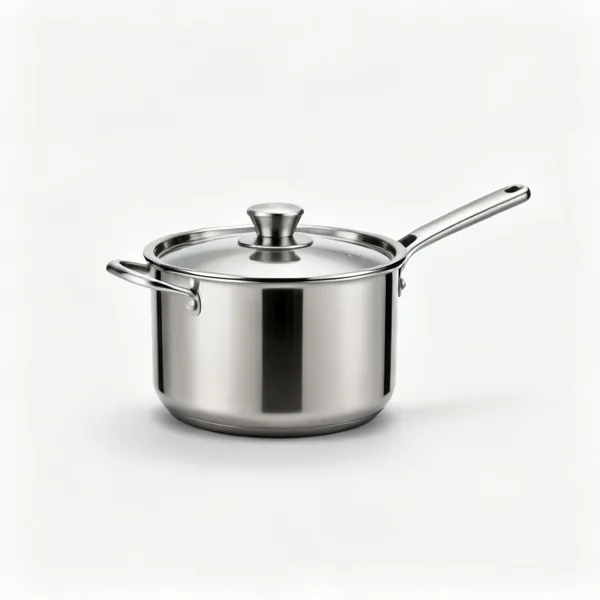
  • A stainless steel saucepan with straight sides and a lidEssential

    Saucepan

    Tall straight sides and a small base. For anything wet, like sauces, rice, or reheating. The narrow base means less evaporation, so a sauce reduces slowly and you stay in control.

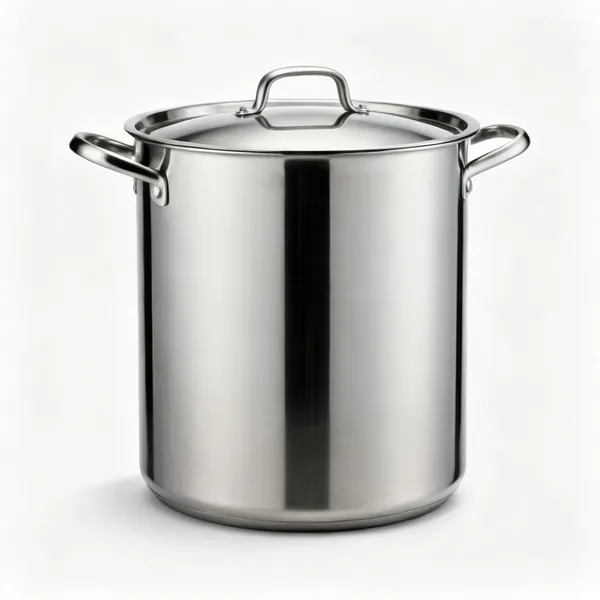
  • A tall large stainless steel stockpot with two handles and a lidEssential

    Stockpot

    A big tall pot for pasta, stock and anything that needs a lot of water. Tall rather than wide keeps evaporation down over a long simmer.

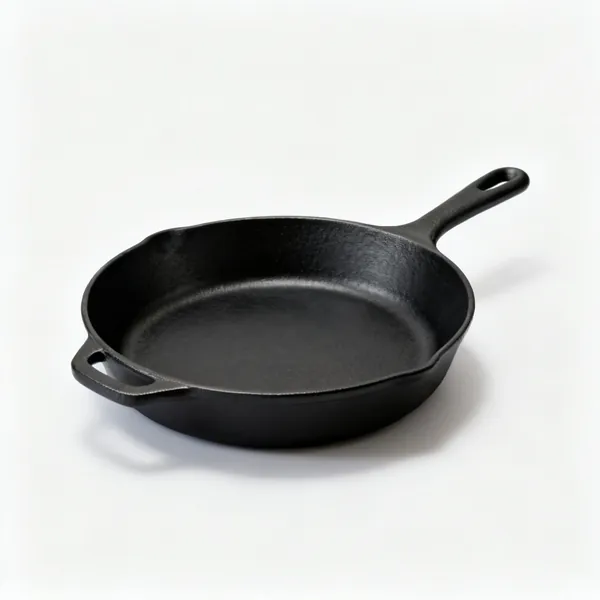
  • A black cast iron skillet with a short handleEssential

    Cast iron skillet

    Heavy, and holds heat better than anything else, so it gives a proper sear without the temperature dropping when cold food hits it. Oven safe too, so it goes straight from hob to oven.

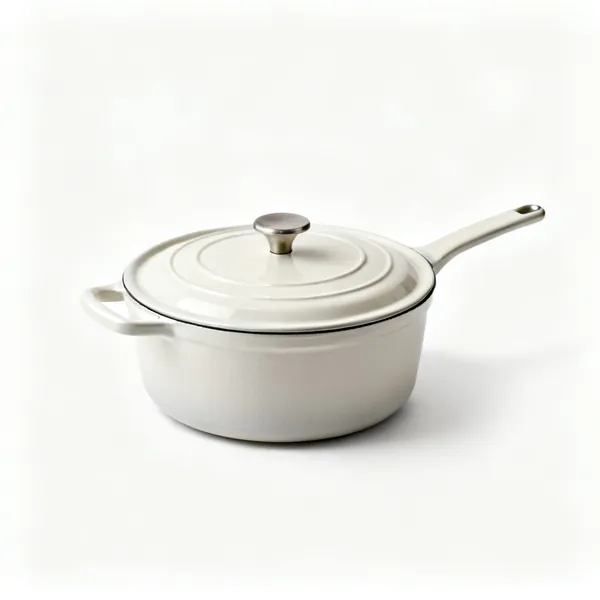
  • A round enamelled cast iron Dutch oven with a heavy lidEssential

    Dutch oven

    A thick pot with a heavy lid for stews, braises and no knead bread. The weight smooths out oven temperature swings and the tight lid keeps the steam in, so a long cook does not dry out.

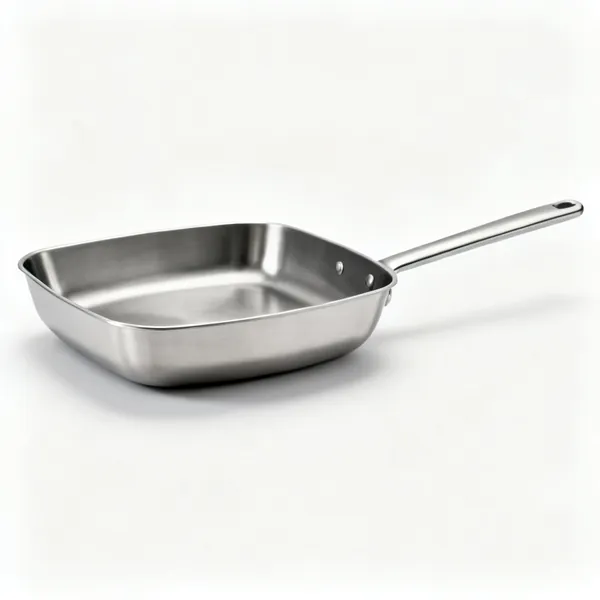
  • A stainless steel sauté pan with straight sides and a long handle

    Sauté pan

    Straight sides and wider than a saucepan. Enough room to brown a batch of meat and then make a sauce in the same pan without it sloshing over the edge.

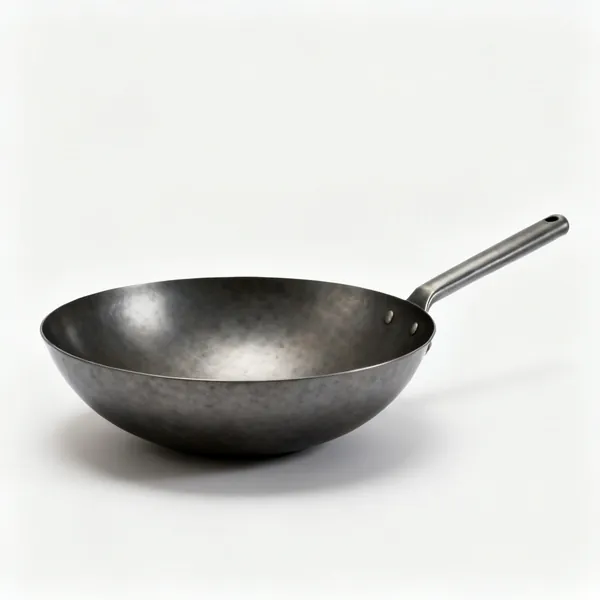
  • A carbon steel wok with a rounded base and a long handle

    Wok

    A deep bowl shaped pan that puts fierce heat at the bottom and gives you room to toss. That shape is what makes proper stir frying possible on a home hob.

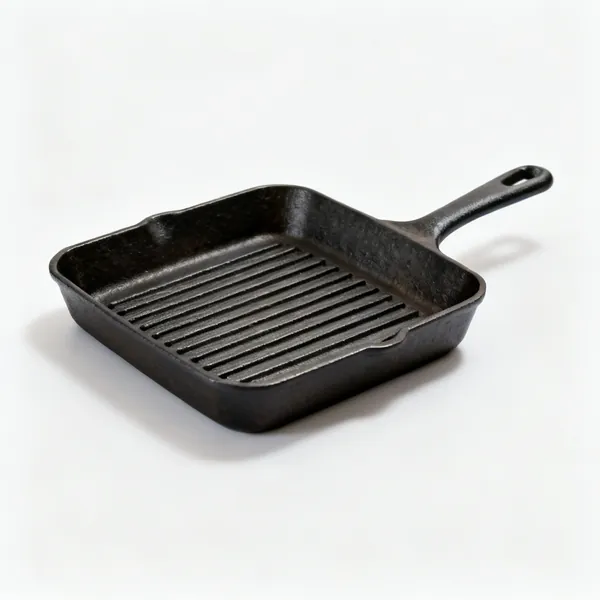
  • A square cast iron griddle pan with raised ridges

    Griddle pan

    Raised ridges hold food up out of its own juices, so it chars in stripes instead of stewing. About as close as a hob gets to a barbecue.

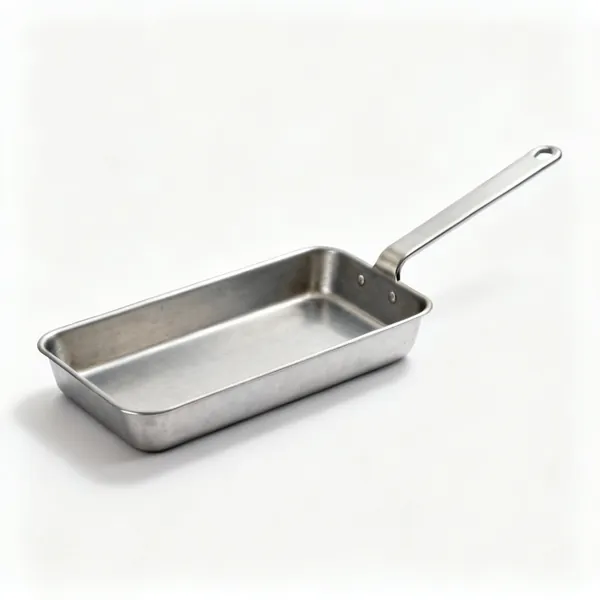
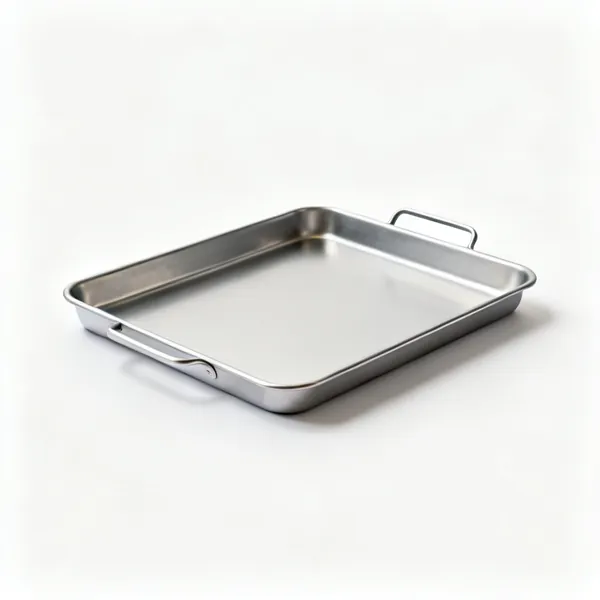
  • A rectangular metal roasting tin with low sidesEssential

    Roasting tin

    A sturdy open tray with low sides for joints and tray roasted veg. Low sides let the hot air get to the food. A deep dish would just steam it.

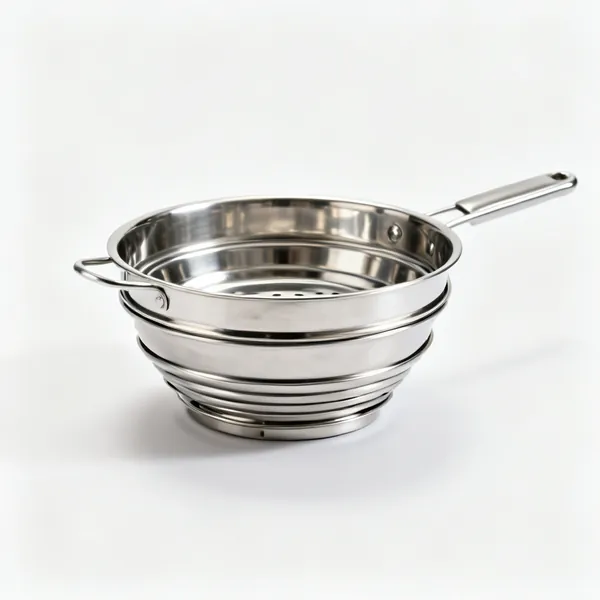
  • Steamer insert: A collapsible stainless steel steamer basket insert

    Steamer insert

    A basket with holes that sits above boiling water, so vegetables and fish cook in the steam. Keeps the texture, and keeps the vitamins that boiling would wash away.

Baking tins & trays 11

Baking tins are sized by how much they hold, so swapping one for another changes how deep the mixture sits and therefore how long it takes. This is the one area where using the tin the recipe asks for really does matter.

  • A flat rectangular metal baking sheet with a shallow rimEssential

    Baking sheet

    A flat tray with a small lip for biscuits, tray bakes and roast vegetables. Heavy pale metal browns evenly. Thin dark trays burn the bottoms before the tops are done.

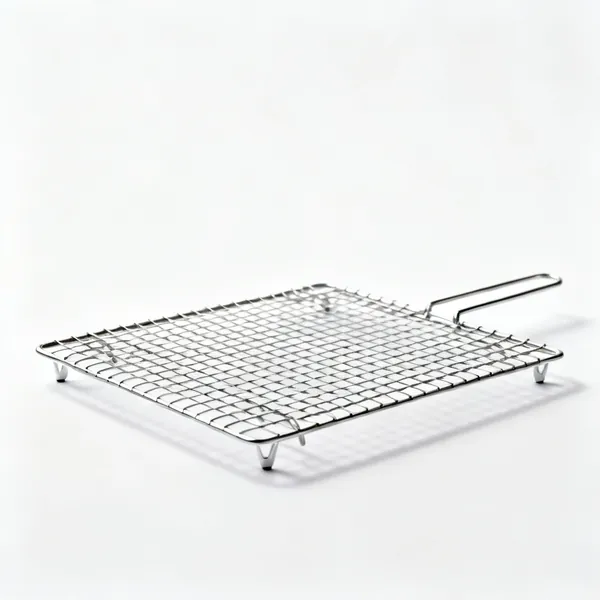
  • A rectangular wire cooling rack raised on small feetEssential

    Cooling rack

    A wire grid on little feet so air can get underneath. Leave a cake in its tin and it steams in its own damp heat, and the bottom goes soggy.

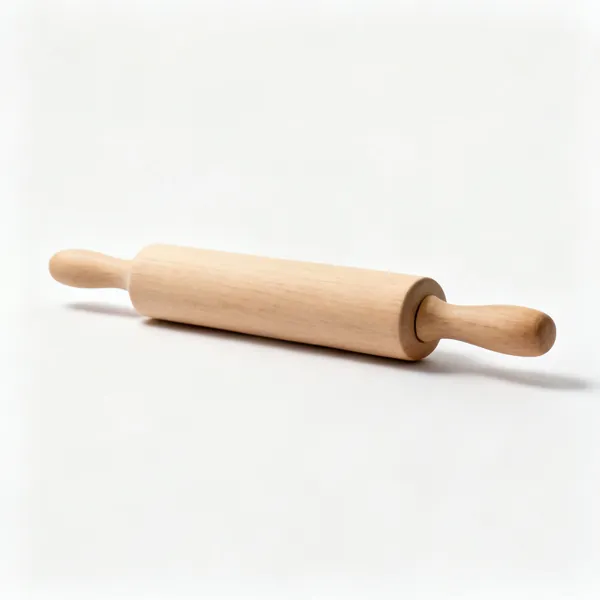
  • A smooth wooden rolling pinEssential

    Rolling pin

    Rolls pastry and dough to an even thickness, which matters because uneven pastry cooks unevenly. A plain straight pin gives you more feel. One with handles is easier to start with.

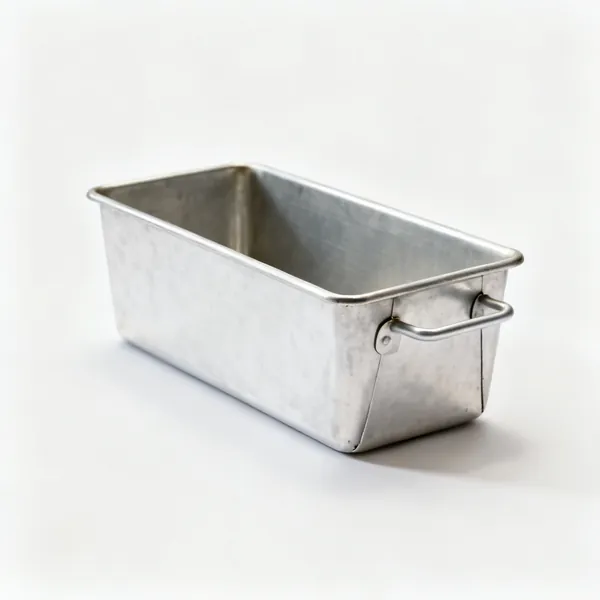
  • A rectangular metal loaf tinEssential

    Loaf tin

    A deep narrow tin for bread and loaf cakes. The tall sides push the rise upwards, which is what gives a loaf its shape instead of spreading out flat.

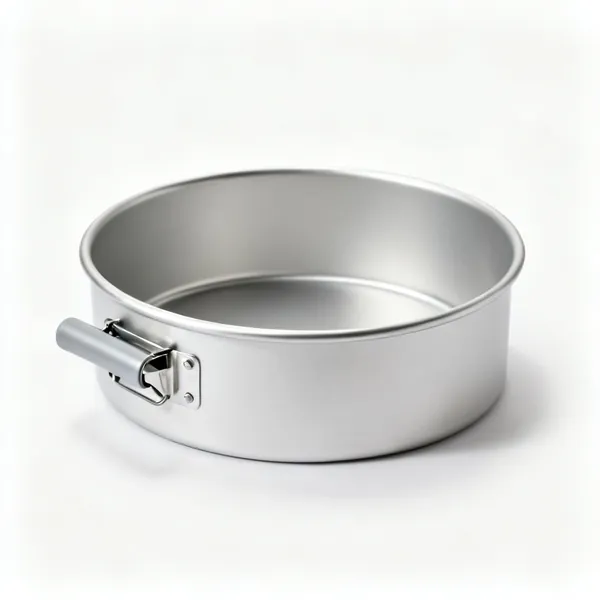
  • A round springform cake tin with a clip on the sideEssential

    Cake tin

    A round tin. Get a springform or loose bottomed one if you can, so you can release a soft cake without turning it upside down and hoping.

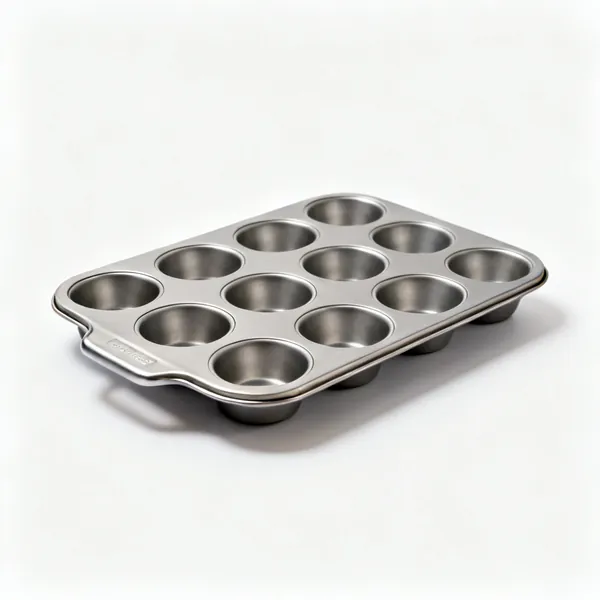
  • A twelve-cup metal muffin tin

    Muffin tin

    A tray of identical cups for muffins, cupcakes and single portions. Identical is the point, because then they all bake in the same time.

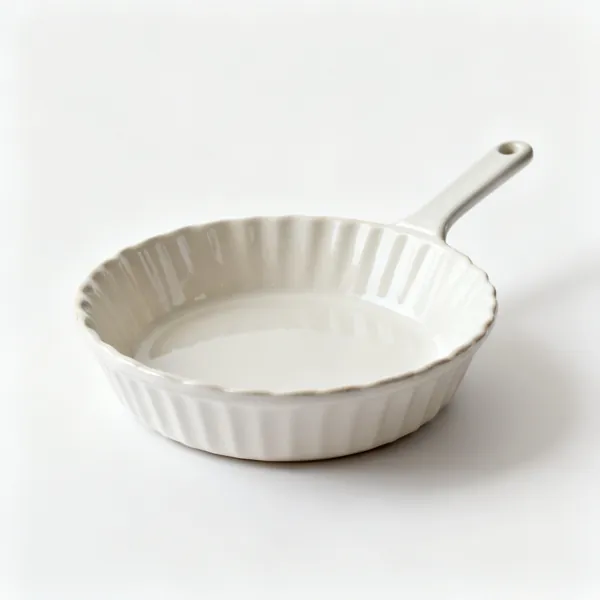
  • A round ceramic pie dish with fluted sloped sides

    Pie dish

    A round sloped dish, usually ceramic or glass. Glass is worth it because you can actually see whether the base has browned, which is the tricky part of a pie.

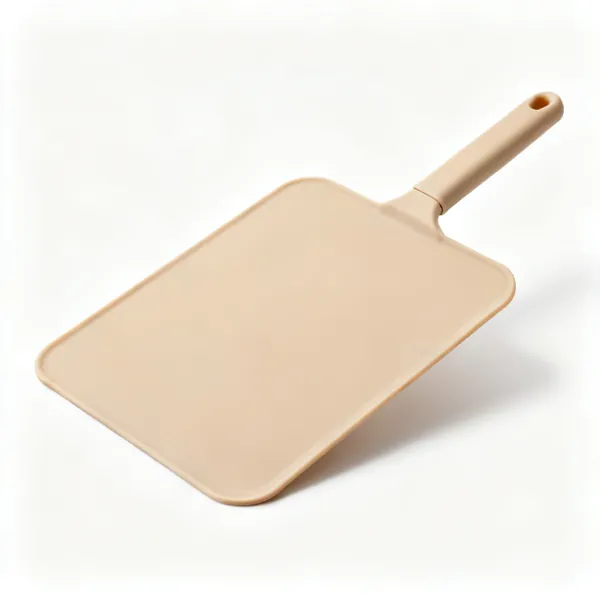
  • A flat beige silicone baking mat

    Silicone baking mat

    A reusable non stick sheet instead of baking paper. It also spreads heat a bit more evenly, so biscuit bottoms stop catching.
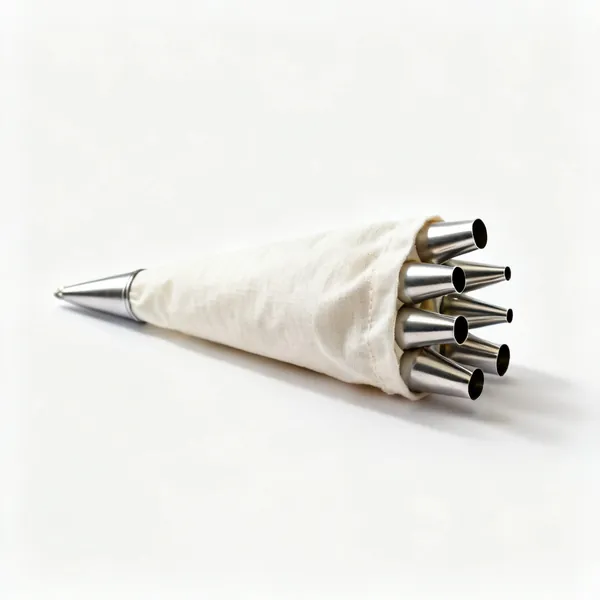
  • Piping bag & nozzles: A fabric piping bag with a set of metal nozzle tips

    Piping bag & nozzles

    A cone with swappable nozzles for putting icing or cream exactly where you want it. Also the tidiest way to fill cupcake cases to the same level every time.

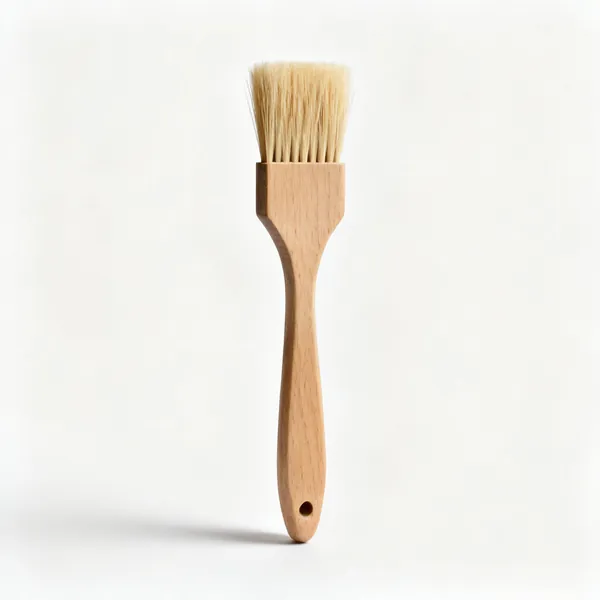
  • A pastry brush with soft natural bristles and a wooden handle

    Pastry brush

    A soft brush for egg wash, milk and melted butter. Softer than a basting brush, because pastry marks if you press on it.

Colanders & sieves 5

Pick by hole size. Big holes for pasta, fine mesh for anything you want smooth. Use the wrong one and you either lose the food down the sink or fail to catch what you were trying to remove.

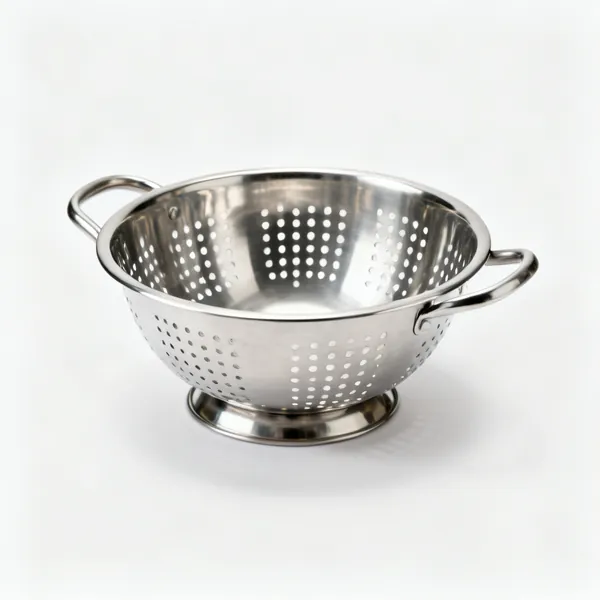
  • A stainless steel colander with large perforations and two handlesEssential

    Colander

    A big bowl full of holes for draining pasta and rinsing veg. The holes are large, so it drains fast but small things slip through. Rice and lentils need a sieve.

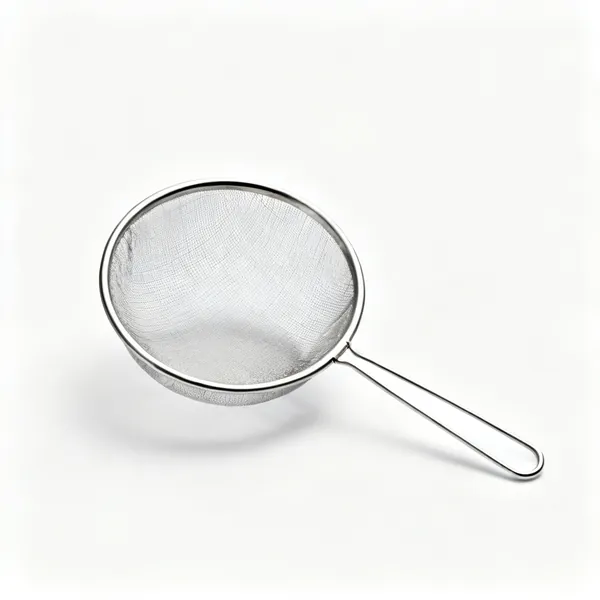
  • Fine-mesh sieve: A round fine wire mesh sieve with a long handleEssential

    Fine-mesh sieve

    Fine mesh that strains stock clear, catches rice, sifts flour and dusts icing sugar over a cake. Probably the most quietly useful thing in this group.

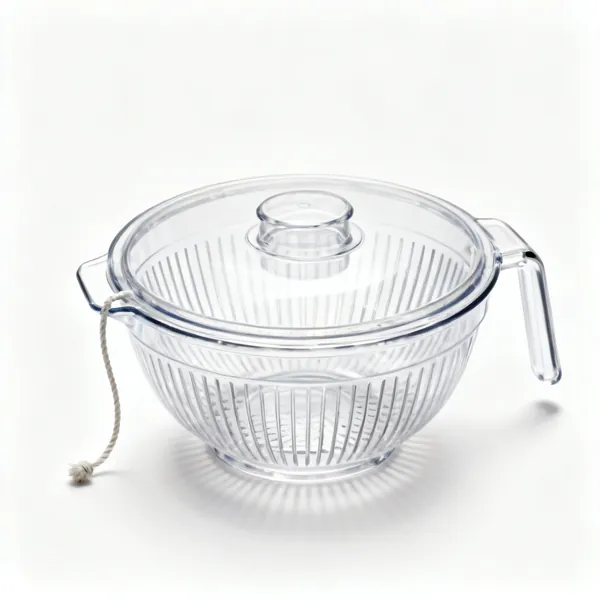
  • A clear plastic salad spinner with a lid and pull cord

    Salad spinner

    Spins the water off washed leaves. Worth the cupboard space, because dressing slides straight off wet leaves instead of sticking to them.

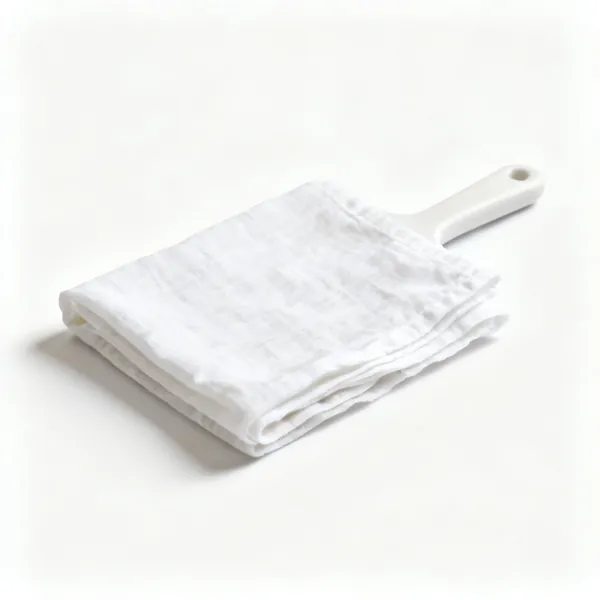
  • Cheesecloth / muslin: A folded piece of white loose-woven cheesecloth fabric

    Cheesecloth / muslin

    Loose woven cotton for straining stock until it is clear, hanging yoghurt to thicken it, or tying herbs into a little bundle you can fish out later.

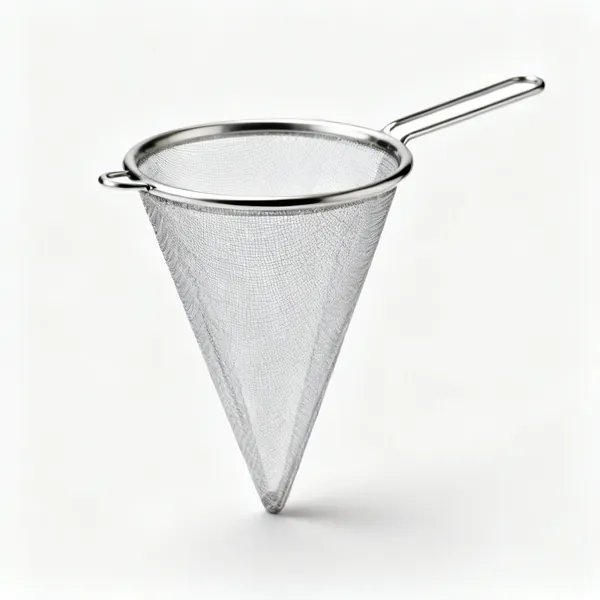
  • A tall conical fine-mesh chinois strainer with a handle

    Chinois

    A tall cone shaped strainer with very fine mesh. You push purees through it with a ladle and get a smoothness a blender cannot manage on its own.

Openers & juicers 7

One job each, and all jobs that are genuinely hard to improvise. Every one of these exists because the alternative involves a knife and a bad afternoon.

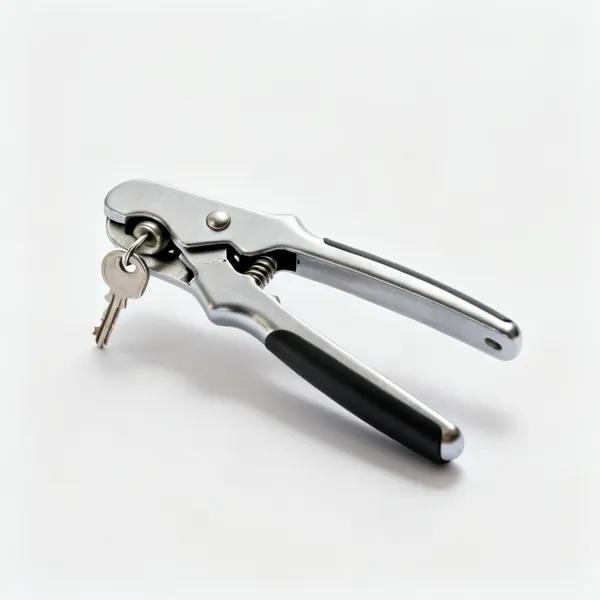
  • A manual handheld can opener with a turning keyEssential

    Can opener

    Opens a tin without a fight. The side cutting sort takes the whole lid off and does not leave the sharp edge that a top cutting one does.

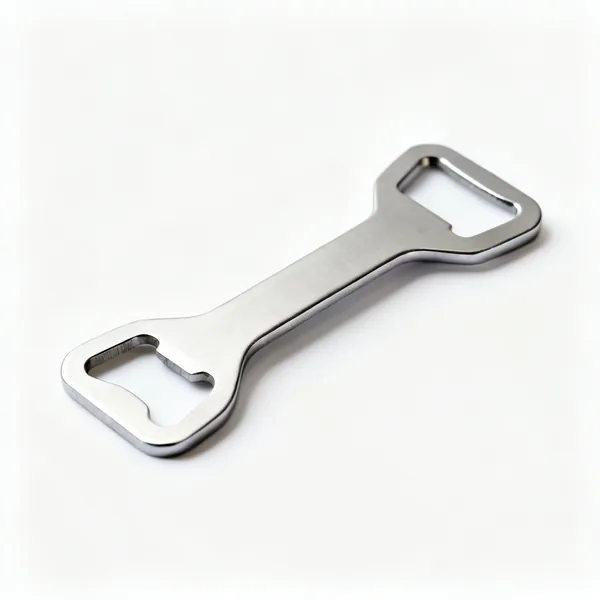
  • A flat metal bottle openerEssential

    Bottle opener

    Levers the cap off a bottle using the crimped edge of the cap itself as the pivot. Simple and hard to improve on.

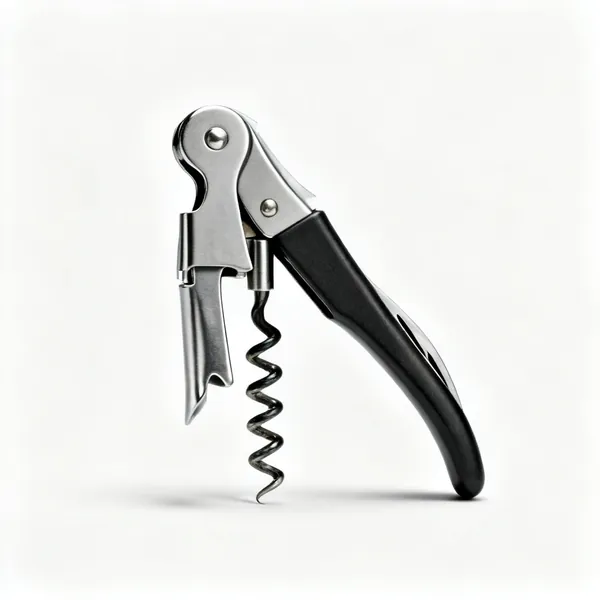
  • A waiter's friend corkscrew with a folding lever and wormEssential

    Corkscrew

    A spiral you screw into the cork and lever out. The folding waiter's friend type gives you the most control and is least likely to tear the cork in half.

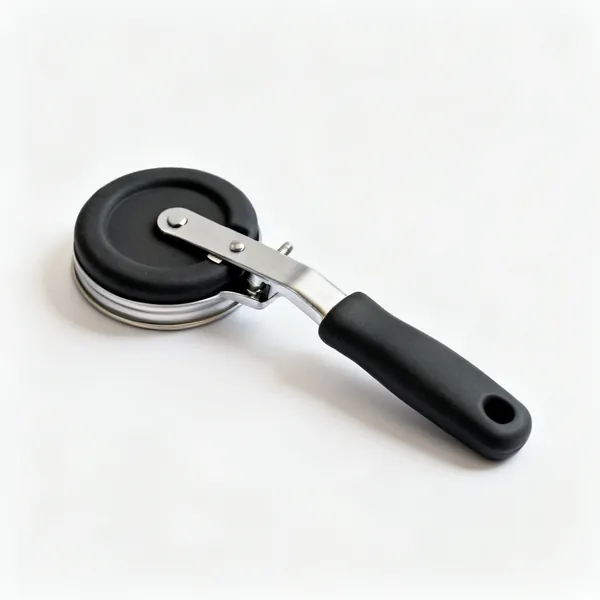
  • Jar opener: A rubber and metal jar lid opener with an adjustable grip

    Jar opener

    Grips a stuck lid and gives you more turning force. Solves the vacuum seal that your hands alone are never quite going to beat.

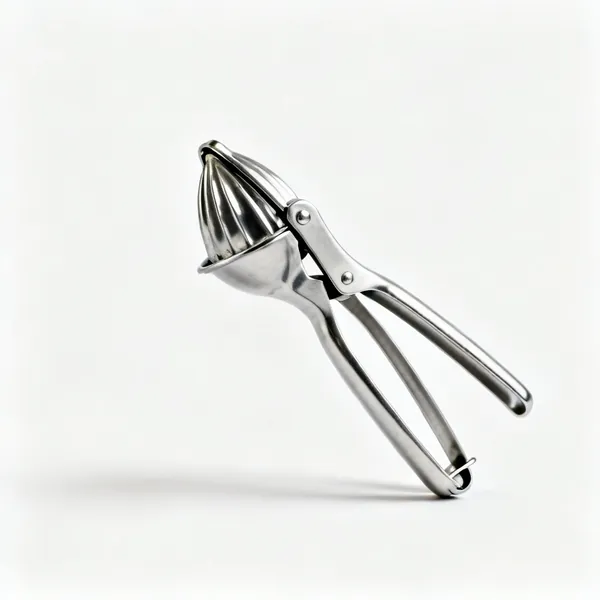
  • Citrus juicer: A metal handheld citrus squeezer with hinged handles

    Citrus juicer

    Squeezes the juice out of half a lemon or lime while holding back the pips. A handheld squeezer gets a lot more out than your hands do.

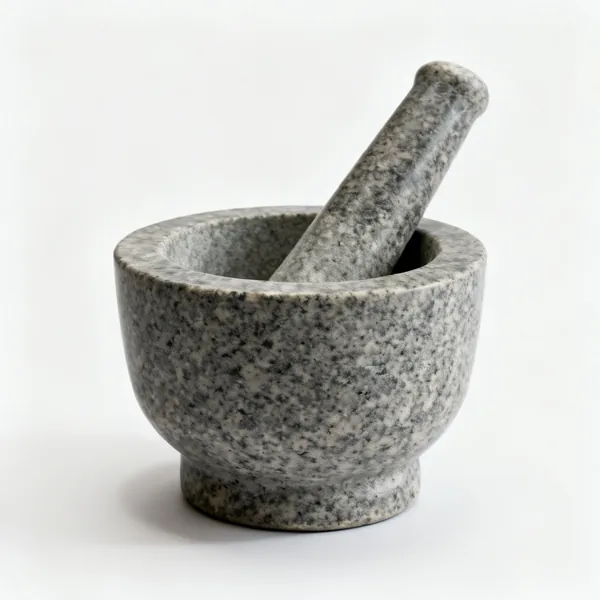
  • A heavy granite mortar and pestle

    Mortar and pestle

    Crushes instead of cutting, which bursts the cells and releases oils that a blade leaves locked inside. That is why pesto and spice pastes taste different made this way.

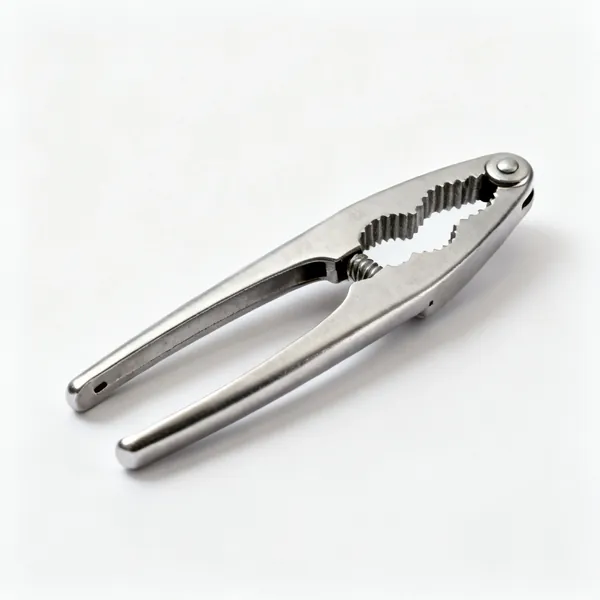
  • A metal hinged nutcracker

    Nutcracker

    Cracks a shell with steady pressure instead of smashing it, so the nut inside comes out whole rather than in bits.

Small appliances 8

Motors that save you repeating the same effort. The difference worth knowing: blenders make things liquid, processors chop and slice, mixers beat air in and knead. They do not replace each other.

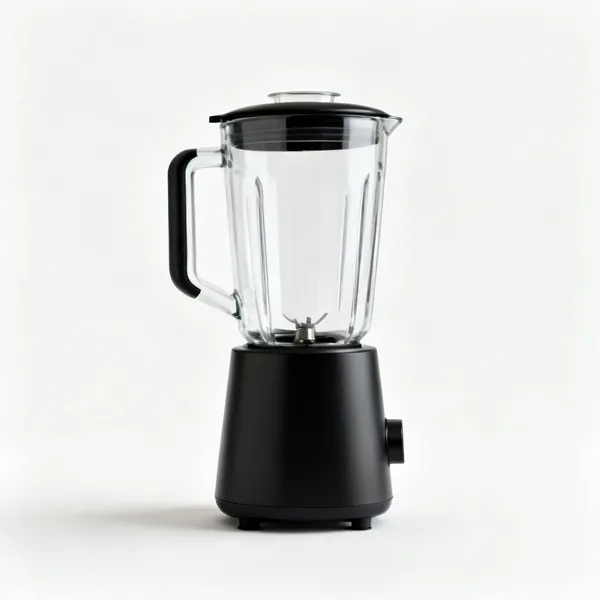
  • A countertop blender with a clear jug and a black baseEssential

    Blender

    A tall jug with a blade that makes a whirlpool, for soups, smoothies and sauces. It needs liquid to keep things moving, so it will stall on anything dry.

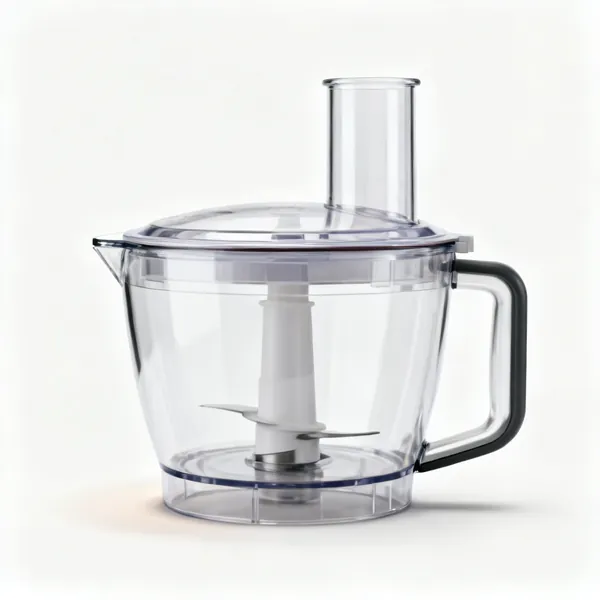
  • A food processor with a wide clear bowl and a lid feed tube

    Food processor

    A wide bowl with blades and discs you swap in to chop, slice, grate and make pastry in seconds. It handles solid dry food that a blender cannot.

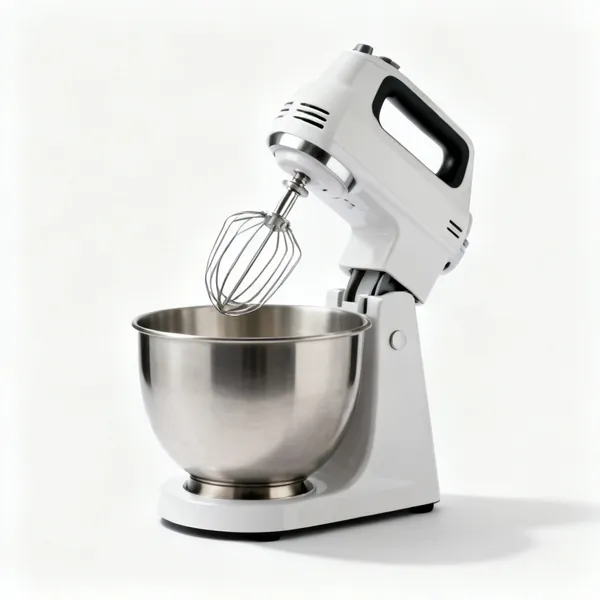
  • A stand mixer with a tilting head, bowl and whisk attachment

    Stand mixer

    A motor on a stand that creams butter, whips meringue and kneads bread while you do something else. It is the one machine that does a job your hands genuinely cannot keep up with.

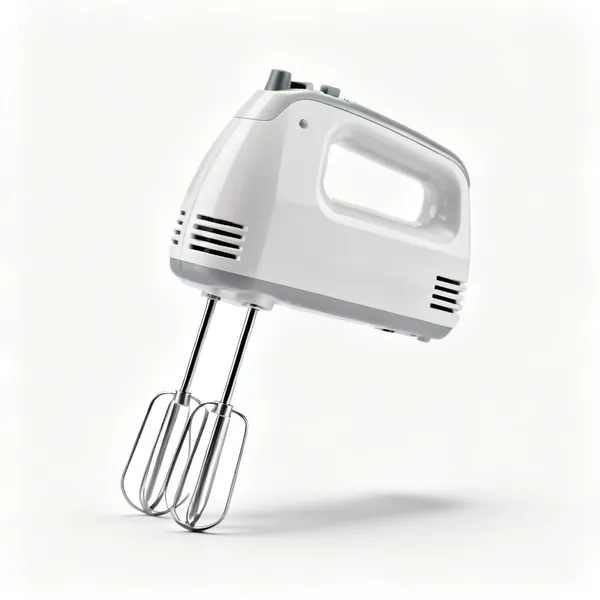
  • Hand mixer: A handheld electric mixer with two beatersEssential

    Hand mixer

    Two beaters you hold, for cream, batter and mash. Does most of what a stand mixer does for a fraction of the price and a fraction of the cupboard space.

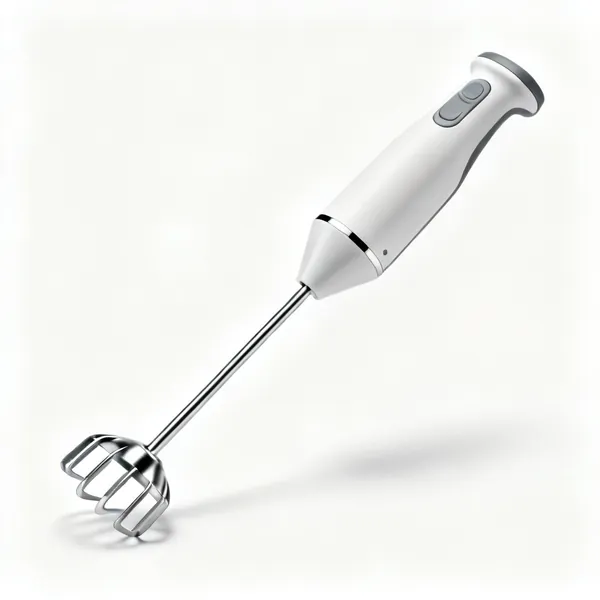
  • Immersion blender: A handheld immersion stick blender with a metal blade guardEssential

    Immersion blender

    A blade on a stick that you put straight into the pot, so hot soup never has to be poured into a jug. Easiest thing with a motor to clean, by a mile.

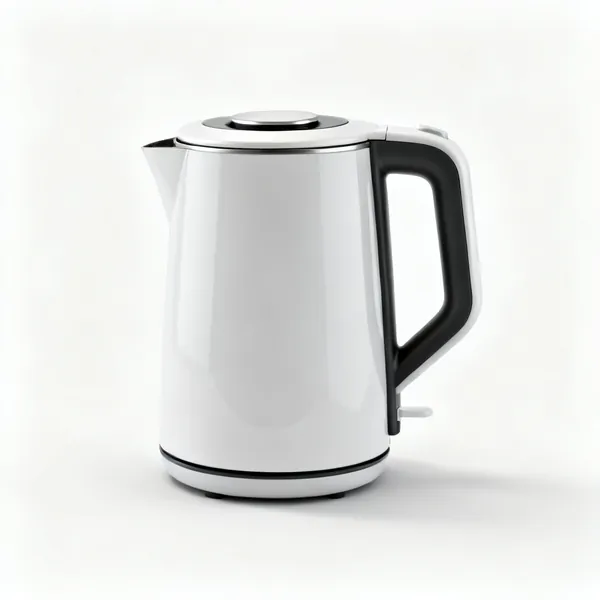
  • An electric kettle with a handle and lidEssential

    Kettle

    Boils water faster and cheaper than a pan on the hob. A model where you can set the temperature is worth it for tea and coffee, because boiling water scorches the leaves.

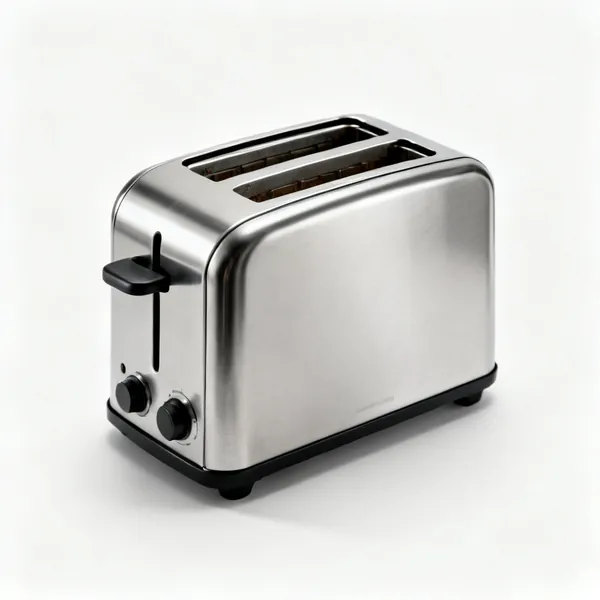
  • A two-slot stainless steel toaster

    Toaster

    Dry heat that crisps the outside of bread while the middle stays soft. Not complicated, but nothing else does it as well.

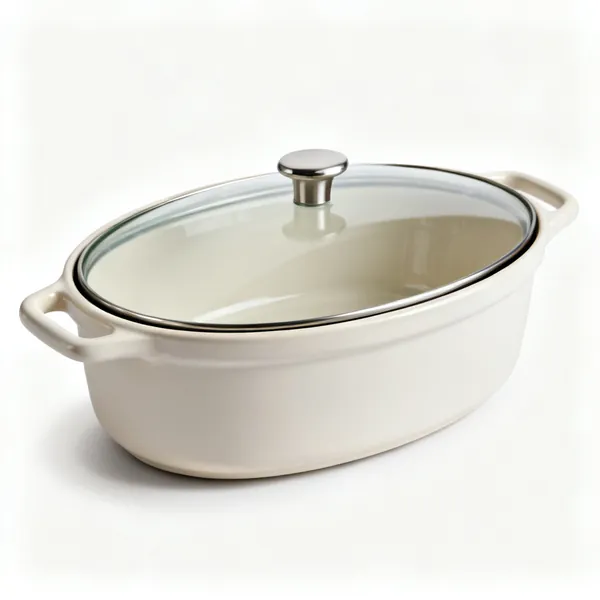
  • An oval slow cooker with a ceramic insert and glass lid

    Slow cooker

    Holds a low steady heat for hours, which breaks the tough bits in cheap cuts down into something soft and rich. You can leave it alone, and it costs less to run than the oven.

Storage & cleaning tools 7

The boring end, and where most kitchens actually fall down. Food stored badly is food thrown away, and anything annoying to clean is something you will quietly stop using.
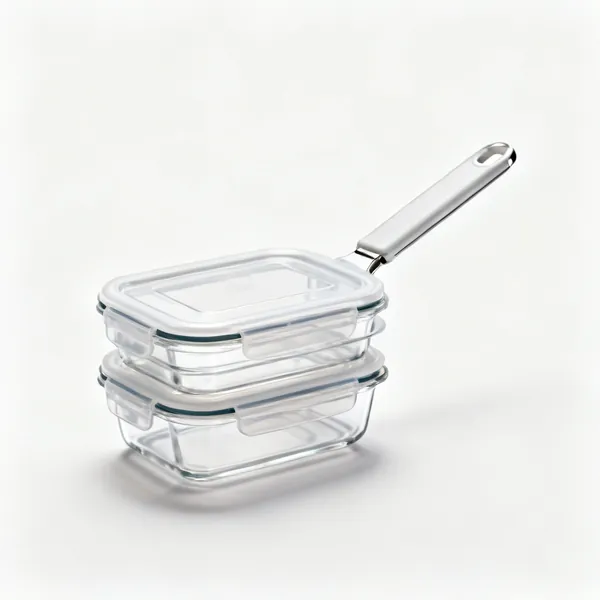
  • A set of stacked clear airtight food storage containers with lidsEssential

    Food storage containers

    Stackable boxes with airtight lids for leftovers and batch cooking. Airtight is the bit that matters. It slows food going off and stops the whole fridge smelling of last night.
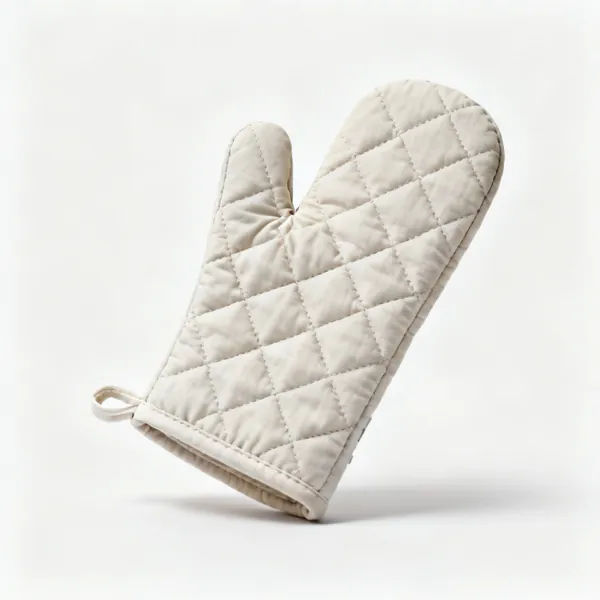
  • A pair of quilted fabric oven glovesEssential

    Oven gloves

    Thick heatproof gloves for hot tins and cast iron. A folded tea towel starts conducting heat the moment it picks up any steam, which is how people get burnt.

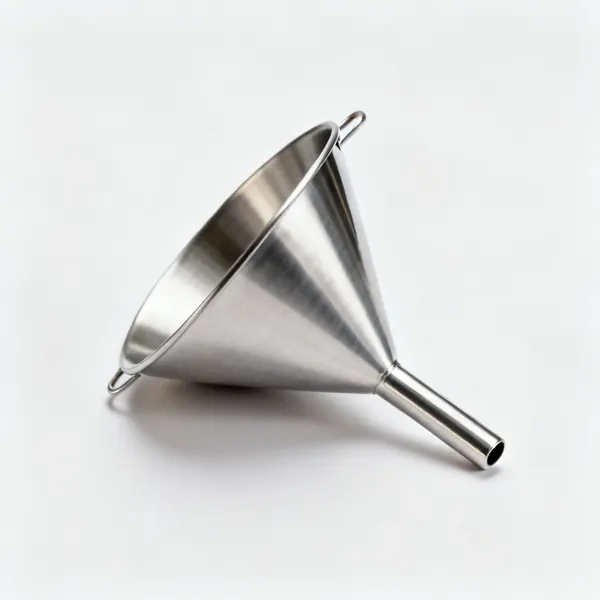
  • A stainless steel kitchen funnel

    Funnel

    Guides liquid into a narrow opening without spilling it everywhere. Feels pointless until you are pouring hot stock into jars.

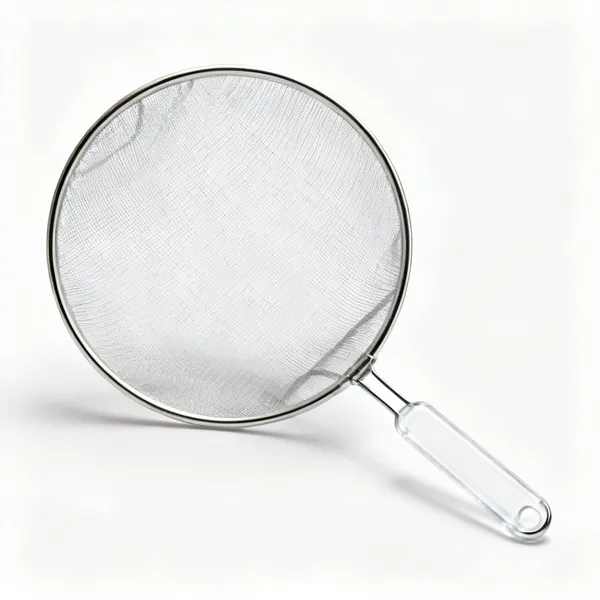
  • A round fine mesh splatter guard screen with a handle

    Splatter guard

    A fine mesh disc you lay over a frying pan. Steam gets out but fat does not, so the hob stays clean without trapping moisture the way a lid would.

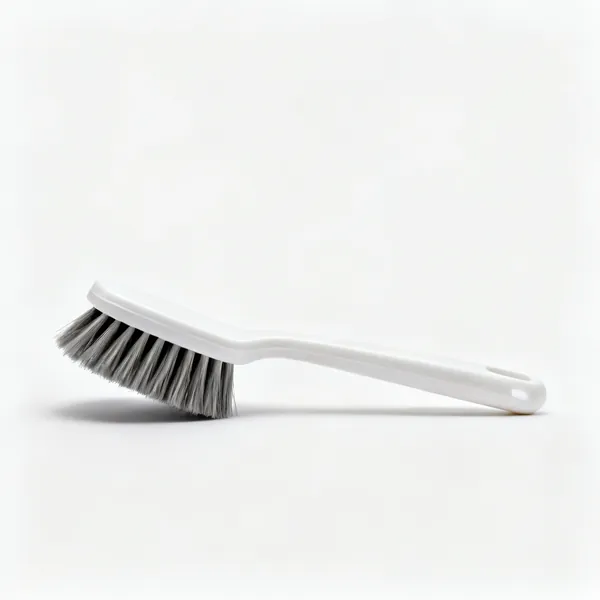
  • A dish brush with stiff bristles and a plastic handleEssential

    Dish brush

    Stiff bristles on a handle, so you can clean a pan without putting your hands in hot water and without a sponge holding bacteria in a soggy lump.

  • A metal dish drying rack with slots

    Drying rack

    A raised frame so washed things drip and air dry. Air drying is cleaner than a tea towel, which mostly just moves the water and germs around.

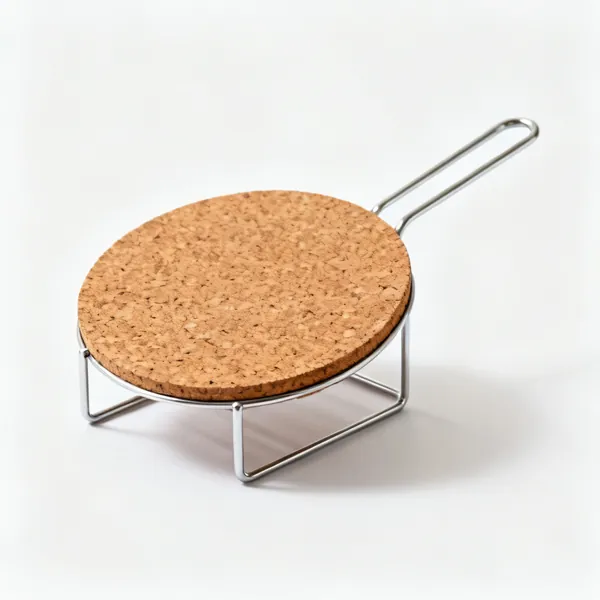
  • A round cork and metal trivet stand

    Trivet

    A heatproof stand so a hot pan can come off the heat and go straight onto the table without scorching anything.
Choosing kitchen tools

The list above is what exists. This is how to decide which of it you actually need, what separates a tool worth keeping from one that ends up at the back of a drawer.
How many of these do you actually need?

Fewer than you think. Of the 93 tools above, 45 are marked essential, and honestly even that is a generous list. A kitchen with fifteen good things in it cooks better than one with sixty cheap ones, because what limits most cooking is a sharp knife and a pan that stays hot. Not how many drawers you can fill.

The expensive mistake is buying by the number. A fifteen piece knife block sounds like a bargain, but it only exists because thin stamped blades are cheap to make. You will use three of them. The rest are there to fill the block. Twenty piece gadget sets work the same way, where the avocado slicer is paying for the peeler you actually wanted.

So buy a few good things, and add something new when you have reached for it twice and found it missing. Wanting a tool while watching a cooking video does not count.

How to tell a good one from a bad one

Almost every real difference comes down to what it is made of and how it is put together, not whose name is on it. Here is what to look at before you spend anything.
Knives: pick it up first
How it feels in your hand matters more than the steel. A forged knife with the metal running all the way through the handle feels solid and planted. A thin stamped blade feels like a lever. Harder steel stays sharp longer but chips more easily and is harder to sharpen at home, so a normal European knife is more forgiving than a very hard Japanese one if sharpening is not your thing.
Pans: the metal decides how it cooks
Stainless steel browns food well and turns the sticky bits into a sauce, but food will stick if you rush it. Cast iron holds heat better than anything, so it sears properly. Carbon steel is lighter and reacts faster but needs looking after. Non stick is brilliant for eggs and fish and wrong for steak, and it wears out however much you spend.
Thickness beats brand name
A thick base is what stops one side of your pancake burning while the other stays pale. Pick up two pans the same size. The heavier one will almost always cook more evenly.
Check what your hob is
Induction hobs only work with pans a magnet sticks to. Lots of aluminium and copper pans simply will not heat up. This is the most common expensive mistake people make when they move house.
Baking trays: pale and heavy
Thin dark trays soak up heat and burn the bottoms of biscuits before the tops are done. Heavy pale metal bakes evenly. Glass and ceramic hold heat for longer and let you see whether the base of a pie has actually browned.
Look at the handle
Handles held on with rivets last longer than ones that are just welded. If you want to move a pan from the hob into the oven, check what temperature it is rated to. Plenty of plastic handles and lids will not survive a hot roast.
Match your utensils to your pans
Metal turners wreck non stick. If you own non stick, use silicone or wood. Silicone copes with heat and washes properly. Wood is gentle and will not get hot in your hand.

Things to think about before you buy

The right kit depends on how you cook, not on a list someone else wrote. Five questions sort out most decisions.

How you really cook
Not how you plan to. If you make a few dinners in the week and a roast on Sunday, you need a good knife, two pans and a roasting tin. Not a pasta machine.
How many people you cook for
This decides your pan size. A small 20cm frying pan cannot brown food for four people, it just steams it. A crowded pan is one of the main reasons home cooking tastes a bit flat.
Where you are going to put it
The appliances are the problem here, not the utensils. A stand mixer shut in a cupboard because there is no room on the worktop is money spent for nothing.
Whether you will hand wash it
Be honest with yourself. Carbon steel, cast iron and good knives all hate the dishwasher. If you know you will not wash up by hand, buy things that can take it rather than ruining nice ones.
Where the money should go
Spend on what you touch every day and what is genuinely bad when it is cheap. One knife, one or two pans, a scale. Save on anything that only does one job. A cheap digital scale will improve your baking more than an expensive mixer will.

What to buy first, in order

Starting from nothing? Buying in stages costs less and wastes less than buying a big set. Each stage works on its own, so you can stop whenever you have enough.

Stage one: enough to cook almost anything
A chef's knife, a paring knife, a serrated knife, a cutting board and a honing steel. A frying pan around 24 to 28cm, a saucepan and a big pot. Tongs, a turner, a wooden spoon and a silicone spatula. Mixing bowls, a digital scale and measuring spoons. A colander, a fine sieve, a peeler, a grater, a can and bottle opener, and oven gloves. That is about twenty things and it covers the vast majority of recipes.
Stage two: when you start hitting limits
A cast iron pan and a casserole dish for searing and slow cooking. A baking tray, cooling rack, loaf tin and cake tin once you get into baking. A thermometer, which is the cheapest thing you can buy that genuinely improves how your meat comes out. A stick blender for soup.
Stage three: only when you know you need it
Mandoline, stand mixer, food processor, spiralizer, piping bag. Each of these is very good at one narrow job. Buy the one whose job you have actually been struggling with, not all of them at once.

Mistakes that cost people money

Buying the knife block set
You will use three of them. The other twelve are there to fill the holes.
Getting non stick too hot
Above a medium heat the coating starts breaking down. Non stick is for eggs and fish. Sear your steak in steel or iron and the pan will last years longer.
Glass or stone chopping boards
They will blunt a good knife within a few uses. Wood or plastic, nothing else.
Using a pan that is too small
The food gives off water faster than it can steam away, so it goes grey instead of brown. Get a bigger pan, or cook it in two batches.
Buying a machine for one recipe
This is the bread maker problem. If it cannot earn a spot on the worktop, it will live at the back of a cupboard and you will never use it.
Assuming expensive means better
Past a certain point you are paying for looks and a name. A mid priced knife that fits your hand beats an expensive one that does not.

How to make them last

Most of this stuff is not meant to be thrown away. Looked after properly, a good knife and an iron pan will outlast you, and the habits that get you there take about five seconds each.

Hone often, sharpen rarely
A few strokes on a steel before you cook straightens the edge back up. Sharpening actually grinds metal away to make a new edge, and you only need that occasionally. Most knives people call blunt just need honing.
Wash knives by hand and dry them straight away
Dishwasher heat and detergent dull the edge and loosen the handle, and water left sitting on the blade will pit even stainless steel.
Keep iron pans oiled
Dry them on the hob and wipe a little oil over the surface. If rust appears it is not the end, you just scrub it off and oil it again.
Never put cold water in a screaming hot pan
The base warps, and once it is warped it will never sit flat on the hob again.
Store knives so nothing touches the edge
Loose in a drawer, blades knock into each other and chip. A magnetic strip or a cheap edge guard will double how long they stay sharp.
Accept that non stick wears out
Two to five years of normal use, no matter how careful you are. Buy it cheap enough that replacing it does not hurt.

Frequently asked questions

How many kitchen tools do I actually need?
About twenty covers nearly every recipe. Three knives, a board, three pans, a few utensils, some bowls, a scale and something to drain with. Everything past that solves a narrower problem, so buy it when you actually meet the problem.
Are expensive knives worth the money?
Up to a point, yes. Going from a cheap stamped knife to a decent mid priced forged one makes a big difference. Going from mid priced to very expensive mostly buys you nicer looks and steel that stays sharp a bit longer while being harder to sharpen. How it feels in your hand matters more than either, so hold it first if you can.
Should I buy stainless steel or non stick pans?
Both, for different jobs. Stainless browns food, takes high heat and makes a sauce from the sticky bits, so that is what you sear in. Non stick is for eggs, pancakes and delicate fish, and it wears out whatever you pay. Using each for the other's job is why people think their pans are rubbish.
What one thing would improve my cooking most?
A digital scale if you bake, or a thermometer if you cook meat. Both swap guessing for an actual number, and guessing is where most wobbly results come from. Both cost less than a pan.
Do I need a stand mixer?
Only if you bake a lot, or you knead bread by hand and hate it. A hand mixer does most of the same work for a fraction of the price and takes up almost no room. What a stand mixer really gives you is being able to walk away during a long mix.
What size frying pan should I get first?
24cm for one or two people, 28cm for a family. If you can only have one, get the bigger one. A large pan cooks a small amount of food perfectly well, but a small pan will steam a large amount instead of browning it.
Can kitchen tools go in the dishwasher?
Stainless steel, silicone and most baking tins are fine. Good knives, cast iron, carbon steel, wooden boards and spoons, and anything non stick are not. The heat and detergent shorten their lives a lot. If you know you will not wash up by hand, buy accordingly.
What is the difference between a blender and a food processor?
A blender makes things liquid and needs some liquid in there to work, so it is for soups, smoothies and sauces. A food processor chops, slices and grates solid food and can make pastry. If you only get one, pick the one that matches what you cook more of.
How often should I sharpen my knives?
Properly sharpen them once or twice a year for normal home use. Hone them on a steel far more often, ideally before each time you cook. Most knives that feel blunt only need thirty seconds on a steel.
Is it worth buying a matching set of pans?
Usually not. Sets are priced to look like a deal but they normally include a couple of sizes you will never use, and they are all the same material, when the point is that different materials suit different jobs. Buying three pans separately gets you a better three pans.
What are the main types of kitchen tools?
They fall into a handful of groups by what they do: knives and boards for cutting, peelers and graters for prep, scales and spoons for measuring, bowls and whisks for mixing, pans and pots for cooking, tins and racks for baking, sieves for draining, and openers for getting into things. This page is organised in exactly that order.
What is the difference between kitchen tools and kitchen equipment?
In everyday use, none. People say tools for the small handheld things like knives, peelers and whisks, and equipment for the larger items like pans, tins and machines. Both are on this list, because you need them together to actually cook something.