
How to Sharpen Kitchen Knives at Home: Easy Steps for Razor Sharp Blades
Kitchen knives are very important tools in every home. When knives become dull, cooking gets harder and less safe. A sharp knife cuts better and makes cooking easier. You do not need to buy new knives. You can sharpen your kitchen knives at home with simple tools. This guide will show you how to sharpen kitchen knives safely and well.
Why Sharpen Your Kitchen Knives?
Dull knives are dangerous. They can slip and cause accidents. A sharp knife cuts food cleanly and quickly. It also keeps food fresh and looks better on the plate. Sharpening knives often helps them last longer. It saves money because you do not need to buy new knives often.
What You Need to Sharpen Knives at Home
You do not need many things to sharpen knives. Here are some easy tools you can use:
- Whetstone (Sharpening Stone): A flat stone that comes in coarse and fine grit.
- Pull-Through Sharpener: A small tool with slots to pull the knife through.
- Honing Steel: A rod used to keep the knife’s edge aligned between sharpenings.
- Clean cloth or towel: To clean and dry knives after sharpening.
- Water: To soak the whetstone.
How to Sharpen Kitchen Knives Using a Whetstone
A whetstone is the best tool for sharpening knives at home. It gives you control over the sharpness. Follow these simple steps:
| Step | Instructions |
|---|---|
| 1. Soak the stone | Put the whetstone in water. Wait until bubbles stop coming out. This usually takes 5-10 minutes. |
| 2. Place the stone | Put the wet stone on a flat surface. Use a wet towel under it to stop slipping. |
| 3. Find the right angle | Hold the knife at 15-20 degrees to the stone. This angle works for most kitchen knives. |
| 4. Sharpen the first side | Use the coarse side of the stone. Push or pull the knife from heel to tip in a sweeping motion. Do this 10-15 times. |
| 5. Sharpen the second side | Flip the knife and repeat the same motion on the other side. Use the same number of strokes. |
| 6. Use the fine grit | Turn the stone to the fine side. Repeat steps 4 and 5 to polish and finish the edge. |
| 7. Clean and dry | Wash the knife and stone with water. Dry the knife carefully with a cloth. |
Tips for Using a Whetstone
- Keep the angle steady while sharpening.
- Do not press too hard. Use light, even pressure.
- Keep the stone wet during the process.
- Practice on old knives first if you are new.
How to Use a Pull-Through Sharpener
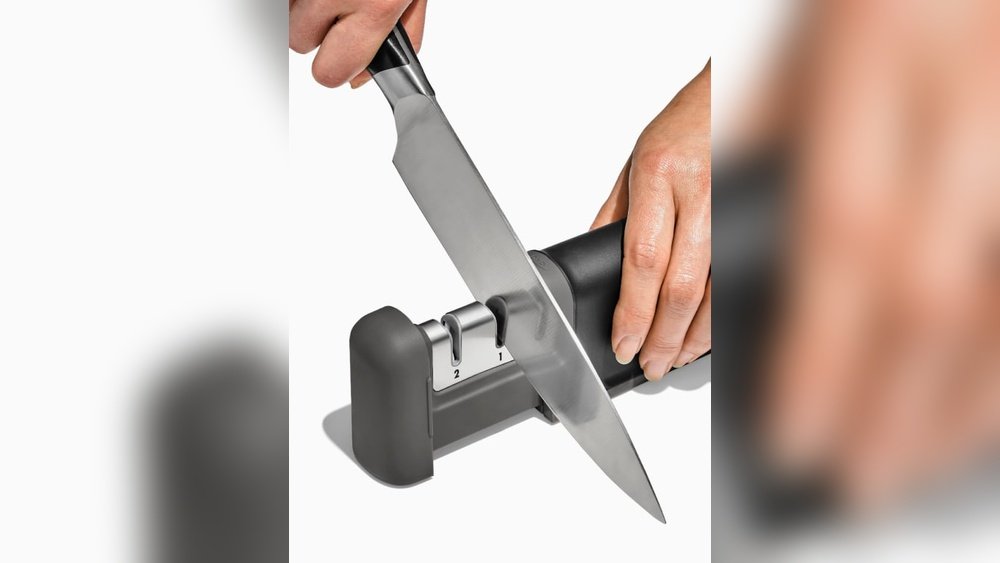
If you want a faster way, a pull-through sharpener works well. It is easy to use and good for beginners.
| Step | Instructions |
|---|---|
| 1. Choose the right slot | Many pull-through sharpeners have slots for coarse and fine sharpening. Use the coarse slot first if your knife is very dull. |
| 2. Place the sharpener | Put the sharpener on a stable surface. Hold it firmly with one hand. |
| 3. Pull the knife | Insert the knife blade into the slot. Pull it through from heel to tip with light pressure. Do this 3-5 times. |
| 4. Use the fine slot | Repeat the pulling process in the fine slot to smooth the edge. |
| 5. Clean the knife | Wash and dry the knife before use or storage. |
:max_bytes(150000):strip_icc()/how-to-sharpen-a-knife-3x2-1-def598ca67a3443a83a97baa06877d1d.jpg)
Credit: www.allrecipes.com
How to Use a Honing Steel
A honing steel does not sharpen the blade but keeps it straight. Use it often to keep knives sharp longer.
- Hold the honing steel vertically with the tip on a safe surface.
- Hold the knife at 15-20 degrees to the steel.
- Pull the knife down and across the steel from heel to tip.
- Do this 5-10 times on each side of the blade.
- Wipe the knife clean after honing.

Credit: www.youtube.com
Safety Tips When Sharpening Knives
- Always keep your fingers away from the blade edge.
- Work slowly and carefully to avoid accidents.
- Use a stable surface to avoid slips.
- Keep your tools clean and dry.
- Store knives safely after sharpening.
How Often Should You Sharpen Your Knives?
It depends on how much you use them. For most home cooks, sharpening every few months is good. Use a honing steel once a week to keep edges aligned. If knives feel dull or slip while cutting, it’s time to sharpen.
Common Mistakes to Avoid
- Sharpening with too much pressure can damage the blade.
- Using wrong angles can make sharpening less effective.
- Not soaking the whetstone before use can wear it out.
- Sharpening only one side of the knife edge.
- Ignoring safety and working too fast.
Summary
Sharpening kitchen knives at home is simple and useful. A whetstone gives the best sharpness but needs practice. Pull-through sharpeners are easy and fast but less precise. Honing steels help keep knives sharp between sharpenings. Always follow safety steps and keep your tools clean. Sharpen knives regularly to make cooking safer and more fun.
Try these methods to keep your kitchen knives sharp and ready. You will enjoy cooking more with sharp knives.
Frequently Asked Questions
What Is The Best Way To Sharpen My Kitchen Knives?
Use a whetstone for precise sharpening by soaking it, then sliding the blade at a 15-20° angle. Alternatively, pull-through sharpeners offer quick, easy sharpening. Regularly hone knives with a honing steel to maintain sharpness between sessions. This method ensures sharp, durable kitchen knives.
How To Sharpen A Kitchen Knife Without A Sharpener?
Use a ceramic mug’s unglazed bottom or a smooth stone. Hold the knife at 15-20 degrees. Swipe the blade gently across the surface, alternating sides. Repeat 10-15 times until sharp. Rinse and dry the knife after sharpening for best results.
What Must You Not Do When Sharpening A Knife?
Avoid applying too much pressure, sharpening at the wrong angle, or rushing the process. Never use a dry whetstone or neglect safety precautions. Do not sharpen damaged or chipped blades without proper repair first. Avoid inconsistent strokes and skipping the finishing step to ensure a sharp, durable edge.
What Do Most Chefs Use To Sharpen Knives?
Most chefs use whetstones to sharpen knives, as they provide precise control and a razor-sharp edge. They also use honing steels for regular maintenance. Pull-through sharpeners offer a quick, convenient option but may wear knives faster.