
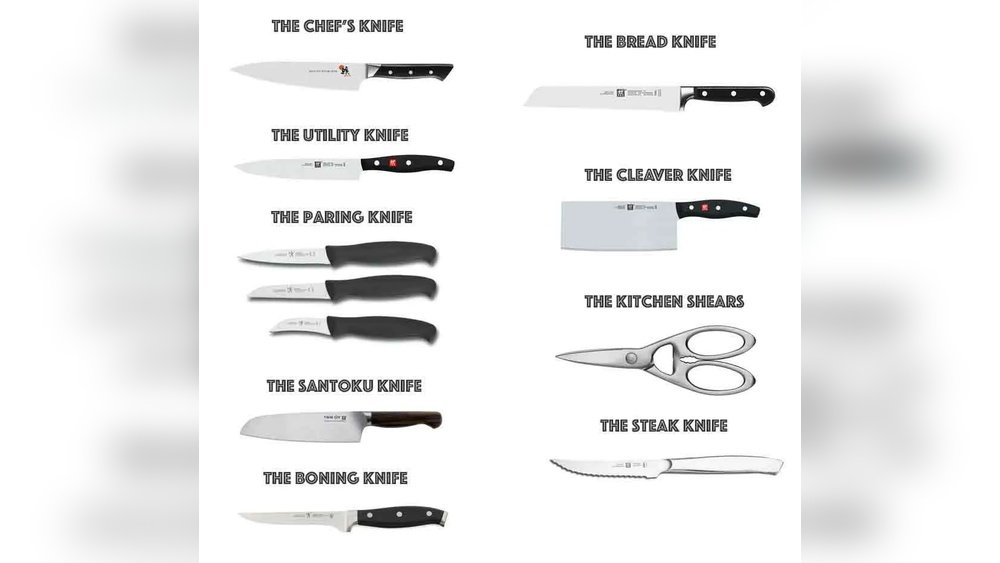
Types of Kitchen Knives & Their Uses- Guide for Every Chef.
Kitchen knives are very important tools. They help us cut food easily. But not all knives are the same. Different knives do different jobs. Knowing the right knife makes cooking easier and safer. This guide will explain the main types of kitchen knives and how to use each one.
1. Chef’s Knife
The chef’s knife is the most common knife in kitchens. It usually has a blade about 8 inches long. The blade is wide and curves upward at the tip.
Uses:
- Slicing vegetables like onions and carrots
- Chopping herbs and nuts
- Mincing garlic and ginger
- Cutting meat and fish
This knife is very good for many tasks. It can do almost everything well. It is a great knife to start with.
2. Paring Knife
The paring knife is small and has a short blade. It is usually 3 to 4 inches long. It is easy to hold and control.
Uses:
- Peeling fruits and vegetables
- Cutting small pieces of food
- Removing seeds or eyes from potatoes
- Making small cuts or shapes
This knife is perfect for detailed work. It helps when you need to be careful with small foods.

Credit: www.chefstore.com
3. Bread Knife
The bread knife has a long blade with sharp teeth. The blade is about 8 to 10 inches long. The teeth help cut bread without squashing it.
Uses:
- Slicing bread and rolls
- Cutting cakes and pastries
- Slicing soft fruits like tomatoes
The serrated edge works like a saw. It cuts cleanly without pushing down on food.
4. Santoku Knife
The Santoku knife is a Japanese-style knife. It is similar to a chef’s knife but shorter and lighter. The blade is usually 5 to 7 inches long.
Uses:
- Slicing vegetables and fruits
- Chopping herbs and nuts
- Cutting fish and meat
Santoku means “three virtues.” It is good for slicing, dicing, and mincing. The blade often has small dimples to stop food from sticking.
5. Utility Knife
The utility knife is a medium-sized knife. Its blade is about 4 to 7 inches long. It is more flexible than a chef’s knife.
Uses:
- Cutting sandwiches and small meats
- Slicing fruits and vegetables
- Trimming fat from meat
This knife is good when a chef’s knife is too big. It is also better than a paring knife for some jobs.
6. Boning Knife
The boning knife has a thin, sharp blade. The blade is about 5 to 6 inches long. It is curved or straight.
Uses:
- Removing bones from meat and fish
- Trimming fat and skin
- Cutting around joints
This knife helps get meat ready to cook. It works well where you need to be precise.

Credit: www.jessicagavin.com
7. Cleaver
The cleaver is a heavy, large knife. The blade is wide and rectangular. It can be 6 to 12 inches long.
Uses:
- Chopping through bones
- Cutting large pieces of meat
- Slicing hard vegetables like squash
This knife is strong and powerful. It is good for tough jobs that need force.
8. Nakiri Knife
The Nakiri knife is a Japanese vegetable knife. It has a straight blade and squared tip. The blade is usually 5 to 7 inches long.
Uses:
- Chopping vegetables quickly
- Slicing thin pieces
- Cutting herbs and leafy greens
The flat blade helps cut all the way through vegetables. It is perfect for daily vegetable prep.
Summary Table: Types of Kitchen Knives & Uses
| Knife Type | Blade Length | Main Uses |
|---|---|---|
| Chef’s Knife | 8 inches | Slicing, chopping, mincing, cutting meat |
| Paring Knife | 3-4 inches | Peeling, small cuts, trimming |
| Bread Knife | 8-10 inches | Slicing bread, cakes, soft fruits |
| Santoku Knife | 5-7 inches | Slicing, dicing, mincing |
| Utility Knife | 4-7 inches | Cutting sandwiches, small meats, fruits |
| Boning Knife | 5-6 inches | Removing bones, trimming fat |
| Cleaver | 6-12 inches | Chopping bones, large meat pieces |
| Nakiri Knife | 5-7 inches | Chopping vegetables, slicing herbs |
How to Choose the Right Knife
Choosing the right knife depends on what you cook. If you like vegetables, a Nakiri or Santoku is good. If you cook meat, a chef’s knife and boning knife help a lot. Bread lovers need a bread knife. For small tasks, a paring or utility knife is best.
Start with a few knives first. The chef’s knife is the best all-rounder. Add others as you need.
Tips for Using Kitchen Knives Safely
- Always cut on a stable board.
- Hold the knife firmly and cut away from your body.
- Keep knives sharp. Dull knives are more dangerous.
- Use the right knife for the job.
- Clean knives carefully after use.
Frequently Asked Questions
What Are The 8 Basic Types Of Knives And How Are They Used?
The 8 basic knives: Chef’s (chop/slice), Santoku (precision), Bread (slicing bread), Carving (meats), Utility (small tasks), Boning (debone meat), Paring (peeling), and Cleaver (chopping bones). Each serves a specific kitchen cutting task for efficient cooking.
Which Kitchen Knives Are For What?
Chef’s knife excels at chopping, slicing, and dicing. Paring knife handles peeling and intricate cuts. Bread knife cuts crusty bread. Utility knife suits small tasks. Boning knife removes bones. Santoku knife offers precision slicing. Carving knife slices cooked meats. Each knife serves a specific kitchen task.
What Should Each Knife Be Used For?
Chef’s knife handles slicing, chopping, and mincing. Bread knife cuts crusty bread. Paring knife peels and trims. Boning knife removes bones. Utility knife tackles small slicing tasks. Santoku excels at precision cutting. Carving knife slices cooked meats. Cleaver chops through bones.
What Knife Does Gordon Ramsay Recommend?
Gordon Ramsay recommends a high-quality chef’s knife for versatile slicing, chopping, and mincing tasks in the kitchen.
Conclusion
Kitchen knives are important tools in cooking. Each type has a special use. Knowing the right knife helps you cook faster and safer. A chef’s knife is the most useful for many tasks. Paring knives help with small work. Bread knives cut soft foods cleanly. Santoku and Nakiri knives are great for vegetables. Boning knives and cleavers are for meat and bones.
Buy knives that fit your cooking style. Take care of them well. This will make your kitchen work easy and fun.