Disclosure

Tools for soldering

Solder does not glue, it wets. Molten solder flows onto clean hot metal and forms an alloy with the surface, and it refuses to touch anything oxidised or cold. Almost every bad joint is one of those two failures, not a technique problem. All 32 here are grouped by what they do to heat, clean or remove solder, which is the order the work happens in.

16 are marked essential: enough to make and unmake a joint properly.

Part of the full electrical tools list, 67 tools in 10 groups.

Irons and heat sources 7

Temperature control matters more than wattage. Wattage is how fast it recovers, not how hot it gets.

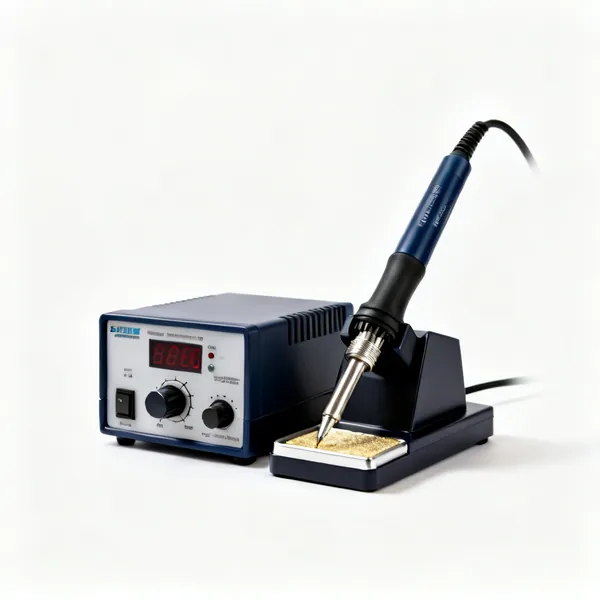
  • A soldering station with a control base, digital display and a pencil iron in a standEssential

    Soldering station

    A temperature controlled base and a lightweight pencil iron. The control is the point: a plain iron overheats when idle and drops under load, so joints are inconsistent.

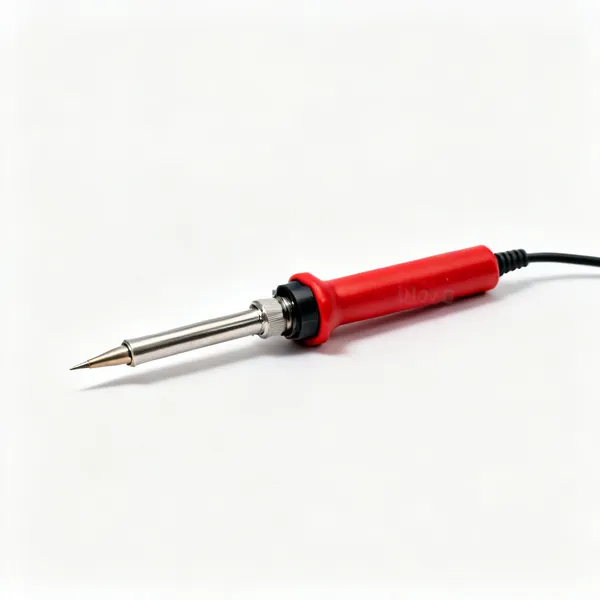
  • Basic soldering iron: A simple mains soldering iron with a conical tip and a red handle

    Basic soldering iron

    A mains iron at a fixed wattage with no control. Fine for occasional wire joints, and it will cook a small component while you wait for it to flow.

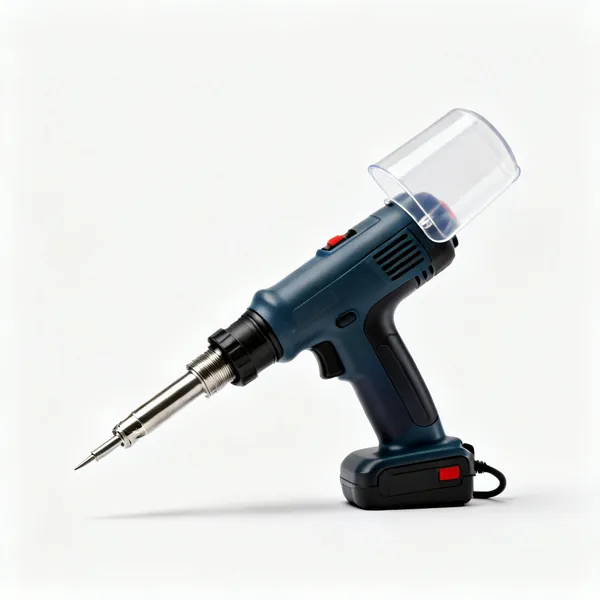
  • Cordless soldering iron: A cordless battery powered soldering iron with a protective cap

    Cordless soldering iron

    Battery or gas powered for work where no socket exists. Limited thermal recovery, so it suits a wire splice in a loft rather than bench work.

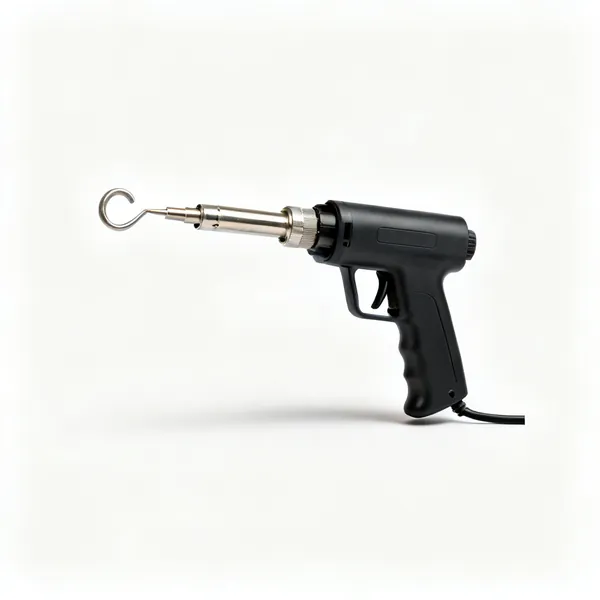
  • A pistol shaped soldering gun with a loop tip and a trigger

    Soldering gun

    A trigger heats a heavy loop tip in seconds and it cools as fast. Far too much heat for electronics and the right thing for a thick cable or a terminal.

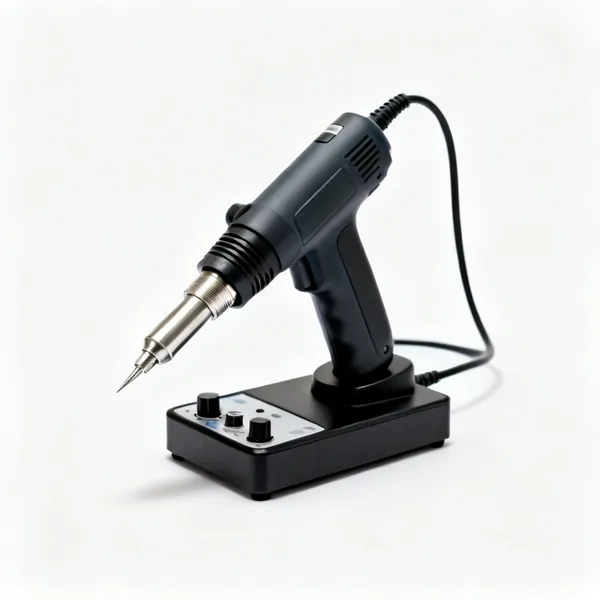
  • Hot air station: A hot air rework station with a handpiece, nozzle and a control base

    Hot air station

    Directs controlled hot air, which is how surface mount parts are fitted and removed. It heats everything nearby too, so the surrounding board needs shielding.

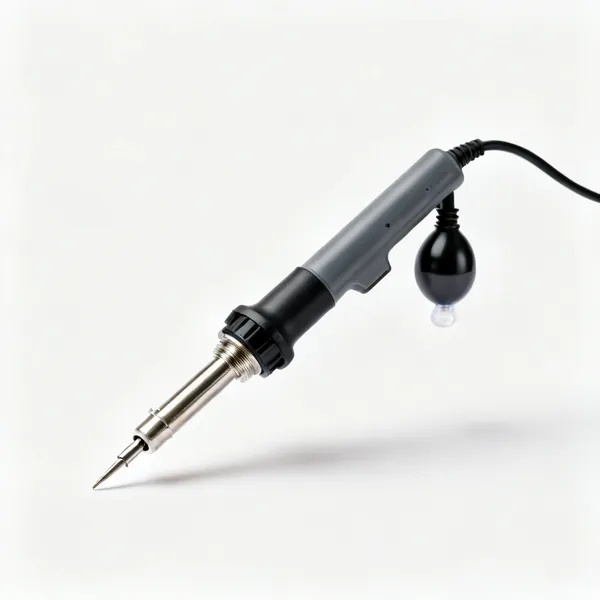
  • A desoldering iron with a hollow tip and an attached vacuum bulb

    Desoldering iron

    A hollow tip with a vacuum pump behind it, melting and sucking in one action. The fastest way to clear a multi pin part without lifting pads.

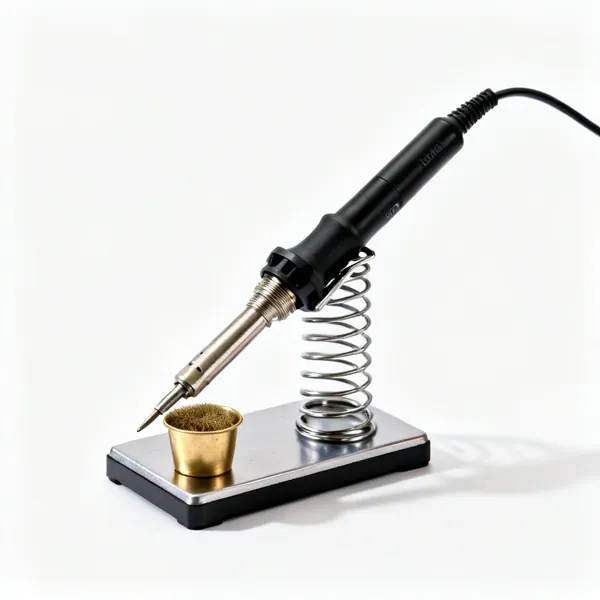
  • A compact metal soldering iron stand with a coiled spring cradle and a small brass wool cup on its base, centred with clear space at every edgeEssential

    Iron stand

    A cradle that keeps a 350C tip off the bench and off cables. Fitted with brass wool, so cleaning the tip is one movement rather than reaching for something.

Solder, flux and tips 8

Where most joint problems actually live. Flux does more for a stubborn joint than any amount of heat.

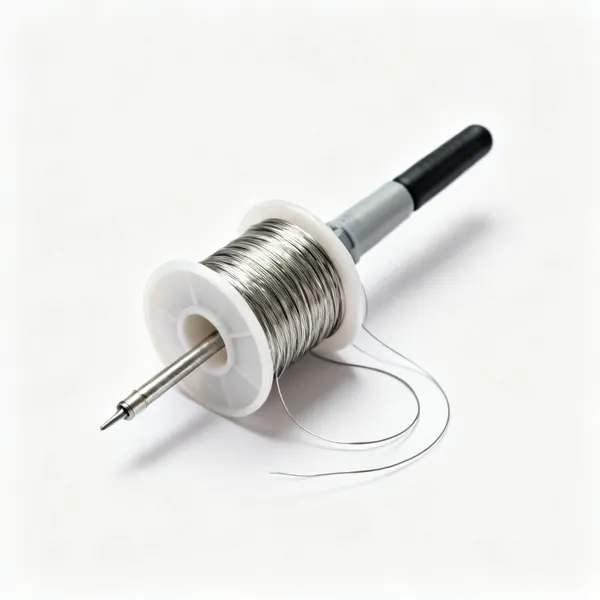
  • A reel of thin cored solder wire with a few turns unwoundEssential

    Cored solder wire

    Flux in a hollow core, released as it melts. 0.7mm suits most electronics: thinner runs out too fast on a large joint, thicker floods a small one.

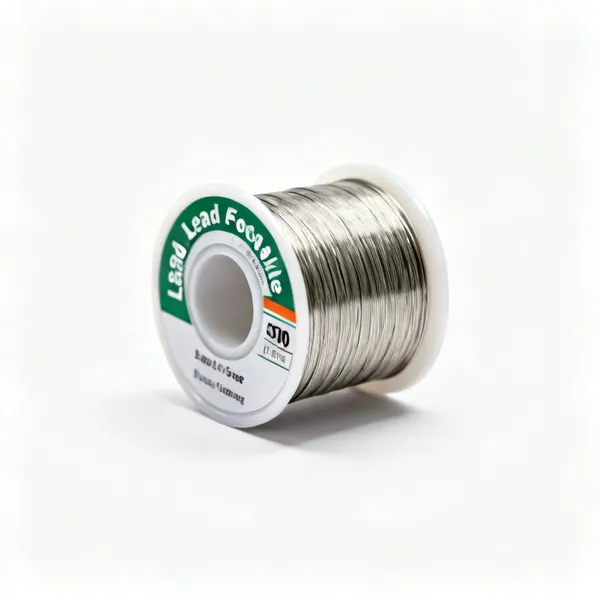
  • A reel of lead free solder wire with a label facing outward

    Lead free solder

    Required for anything sold commercially. Melts around 40 degrees higher, wets less willingly and produces duller joints that look wrong but are not.

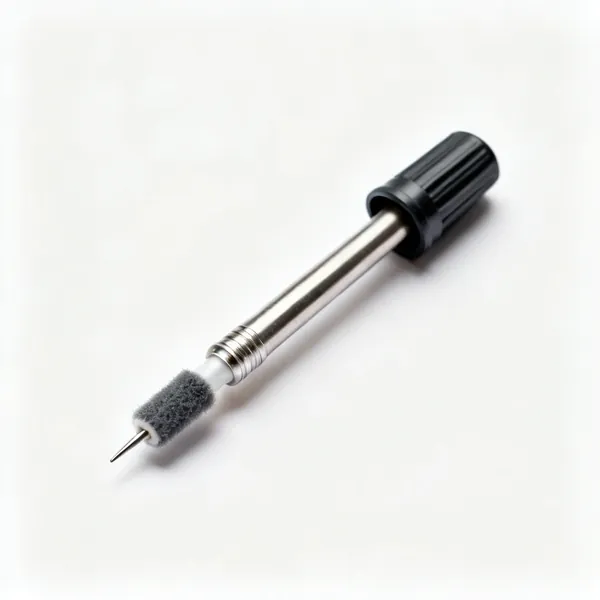
  • A soldering flux pen with a felt applicator tip and a capEssential

    Flux pen

    Applies liquid flux exactly where it is needed. For any joint that refuses to flow, this rather than a hotter iron is the correct next step.

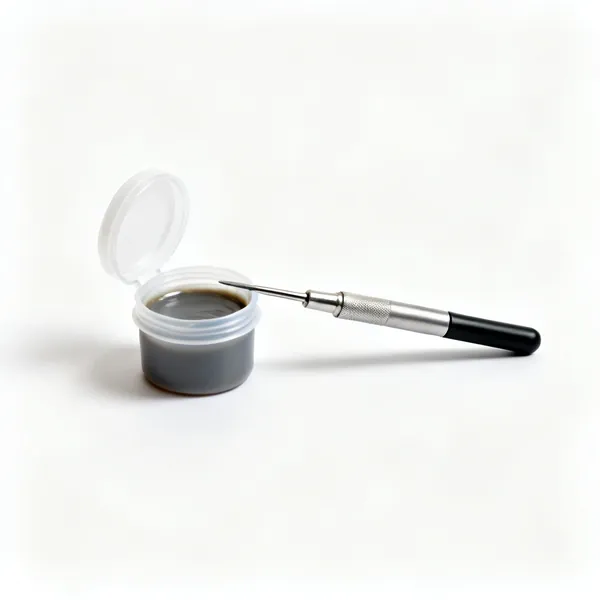
  • A small tub of soldering flux paste with the lid off

    Flux paste

    A tub of tacky flux that stays where it is put, which matters on a vertical joint or a surface mount pad. Stronger than cored flux and needs cleaning off.

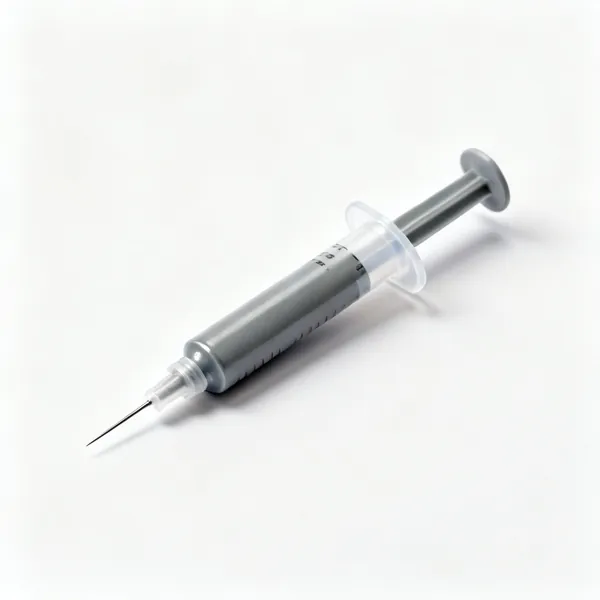
  • A syringe of grey solder paste with a fine dispensing needle

    Solder paste

    Powdered solder suspended in flux, applied to pads before a surface mount part goes on and then reflowed with hot air. Refrigerated, since it has a shelf life.

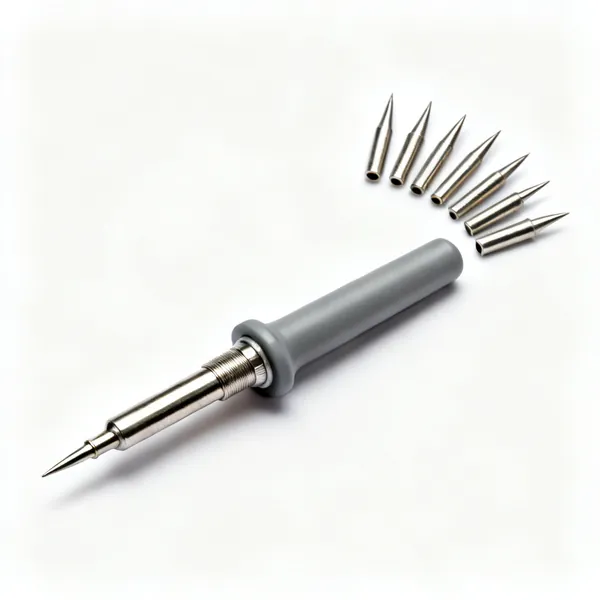
  • Chisel tip: A set of soldering iron chisel and bevel tips of different widthsEssential

    Chisel tip

    A flat angled face with real contact area, so it heats a joint quickly. Better than a fine point for almost everything, which surprises most beginners.

  • Conical tip: A set of fine conical soldering iron tips of different sizes

    Conical tip

    A fine point for dense work where a chisel would bridge two pads. Poor heat transfer by nature, so it is a tip for precision rather than for general use.

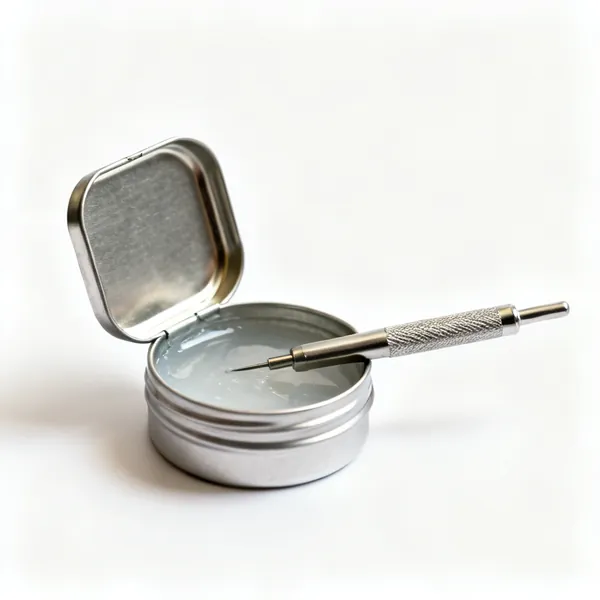
  • A small tin of soldering tip tinner cleaner paste with the lid open

    Tip tinner

    A paste of solder and aggressive flux that recovers an oxidised tip. Cheaper than a new tip and it will not save one that has been filed.

Desoldering and cleaning up 7

Taking a joint apart properly is a separate skill from making one, and it needs its own kit.

  • A small spool of copper solder wick desoldering braid partly unwoundEssential

    Solder wick

    Flux coated copper braid. Pressed on and heated through, capillary action lifts the solder into it. Adding fresh solder first makes it work far better.
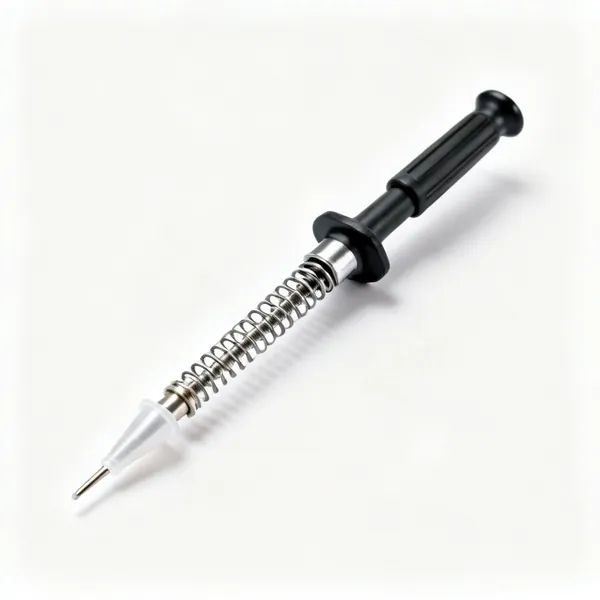
  • A spring loaded desoldering pump solder sucker with a plunger and a plastic tipEssential

    Desoldering pump

    A spring loaded plunger that snatches molten solder out of a hole. Best on through hole joints with a decent amount of solder in them.

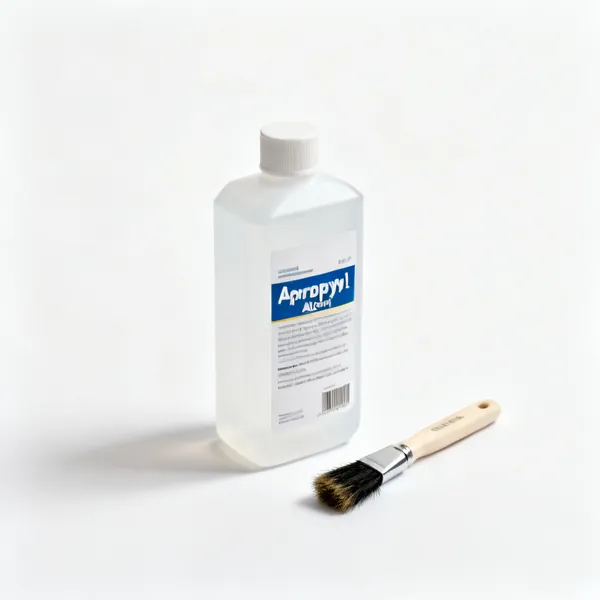
  • A bottle of isopropyl alcohol beside a small stiff brushEssential

    Isopropyl alcohol

    Dissolves rosin flux residue, which is mildly conductive and holds moisture against the board. A bottle and a brush, and boards come out looking finished.

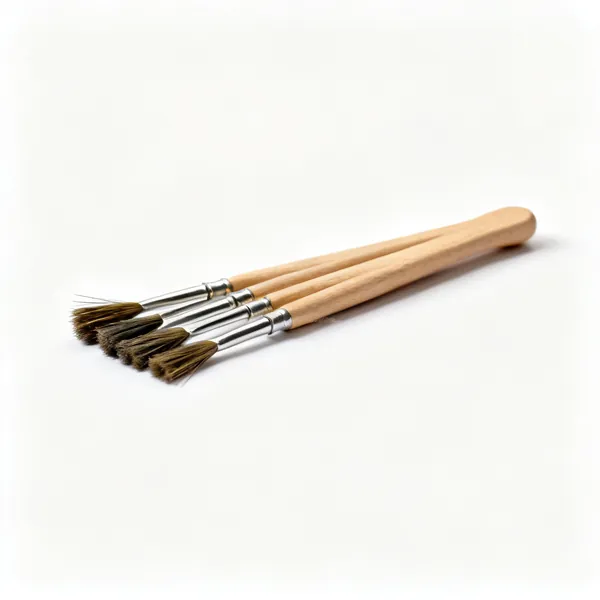
  • Several small stiff bristled acid flux brushes with wooden handles

    Flux brush

    Stiff acid brushes for scrubbing residue off with alcohol. Disposable, because flux residue ruins them and they cost almost nothing.

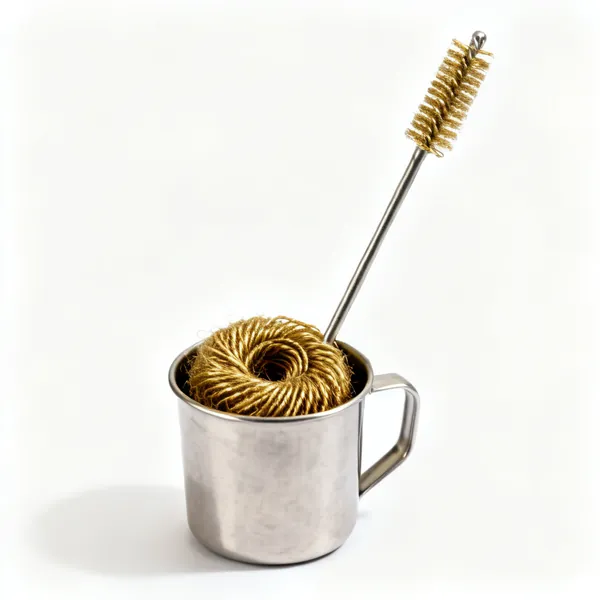
  • A metal cup filled with coiled brass wool tip cleanerEssential

    Brass wool

    Cleans a tip without cooling it, unlike a wet sponge which thermally shocks it every wipe. It also does not fill the tip's plating with water.

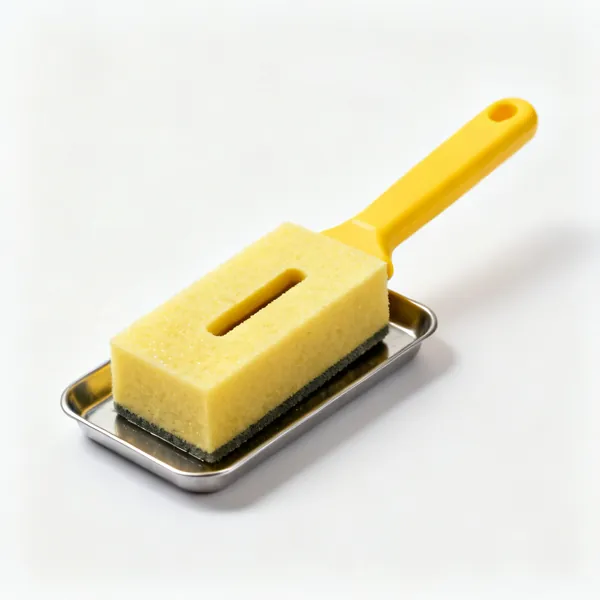
  • Cleaning sponge: A yellow soldering sponge with a slot, damp on a metal tray

    Cleaning sponge

    The traditional wet sponge, damp not soaked. It works and each wipe drops the tip temperature sharply, which shortens tip life.

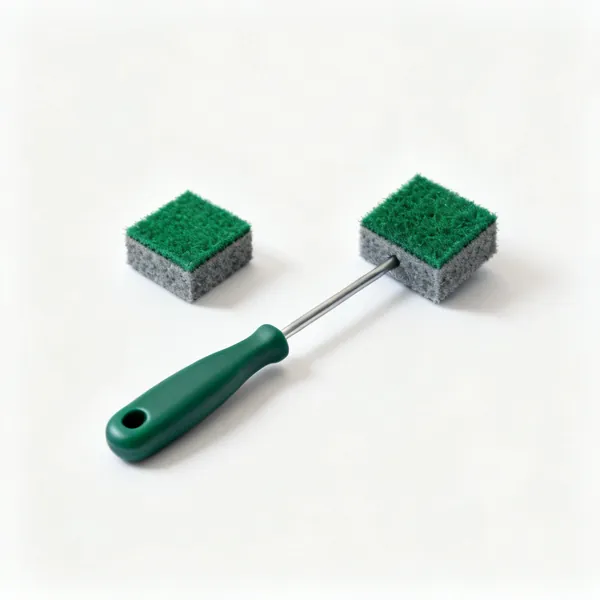
  • Abrasive pads: Two small green and grey abrasive cleaning pads

    Abrasive pads

    Fine abrasive for cleaning oxidised copper and old component legs before soldering. Mechanical cleaning where flux alone will not cope.

Holding, seeing and extracting 10

Both hands are on the iron and the solder, so something else has to hold the work.

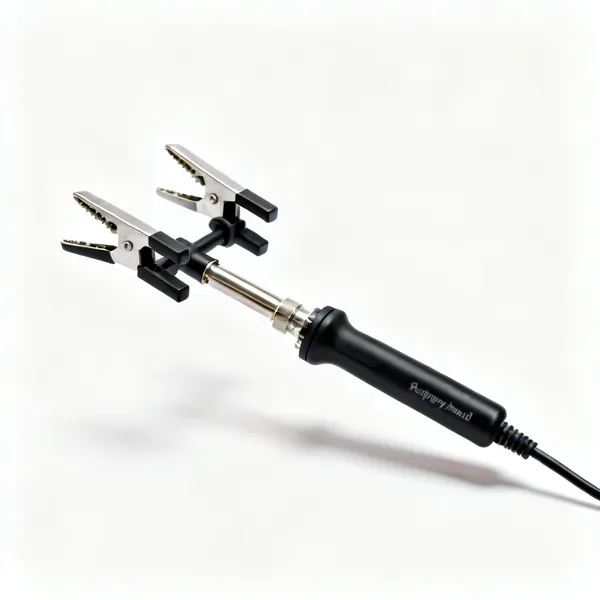
  • A helping hands soldering aid with two crocodile clips on adjustable armsEssential

    Helping hands

    Two crocodile clips on ball joints holding a wire and a component while both your hands work. The cheapest tool here and the one that makes soldering possible.

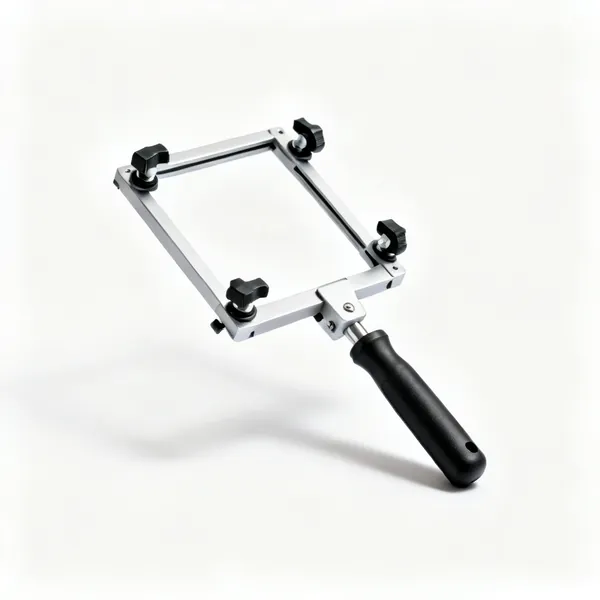
  • PCB holder

    PCB holder

    A frame that grips a board by its edges and rotates it, so both faces are reachable without touching components. What replaces propping it on a book.

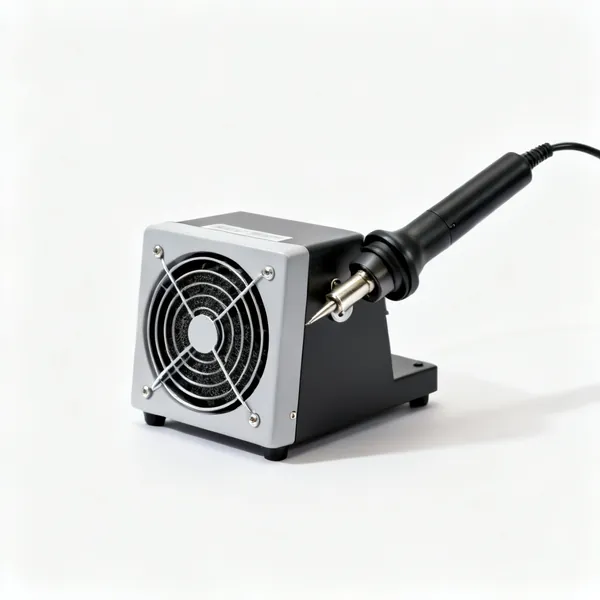
  • A small benchtop soldering fume extractor fan with a carbon filterEssential

    Fume extractor

    A fan and carbon filter pulling flux fume away from your face. Rosin fume sensitises the airways over time, which is the reason this is marked essential.

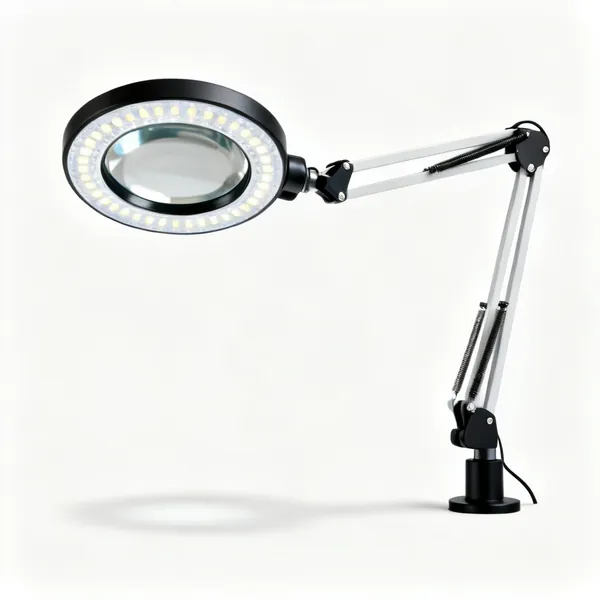
  • Magnifier lamp: A magnifying lamp with a large lens, an LED ring and an adjustable armEssential

    Magnifier lamp

    A lens and a ring light on an arm. A joint that looks fine at arm's length shows its dull blob shape immediately under magnification.

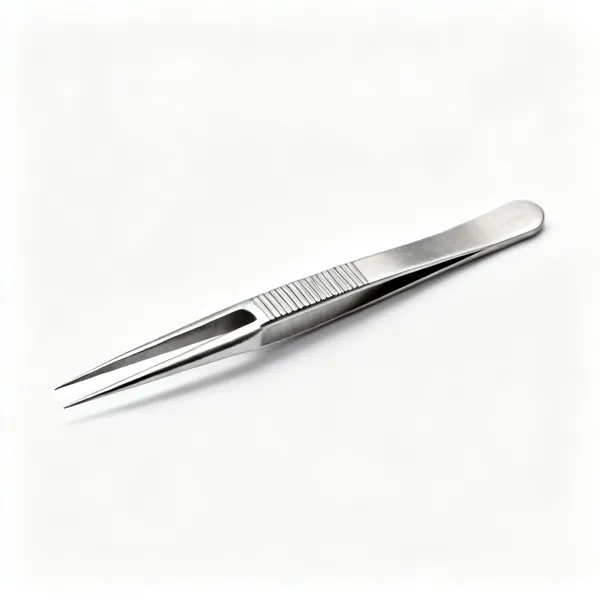
  • TweezersEssential

    Tweezers

    Fine stainless or ceramic tips for placing small parts and holding a wire in position while it cools. Ceramic ones can touch a hot joint.

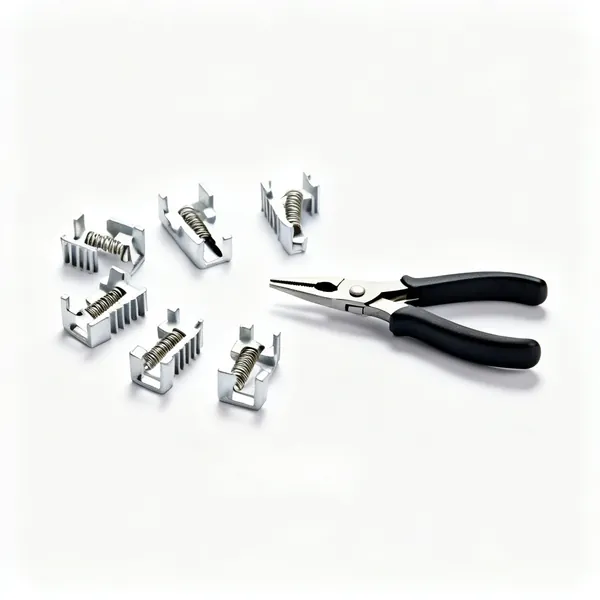
  • Several small aluminium heat sink clips with spring jaws

    Heat sink clips

    Clip onto a component leg between the joint and the body, absorbing heat that would otherwise reach a heat sensitive part like a diode.

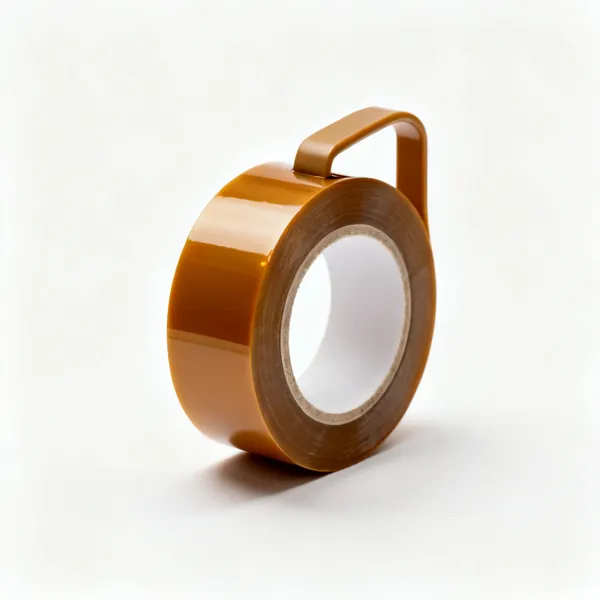
  • A roll of amber polyimide heat resistant tape

    Heat resistant tape

    Amber polyimide tape that holds a part in position and shields neighbours during hot air work. It survives temperatures that melt masking tape.

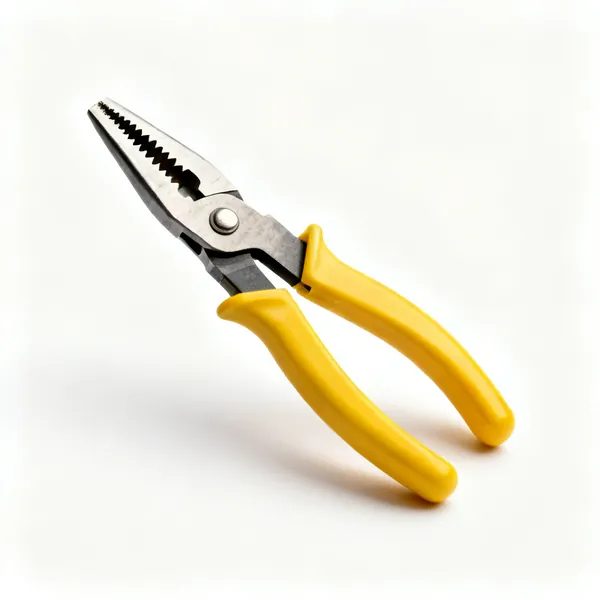
  • A pair of wire strippers with graduated notches and yellow handlesEssential

    Wire strippers

    Clean insulation removal with no nicked strands, since a nicked strand is where the wire breaks later. Also a wire cutter for trimming component legs.

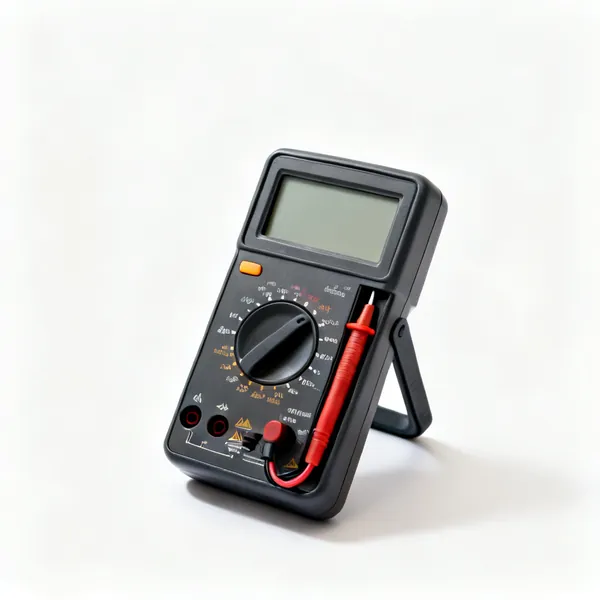
  • A digital multimeter with a display, rotary dial and two test leadsEssential

    Multimeter

    Continuity confirms the joint conducts and finds the bridge you made without noticing. A dry joint frequently passes this, so it is a check and not a proof.

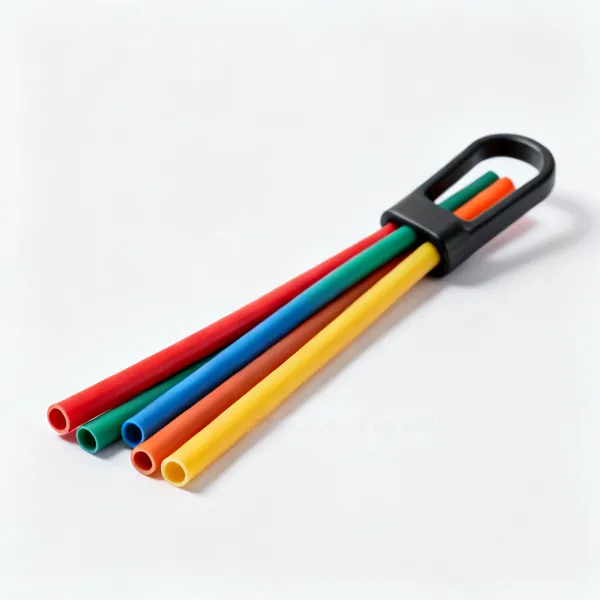
  • Heat shrink sleeving: Several lengths of coloured heat shrink tubing of different diametersEssential

    Heat shrink sleeving

    Insulates and mechanically supports a finished wire joint. A soldered wire is stiff at the joint and will fatigue there without something taking the strain.

Choosing soldering tools

The list above is what exists. This is how to decide which of it you actually need, what separates a tool worth keeping from one that ends up at the back of a drawer.

Solder wets, it does not glue

Molten solder flows onto clean hot metal and forms a thin alloy layer with the surface. That alloy is the joint. If the metal is oxidised the solder beads up and sits on top, looking like a joint and connecting nothing mechanically.

So a good joint is shiny, concave, and has clearly flowed onto both parts. A dull grey blob sitting proud is a dry joint: solder that melted but never wetted. It often conducts on the bench and fails on the first thermal cycle.

Shiny and concave
The solder has flowed and wetted. That fillet shape is the visual test.
A blob is a failure
Dull, proud, ball shaped. It melted without bonding, and it will fail later.
Heat the joint, not the solder
Touch the iron to both parts, then feed solder into the heat. The other way round makes blobs.
Clean metal only
Oxide stops wetting entirely. That is what flux is for, and why old parts need cleaning.

Temperature, and why hotter is often faster and safer

A tip too cool means the joint takes several seconds to reach temperature, so the component and the board are cooked for longer than a hot tip would take. Counterintuitively, running hotter and quicker delivers less total heat into the part.

Around 320 to 350C suits leaded solder and 350 to 380C lead free, which needs more. Above about 400C flux burns off before it can work and the tip oxidises quickly, which then stops it transferring heat at all.

Hot and quick
Two seconds at 350C puts less heat into a component than eight seconds at 280C.
320 to 350C leaded
Lead free wants 350 to 380C, because it melts higher and wets less readily.
Not above 400C
Flux burns before it works and the tip oxidises. Both make the joint worse.
Thermal mass matters
A big ground plane or a thick wire needs a bigger tip, not a higher temperature.

Flux is what makes it work

Flux chemically strips oxide the instant before the solder arrives and stops it re forming while the joint is hot. Solder wire has flux in its core, which is enough for clean new parts and not enough for anything corroded or previously soldered.

For those, extra flux from a pen or a tub does more than any amount of heat or scrubbing. No clean flux can be left; rosin flux should be cleaned off with isopropyl alcohol, because the residue is mildly conductive and traps moisture.

It strips oxide
That is the whole function. Without it solder will not wet even perfectly hot metal.
Cored solder is enough for new parts
Anything old, corroded or reworked needs extra flux applied separately.
Clean rosin residue off
Isopropyl alcohol. The residue is slightly conductive and holds moisture.
More flux, not more heat
A joint that will not flow almost never needs a hotter iron. It needs flux.

Tip choice and tip care

A tip transfers heat by contact area, so a chisel tip touching both the pad and the lead heats a joint far faster than a fine conical point touching neither properly. Beginners choose fine tips for precision and then struggle to get anything hot.

Tips die from oxidation. A tip left hot with no solder on it grows an oxide layer that will not wet, and then it cannot transfer heat. Tinning before you put the iron down, every time, is what makes a tip last a year instead of a week.

Contact area is heat
A chisel tip beats a fine point on almost everything. Precision comes from technique.
Tin before setting down
A coat of solder protects the tip from oxidising while it sits hot.
Brass wool over a wet sponge
Wiping on wet sponge thermally shocks the tip. Brass wool cleans without cooling it.
Never file a tip
The iron plating is what makes it work. Filing through it ends the tip.

Fumes, lead and ventilation

The smoke from soldering is vaporised flux, not lead. Rosin flux fume is a respiratory sensitiser: exposure builds up and can produce asthma, which is why extraction matters even on occasional work.

Lead is a contact and ingestion risk rather than an inhalation one at soldering temperatures. Wash hands before eating, do not eat at the bench, and that is genuinely most of the precaution required.

The smoke is flux
Rosin fume sensitises the airways over time. It is not lead vapour.
Extract at the joint
A small fan pulling fume away from your face is enough for hobby work.
Lead is a hand risk
Wash before eating, do not eat at the bench. That covers it.
Lead free is not risk free
It runs hotter, needs more flux and produces more fume. A different trade off.

Frequently asked questions

What tools do I need to start soldering?
A temperature controlled iron, a chisel tip, 0.7mm cored solder, brass wool for cleaning the tip, a flux pen, solder wick for removals and a stand. That set makes and unmakes joints properly and costs less than most people expect.
What temperature should a soldering iron be?
Around 320 to 350C for leaded solder and 350 to 380C for lead free. Running too cool is the commoner mistake: the joint takes longer to reach temperature, so the component is cooked for longer than a hotter, quicker touch would have done.
Why won't my solder stick?
Almost always oxide or insufficient heat. Solder wets clean hot metal and refuses anything oxidised, so it beads up and sits on top. Add flux rather than heat, make sure the tip touches both parts, and clean any old or corroded surface before starting.
What is a dry joint?
Solder that melted but never wetted the metal, so it sits on top as a dull grey blob rather than flowing into a shiny concave fillet. It often conducts on the bench and fails on the first thermal cycle, which makes it a difficult fault to find later.
Do I need a soldering station or is an iron enough?
A plain iron with no temperature control gets too hot when idle and drops too far under load, so joints are inconsistent. A basic temperature controlled station is not expensive and removes the largest single variable, which makes learning very much faster.
What does flux do when soldering?
It chemically strips oxide from the metal the instant before the solder arrives and stops it re forming while hot. Solder wire has flux in its core, which suffices for clean new parts. Anything corroded or previously soldered needs extra flux applied separately.
Is soldering smoke dangerous?
The smoke is vaporised flux, not lead. Rosin flux fume is a respiratory sensitiser, so repeated exposure can produce asthma, and a small extraction fan pulling it away from your face is worthwhile. Lead is a hand to mouth risk, so wash before eating.
How do I remove solder from a joint?
Solder wick, which is flux coated copper braid: press it onto the joint, heat through it, and capillary action lifts the solder into the braid. A desoldering pump works for through hole joints with more solder. Fresh solder and extra flux first makes both work far better.