Choosing levelling tools
The list above is what exists. This is how to decide which of it you actually need, what separates a tool worth keeping from one that ends up at the back of a drawer.
Level, plumb and square are three things
Level is horizontal, plumb is vertical, and square is at ninety degrees to a reference. A wall can be perfectly plumb and still not square to the floor, and a shelf can be level and not parallel to the ceiling it sits under.
Most jobs need two of the three at once, which is why the vials in a spirit level are set at ninety degrees to each other. It also means checking one and assuming the other is how things end up looking wrong while measuring right.
- Level
- Horizontal, referenced to gravity. The bubble vial along the length of the level.
- Plumb
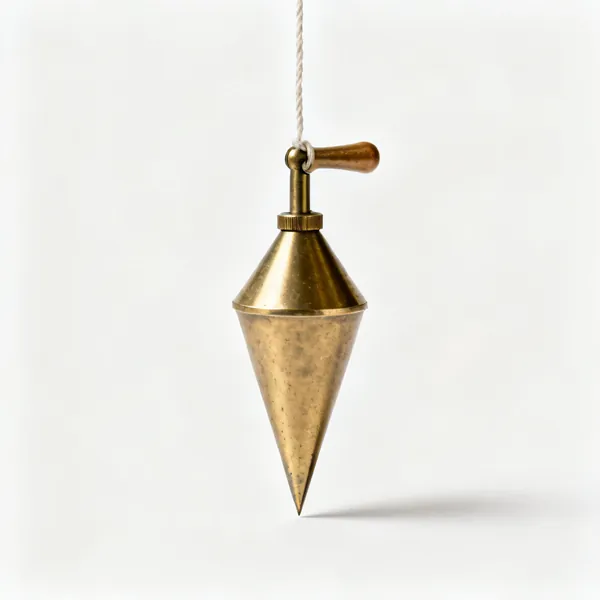
- Vertical, also gravity. The vial across the end, or a plumb bob on a string.
- Square
- Ninety degrees to something else, and nothing to do with gravity at all.
- Check both
- A plumb wall on a sloping floor is still going to look wrong. Reference the thing that matters.
A level is only accurate over its own length
A spirit level tells you about the two points its ends touch. Over 600mm that is a useful answer for a shelf. Over a 4 metre floor it is four separate answers that each looked fine and add up to a slope, because each reading can be within tolerance and lean the same way.
The fix is either a longer level or a tool that projects a reference across the whole distance: a laser line, or a water level for the ends of a room that cannot see each other. That is the real division in this list.
- Under a metre
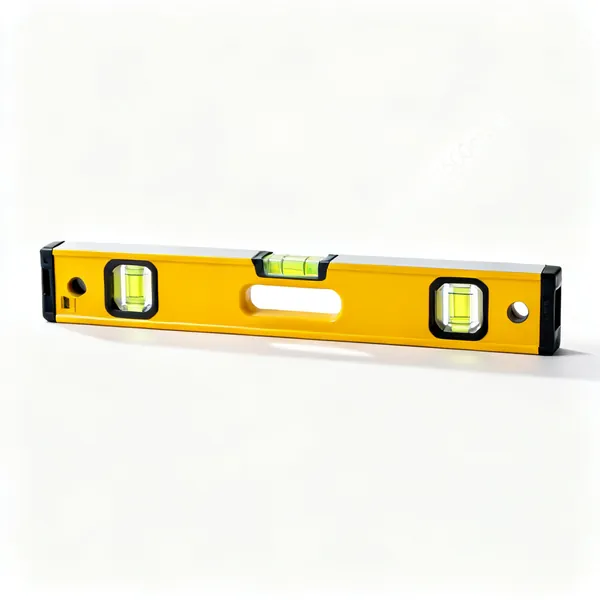
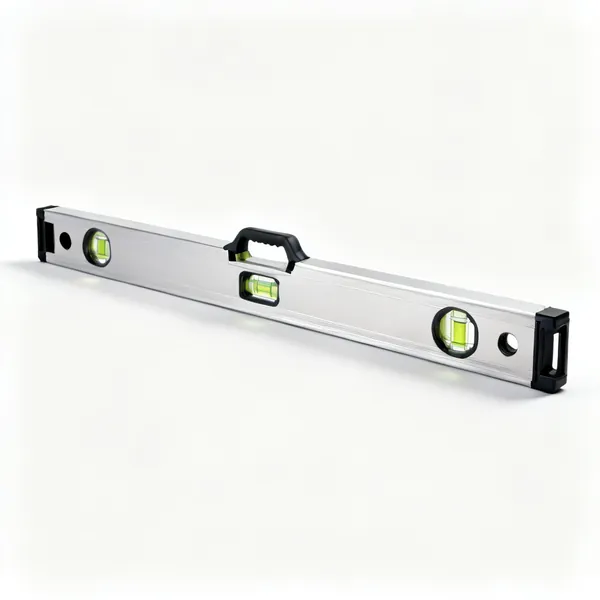
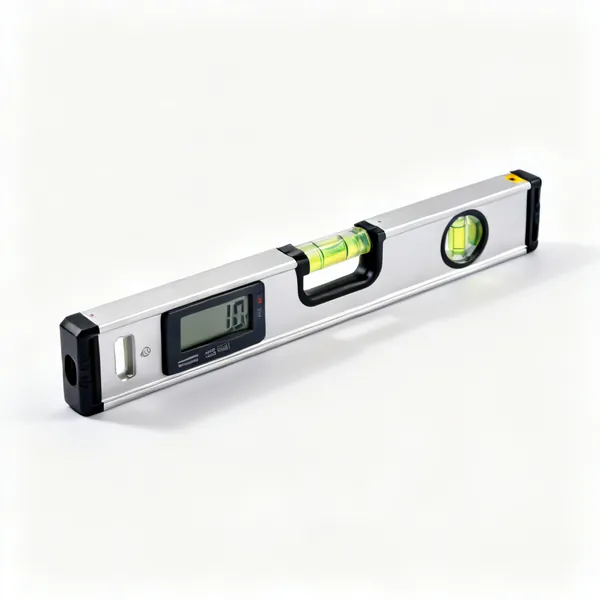
- A spirit level, and the longest one that fits the job. Length is accuracy here.
- A room
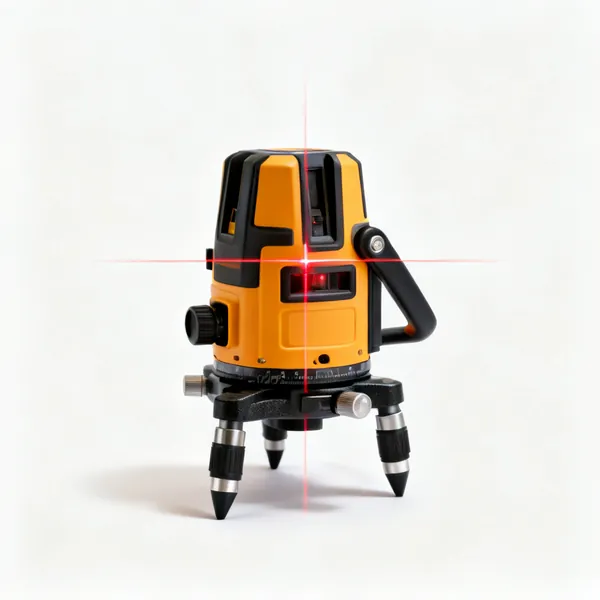
- A laser level. One reference plane everywhere at once rather than a chain of readings.
- Round a corner
- A water level, which does not care about line of sight and costs almost nothing.
- Errors accumulate
- Six readings each just within tolerance and all leaning the same way is a visible slope.
Check the level before you trust it
A dropped level can read consistently wrong, which is worse than reading nothing. The check takes ten seconds: put it on a surface, note the bubble, then turn it end for end in the same place. The bubble should sit identically. If it moves, the level is off by half that difference.
Do the same for the plumb vial against a doorway. Most cheap levels fail this out of the box, and most levels that have been in a van for a year fail it too.
- Turn it end for end
- Same spot, reversed. The bubble should read the same. Half the difference is the error.
- Check plumb too
- Rotate it front to back against a vertical. Same rule.
- Do it after a drop
- The vial mounting moves. A consistently wrong level is worse than no level.
- Lasers need it as well
- Spin the head 180 degrees and mark twice. Two marks that differ is a calibration error.
Choosing a laser level
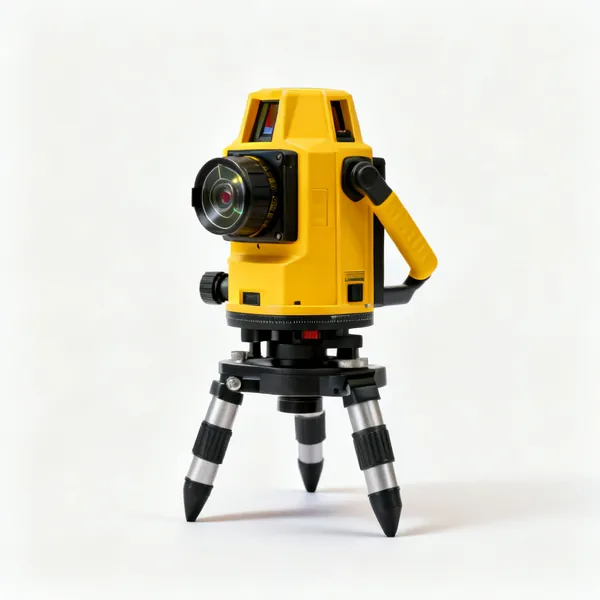
A cross line laser projects one horizontal and one vertical line onto a surface, which is what tiling, kitchen units and dot and dab need. A rotary laser sweeps a full 360 degree plane and is read with a detector rather than by eye, which is what floors and groundwork need.
Self levelling means a pendulum inside brings it level over a few degrees of tilt and locks out if it cannot. Manual levelling means you set it with a vial, and forgetting to is a whole day's work out of true.
- Cross line
- Lines on a wall for tiles, units and shelves. Read by eye, so indoors mostly.
- Rotary
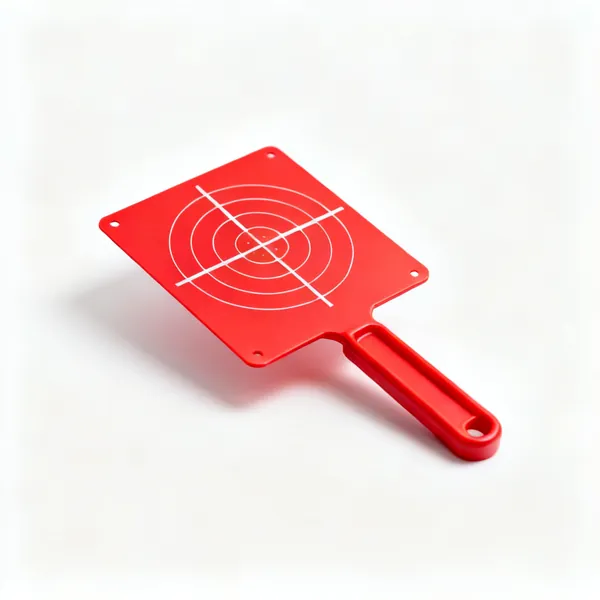
- A full plane, read with a detector, and works in daylight over a site.
- Self levelling
- Locks out rather than lying to you when it is beyond its range. Worth the difference.
- Green over red
- Green lines read as several times brighter to the eye, which matters in a lit room.
Levelling a floor is a different job
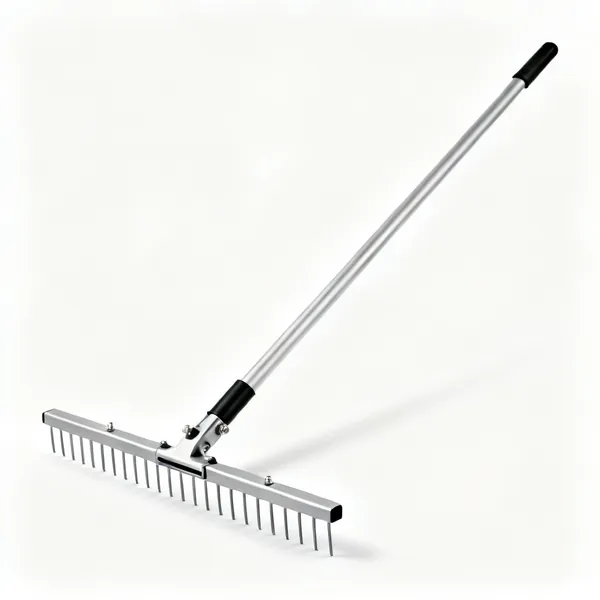
Finding out a floor is not level is one tool. Making it level is another set entirely, and the two get searched for together. A long straightedge finds the high spots, a laser or water level finds the overall fall, and self levelling compound with a gauge rake and a trowel fixes it.
The order matters: measure the whole floor before mixing anything, because compound depth is decided by the lowest point and there is no adding to it once it has gone off.
- Straightedge for humps
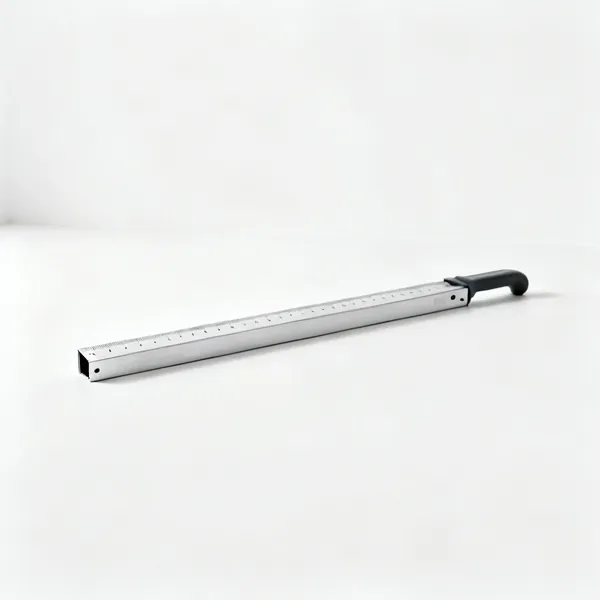
- A long alloy rule laid across the floor shows local high spots a level averages out.
- Laser for the fall
- One plane across the room turns guesswork into a depth at every point.
- Datum marks first
- Mark the finished level on every wall before mixing. You cannot add depth later.
- Compound is not a fix for all
- Above about 25mm it is a screed job, not a bag of compound.
Frequently asked questions
- What tools do I need for levelling?
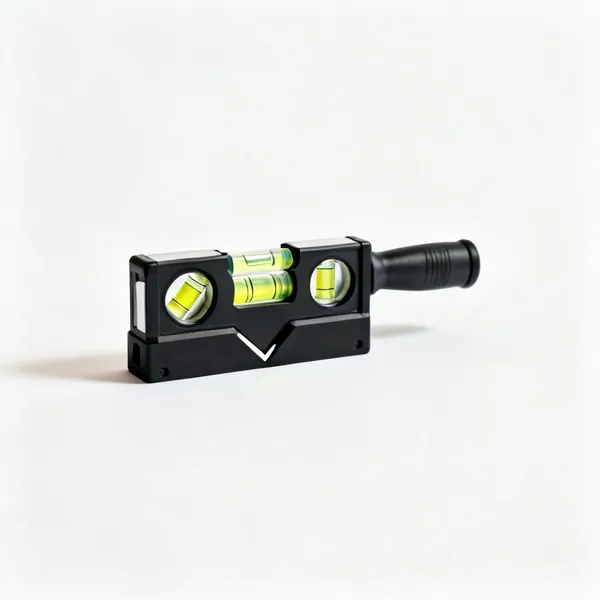
- A 600mm spirit level for most work, a 1.8 metre one for walls and door frames, and a torpedo level for tight spots. Beyond a couple of metres you want a laser level or a water level, because a short level cannot tell you anything about a long distance.
- How do I check if my spirit level is accurate?
- Put it on a surface, note where the bubble sits, then turn it end for end in exactly the same spot. The bubble should read identically. If it moves, the level is off by half that difference. Do the same rotated front to back for the plumb vial.
- What is the difference between level and plumb?
- Level is horizontal and plumb is vertical, both referenced to gravity. Square is different again: ninety degrees to another surface, with nothing to do with gravity. A wall can be perfectly plumb and still not square to a sloping floor.
- Is a laser level better than a spirit level?
- Over distance, yes, because it projects one reference across the whole room instead of giving you a chain of short readings that can all lean the same way. For a single shelf or a short run, a spirit level is faster, cheaper and entirely sufficient.
- What is a self levelling laser?
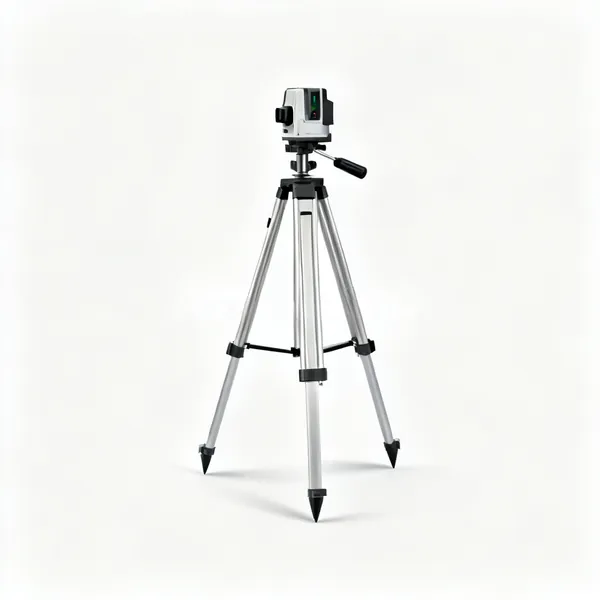
- One with an internal pendulum that brings the beam level automatically within a few degrees of tilt, and locks out or flashes if the tripod is beyond that range. The locking out is the valuable part: a manual laser set up wrong just quietly reads wrong all day.
- Should I get a green or a red laser level?
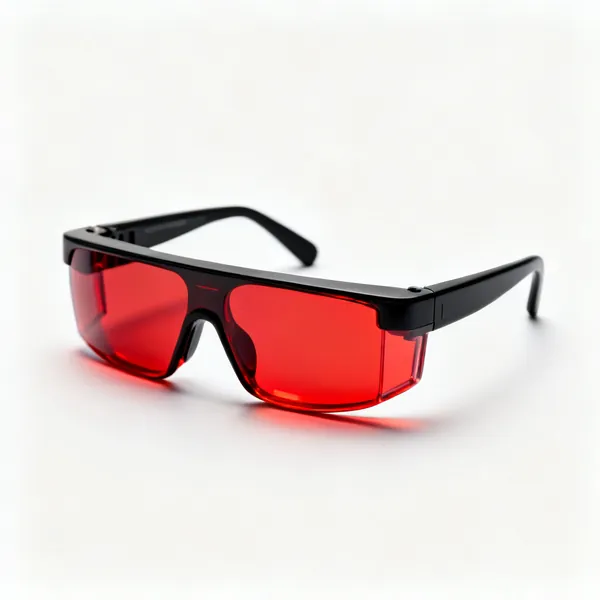
- Green if the budget allows. The eye is far more sensitive to green at the same power, so the line reads much brighter in a lit room and at distance. Red is cheaper and the battery lasts longer, and it is genuinely hard to see on a bright day.
- How do you level a floor over a long distance?
- Project one reference across the whole floor rather than stepping a short level along it. A rotary laser with a detector, or a water level if walls block the line of sight. Then mark a datum on every wall before you mix any compound, since depth cannot be added later.
- Does a water level still have a use?
- Yes, and it costs almost nothing. Water finds its own level in both ends of a clear tube regardless of what is between them, so it works round corners, through doorways and between rooms where no laser has line of sight. Slow to set up and impossible to argue with.