Disclosure

Squares

A square is a reference, and a reference that is wrong is worse than none at all, because you will trust it. Most cheap squares are not square out of the box and the test takes five seconds. All 28 here are grouped by what they are for: checking, marking, laying out large work, and setting angles other than ninety degrees.
9 are marked essential: one you trust for checking, one for marking, one for a roof.

Part of the full measuring tools list, 55 tools in 9 groups.

Squares for checking 6

Kept accurate and used as a reference. One trustworthy square is worth four approximate ones.

  • A small precision engineer's square with a thick steel stock and a ground bladeEssential

    Engineer's square

    A machined steel blade in a thick stock, ground square to a fine tolerance. Kept on a shelf for checking rather than carried in a bag where it will be dropped.

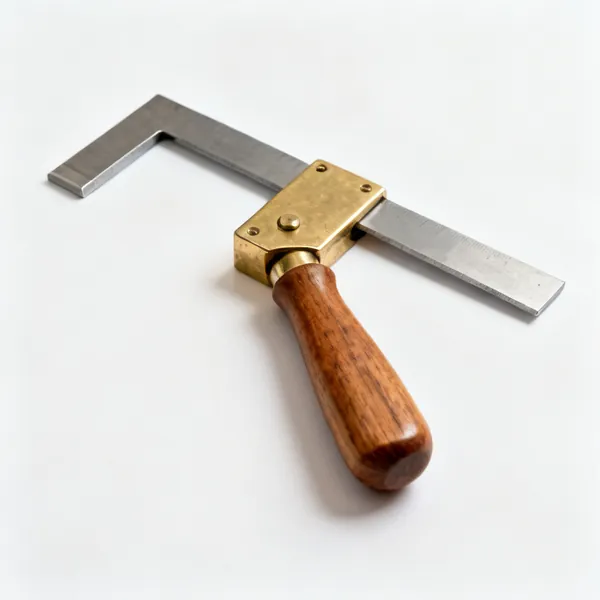
  • A wooden handled try square with a brass faced stock and a fixed steel bladeEssential

    Try square

    A steel blade fixed at ninety degrees in a wooden stock with a brass face. Rigid, quick to register, and the traditional woodworking marking square.

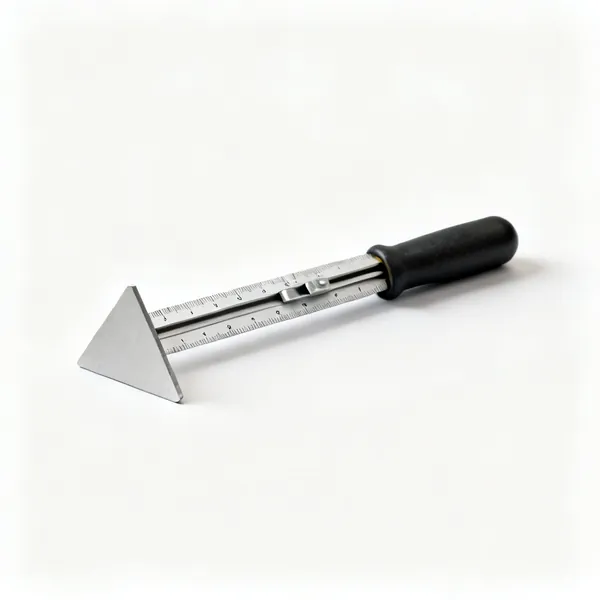
  • A small double square with a sliding steel rule and a single square head

    Double square

    A small combination square with only a ninety degree head, so the blade slides but there is no 45 degree face to be out of true. Precise and compact.

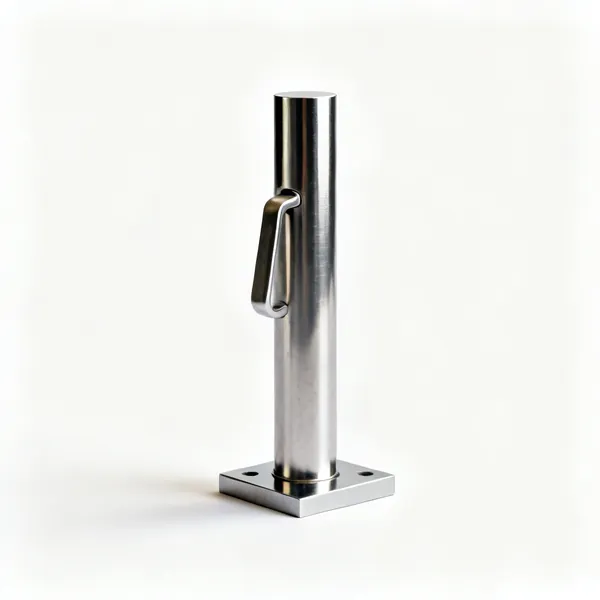
  • A polished steel cylinder square standing upright on its base

    Cylinder square

    A ground steel cylinder standing on a lapped end, square in every direction at once. A metrology reference rather than a working tool.

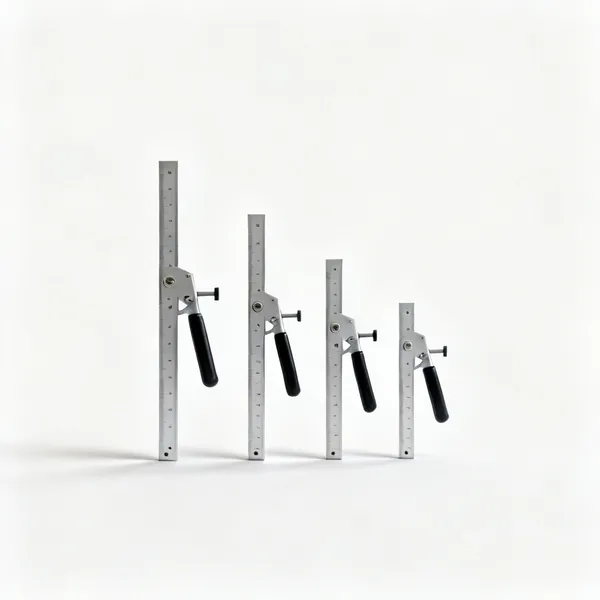
  • Square set: A set of four engineer's squares of graduated sizes standing side by side

    Square set

    Several engineer's squares in graduated sizes, since a large one cannot check a small part and a small one cannot span a large one.

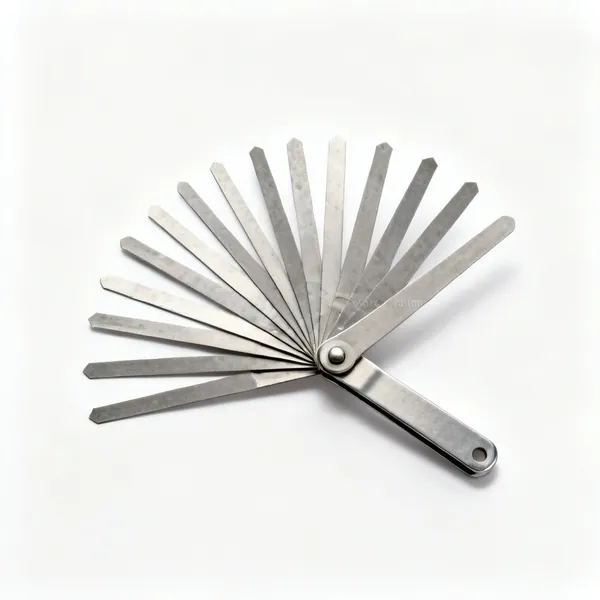
  • Feeler gauges: A fanned set of steel feeler gauge blades

    Feeler gauges

    Thin blades slipped into the gap behind a square, turning is it square into a number. That is how you know whether an error matters for this job.

Squares for marking 7

Used constantly, dropped occasionally, and worth retesting because of it.

  • A combination square with a steel rule and a cast metal sliding stockEssential

    Combination square

    A rule sliding in a stock, marking ninety and 45 degrees, setting a depth and scribing parallel to an edge. Four tools and the most used of them all.

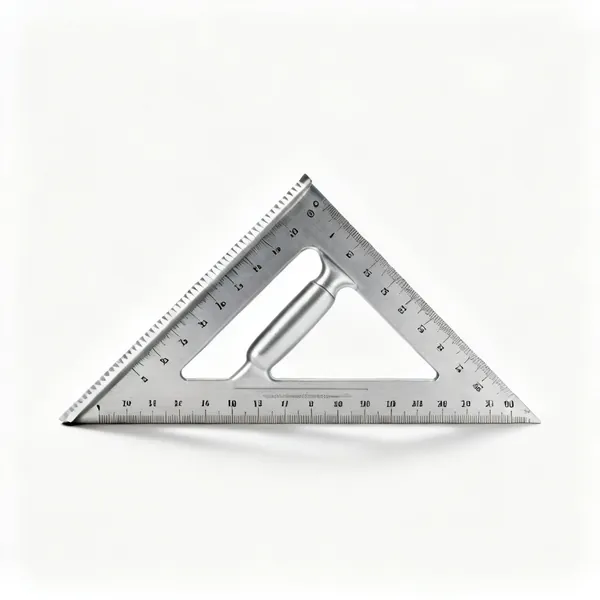
  • An aluminium triangular speed square with a lipped fence and degree markingsEssential

    Speed square

    A triangle with a lipped fence that hooks a board edge, marking a square line one handed and guiding a circular saw. Also a rafter layout tool.

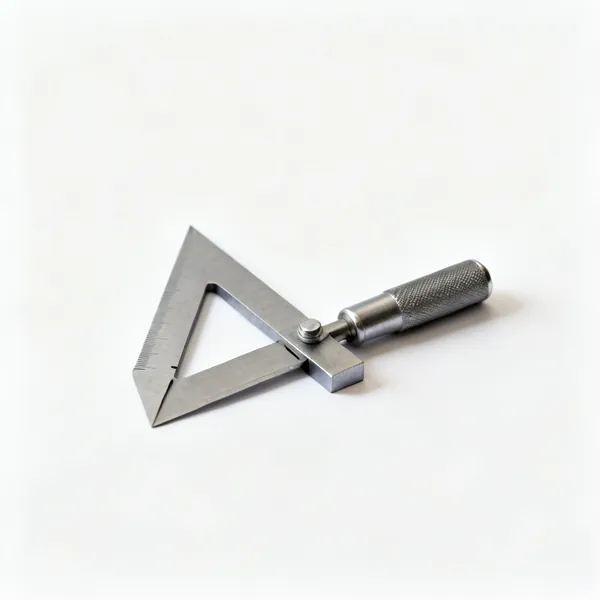
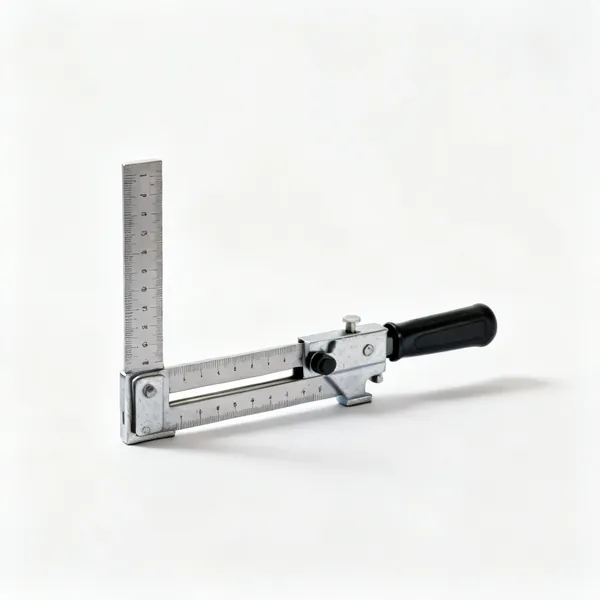
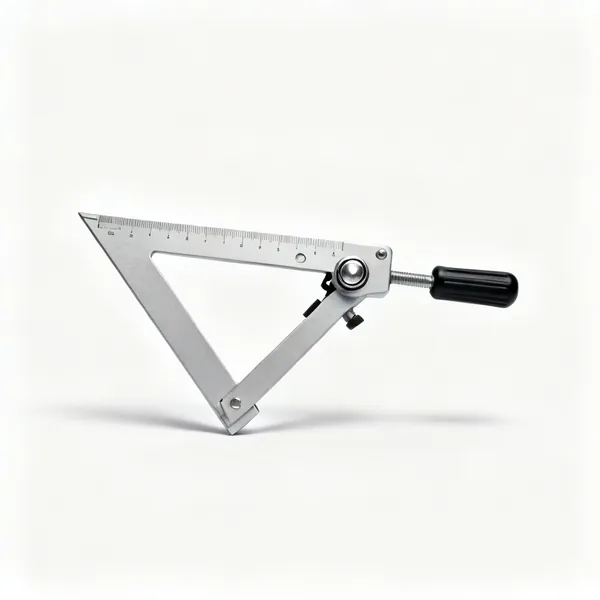
  • Adjustable square: An adjustable triangular square with a pivoting arm and a locking knob

    Adjustable square

    A speed square with a pivoting arm that locks at any angle, so a repeated bevel can be marked as easily as a square line.

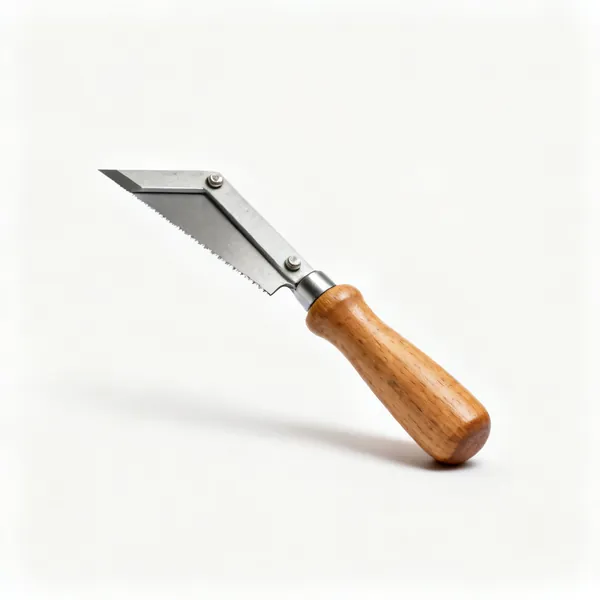
  • A wooden handled mitre square with a blade fixed at 45 degrees

    Mitre square

    A fixed 45 degree stock, so a mitre line is marked without setting anything. Faster and more repeatable than a combination square for a run of frames.

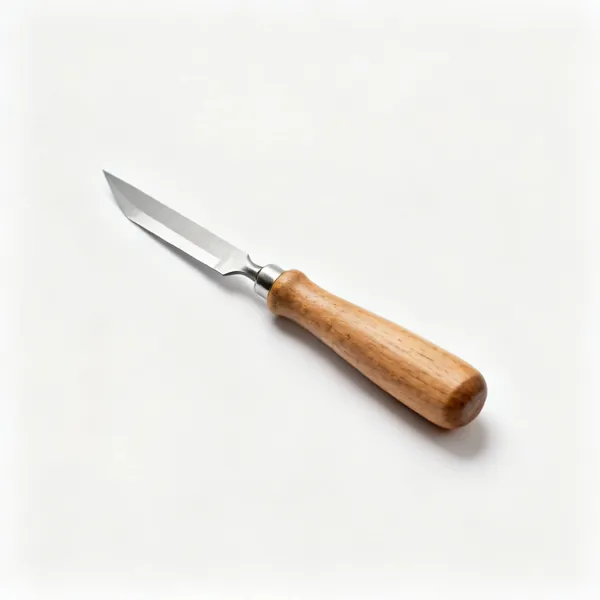
  • A marking knife with a single bevel blade and a wooden handleEssential

    Marking knife

    The square gives the direction and the knife gives the line. A cut line severs the surface fibres so a chisel or saw drops into it rather than wandering.

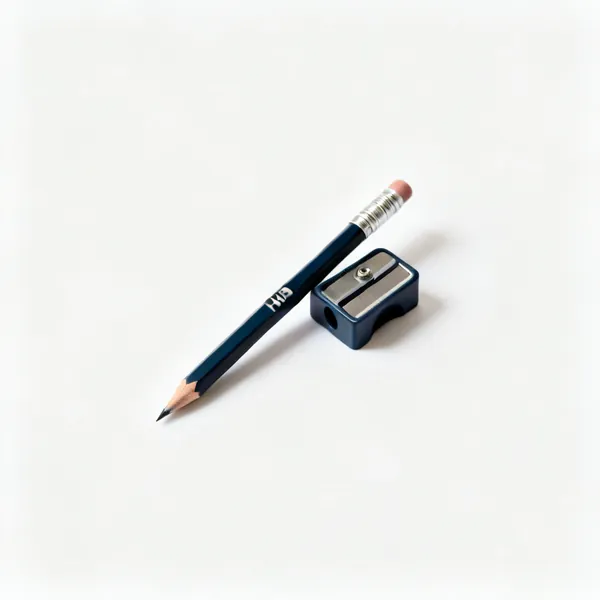
  • Fine pencil: A sharpened HB pencil laid diagonally beside a small pencil sharpenerEssential

    Fine pencil

    A sharp HB, because a thick line is a millimetre of ambiguity at each edge and a square is only as accurate as what marks against it.

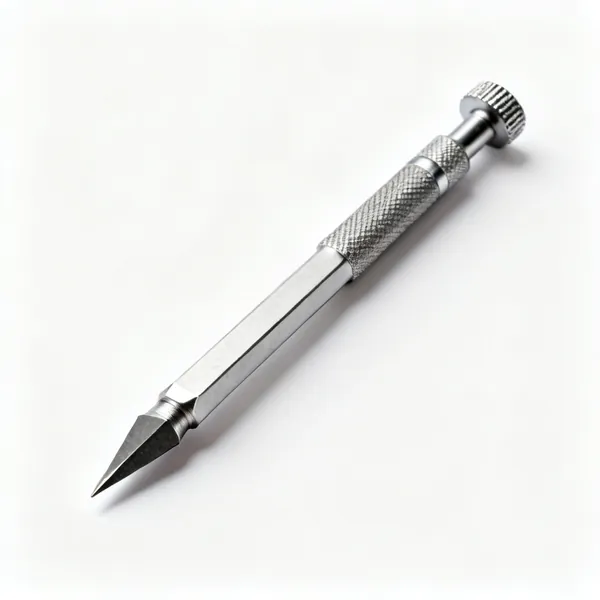
  • A steel engineer's scriber with a sharp carbide point and a knurled handle

    Scriber

    A hardened point that marks metal, where a pencil line rubs off and cannot be seen against bright steel anyway. Used with an engineer's square.

Large layout squares 7

For sheet material, stair strings and roofs, where a small square cannot span the work.

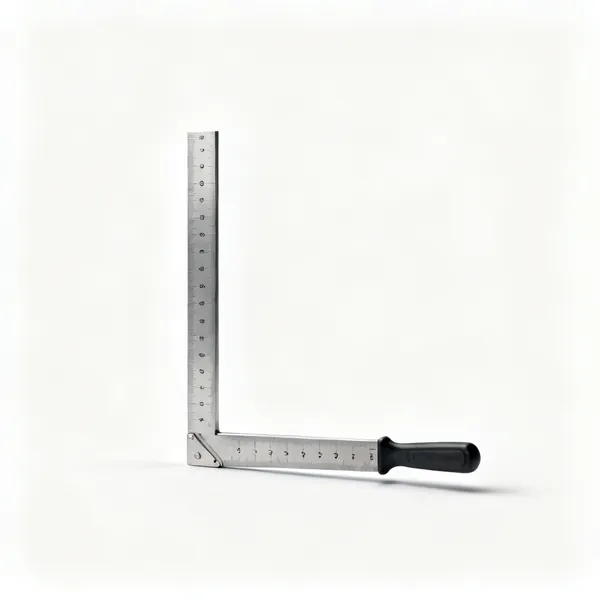
  • A large flat steel framing square in an L shape with printed scalesEssential

    Framing square

    A large flat steel L, typically 600 by 400mm, for laying out sheet material, stair strings and rafters. Thin, so it is easily bent out of true.

  • A large steel rafter square with printed rafter tables along the blade

    Rafter square

    A framing square with rafter and brace tables printed on it, so a roof cut is read off rather than calculated. Older tables assume imperial pitches.

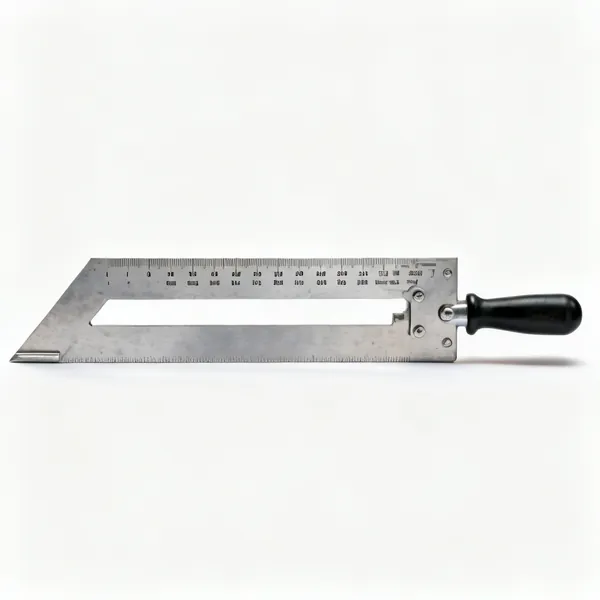
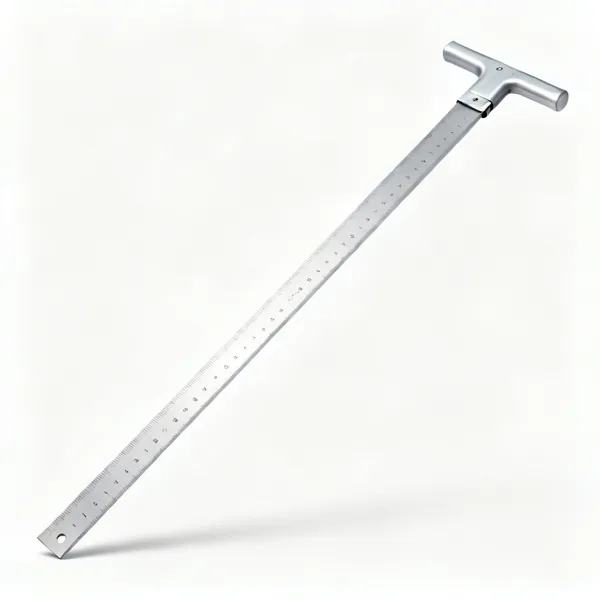
  • A long aluminium drywall T square with a perpendicular head

    Drywall T square

    A 1.2 metre blade with a T head that hooks the board edge, so a full width cut across plasterboard is one movement rather than a measured line.

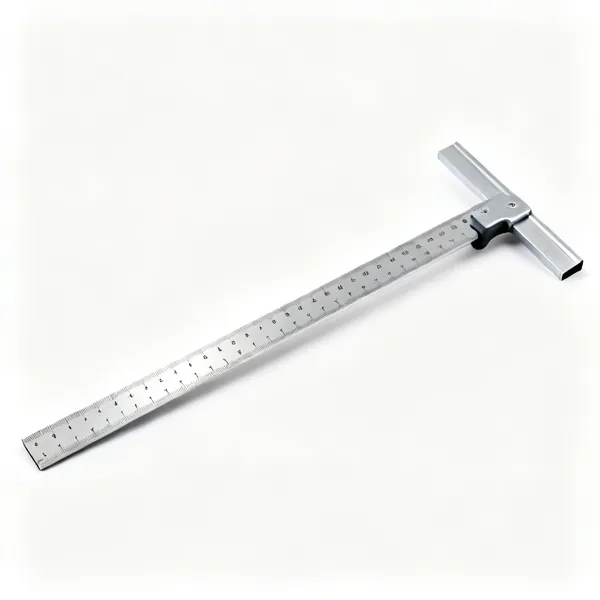
  • A long lightweight aluminium T square with a slim blade

    Aluminium T square

    The same idea in a lighter section for tile backer and thin sheet. Long enough to be a straight edge for a knife as well as a marking square.

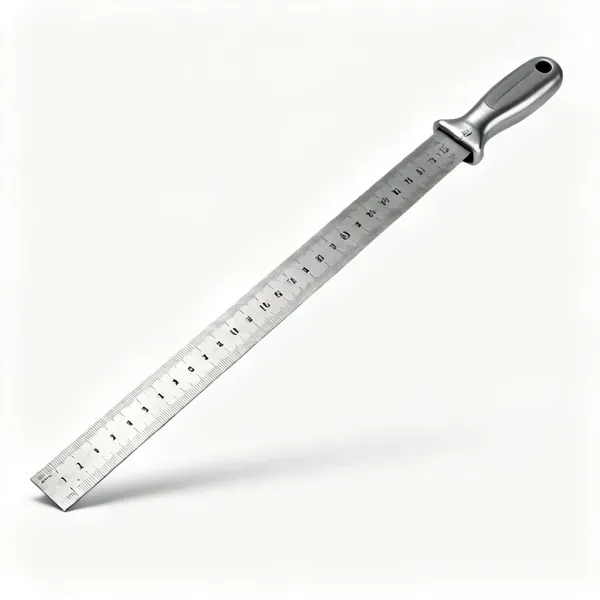
  • A long steel rule with engraved metric markings

    Long steel rule

    A metre rule used with the diagonal method rather than as a square. On large work a rule and two diagonals beat any square for accuracy.

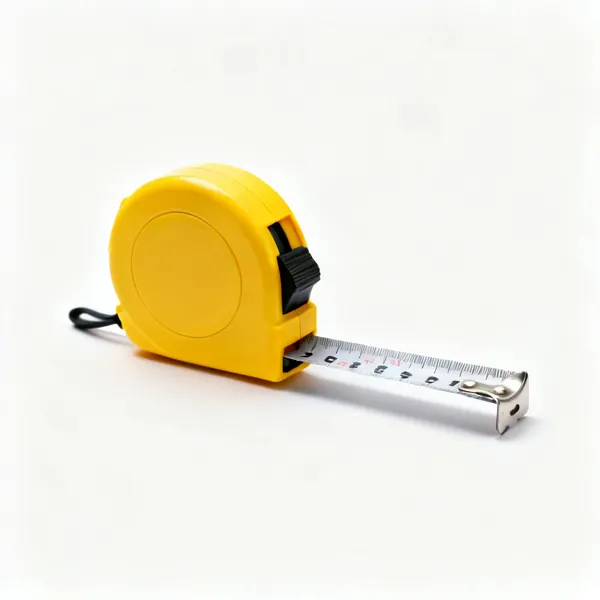
  • A retractable steel tape measure with a yellow case, blade partly extendedEssential

    Tape measure

    The actual squaring tool on anything large, since equal diagonals proves a rectangle true at any size. Measure to the same corners both times.

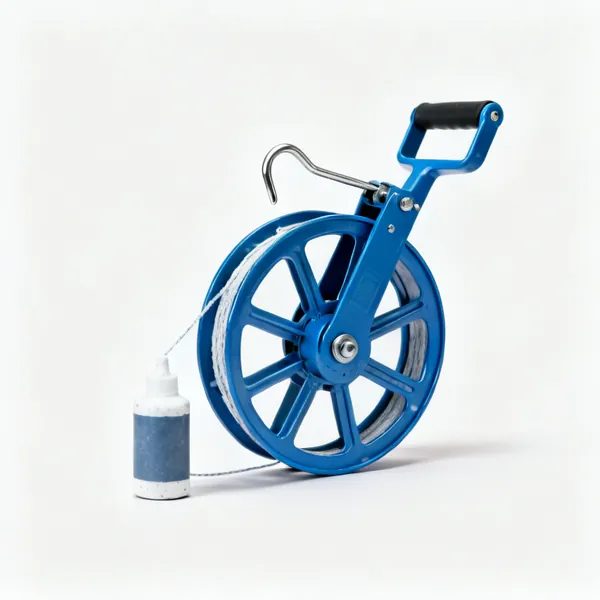
  • A blue metal chalk line reel with a hook and a chalk refill bottle

    Chalk line

    Snaps a straight line between two marked points across a floor or a wall, further than any square reaches. Also produces a 3 4 5 layout on site.

Other angles and specialists 8

Squares that are not ninety degrees, and the ones that solve exactly one problem.

  • A sliding bevel gauge with a wooden stock and a pivoting locking bladeEssential

    Sliding bevel

    A blade that pivots and locks at any angle, so an existing angle can be copied without measuring it. What you use when the angle in the building is not 90.

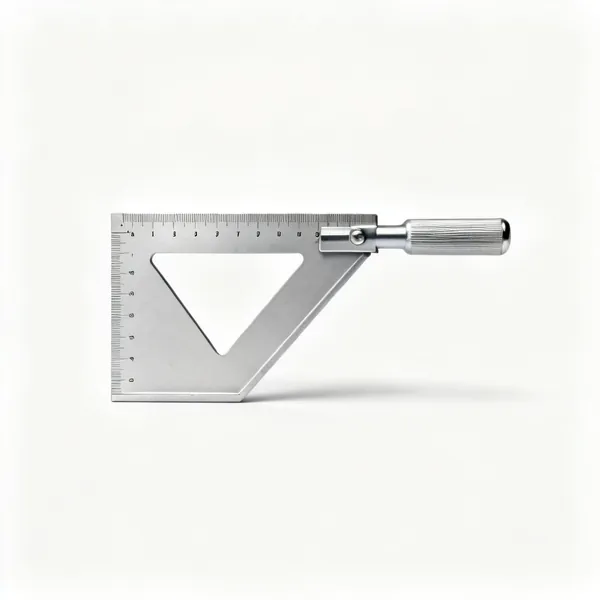
  • Centre square: A centre finding square head with a V shape and a steel rule fitted

    Centre square

    A V that straddles a round bar with a rule bisecting it, so two lines across it cross at the centre. The only quick way to find the centre of a cylinder.

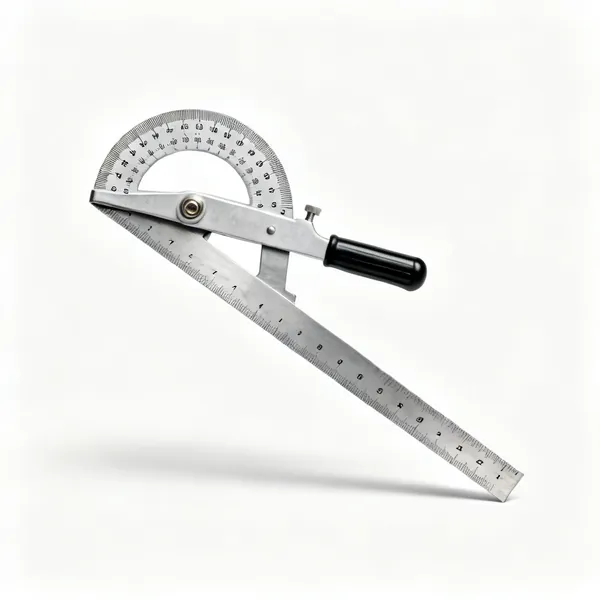
  • A combination square protractor head with a degree scale and a steel rule

    Protractor head

    Fits the same rule as a combination square and reads an angle in degrees. What turns a marking set into an angle measuring set.

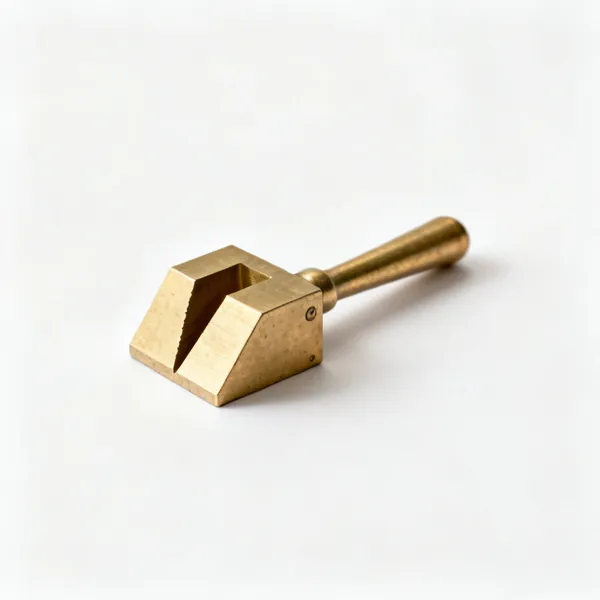
  • Dovetail marker

    Dovetail marker

    A fixed block at the dovetail slope on one face and square on the other, so both cuts of a dovetail are marked without setting a bevel.

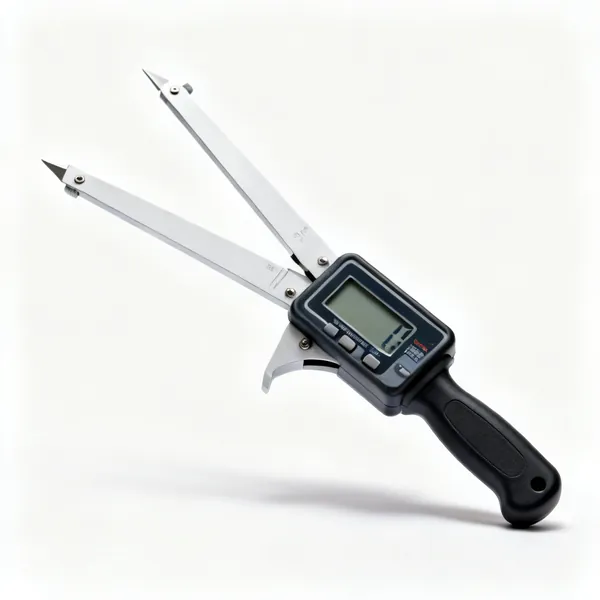
  • Digital angle finder

    Digital angle finder

    Reads an angle as a number and holds it, which matters when transferring an awkward corner to a mitre saw across the room.

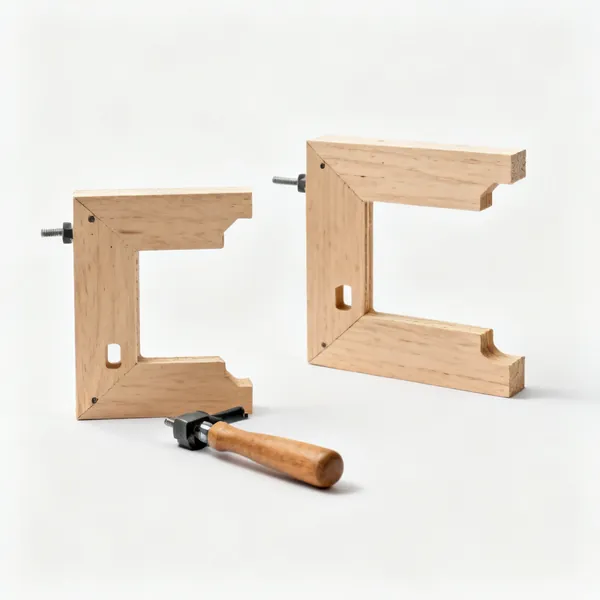
  • Two L shaped plywood clamping squares with cut out corners

    Clamping squares

    Right angled blocks clamped inside a corner, holding it square while glue sets. A marking square cannot hold anything, which is the gap these fill.

  • A small metal saddle square shaped to sit over a board corner

    Saddle square

    Sits over a corner and marks the same line down two adjacent faces at once, so a crosscut line wraps round without being registered twice.

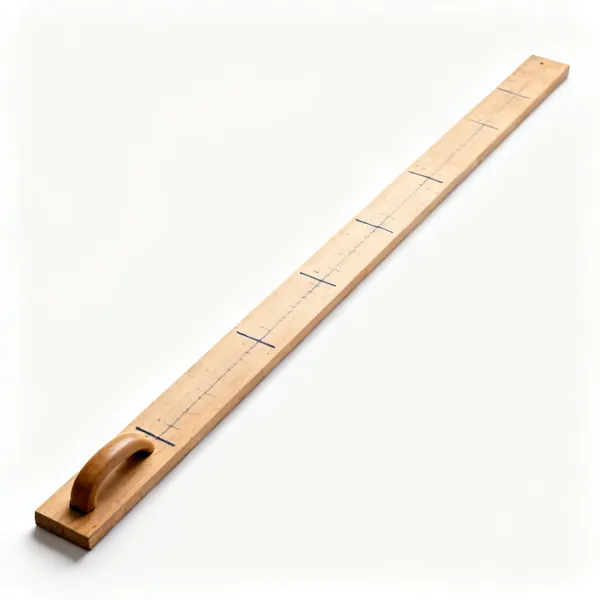
  • A long wooden batten story stick with several pencil marks along it

    Story stick

    A batten with every position marked directly on it, so nothing is measured twice and no reading is misread. Free, and more reliable than a tape.

Choosing squares tools

The list above is what exists. This is how to decide which of it you actually need, what separates a tool worth keeping from one that ends up at the back of a drawer.

Test the square before trusting it

Lay the stock against a straight board edge and draw a line along the blade. Flip the square over, register on the same point, and draw again. Two lines that coincide means the square is square. Two lines that diverge means it is out by half the angle between them.

That test costs five seconds and catches the commonest problem in this whole category. Do it on a new square before its first use, and again after it has been dropped, because the stock to blade joint is what moves.

Draw, flip, draw again
Same registration point, other face. Coinciding lines means square.
Error is half the gap
The divergence between the two lines is twice the actual error.
Test new squares
Many are out of the box. It is not a sign of abuse, it is a sign of price.
Retest after a drop
The stock to blade joint moves. A square that reads consistently wrong is the worst case.

Square is not level and not plumb

Square means ninety degrees to a reference surface, and it has nothing to do with gravity. A workpiece can be perfectly square and sitting at any angle in the world. Level and plumb are gravity references and need a spirit level or a laser.

Confusing the two produces work that measures right and looks wrong. A cabinet square to itself and standing on a sloping floor is going to read as leaning, and no square will tell you that.

Square is relative
Ninety degrees to a chosen surface. Which surface you chose is the whole question.
Level and plumb are absolute
Referenced to gravity, and a square knows nothing about it.
Reference the right face
Register the stock on a face you have already made straight, not any convenient one.
Check both
Square to the work and level in the room. They are two separate checks.

Diagonals beat a square on anything large

A 200mm square held in the corner of a metre wide carcase tells you about 200mm of it. A tiny angular error there is several millimetres across the full width, and it will not be visible in the corner.

So on anything large, measure the two diagonals instead. Equal diagonals means the rectangle is true, over any size, using only a tape. That is why a framing square is for laying out and a tape is for checking.

Equal diagonals means square
True over any size, with just a tape. The only reliable check on a large assembly.
A small square lies at scale
A tiny error in 200mm is several millimetres across a metre.
Measure to the same corners
Outside to outside both times, or the numbers mean nothing.
Push the long diagonal
Pressure across the longer one brings it back. That is how a racked frame is corrected.

What a speed square actually does

The fence hooks over a board edge, so it marks a square crosscut line one handed and guides a circular saw along it. That is the job most people buy one for and it does it very well.

The scales on it are a rafter tool. The pivot point and the degree markings set a roof pitch and mark a plumb or seat cut, which is the reason the triangle shape exists at all.

Hooks and marks
The lipped fence registers on the edge, so a square line is one handed.
Guides a saw
The thick body is a fence for a circular saw base on a crosscut.
Pivot for rafters
The corner is a pivot and the degrees around the hypotenuse set a pitch.
Also 45 degrees
The triangle gives a mitre line as easily as a square one, from the same registration.

Which one to own

A small engineer's square, machined and trustworthy, for checking. A combination square for marking, depth setting and repeated lines. A speed square for site work and guiding a saw. That covers almost everything.

The large framing square is for laying out sheet material and stair strings. The specialists after that solve one problem each and are worth buying when you meet that problem rather than in advance.

One you trust
A machined engineer's square kept for checking, not carried in a bag.
One you use
A combination square, which marks, checks depth and does 45 degrees too.
One for site
A speed square. Cheap enough to replace when it gets dropped, which it will.
Buy specialists on demand
A dovetail marker or a centre square solves one job. Buy it for that job.

Frequently asked questions

What are the different types of square?
Try and engineer's squares for checking ninety degrees, combination squares for marking and depth setting, speed squares for site work and guiding a saw, framing squares for large layout, and specialists like sliding bevels, centre squares and dovetail markers.
How do you check if a square is accurate?
Register the stock against a straight edge and draw a line along the blade. Flip the square over onto its other face at the same point and draw again. Coinciding lines means it is square. Diverging lines means it is out by half the angle between them.
What is the difference between square, level and plumb?
Square is ninety degrees to a chosen reference surface and has nothing to do with gravity. Level is horizontal and plumb is vertical, both referenced to gravity. A cabinet can be perfectly square to itself and still lean, if the floor slopes.
What is a speed square used for?
Marking a square crosscut line one handed, because the lipped fence hooks over the board edge, and guiding a circular saw along that line. The scales and pivot point on it are for setting roof pitches and marking rafter plumb and seat cuts.
What square should I buy first?
A combination square, which marks square and 45 degree lines, sets a depth, scribes parallel to an edge and doubles as a short rule. Add a small machined engineer's square kept purely for checking, and a speed square if you do any site work.
How do you check a large frame is square?
Measure both diagonals, outside corner to outside corner. Equal diagonals means the rectangle is true, at any size, using only a tape. A small square held in one corner tells you about that corner only, and a tiny error there is millimetres across a metre.
What is a combination square for?
It is four tools. The stock checks and marks ninety and 45 degrees, the sliding rule sets and transfers a depth, the blade locked at a distance scribes a line parallel to an edge, and the rule alone measures. It is the most used marking tool in most workshops.
Why is my woodwork not square even though I used a square?
Usually the reference face. A square registers off whatever surface you put the stock against, so if that edge is not straight the line is not square to anything useful. The other cause is a square that is itself out, which the flip test finds in five seconds.