Choosing measuring angles tools
The list above is what exists. This is how to decide which of it you actually need, what separates a tool worth keeping from one that ends up at the back of a drawer.
Copy the angle rather than reading it
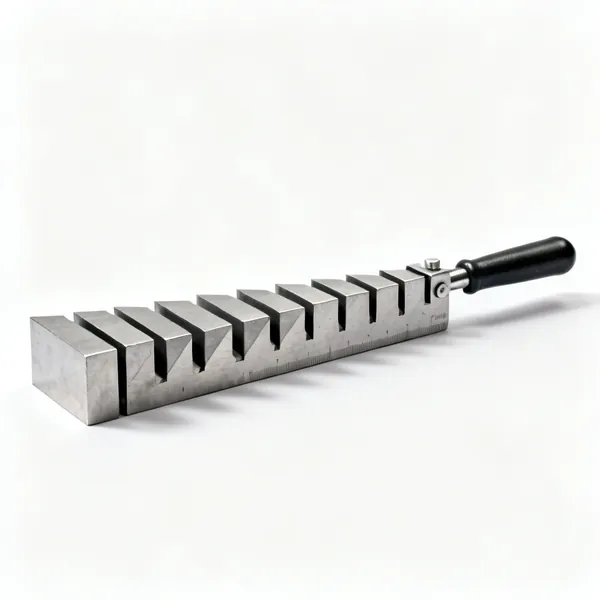
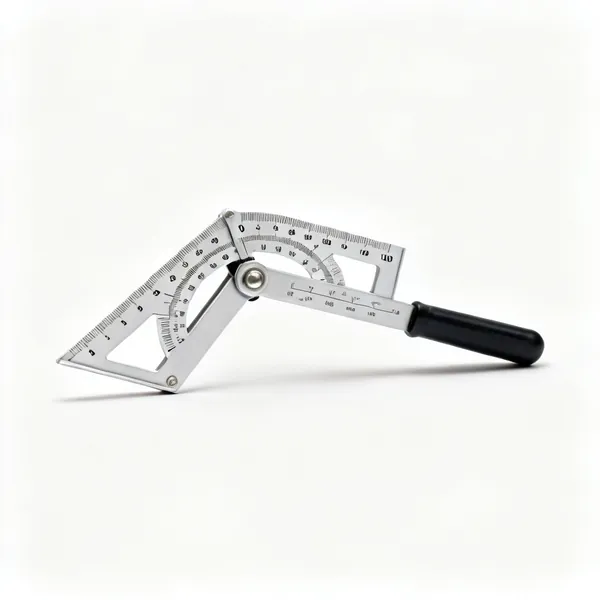
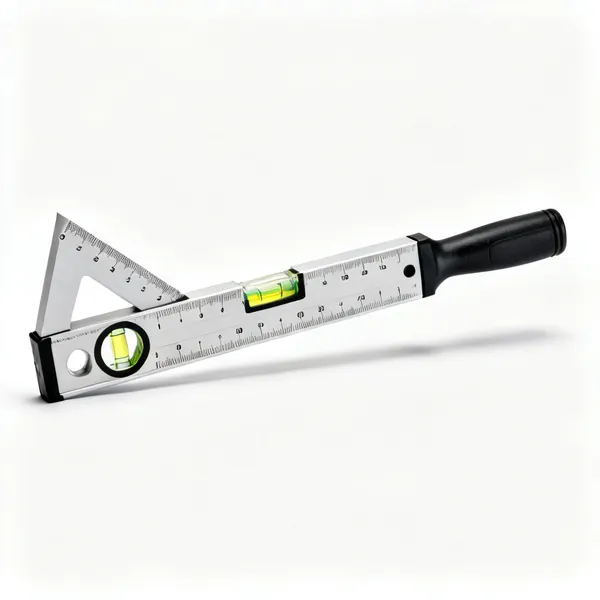
Set a sliding bevel into the corner, lock it, and carry it to the saw. The angle is transferred exactly, with no reading and no setting, so no rounding error enters the job at any point.
Reading it as a number introduces two chances to be wrong: the reading, and setting the saw to that reading. On a corner that is 93.4 degrees, a saw scale marked in whole degrees cannot express it anyway.
- Bevel into the corner
- Lock it, take it to the saw, set the blade to it. Nothing is read and nothing is rounded.
- Two errors become none
- Reading, then setting, each add error. Direct transfer adds neither.
- Saw scales are coarse
- Most read whole degrees. A real corner is not a whole number of degrees.
- Read only when you must
- For calculation, for a drawing, or to communicate it to someone else.
A joint is half the corner
Two pieces meeting in a corner each get half of it. A 90 degree corner is two 45 degree cuts. A 93 degree corner is two cuts of 46.5, which no saw scale shows and every skirting board in an old house needs.
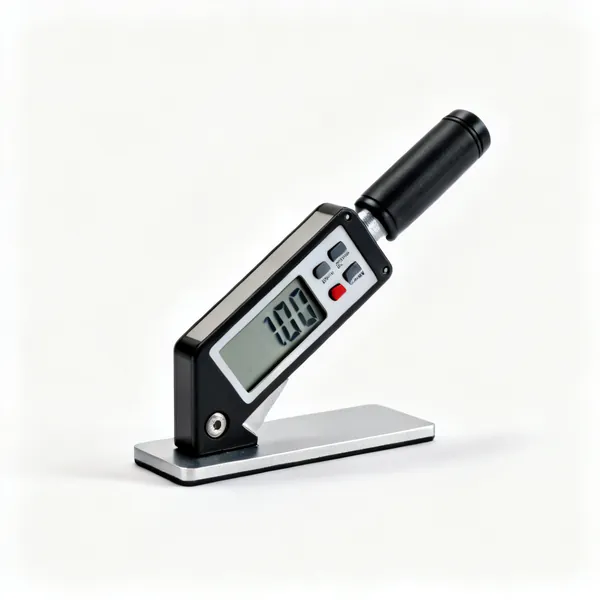
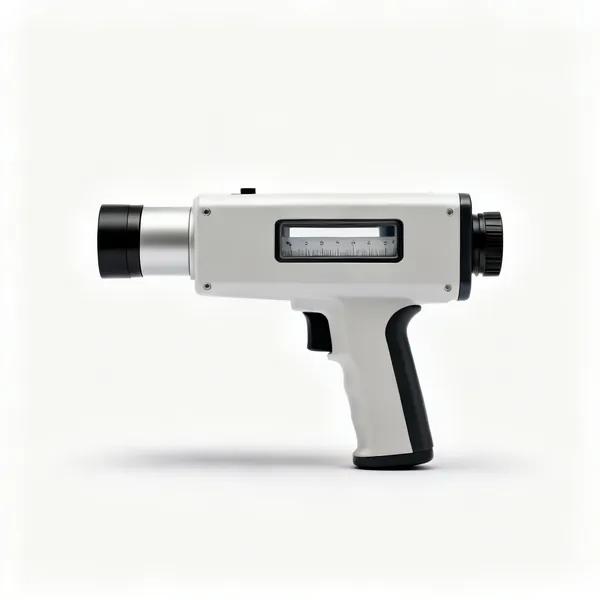
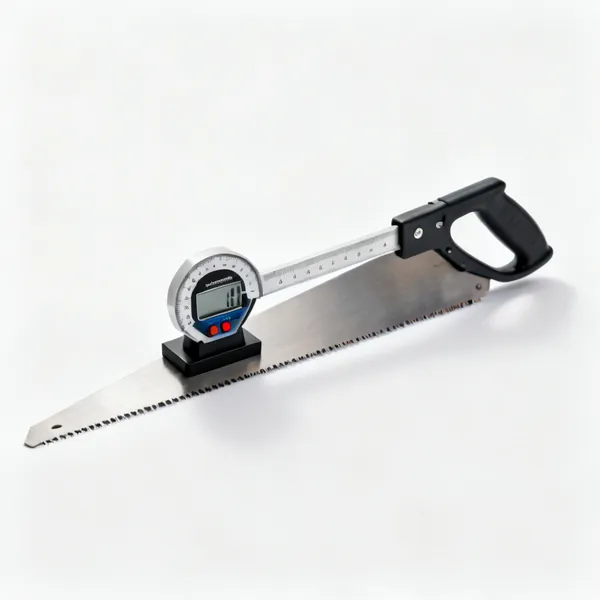
So the useful tool is one that reports the half angle directly, or a bevel and a compass to bisect the angle geometrically. Digital angle finders that show the mitre setting rather than the corner angle exist for exactly this reason.
- Half the corner each
- Two pieces share it. That halving is where the arithmetic goes wrong most often.
- Digital finders halve for you
- Many display the mitre setting directly. It removes the one calculation people get wrong.
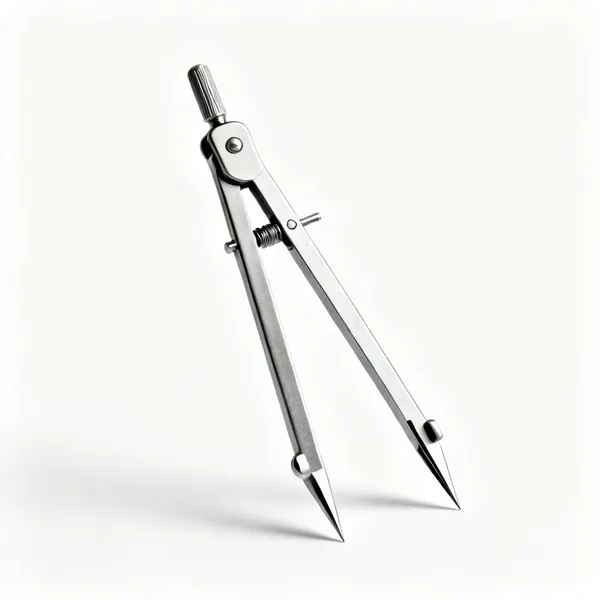
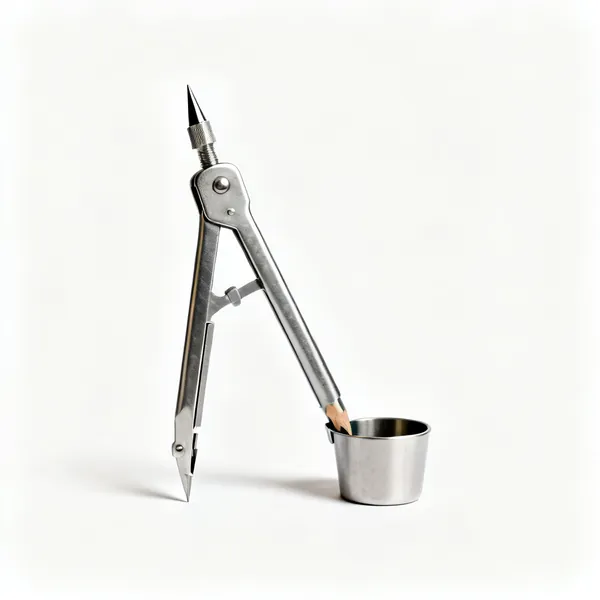
- Bisect with a compass
- Two arcs and a line halves any angle exactly, with no number involved at all.
- Cut a test piece
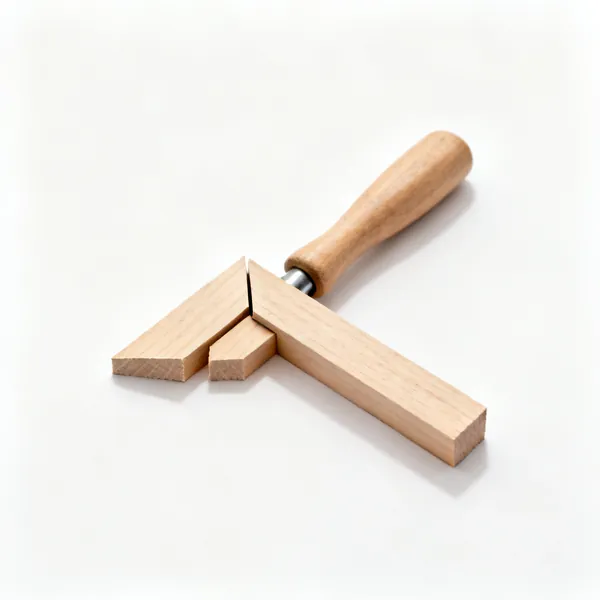
- Two offcuts at the setting. If they close, the setting is right. Cheaper than the skirting.
Mitre and bevel are different angles
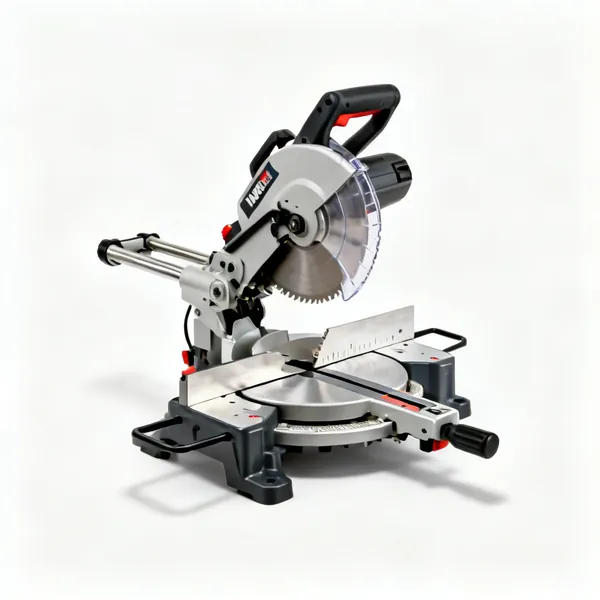
On a mitre saw, the mitre angle is the rotation of the table and the bevel angle is the tilt of the blade. A skirting corner needs a mitre. A crown moulding or a hip rafter needs both at once, and getting them the right way round is most of the difficulty.
Compound angles are where calculation genuinely beats copying, because the two settings interact and cannot be transferred with a bevel. A chart or a calculator is the honest tool there.
- Mitre rotates the table
- For a corner in the plan view. Skirting and architrave are mitre cuts.
- Bevel tilts the blade
- For a cut through the thickness. Roof and moulding work needs it.
- Compound is both
- The settings interact, so neither can be read off the corner directly.
- Use a chart for compound
- This is the case where a table or an app beats any measuring tool.
Angle to what
Some tools measure the angle between two surfaces, and some measure the angle of one surface relative to gravity. A protractor does the first, an inclinometer does the second, and they answer different questions.
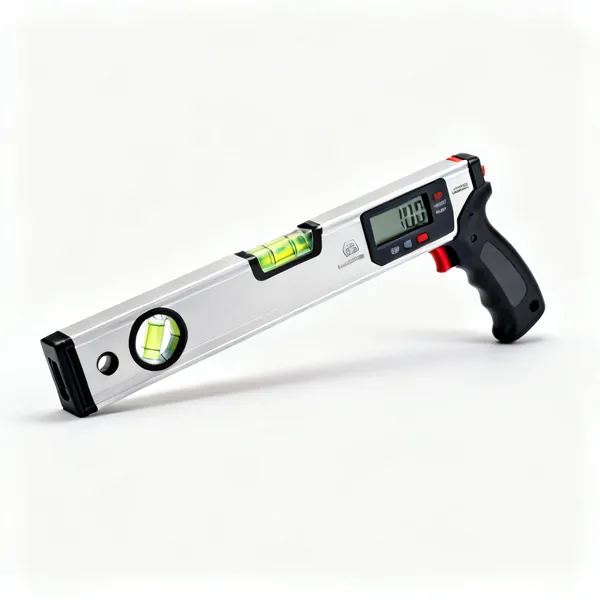
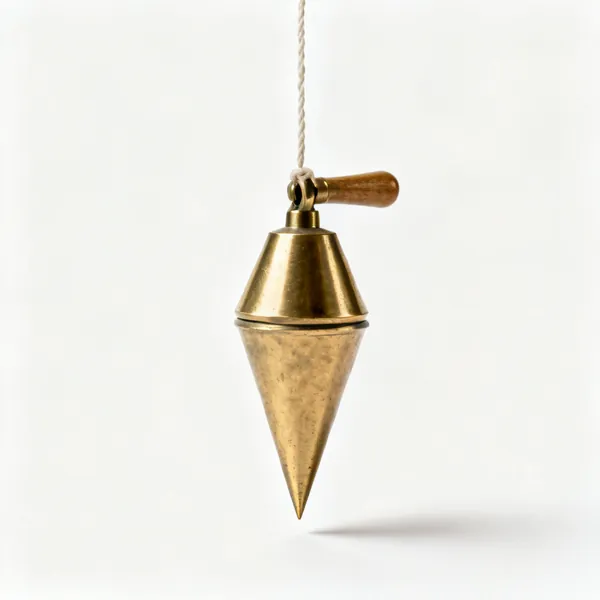
A roof pitch, a drain fall or a ramp gradient is a gravity measurement. The angle at a corner of a room is not. Using an inclinometer on a workpiece that is not level gives a number that is true and useless.
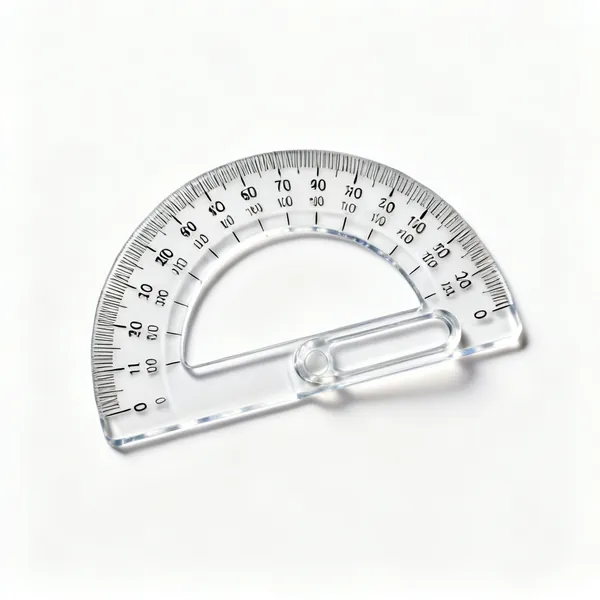
- Protractor: surface to surface
- The angle between two things, wherever they happen to be sitting.
- Inclinometer: relative to gravity
- A pitch, a fall, a gradient. Meaningless if the reference is not the horizon.
- Zero it first
- A digital tool referenced to a flat surface gives relative angles reliably.
- Falls are usually ratios
- A drain is specified as 1 in 40, not in degrees. Convert once and note it.
Squaring and angles without a tool
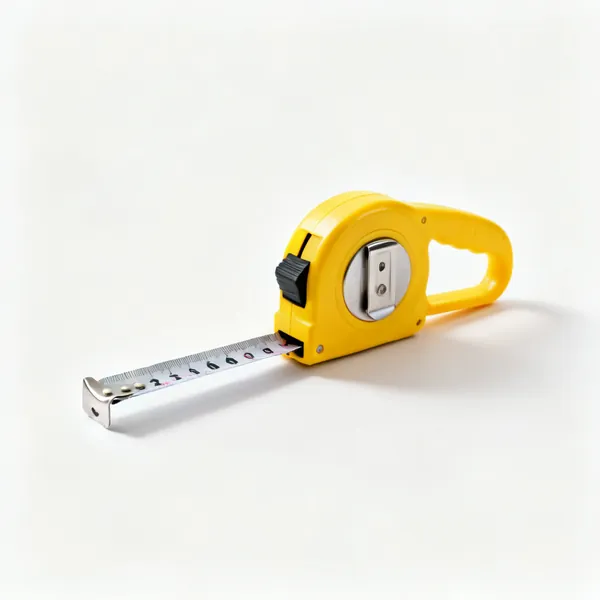
The 3 4 5 method makes a right angle at any scale with a tape alone: measure 3 units along one line, 4 along the other, and adjust until the diagonal is 5. It scales to a whole building and needs nothing else.
Equal diagonals proves a rectangle true. A compass bisects an angle exactly. These are worth knowing because they work when a tool has been left in the van, and because they are more accurate than a small tool used on large work.
- 3 4 5 for a right angle
- Any units, any scale, tape only. Use 6 8 10 on site for better precision.
- Equal diagonals
- Proves a rectangle. The only reliable check on anything larger than your square.
- Compass bisects exactly
- Two arcs and a line halves an angle with no measurement at all.
- Scale up for accuracy
- The longer the sides, the smaller the angular error. Use the whole space.
Frequently asked questions
- What tools measure angles?
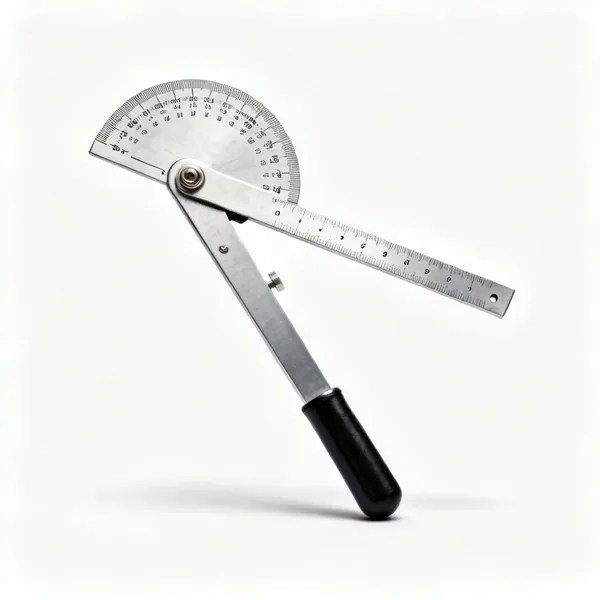
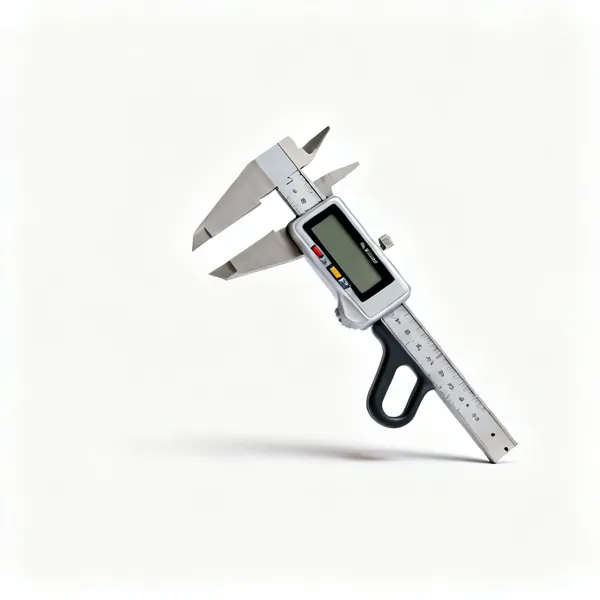
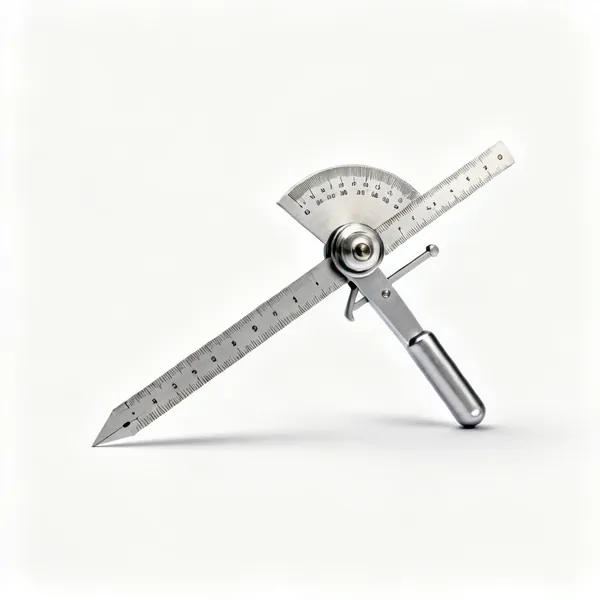
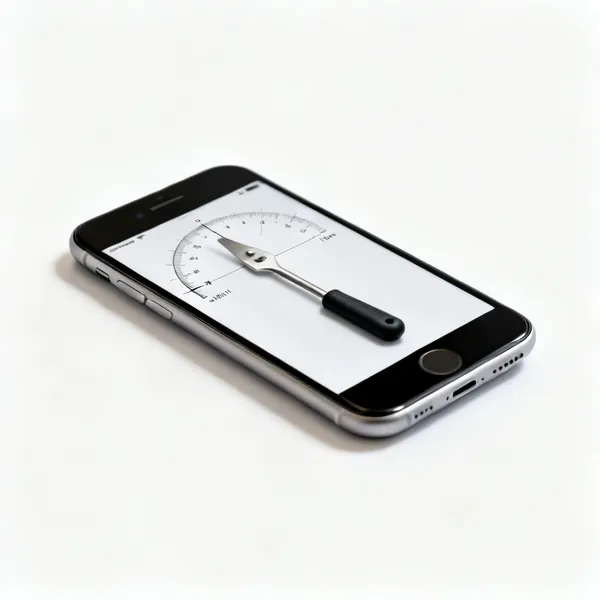
- A sliding bevel copies an angle without reading it. A protractor or protractor head reads one in degrees. A digital angle finder reads it and often halves it for a mitre. An inclinometer measures a surface against gravity for pitches and falls.
- Should I copy an angle or measure it?
- Copy it wherever you can. A sliding bevel locked into a corner and carried to the saw transfers the angle exactly. Reading it as a number and then setting the saw to that number adds two chances of error, and most saw scales only read whole degrees anyway.
- How do I work out the mitre angle for a corner?
- Each piece takes half the corner angle. A 90 degree corner is two 45 degree cuts, and a 93 degree corner is two cuts of 46.5. Many digital angle finders display that halved figure directly, which removes the one calculation people most often get wrong.
- What is the difference between a mitre and a bevel angle?
- On a mitre saw the mitre angle is the rotation of the table, for a corner seen in plan, and the bevel angle is the tilt of the blade, for a cut through the thickness. Skirting needs a mitre. Crown moulding and hip rafters need both at once.
- How do you find a right angle without a square?
- The 3 4 5 method. Measure 3 units along one line and 4 along the other, then adjust until the diagonal between those points is exactly 5. It works in any units at any scale, so 6 8 10 in metres sets out a building foundation with just a tape.
- What is an inclinometer used for?
- Measuring the angle of a single surface relative to gravity, which is what a roof pitch, a drain fall or a ramp gradient is. It is not the tool for the angle between two surfaces, so using it on a workpiece that is not level gives a true and useless number.
- How accurate are digital angle finders?
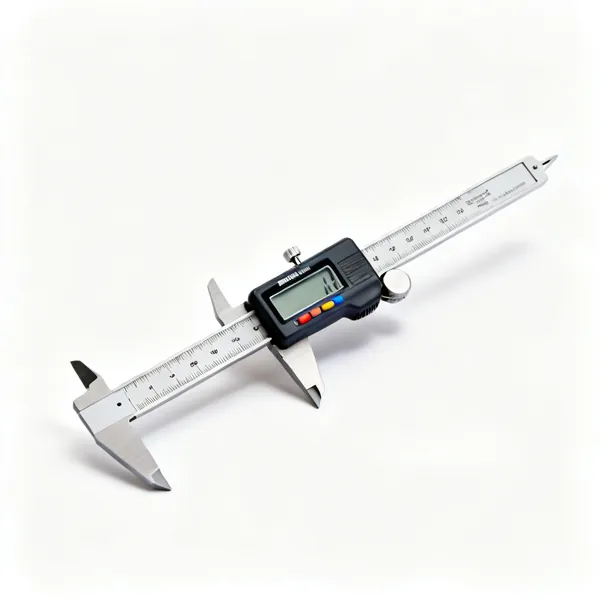
- Typically a tenth of a degree, which is far finer than most saw scales can be set to. The useful features are holding a reading, showing the halved mitre figure, and being zeroed against a reference surface so relative angles can be taken directly.
- How do I cut compound angles?
- Use a chart or a calculator rather than a measuring tool. The mitre and bevel settings on a compound cut interact, so neither can be read directly off the corner or transferred with a bevel. Then cut two offcuts at those settings and check they close before the real piece.