Disclosure

Tools for wood carving

Carving is not one craft. Whittling is a knife and a stick in your hands, relief carving is gouges and a mallet on a held panel, and chip carving is one knife making triangular cuts to a pencil line. The tools barely overlap. All 34 here are grouped that way, plus the sharpening kit, which matters more in carving than in any other woodwork because a dull edge crushes fibres instead of severing them.

14 are marked essential: enough to start and enough to keep the edges working.

Part of the full woodworking tools list, 87 tools in 12 groups.

Carving gouges and chisels 10

The core of relief and sculptural carving. Sweep number is the curve, second number is the width.

  • A wood carving straight gouge with a shallow curved cutting edge and a wooden handleEssential

    Straight gouge

    A shallow sweep, usually a number 3 or 5, for shaping and smoothing. It does most of the finishing cuts in relief work and leaves a surface that needs little sanding.

  • Deep U gouge: A wood carving deep U shaped gouge with a semicircular cutting edge and a wooden handleEssential

    Deep U gouge

    A number 9 or above, cutting a deep scoop and removing wood fast. This is the roughing tool: get the shape down near the line before switching to anything shallower.

  • V tool: A wood carving V parting tool with a V shaped cutting edge and a wooden handleEssential

    V tool

    Cuts a groove with two flat walls, which is how a shape gets outlined before waste comes away around it. Also the tool for hair, fur and any incised line.

  • A wood carving veiner gouge with a deep narrow U cutting edge and a wooden handle

    Veiner

    A number 11, so deep it is nearly a tube, cutting a narrow round channel. For veins, tendrils and any line that wants a rounded bottom rather than a V.

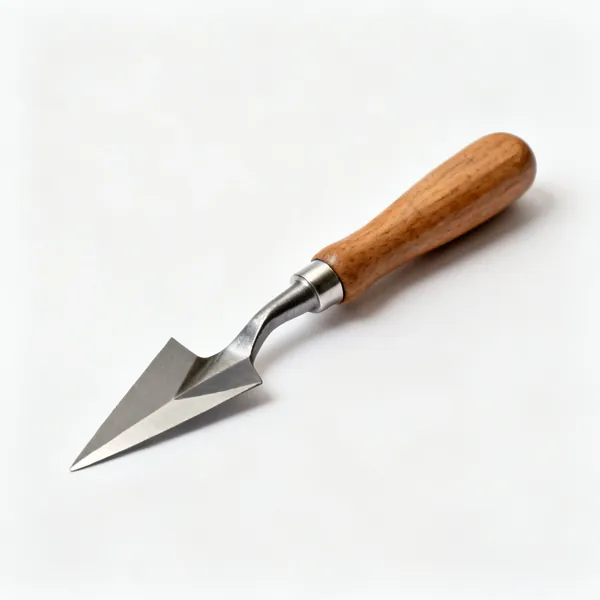
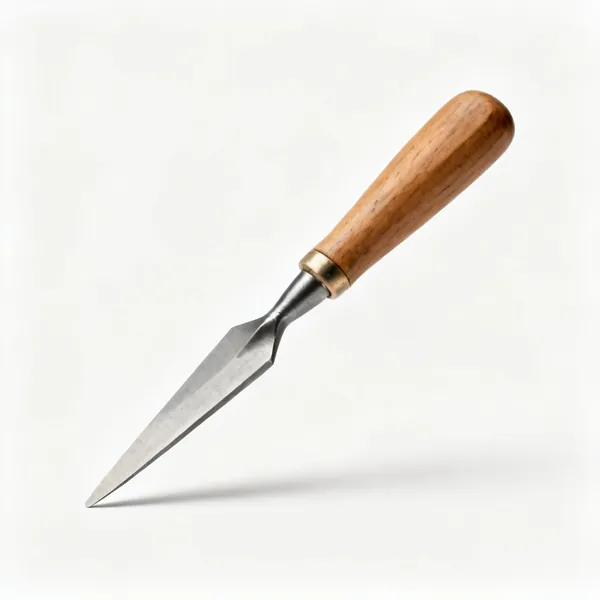
  • Skew chisel

    Skew chisel

    A flat edge ground at an angle, so the long point reaches into a corner nothing else enters. Cleaning up the inside angles of a relief cut is its main job.

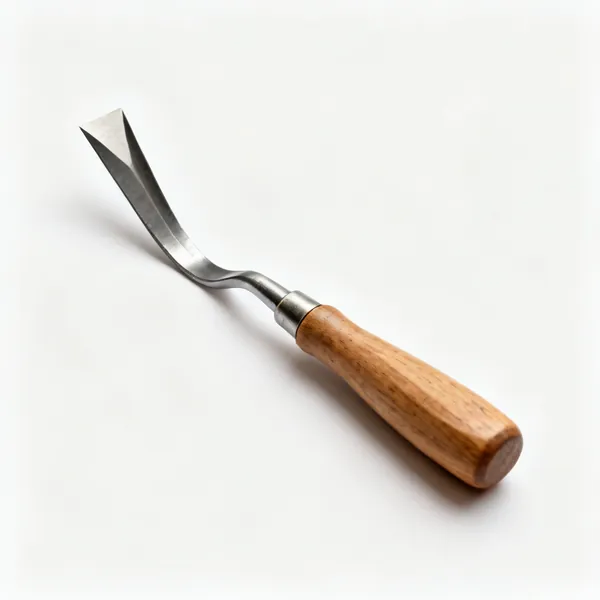
  • A wood carving fishtail gouge with a blade that flares out to the cutting edge

    Fishtail gouge

    The blade narrows behind the edge, so it reaches into a recess without the shank fouling the sides. What you want once a carving has depth to it.

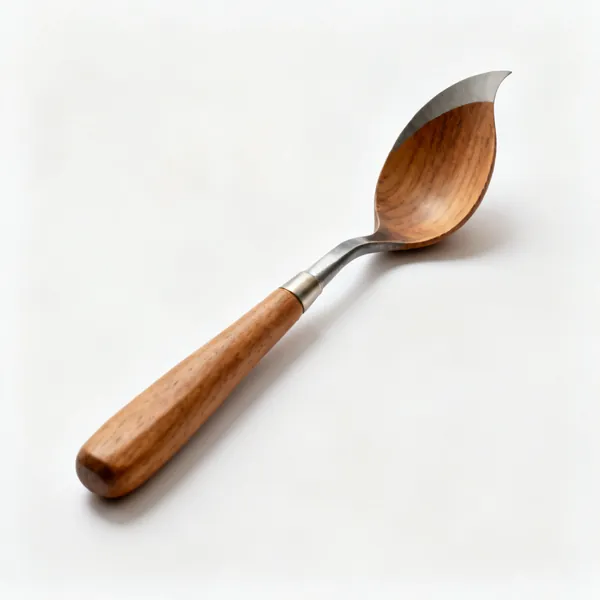
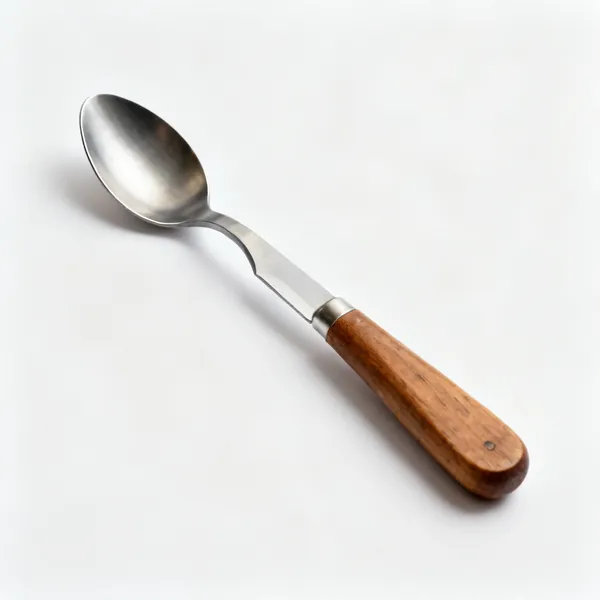
  • A wood carving spoon bent gouge with a blade curving upward to the cutting edge

    Spoon bent gouge

    The blade curves up so the edge can reach the bottom of a hollow while the handle stays clear. The only way to finish inside a deep bowl or a dished relief.

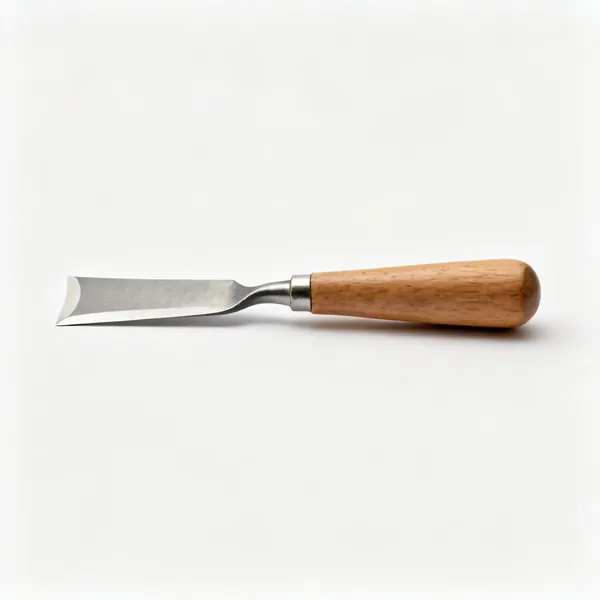
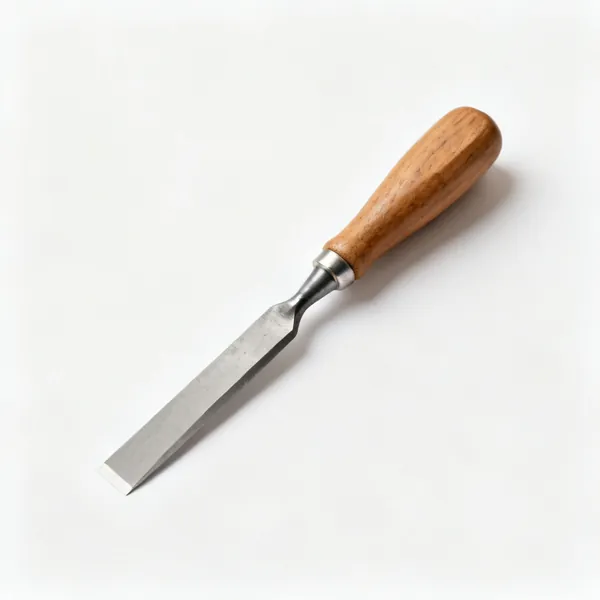
  • Carving chisel: A wood carving flat chisel with a straight cutting edge and a wooden handle

    Carving chisel

    A flat edge for levelling backgrounds and cutting straight walls. Bevelled on both faces unlike a bench chisel, so it can work from either side of a line.

  • A wood carving macaroni tool with a square U shaped cutting profile and a wooden handle

    Macaroni tool

    Cuts a flat bottomed square channel in one pass. A specialist, and the only tool that produces a clean three sided trench without three separate cuts.

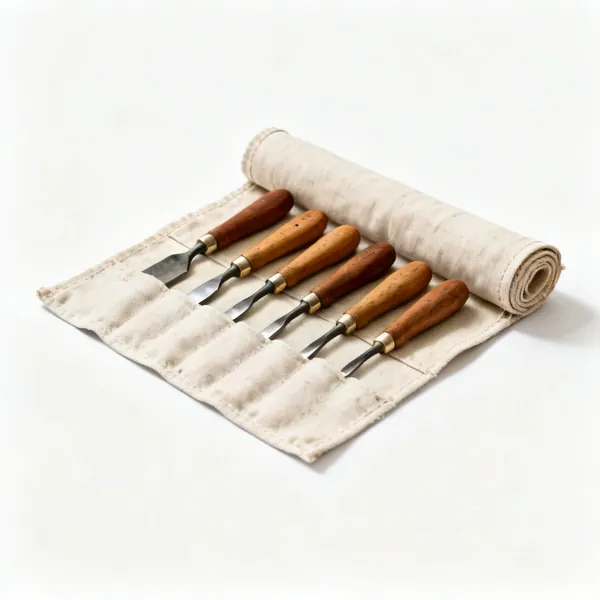
  • Beginner gouge set: A set of six wood carving gouges with wooden handles laid out in a canvas rollEssential

    Beginner gouge set

    Five or six tools covering a shallow sweep, a deep sweep and a V tool. Better value than buying individually, provided the steel takes an edge, which the cheapest sets do not.

Whittling and chip carving knives 7

Worked in the hand with no bench. A short list, and the sharpness matters more than the count.

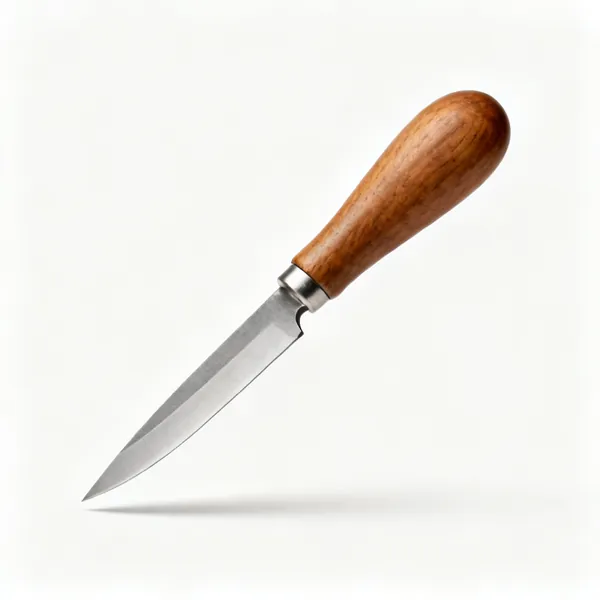
  • A whittling knife with a short straight blade and a rounded wooden handleEssential

    Whittling knife

    A short fixed blade with a handle that fills the palm, so the cut comes from the whole hand rather than the fingers. One good one is a complete whittling kit.

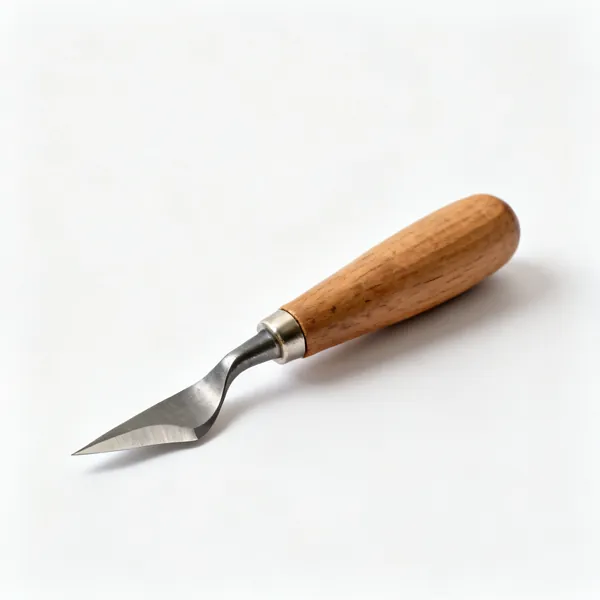
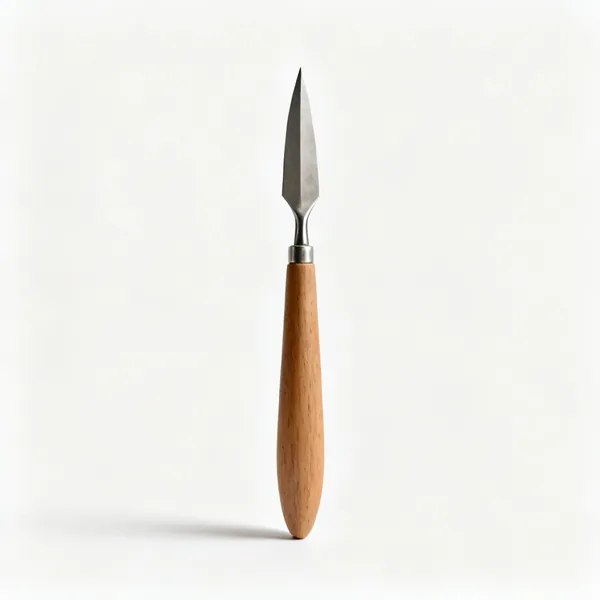
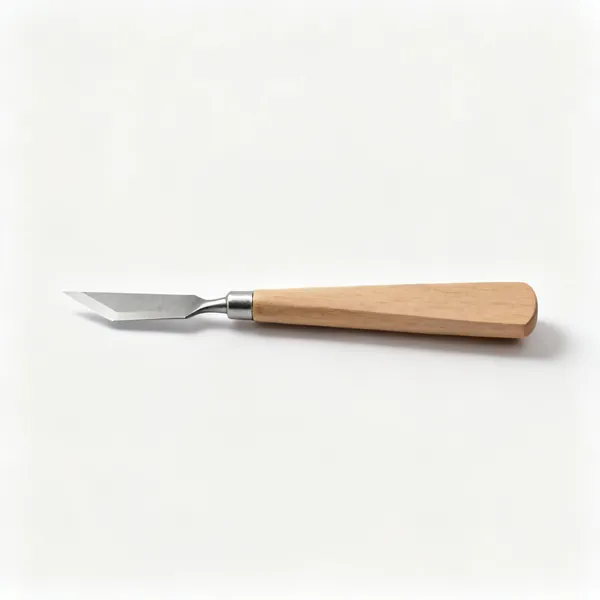
  • A wood carving detail knife with a narrow pointed blade and a slim wooden handle

    Detail knife

    A narrow pointed blade for eyes, fingers and any small feature. Too fine for stock removal and the only thing that works once the shape is nearly there.

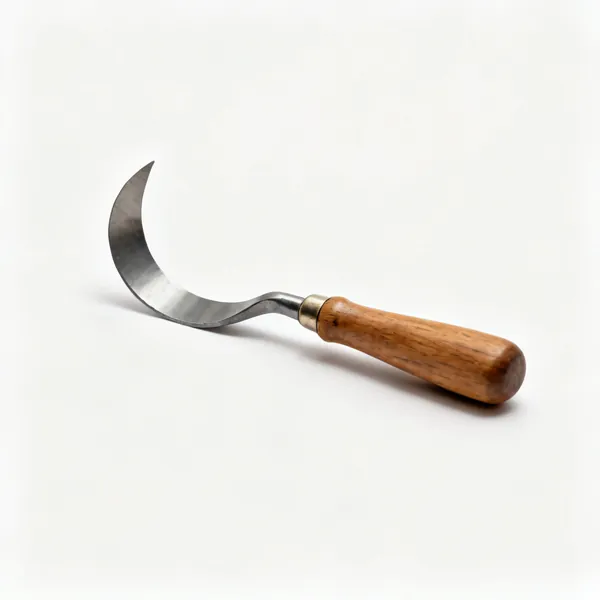
  • A spoon carving hook knife with a curved blade and a wooden handle

    Hook knife

    A curved blade that cuts on the inside of the curve, which is the only practical way to hollow a spoon or a bowl by hand. Sharpened on the inside face too.

  • Chip carving knife

    Chip carving knife

    A short stiff blade at a shallow angle for the paired angled cuts that release a triangular chip. Needs to be genuinely sharp, since the whole craft is one cut repeated.

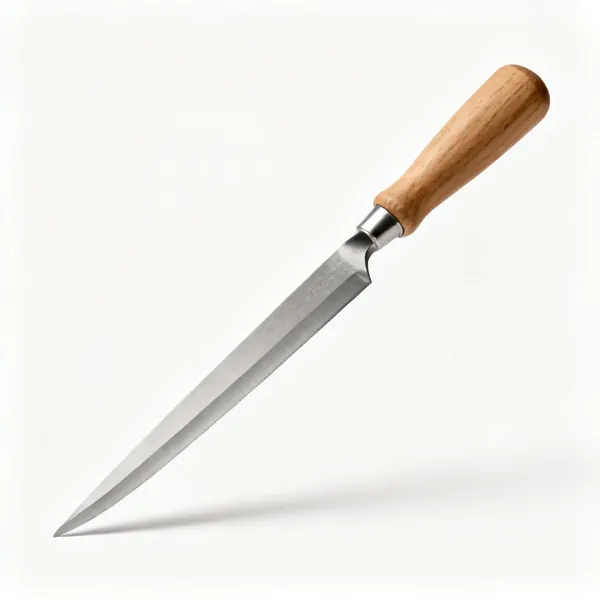
  • A large wood carving roughing knife with a long straight blade and a substantial handle

    Roughing knife

    A longer, heavier blade for taking a stick down to rough shape before the detail knife. Saves the fine edge for the work that needs it.

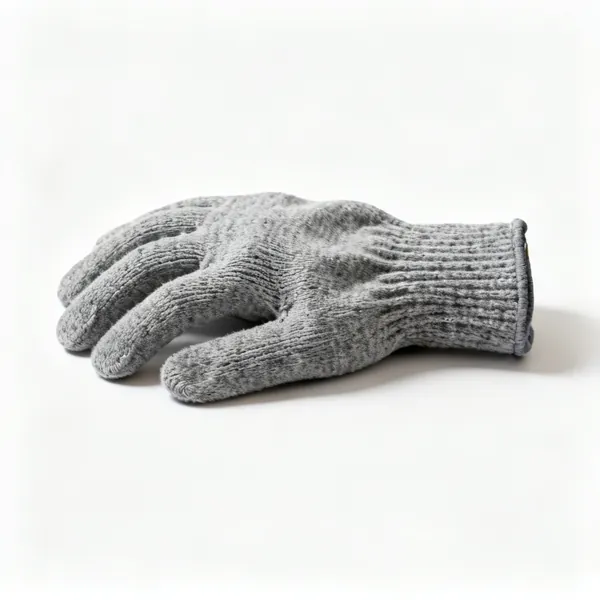
  • Cut resistant glove: A grey cut resistant carving glove made of knitted fibreEssential

    Cut resistant glove

    Worn on the hand holding the work, which in whittling cannot get out of the way. The one piece of safety kit that changes the outcome of the usual accident.

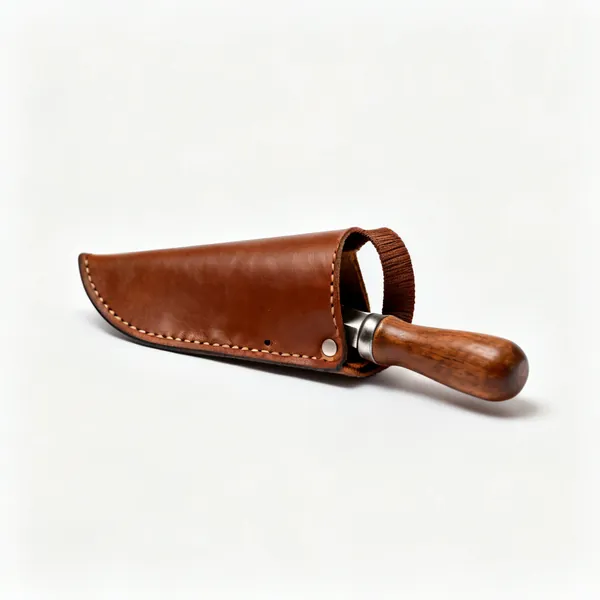
  • A brown leather carving thumb guard with an elastic strap

    Thumb guard

    A leather or tape wrap on the pushing thumb, which takes the pressure of every paring cut. Not about a slip, about the blister that stops you after an hour.

Sharpening and stropping 7

Carving needs a sharper edge than any other woodwork, and curved edges need shaped abrasives to reach them.

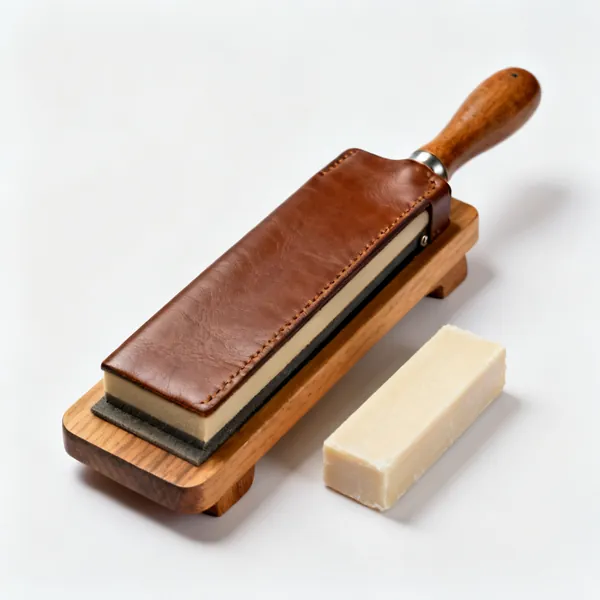
  • A leather strop on a wooden paddle with a bar of honing compound beside itEssential

    Leather strop

    Loaded leather that realigns the edge in seconds. Used every few minutes, it means the edge never actually goes dull, which is the whole trick behind a sharp tool.

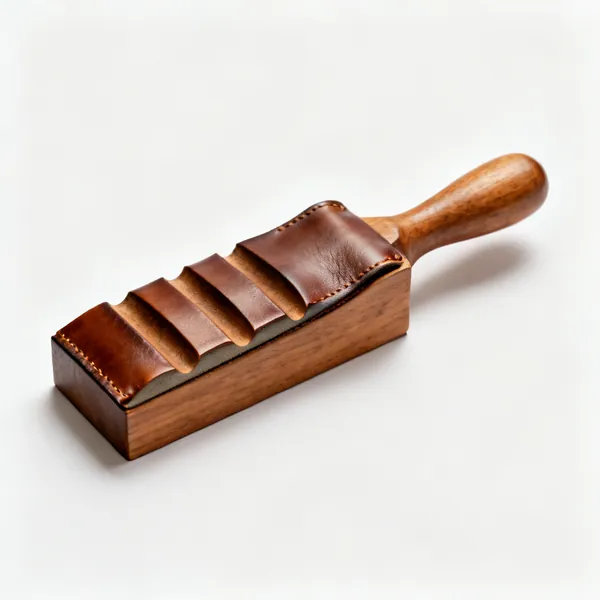
  • Shaped strop: A wooden shaped carving strop block with several grooved profiles covered in leatherEssential

    Shaped strop

    Profiled wood covered in leather with grooves matching the common sweeps, so the inside of a gouge and a V tool can be stropped as well as the outside.

  • A set of shaped sharpening slip stones with rounded and tapered edgesEssential

    Slip stones

    Thin stones with rounded and tapered edges that fit inside a gouge sweep. A flat stone touches a curved edge at one point only, which is why these exist.

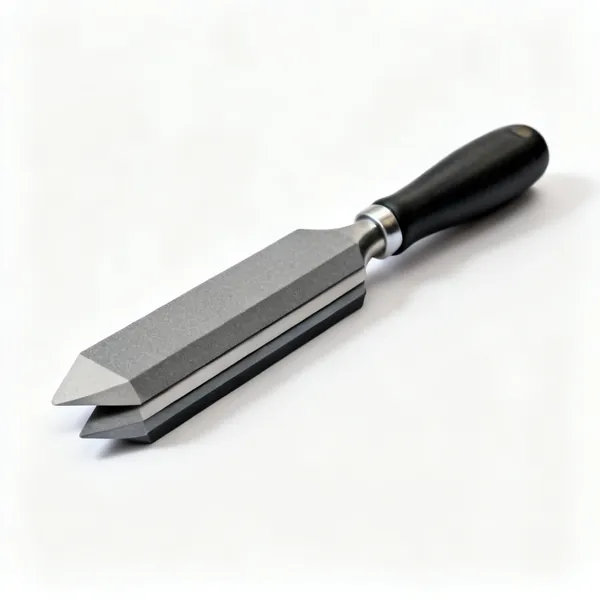
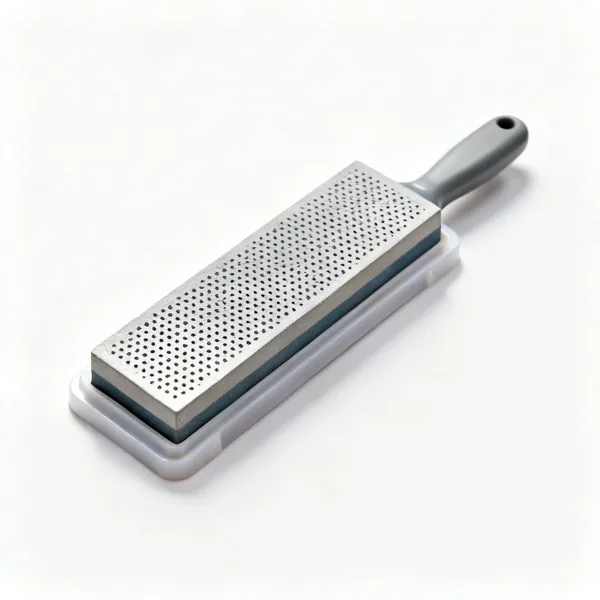
  • Diamond stone: A rectangular diamond sharpening stone with a perforated surface on a plastic base

    Diamond stone

    For re establishing a bevel on a tool that arrived blunt, which most budget sets do. Cuts fast, stays flat, and does not need soaking or flattening itself.

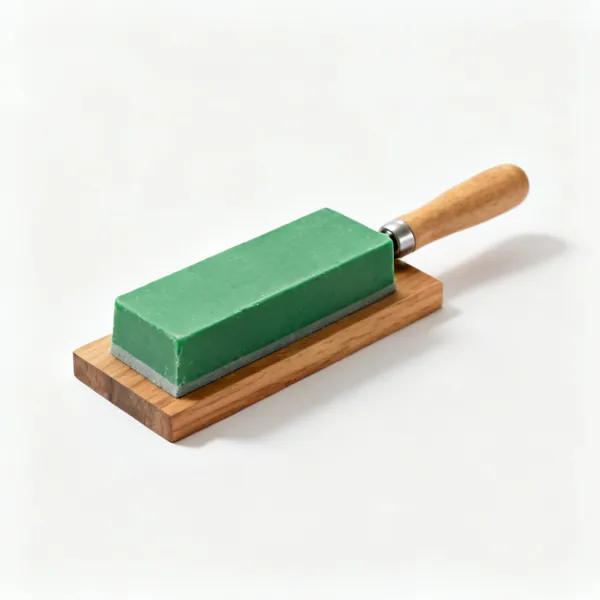
  • A green bar of honing compound on a wooden surfaceEssential

    Honing compound

    A wax bar of fine abrasive rubbed into the strop. Without it a strop is just leather, and the difference in the finished edge is immediately visible in the wood.

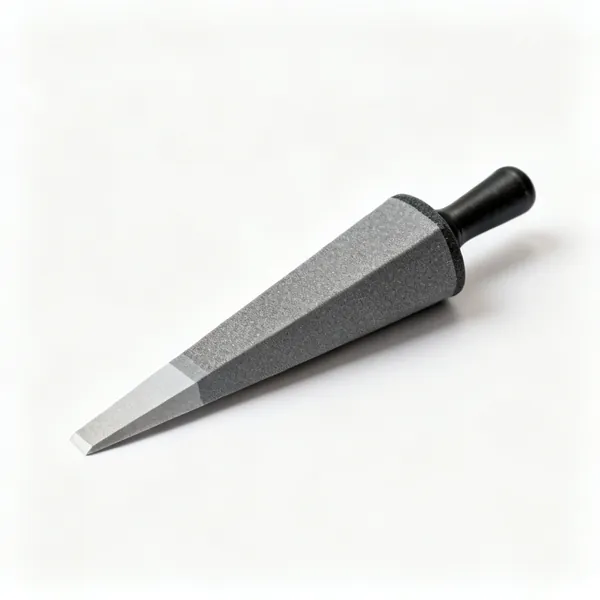
  • Cone slip: A tapered conical sharpening stone with a fine grit surface

    Cone slip

    A tapered round stone that reaches inside a veiner or a deep gouge where a flat slip cannot. The narrowest sweeps have no other way to be honed.

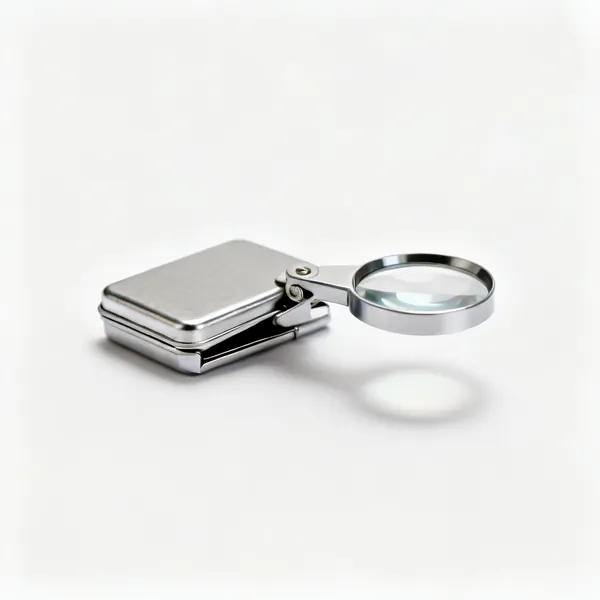
  • A small folding jeweller's loupe magnifier with a metal case

    Magnifier

    The only way to see whether an edge is sharp or has a wire edge folded along it. Faster than testing on the wood and finding out after the cut.

Holding, striking and refining 10

Two hands on the tool beats one hand holding the work, for control as much as for safety.

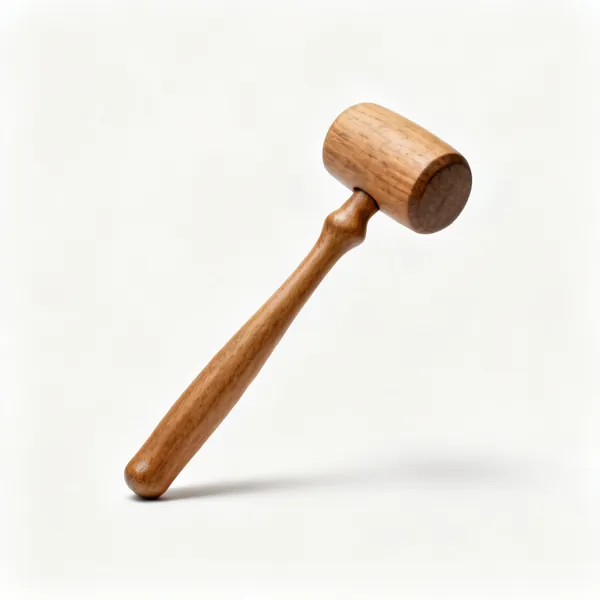
  • A round headed wooden carver's mallet with a turned handleEssential

    Carver's mallet

    Round headed, so it strikes squarely from any angle without turning your wrist to line it up. That is why carving mallets are round and joinery mallets are not.

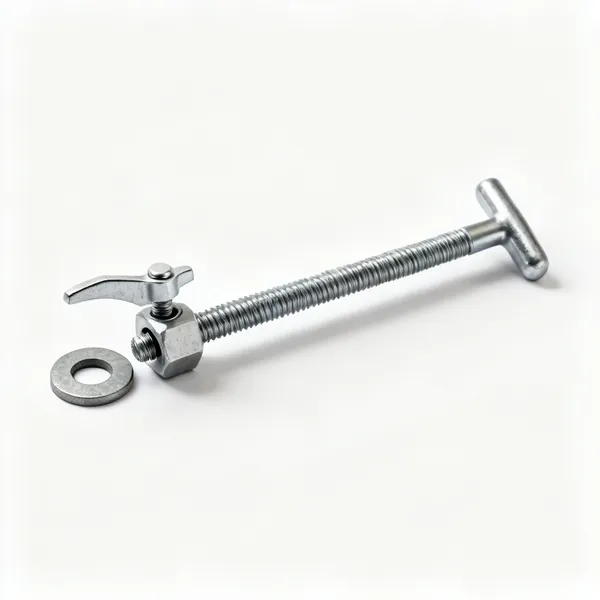
  • Carver's screw: A long threaded carver's bench screw with a wing nut and a washer

    Carver's screw

    A long screw through the bench into the back of the work, holding it down with nothing on top to obstruct a tool. The traditional answer for a carving in the round.

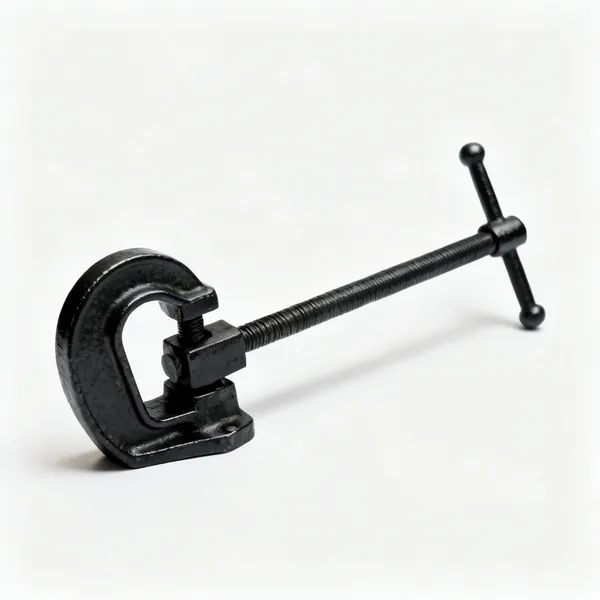
  • A black iron bench holdfast with a curved arm and a long shaftEssential

    Holdfast

    Drops into a bench dog hole and grips with a tap. Released with a tap too, which matters because carving means repositioning the work every few minutes.

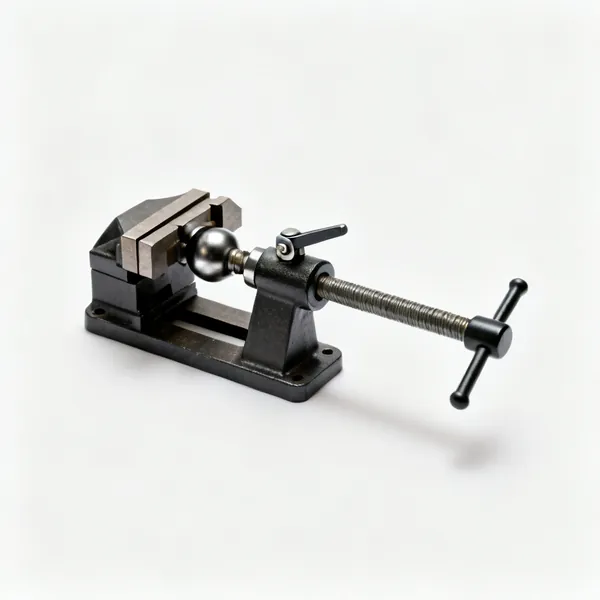
  • A ball joint carving vice with a clamping head and a locking lever

    Carving vice

    A ball joint head that tilts the work to any angle and locks. It turns awkward cuts into downhill ones, which is most of what good grain direction means in practice.

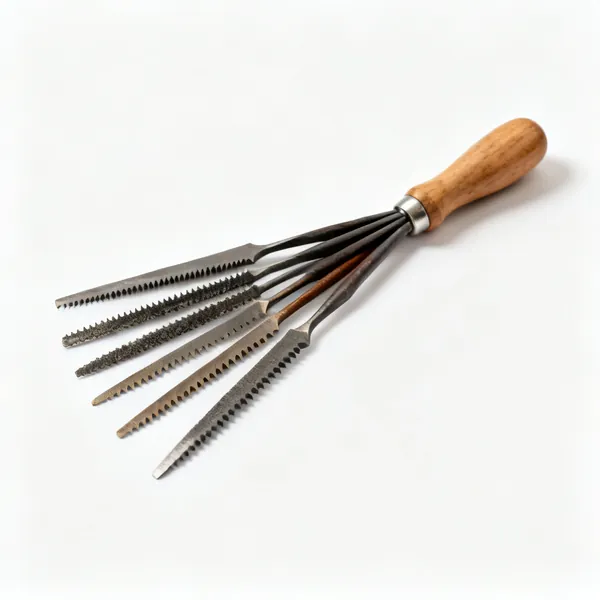
  • A set of wood carving rasps with different coarse toothed profiles

    Carving rasps

    Coarse toothed files that shape across the grain where a gouge would tear out. The bridge between roughing with a gouge and finishing with abrasive.

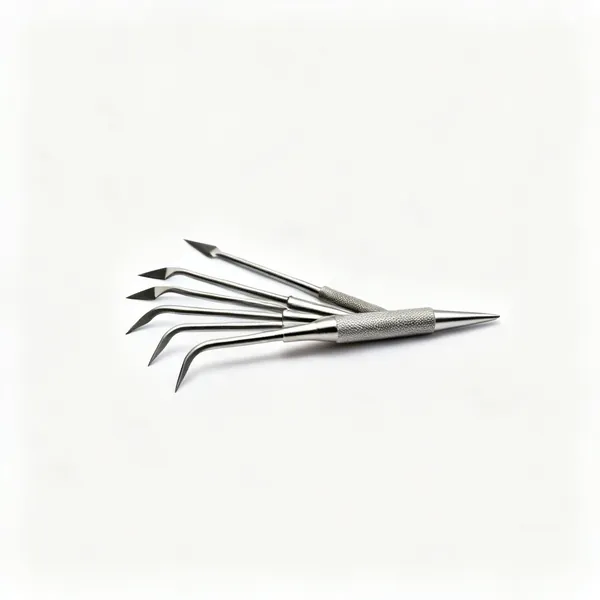
  • Rifflers: A set of small double ended riffler files with curved and pointed shapes

    Rifflers

    Small double ended files in curved and pointed shapes, for the recess a rasp cannot enter. Slow, and the only thing that refines a tight internal curve.

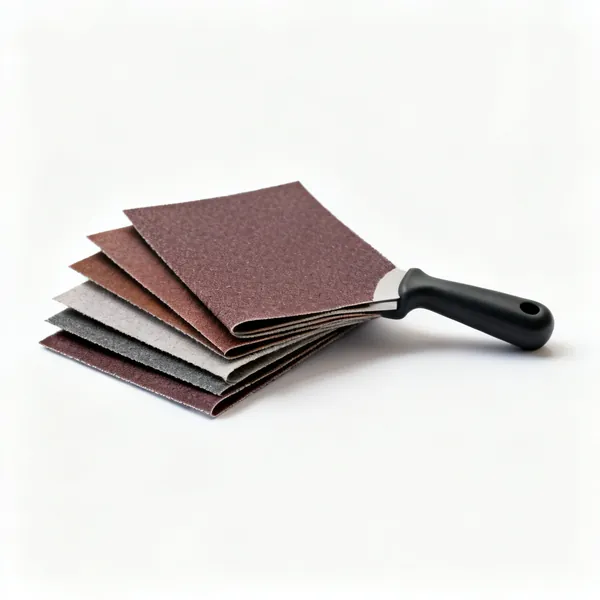
  • Abrasives: Several folded sheets of abrasive paper in different grits

    Abrasives

    For a smooth finish, used sparingly, since sanding softens the crisp tool marks that make carved work look carved. Some carvers never use it at all.

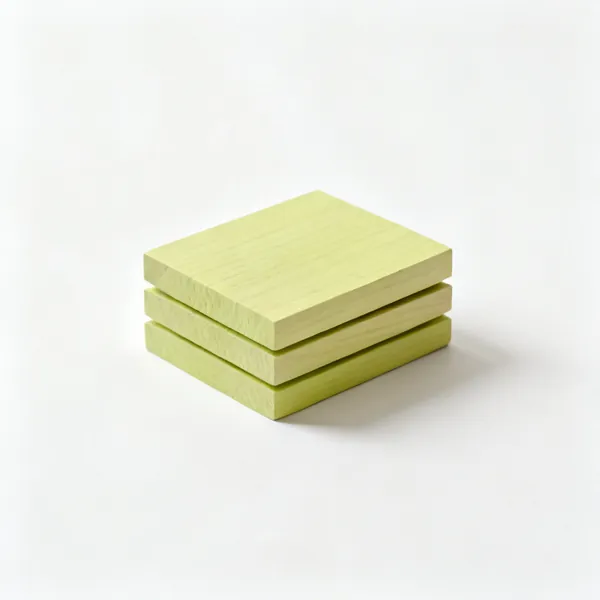
  • Lime carving blanks: A small stack of three rectangular pale lime wood carving blanks, arranged compactly with clear space at every edgeEssential

    Lime carving blanks

    Lime, sold as basswood, is even textured, cuts cleanly in every direction and holds detail. Learning on pine teaches you to fight grain rather than to carve.

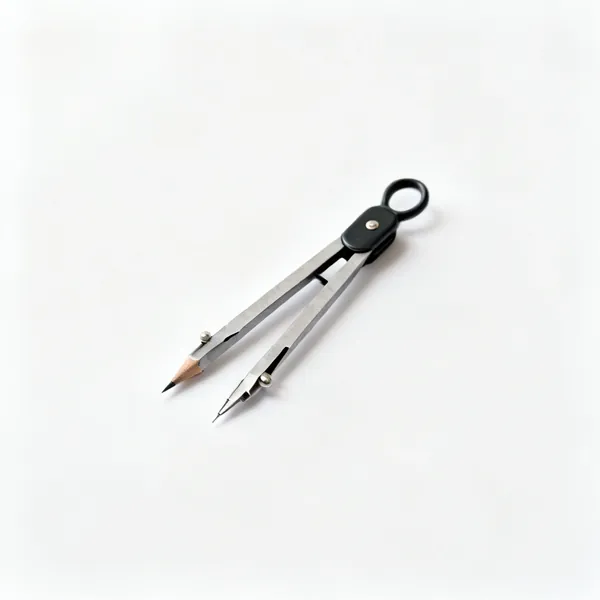
  • Pencil and dividers: A flat carpenter's pencil beside a small pair of steel dividers, both laid diagonally with clear space at every edge

    Pencil and dividers

    Layout is most of chip carving and half of relief carving. A line you can see is what stops a cut going where the tool wanted rather than where you did.

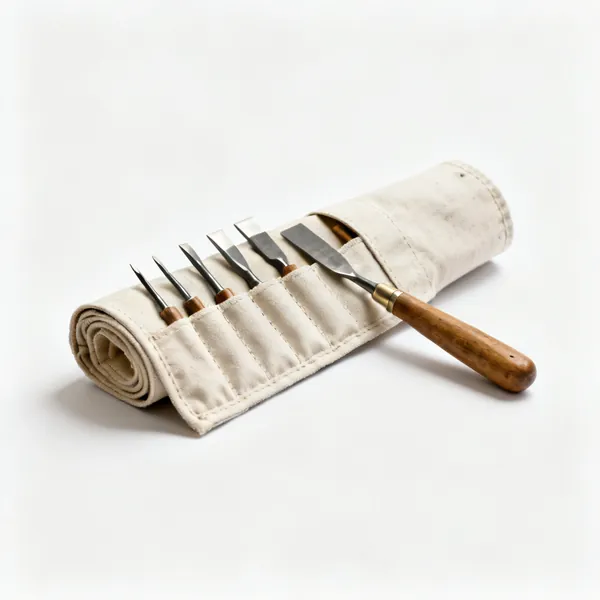
  • A rolled canvas tool roll with individual pockets holding carving gougesEssential

    Tool roll

    Canvas pockets so edges never touch each other. Carving tools loose in a drawer arrive blunt and chipped, which is a slower way to lose an edge than using them.

Choosing wood carving tools

The list above is what exists. This is how to decide which of it you actually need, what separates a tool worth keeping from one that ends up at the back of a drawer.

Three crafts, different tools

Whittling is done in the hand with a knife, no bench and no mallet. Relief and sculptural carving is done on a held workpiece with gouges, driven by hand for fine work and a mallet for waste removal. Chip carving is a single knife making paired angled cuts that release a triangular chip.

Buying a 12 piece gouge set for whittling wastes most of it, and a whittling knife will not hollow a bowl. Decide the craft first and the tool list follows from it, which is the opposite of how most starter sets are sold.

Whittling
One or two knives, in the hand, no bench. The cheapest way into carving by a wide margin.
Relief carving
Gouges and a V tool on a clamped panel. Depth and shadow rather than shape in the round.
Sculptural
Larger gouges and a mallet, plus rasps and rifflers to refine. Waste removal is most of the work.
Chip carving
One knife, geometric layout, and a level of sharpness the other three tolerate being without.

Reading gouge numbers

Carving gouges are described by sweep and width. The sweep number is how curved the cutting edge is: a number 3 is nearly flat, a number 9 is a deep U, and a number 11 is a veiner that cuts a narrow channel. The width is the edge in millimetres.

The V tool is numbered separately, usually 12, and is defined by its angle rather than a sweep. It cuts a groove with two flat walls, which is what outlines a shape before any waste is taken out around it.

Low number, flat
A 3 or a 5 smooths and shapes. Most of the finishing cuts in relief work happen here.
High number, deep
A 9 or an 11 removes wood fast and leaves a deep scoop. Roughing rather than finishing.
The V tool
Outlines. A crisp V groove around a shape is what lets you cut down to it cleanly.
Width in millimetres
The second number. A 5/12 is a moderate sweep, 12mm wide.

Grain direction decides the cut

Cutting with the grain, the fibres are severed and supported and the surface comes off glassy. Cutting against it, the blade lifts the fibres ahead of the edge and they tear out below the surface you wanted. The tear does not show until you are past it.

So carving is constantly rotating the work or changing which direction you cut from, rather than working steadily around a shape. On a curved form the grain direction changes every few degrees, which is why carvers turn the piece more often than they change tools.

Downhill, always
Cut with the fibres running away from the edge. Uphill tears out below the surface.
Turn the work
Not the tool. On a curve the right direction changes every few degrees.
Stop cuts first
A V groove or a knife cut across the grain gives the fibres somewhere to break off.
Shallow across end grain
End grain crumbles under a deep cut. Take it in light passes with a very sharp edge.

Sharpening is half the craft

A carving edge has to sever fibres cleanly with hand pressure alone. There is no motor and no weight behind it, so anything less than genuinely sharp crushes the wood, and the crushed surface will not take a finish evenly.

Carving gouges are also curved, which means a flat stone only touches part of the edge. That is what slip stones and shaped strops are for, and it is why most beginners' first real problem is not technique but an edge that was never properly sharp.

Sharper than a chisel
No mallet and no weight behind it, so the edge alone has to sever the fibre.
Strop constantly
Every few minutes, not at the end of the day. It is seconds and it keeps the edge from ever going.
Shaped stones
A flat stone touches one point of a curved edge. Slips and cones match the sweep.
Inside and out
A gouge has an inner bevel too. Ignoring it leaves a wire edge that folds on first contact.

Holding the work and your hands

Carving injuries are almost all the same injury: the tool leaves the wood faster than expected and the other hand is in front of it. So the rule is that no part of you is ever on the far side of the cut, and the work is held by something other than a hand where possible.

Whittling is the exception, because the work is in the hand by definition. There the answer is a cut resistant glove on the holding hand, a thumb guard, and cuts that move away from the body rather than toward it.

Nothing beyond the edge
The single rule. Almost every carving cut injures the hand that was holding the work.
Clamp or a carver's screw
Frees both hands, which also makes the carving better rather than only safer.
Glove for whittling
The holding hand cannot leave the work, so it wears the protection instead.
Two hands on the gouge
One pushing, one guiding and braking. That is what stops an overrun.

Frequently asked questions

What tools do I need to start wood carving?
It depends which carving. Whittling needs one good knife, a strop and a cut resistant glove, which is a very cheap start. Relief carving needs a number 3 and a number 9 gouge, a V tool, a mallet, a way to clamp the work and sharpening kit.
What do the numbers on carving gouges mean?
The first number is the sweep, meaning how curved the edge is: a 3 is nearly flat, a 9 is a deep U, an 11 is a narrow veiner, and 12 is the V tool. The second number is the width of the edge in millimetres, so a 5/12 is a moderate sweep 12mm wide.
What is the difference between whittling and carving?
Whittling is done in the hand with a knife and no bench, so the piece is small enough to hold. Carving usually means gouges on a workpiece held by a clamp or a carver's screw, often with a mallet. They share the need for sharp edges and almost no tools.
What wood is best for carving?
Lime, also sold as basswood, for almost everything: even textured, soft enough to cut cleanly, and it holds detail. Butternut and jelutong are similar. Avoid pine to start with, since it is soft but the hard grain lines and soft summer wood cut at completely different rates.
How sharp do carving tools need to be?
Sharper than a bench chisel, because there is no mallet or body weight behind the cut. Hand pressure alone has to sever the fibres, and anything less crushes them, which leaves a fuzzy surface that will not take a finish evenly. Strop every few minutes.
How do I sharpen a curved carving gouge?
A flat stone only touches one point of a curved edge, so you need shaped slip stones or a cone that matches the sweep, plus a shaped strop. The inner bevel matters too: ignoring it leaves a wire edge that folds over on the first contact with wood.
Why is my carving tearing the wood instead of cutting it?
Either the edge is dull, which crushes fibres rather than severing them, or you are cutting against the grain so the blade lifts the fibres ahead of it. On a curved shape the grain direction changes constantly, which is why carvers turn the work rather than the tool.
Do I need a mallet for wood carving?
For relief and sculptural work, yes: waste removal by hand pressure alone is slow and tiring. A round carver's mallet lets you strike from any angle without turning your wrist. Whittling and chip carving use hand pressure only and never need one.