Disclosure

Tools for cutting PVC pipe

Ratchet shears, wheel cutters, saws and guides, all 23 grouped by how they cut. Square matters more than clean, and a solvent weld joint needs the outside edge chamfered or the pipe wipes the cement out of the socket as it enters.

12 are marked essential: really a pair of shears, a saw and a deburring tool.

Part of the full plumbing tools list, 56 tools in 9 groups.

Shears and ratchet cutters 5

Quickest for smaller pipe, square by construction. The one caution is cold weather, where they split what they would otherwise cut cleanly.

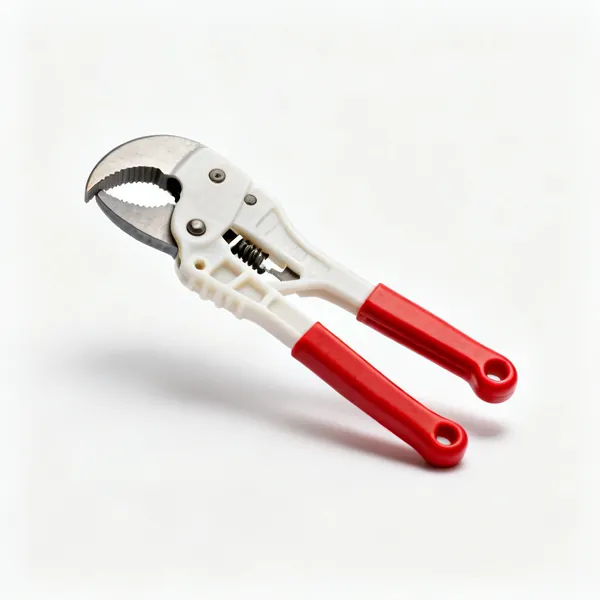
  • Ratchet pipe shears: A pair of ratcheting plastic pipe shears with a curved blade and red handlesEssential

    Ratchet pipe shears

    A curved blade driven through the pipe wall in stages by a ratchet, cutting up to about 42mm square in one operation. No swarf and no dust, which is why it suits work over a finished floor.

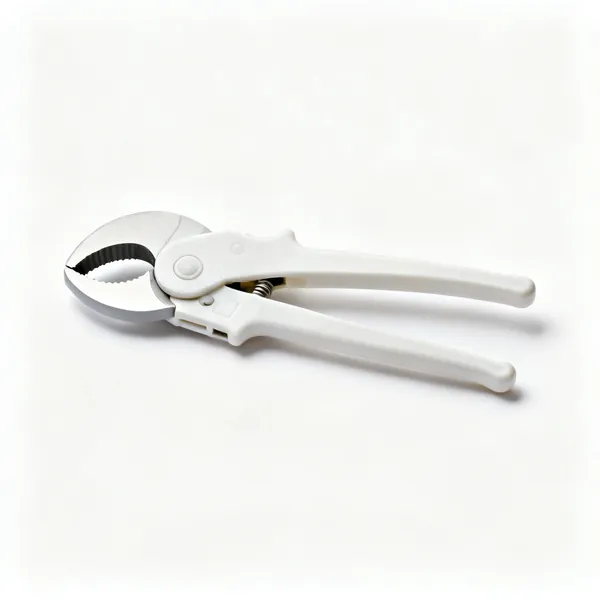
  • Scissor pipe cutter: A pair of scissor type plastic pipe cutters with a single curved blade and long handlesEssential

    Scissor pipe cutter

    A single squeeze cutter without a ratchet, for thin wall pipe up to about 25mm. Faster than a ratchet on overflow and small waste, and it needs more hand strength on anything thicker.

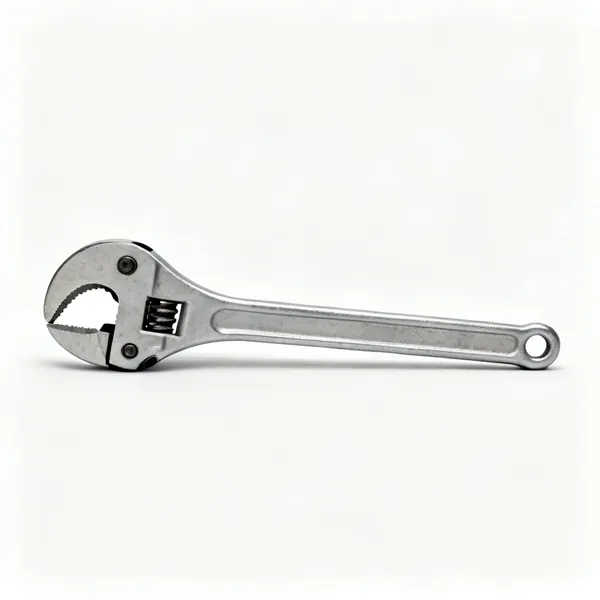
  • Heavy duty ratchet cutter: A large heavy duty ratchet pipe cutter with a long handle and a wide curved blade

    Heavy duty ratchet cutter

    A larger ratchet cutter reaching about 63mm, with a replaceable blade and a longer handle. The blade is the consumable, and a blunt one is what starts crushing pipe rather than cutting it.

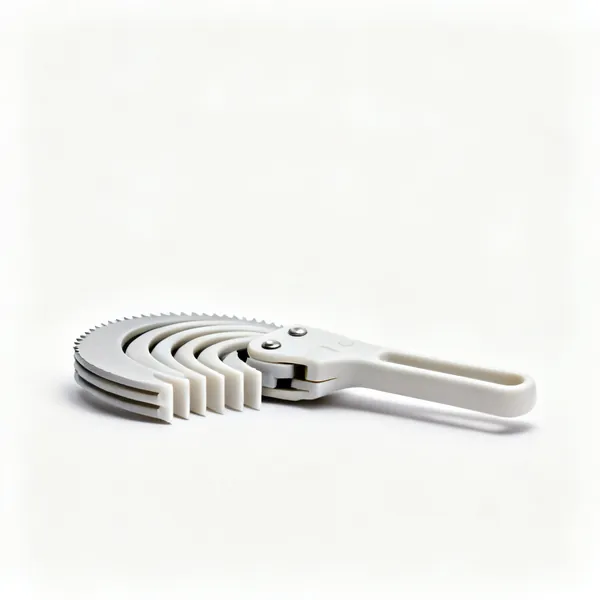
  • Spare shear blades: A set of replacement curved plastic pipe cutter bladesEssential

    Spare shear blades

    Replacement blades, because a blunt shear crushes the pipe into an oval instead of cutting it. Cheap, and most people persist with a dull blade and blame the pipe.

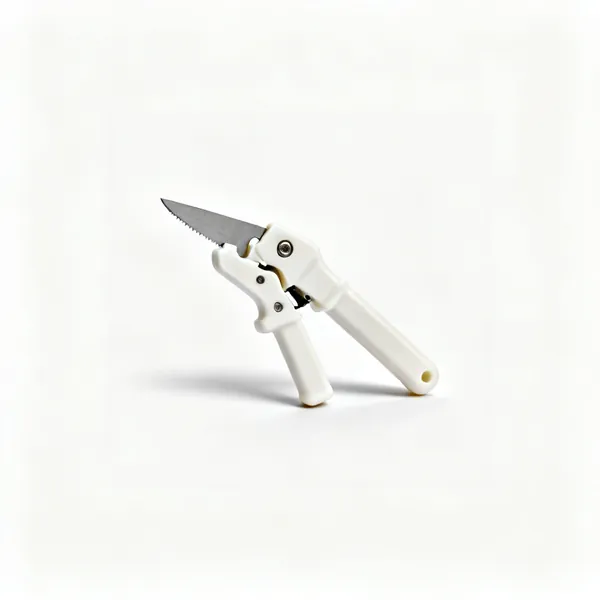
  • A small compact plastic conduit cutter with a short blade and stubby handles

    Conduit cutter

    A small ratchet cutter sized for 20mm and 25mm electrical conduit and overflow pipe. Fits in a pocket, and it will not span waste pipe, so it is an addition rather than an alternative.

Wheel and rotary cutters 5

Score progressively all the way round rather than pushing through in one line. Gentler on thick wall and on cold pipe.

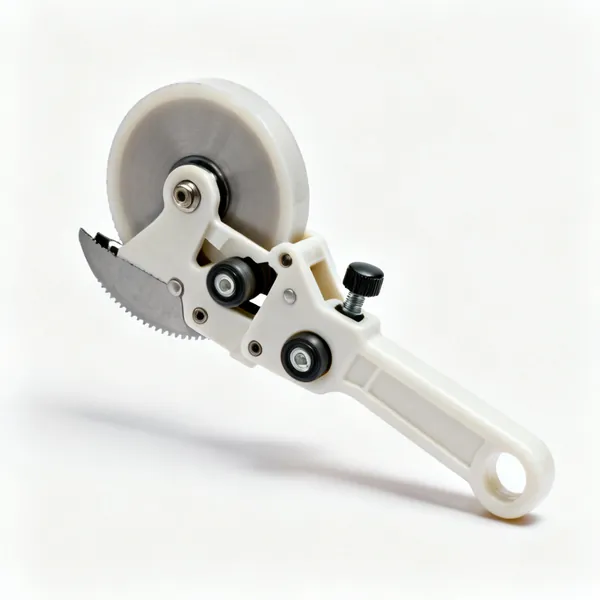
  • A plastic pipe wheel cutter with a wide cutting wheel, rollers and an adjusting knobEssential

    Plastic pipe wheel cutter

    A wide wheel profiled for plastic, rolled around the pipe under increasing pressure. It scores rather than splits, which makes it the safer choice on thick wall pressure pipe and in the cold.

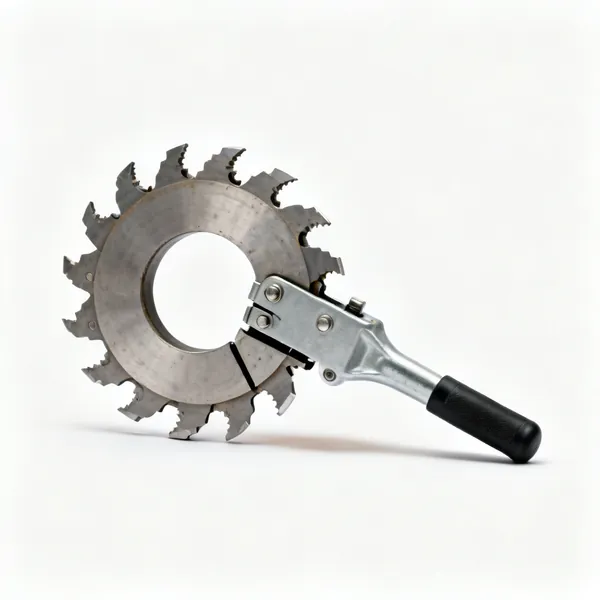
  • Large diameter wheel cutter: A large hinged pipe wheel cutter with multiple cutting wheels for large diameter pipe

    Large diameter wheel cutter

    A hinged frame carrying several wheels, wrapped around 110mm soil pipe and rotated. It gives a genuinely square cut on large pipe, which a handsaw only manages with a good guide.

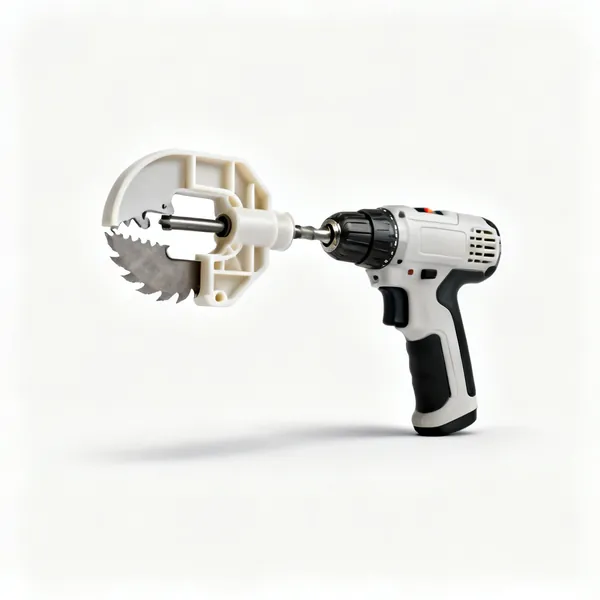
  • Internal pipe cutter: An internal plastic pipe cutter, a drill driven tool with a cutting blade on a shaft

    Internal pipe cutter

    A drill driven cutter that trims a pipe stub flush inside a socket or a floor. It is the only way to remove a snapped stub without cutting out the fitting around it.

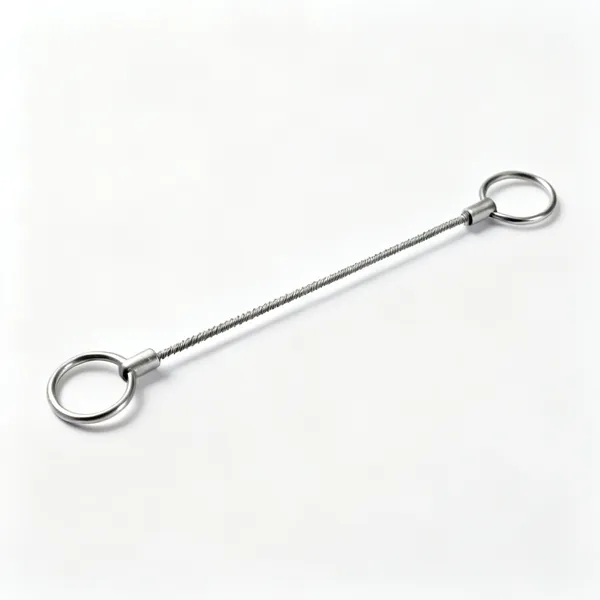
  • Flexible wire saw: A flexible abrasive wire saw with two ring handles at each end

    Flexible wire saw

    An abrasive coated wire passed behind a pipe and worked from both ends. For a pipe against a wall with a few millimetres of clearance, where nothing rigid can be got around it.

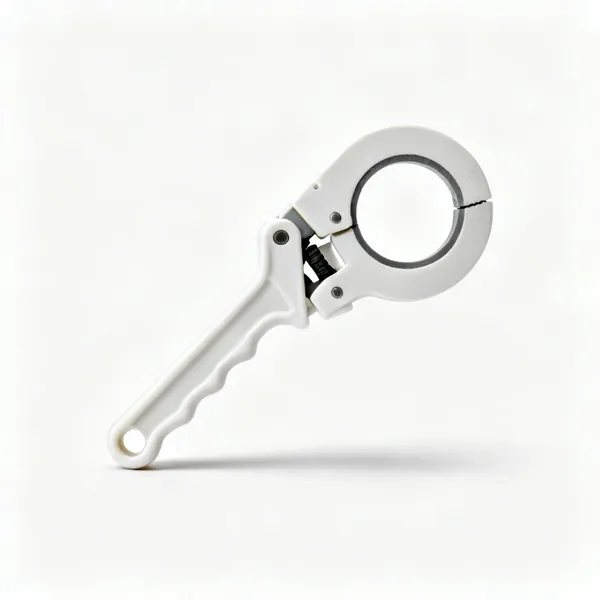
  • A plastic pipe slice cutter, a circular ring tool that clips around a pipe

    Plastic pipe slice

    A ring that clips around the pipe and cuts in a few turns by hand, needing almost no clearance. Sized to one diameter, so it is a set of tools rather than one adjustable one.

Saws and guides 6

The answer above 50mm and in cold weather. The guide is not optional, because a freehand cut is not square.

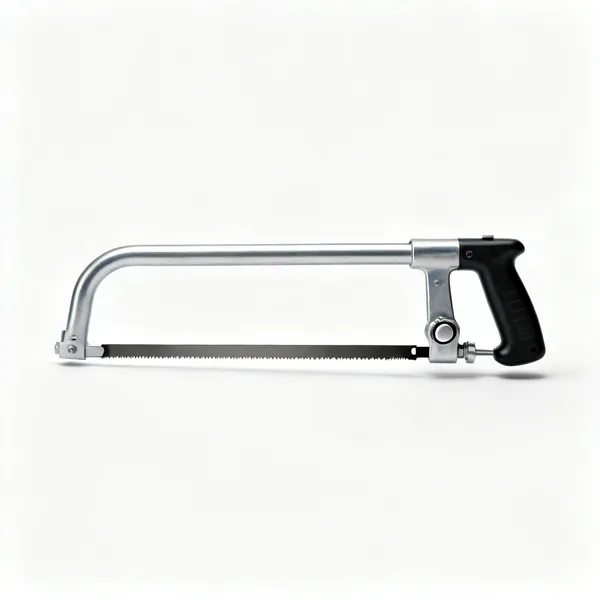
  • Hacksaw: Tensioning knob and pistol grip handleEssential

    Hacksaw

    A fine blade at 24 to 32 TPI cuts PVC cleanly and cannot split it. It leaves swarf and a burr on both edges, so the cut always needs deburring and chamfering afterwards.

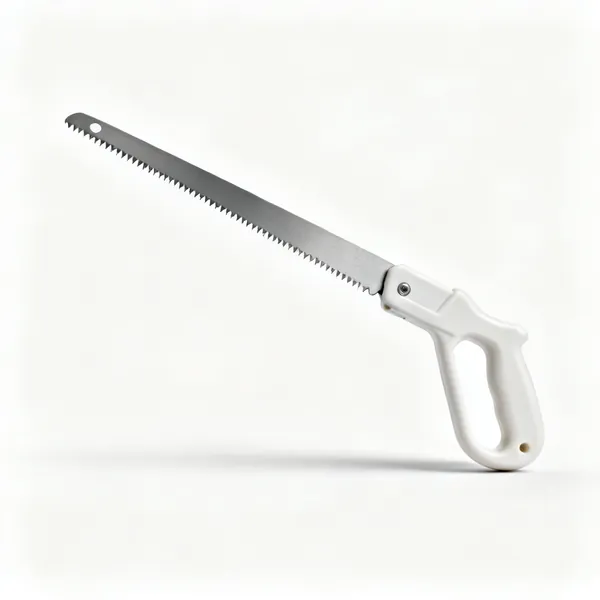
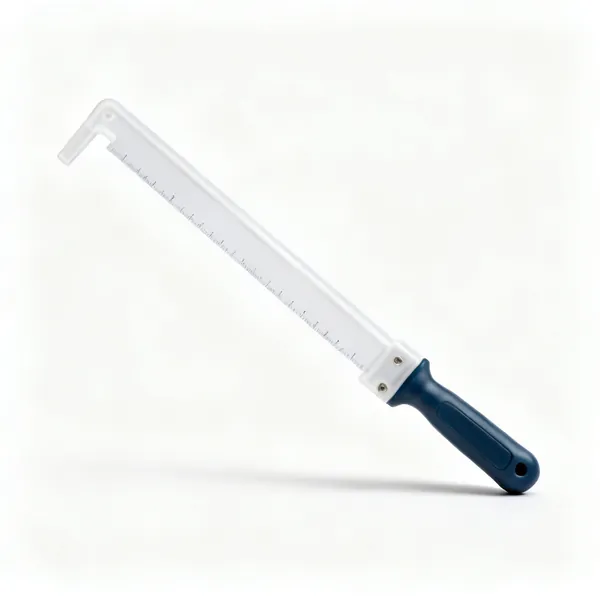
  • A plastic pipe saw with a stiff fine toothed blade and a moulded plastic handle

    Plastic pipe saw

    A stiff blade with fine hardened teeth set for plastic, cutting faster than a hacksaw without melting. The set of the teeth is what stops the blade binding in a deep cut in 110mm pipe.

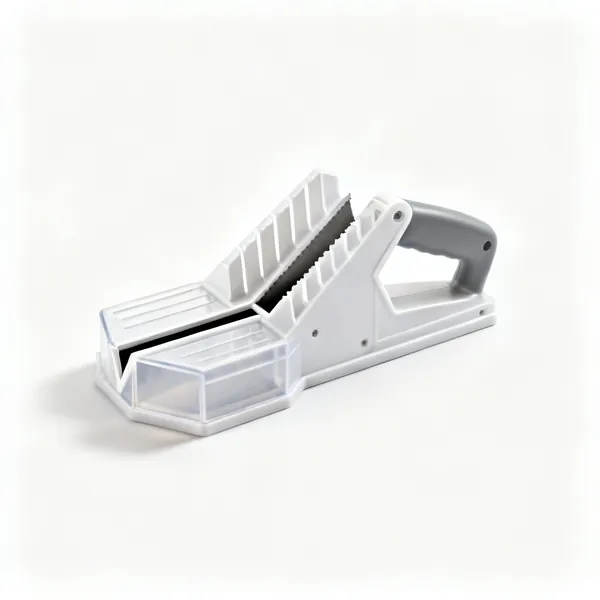
  • Mitre boxEssential

    Mitre box

    A slotted guide holding the saw at 90 or 45 degrees so the angle comes from the box rather than your eye. This is what makes a sawn PVC end square, and the reason to own one is that eye alone is not.

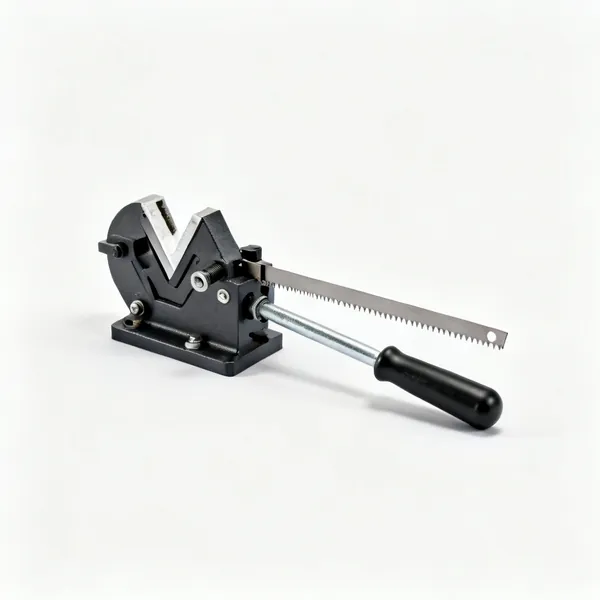
  • A pipe cutting jig with a clamping V block and a slotted saw guide

    Pipe cutting jig

    A clamp that holds round pipe and guides the saw square around it, sized for larger diameters. It is what makes a 110mm soil pipe cut come out true rather than spiralling.

  • A flexible plastic pipe marking template wrap with a straight edge

    Pipe marking template

    A wrap or hinged template that marks a true line right around the pipe. The low tech version is a strip of paper wrapped round, and it works exactly as well.

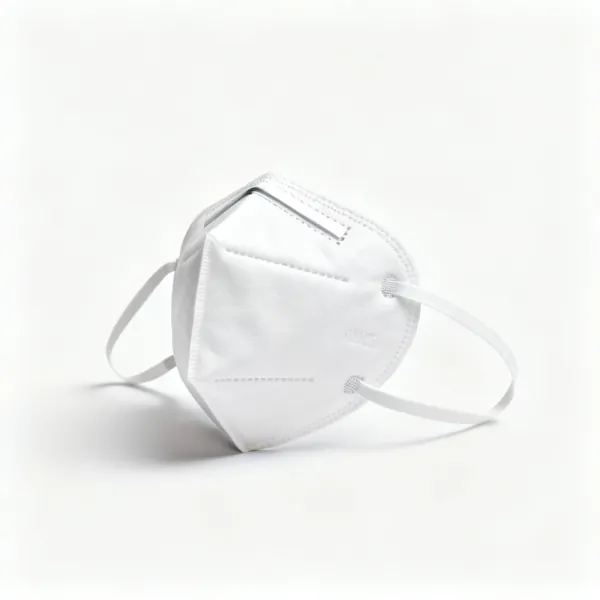
  • A white disposable dust mask with two elastic straps and a nose clipEssential

    Dust mask

    PVC dust is an irritant and sawing in a loft or a duct concentrates it. Marked essential because volume cutting in an enclosed space is common in this work and the exposure adds up.

Finishing the end 7

The step that decides whether the joint seals. All of it takes seconds and all of it gets skipped.

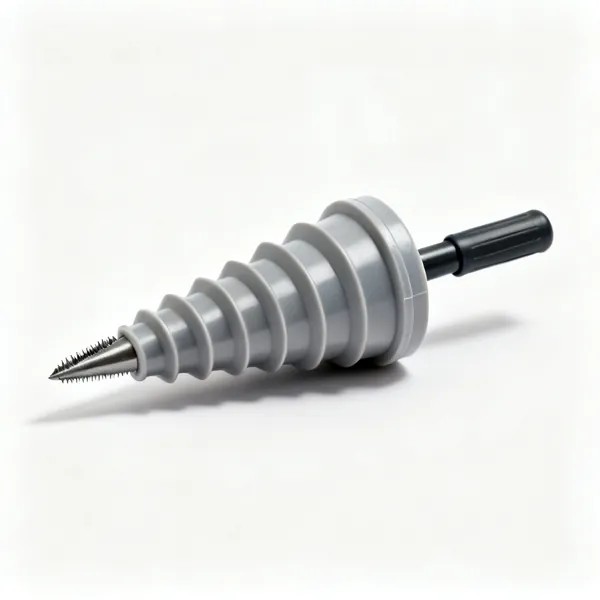
  • Pipe deburring tool: A plastic pipe deburring and chamfering tool with a stepped conical bodyEssential

    Pipe deburring tool

    A stepped cone that reams the inside and chamfers the outside in one twist. It does both jobs a cut PVC end needs, which is why it is worth having rather than using a knife.

  • Chamfering tool

    Chamfering tool

    A dedicated cutter that puts a consistent taper on the pipe end for solvent welding. Consistency matters here: a hand cut chamfer varies around the pipe and so does the cement film.

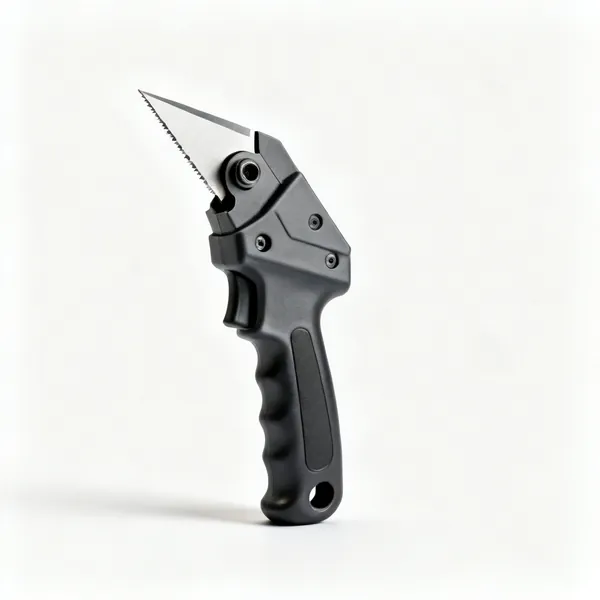
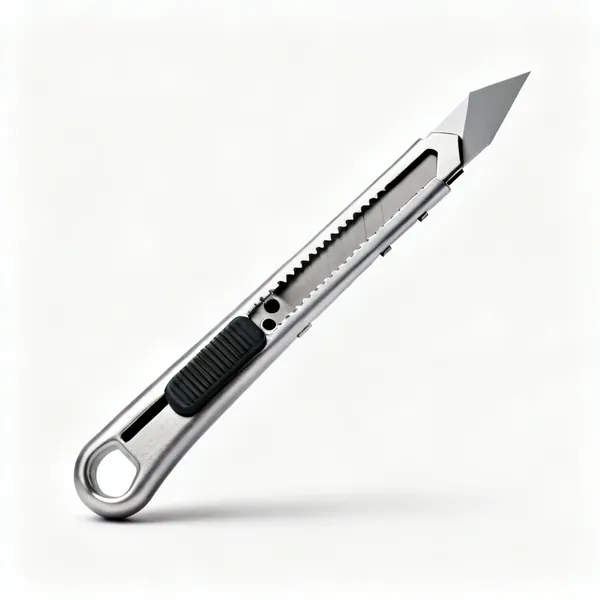
  • A metal bodied utility knife with a retractable trapezoid bladeEssential

    Utility knife

    Trims a burr and chamfers an edge when nothing better is to hand, and cuts thin overflow pipe outright. Cut away from yourself around the pipe rather than toward the hand holding it.

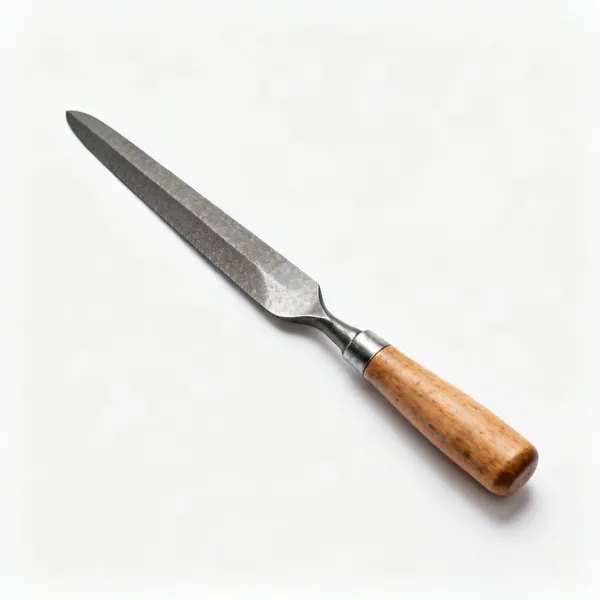
  • A half round file with one flat and one curved face and a wooden handleEssential

    Half round file

    Squares an end that came out slightly off and cleans both edges. The flat face trues the end and the curved face reaches the bore, which is exactly what a cut pipe needs.

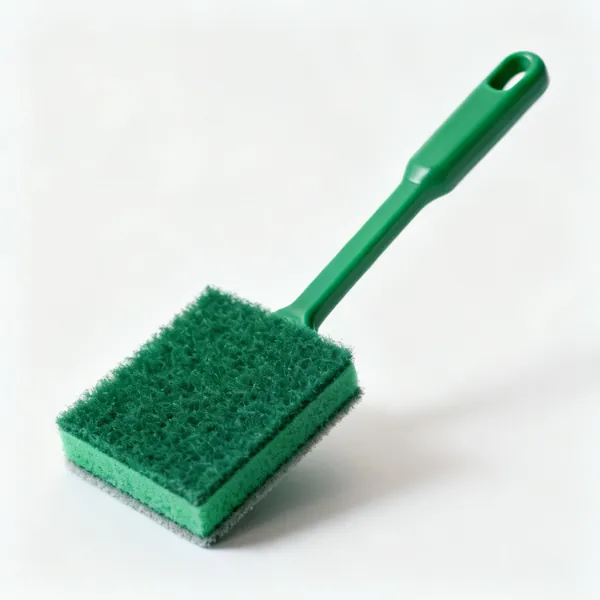
  • Abrasive pad: A green nylon abrasive scouring pad

    Abrasive pad

    Keys the outside of the pipe so solvent cement grips. Glossy new PVC is smoother than the cement needs, and a light scuff over the socket depth improves the weld.

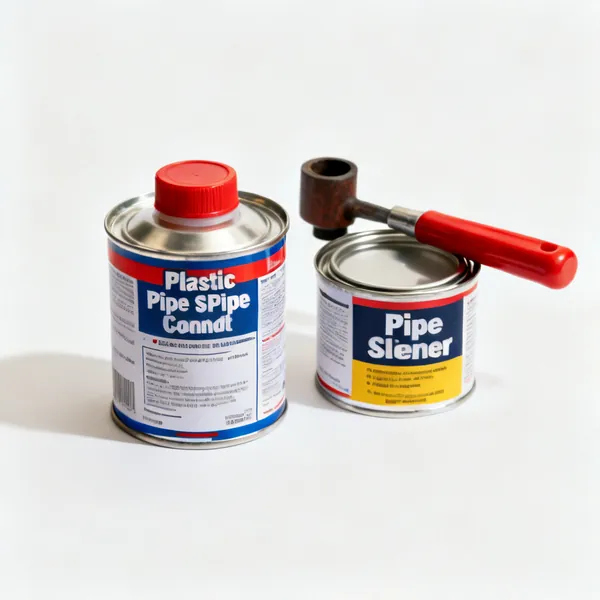
  • Solvent cement and cleaner: A tin of plastic pipe solvent cement and a tin of pipe cleaner side by sideEssential

    Solvent cement and cleaner

    Cleaner removes the release agent and the cement chemically welds pipe to fitting. It grabs in seconds, so the run is dry fitted and marked before anything is wet.

  • A black permanent marker pen with the cap offEssential

    Marker pen

    Marks the cut line and the socket depth on the pipe, so you can see whether it went fully home. That witness mark is the only way to confirm a solvent joint bottomed out.

Cutting PVC properly

Square, and deburred inside and out. Those two things decide whether the joint seals, more than the cutter you used.

Square matters more than clean

A PVC fitting works by the pipe bottoming out squarely in the socket. Cut at an angle and one side of the pipe reaches the shoulder while the other leaves a gap, and solvent cement bridges a gap poorly.

Freehand sawing is where this goes wrong. A ratchet shear or wheel cutter is square by construction. A saw needs a mitre box, a pipe cutting jig, or at minimum a line marked all the way around the pipe with a strip of paper wrapped as a guide.

Shears and wheel cutters
Square automatically, because the tool sits around the pipe rather than being aimed at it.
Saws need a guide
A mitre box, a jig, or a paper strip wrapped round to mark a true line. Eye alone is not close enough.
Check before cementing
Dry fit and look at the shoulder. A visible gap on one side means cut it again.

Deburr and chamfer, or the joint fails

Cutting leaves a burr on both edges. The internal burr disrupts flow and catches debris. The external burr is worse: it scrapes the cement off the socket wall as the pipe goes in, leaving a dry line exactly where the joint needs to be wet.

So a solvent weld joint wants a slight chamfer on the outside edge, not just the burr knocked off. On a push fit with a rubber seal it matters even more, because a burr will cut the ring as the pipe passes it.

Chamfer the outside
A slight taper, not just deburring. It lets the pipe enter without wiping the cement off the socket.
Deburr the inside
Flow, debris and, on a push fit, the seal. A knife or a deburring tool does it in seconds.
Never leave swarf inside
Shavings from a saw travel to the first bend and start the blockage themselves.

Cold PVC cracks

Below about five degrees, rigid PVC becomes noticeably more brittle, and a ratchet shear that cuts cleanly in a warm van will split the pipe outside in January. The split often runs well past the cut and is not always obvious.

In cold weather use a fine toothed saw or a wheel cutter instead, and inspect the cut end before fitting. Warming the pipe in your hands or in the van for a few minutes also helps more than it sounds like it should.

Under 5 degrees, use a saw
Shears concentrate force in one line and that is where cold PVC splits.
Inspect the end
A cold split can run 50mm up the pipe and still be hard to see. Flex the end and look.
Warm the pipe
A few minutes indoors or in the van. Free, and it makes shears usable again.

Diameter decides the tool

Up to about 32mm, ratchet shears are quickest and cut square in one squeeze. From 32mm to 50mm, shears still work on thin wall but a wheel cutter or a saw is more reliable on thick wall pressure pipe.

Above 50mm, and certainly on 110mm soil pipe, it is a saw and a guide, or a large chain or wheel cutter. No handheld shear will span that, and forcing one is how a soil pipe ends up with a crushed oval end.

Up to 32mm
Ratchet shears. One squeeze, square, no swarf, and quick enough to do a run of them.
32 to 50mm
Shears on thin wall, wheel cutter or saw on thick wall pressure pipe.
50 to 110mm
Fine tooth saw with a guide, or a large wheel cutter. Soil pipe is always a saw job in practice.
In situ
A pipe already fitted needs an internal cutter or a flexible wire saw, because nothing else has room to work.

Dust and offcuts

Sawing PVC produces a fine dust that is an irritant, and power sawing produces a lot of it. On any quantity of cutting, especially in an enclosed space like a loft or a duct, a mask is sensible.

Never cut PVC with an abrasive disc. It melts rather than cuts, gives off fumes you do not want to breathe, and leaves a melted lip inside the pipe that will catch debris permanently.

Mask for volume cutting
PVC dust irritates the airways, and a loft or a duct concentrates it.
Never an abrasive disc
It melts the pipe, releases fumes, and leaves an internal lip that becomes a blockage.
Eye protection with shears
A cold pipe can split and release a fragment with real speed when the ratchet lets go.
Collect the offcuts
Small PVC offcuts in a floor void or a trench are the debris that blocks the drain you just built.

Frequently asked questions

What is the best tool for cutting PVC pipe?
Ratchet shears up to about 32mm, because they cut square in one squeeze with no swarf. A wheel cutter for thicker wall pipe up to about 50mm. A fine toothed saw with a mitre box or a jig for anything larger, including 110mm soil pipe.
Can I cut PVC pipe with a hacksaw?
Yes, and it is often the right tool above 50mm. Use a fine blade, around 24 to 32 TPI, cut in a mitre box or against a wrapped paper line so it comes out square, and deburr and chamfer the end afterwards because a saw leaves a burr on both edges.
Why did my PVC pipe crack when I cut it?
Almost certainly because it was cold. Below about five degrees rigid PVC becomes brittle, and ratchet shears concentrate force along one line, which is where it splits. Use a saw or a wheel cutter in cold weather, or warm the pipe first.
Do I need to chamfer PVC pipe before gluing it?
Yes, for solvent weld. A square cut edge scrapes the cement off the socket wall as the pipe goes in, leaving a dry line exactly where the joint needs to be wet. A slight external chamfer lets it enter without wiping the socket clean.
What is the difference between ratchet shears and a wheel cutter?
Shears close a blade through the pipe wall in stages and are quick, clean and square, but they concentrate force and can split cold or thick wall pipe. A wheel cutter scores progressively all the way round, which is gentler and slower and needs clearance to rotate.
How do I cut a pipe that is already fitted?
An internal pipe cutter driven by a drill for a stub in a socket, or a flexible wire saw passed behind the pipe and worked from both ends. Both are slow and both work in clearances where no conventional cutter can be turned or squeezed.
Can I use an angle grinder on PVC?
No. An abrasive disc melts PVC rather than cutting it, produces fumes you should not breathe, and leaves a melted internal lip that catches debris permanently. It also makes an end that cannot be sealed properly. Use a saw.
How do I make sure the cut is square?
Use a tool that surrounds the pipe, like shears or a wheel cutter, and it is square automatically. If sawing, use a mitre box or a pipe jig, or wrap a strip of paper around the pipe and mark along its edge, which gives a true line right around.