Disclosure

Tools for pipe fitting

The pipe fitter's kit, all 38 grouped in the order a joint is made: cut, prepare the ends, bend or thread, then join and support. The step that gets skipped is preparation, and it is the commonest reason a joint leaks.

24 are marked essential: a fitter would not turn up without them.

Part of the full plumbing tools list, 56 tools in 9 groups.

Cutting pipe 7

A square, clean cut is the start of every joint. The tool depends on the material and on how much room there is to rotate it.

  • Wheel pipe cutter: A copper pipe cutter with a cutting wheel, two rollers and a knurled adjusting knobEssential

    Wheel pipe cutter

    A hardened wheel and two rollers tightened progressively as you rotate the tool, parting copper cleanly and square. It leaves no filings inside the pipe, which is why it is preferred over a hacksaw on any water system.

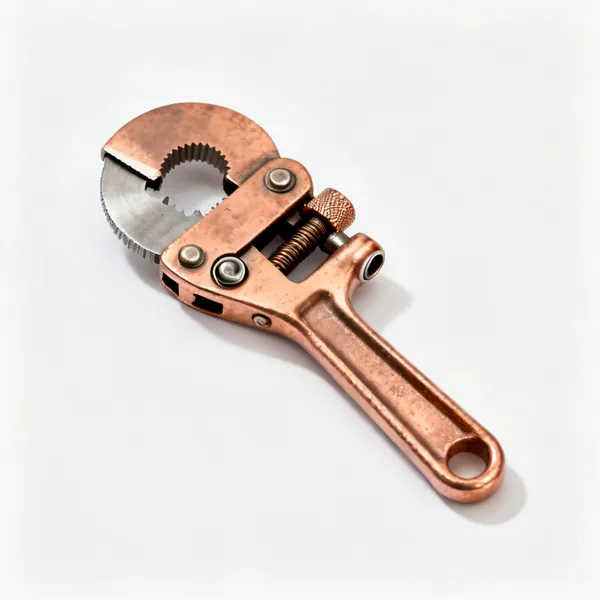
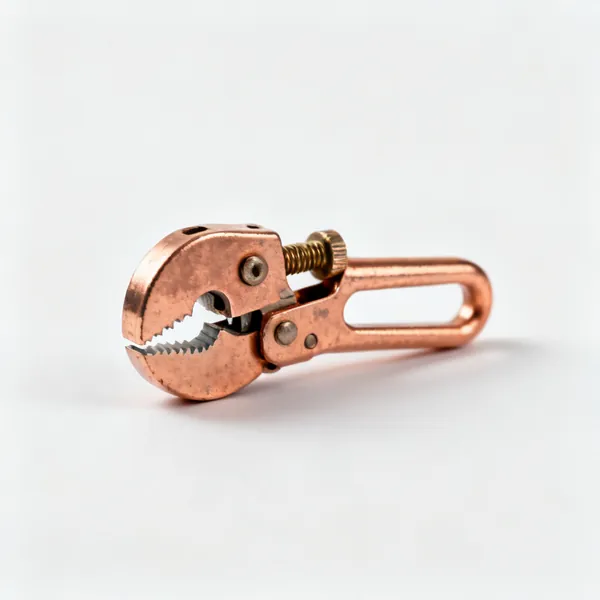
  • Mini pipe cutter: A small mini copper pipe cutter with a compact body, cutting wheel and thumbscrewEssential

    Mini pipe cutter

    A compact cutter that rotates in a couple of centimetres of clearance, for pipe already clipped to a wall or running through a joist. Often the only cutter that fits where the pipe actually is.

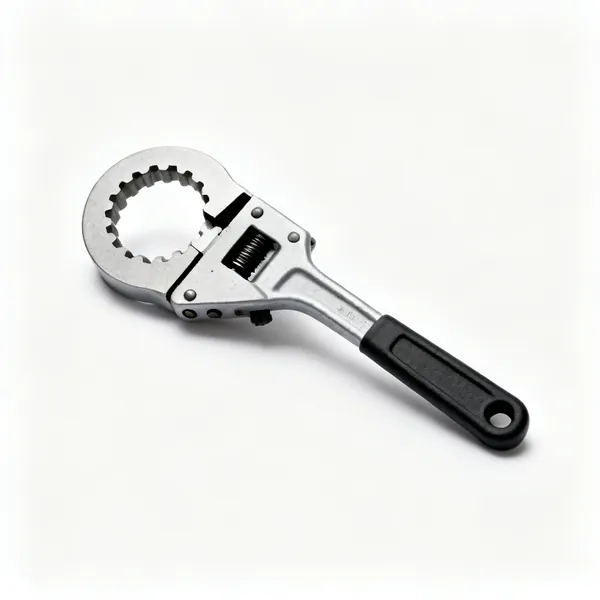
  • A pipe slice cutter, a small circular ratcheting ring tool sized to fit around a pipe

    Pipe slice

    A ring that clips right around the pipe and cuts in two or three turns by hand, needing almost no clearance at all. Sized to one diameter each, so it is a set rather than a single tool.

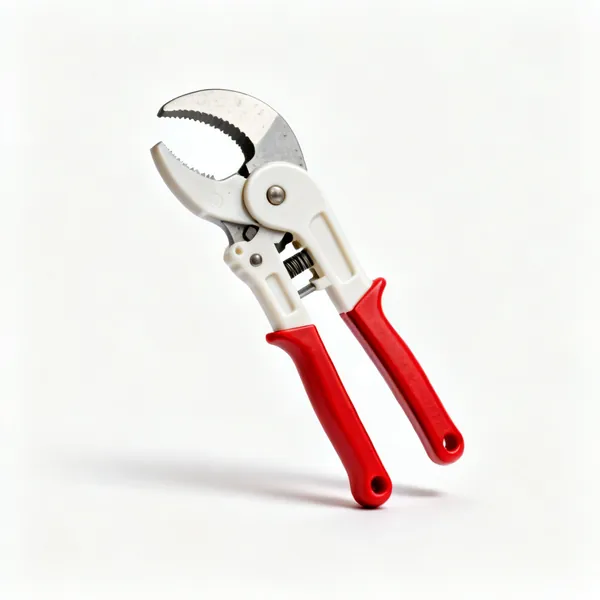
  • A pair of ratcheting plastic pipe shears with a curved blade and red handlesEssential

    Plastic pipe shears

    Ratcheting jaws that shear plastic and multilayer pipe square in one squeeze. A copper wheel cutter tends to crack rigid plastic and a saw leaves swarf, so this is the correct tool rather than a convenience.

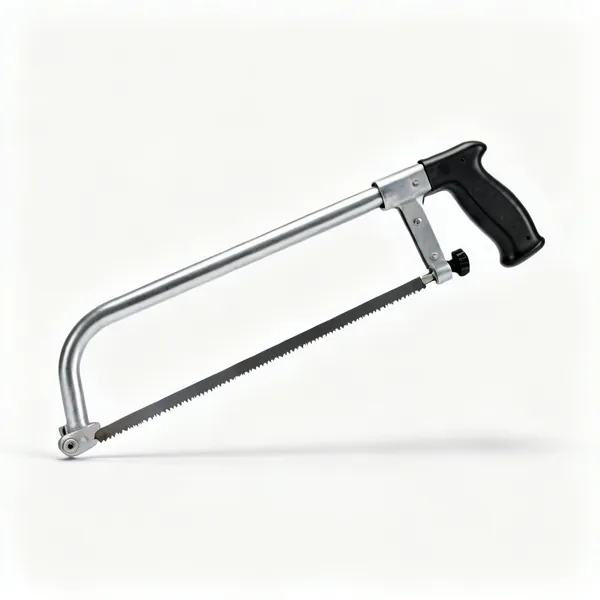
  • Hacksaw: Tensioning knob and pistol grip handleEssential

    Hacksaw

    Cuts steel pipe, threaded rod and anything a wheel cutter cannot reach. A 32 TPI blade is right for thin wall, and the cut must be squared and reamed afterwards because a hacksaw guarantees neither.

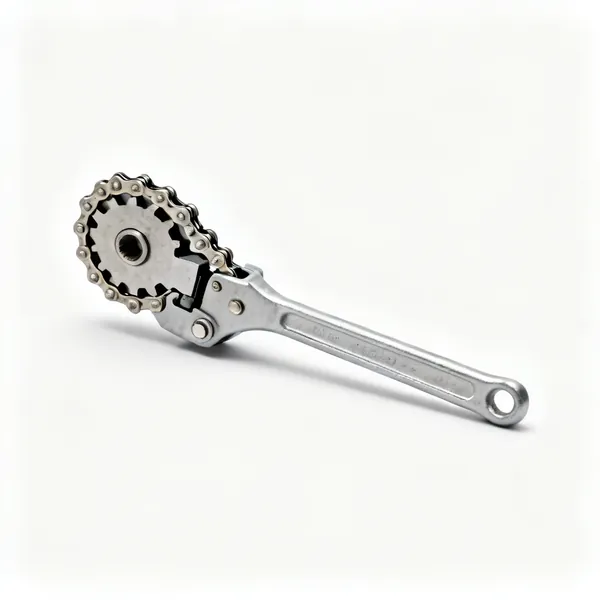
  • A chain pipe cutter with a chain of cutting wheels and a long ratcheting handle

    Chain pipe cutter

    A chain of cutting wheels wrapped around large diameter cast or steel pipe and ratcheted to snap it. For soil pipe and mains work where no rotating cutter would have room or leverage.

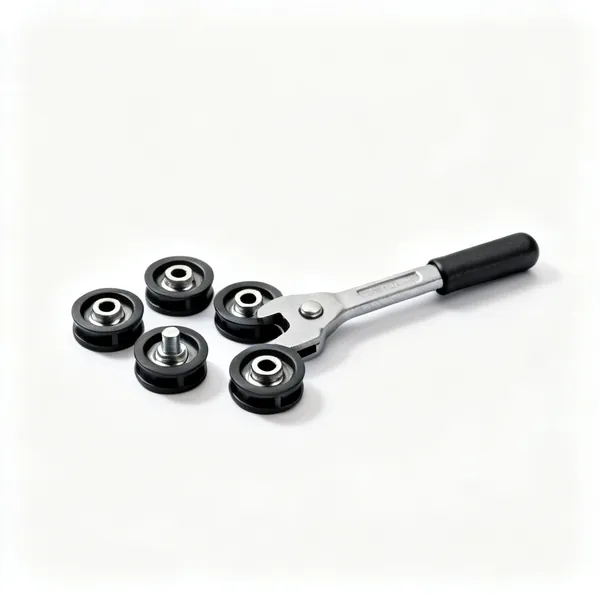
  • Tube cutting wheel spares: A set of small replacement pipe cutter wheels with central axle holesEssential

    Tube cutting wheel spares

    Replacement wheels, because a blunt wheel is the usual reason a cutter starts spiralling instead of tracking a single groove. They cost very little and people persist with worn ones for months.

Preparing the ends 6

The step that gets skipped and the commonest cause of a leaking joint. All of it takes seconds.

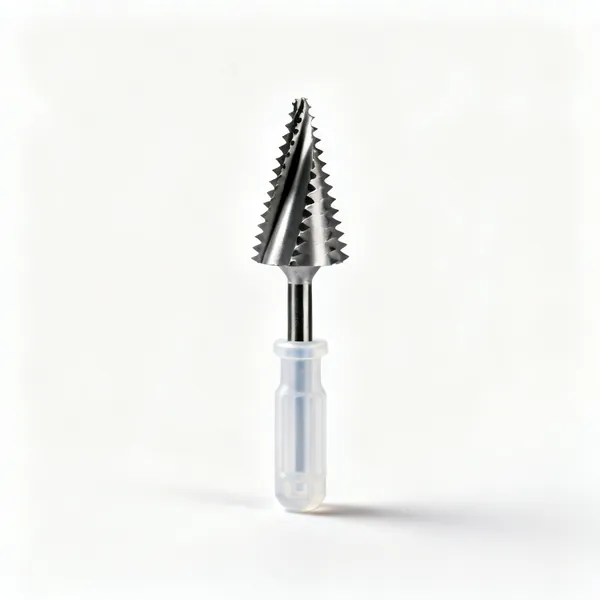
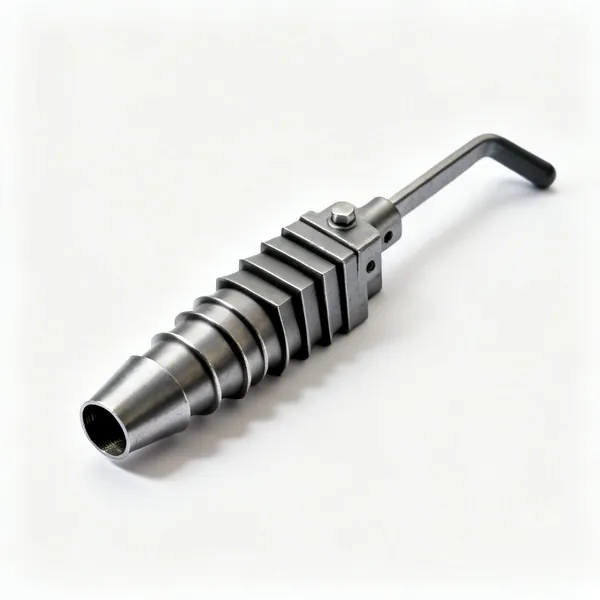
  • A pipe deburring reamer tool with a conical fluted blade and a plastic handleEssential

    Deburring reamer

    A conical blade that shaves the internal burr left by cutting. That burr restricts flow, holds debris, stops a compression olive seating and can shave a push fit O ring on the way in.

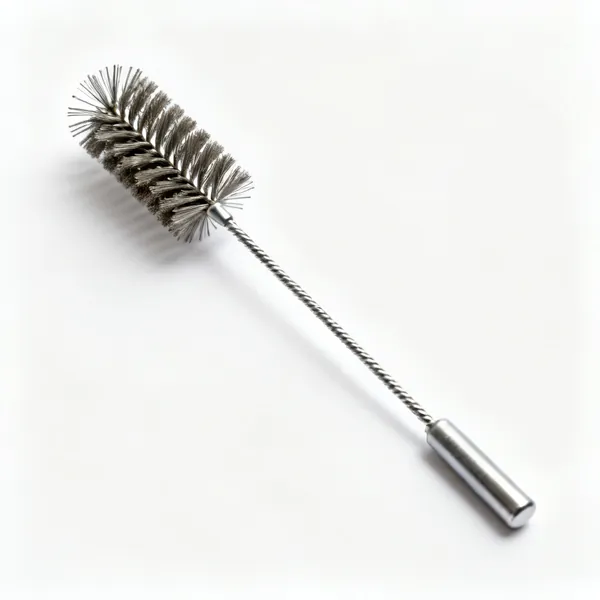
  • Fitting brush: A set of round wire fitting cleaning brushes of graduated diametersEssential

    Fitting brush

    A wire brush sized to the inside of a fitting, cleaning the socket to bright metal. Solder will not wet an oxidised surface, so a dirty socket is a joint that will fail whatever the flux does.

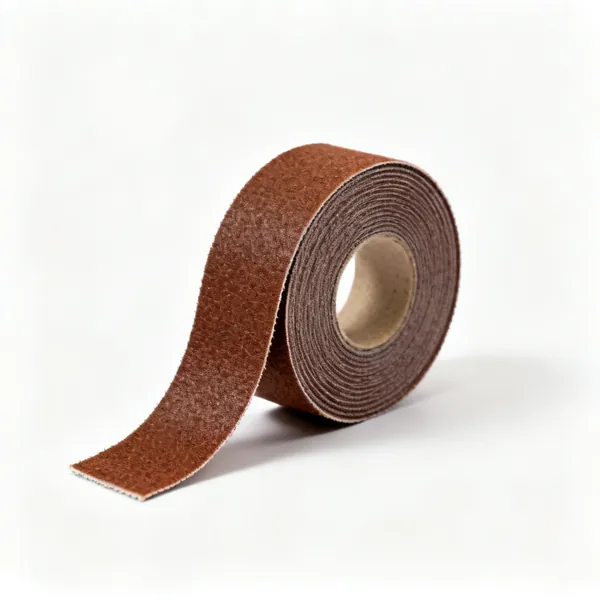
  • A roll of brown cloth backed abrasive strip partly unwoundEssential

    Abrasive strip

    A roll of cloth backed abrasive drawn around the pipe end to remove oxide. Clean further back than the fitting will cover, because flux and solder travel beyond the socket as they heat.

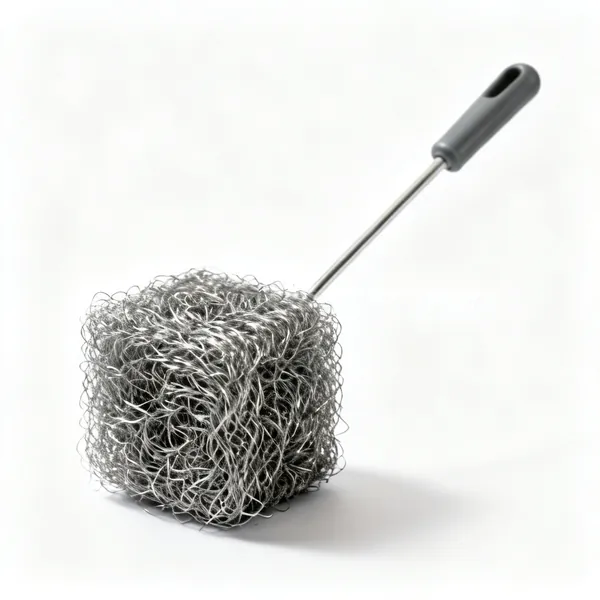
  • A pad of fine steel wire wool

    Wire wool

    Fine steel wool for cleaning pipe where abrasive strip cannot wrap, and for cleaning a fitting by hand. Leaves a finer finish than abrasive, and shreds, so keep it away from open pipe ends.

  • A half round file with one flat and one curved face and a wooden handleEssential

    Half round file

    Squares a hacksawn end and takes the outside burr off. The flat face trues the end and the curved face cleans the bore, which is exactly the pair of jobs a cut pipe presents.

  • A multilayer pipe calibrator tool with stepped conical ends of graduated sizes

    Pipe calibrator

    A stepped tool that reams and rerounds multilayer pipe to its exact bore before a press fitting goes in. Not optional on that system: an out of round end will not seal against the fitting O rings.

Bending and threading 7

Changing the pipe itself rather than adding a fitting. Fewer joints means fewer leaks and better flow.

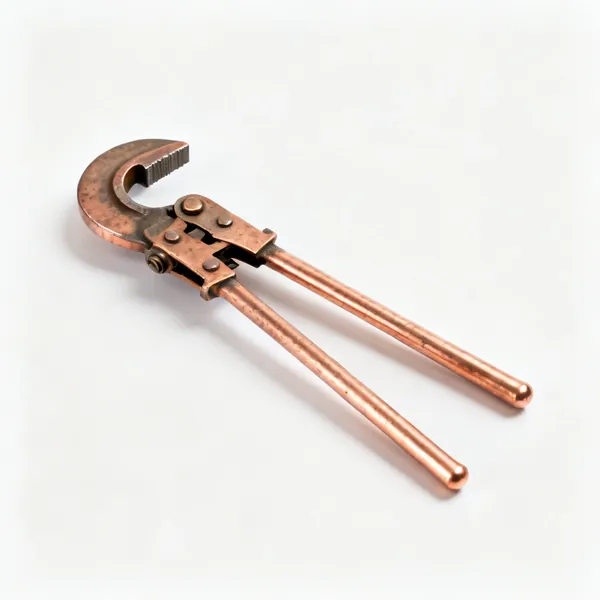
  • Lever pipe bender: A lever type copper pipe bender with two long handles, a curved former and guideEssential

    Lever pipe bender

    A grooved former and guide that bend copper up to 22mm cold without flattening the bore. The former sets the radius and supports the wall, which is what separates a bend from a kink.

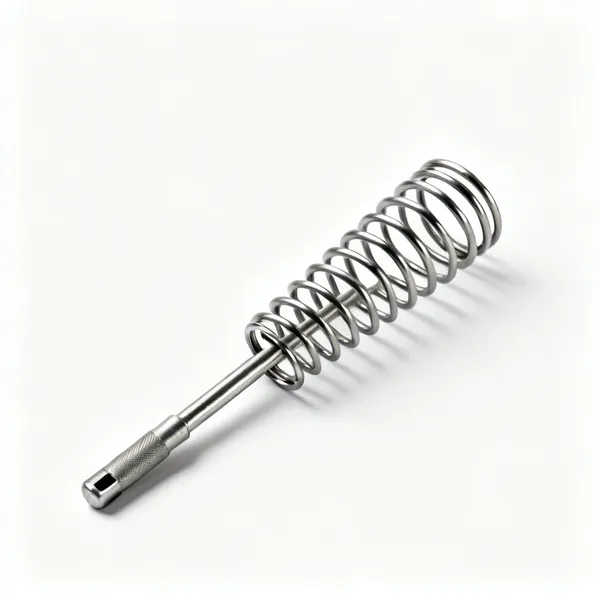
  • A set of coiled steel pipe bending springs of graduated diameters

    Bending springs

    Coiled springs slid inside soft copper to support the wall while it is bent by hand. Less accurate than a bender and they reach into spaces no bender fits, which is the whole reason to keep a set.

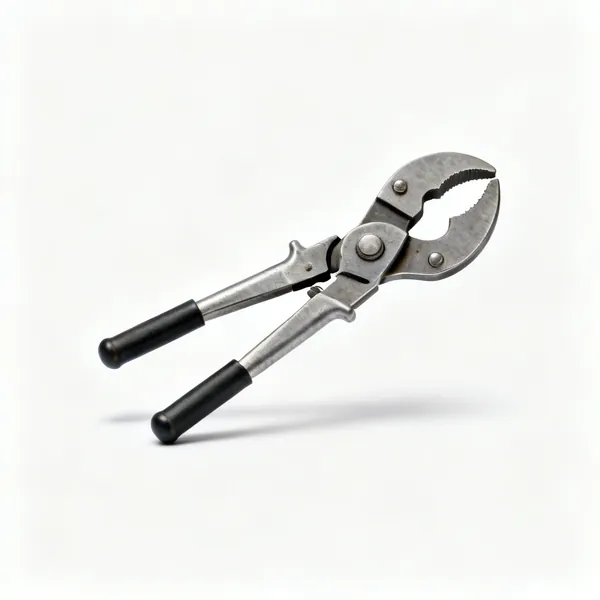
  • Scissor bender: A compact scissor type pipe bender with two short handles and a curved former

    Scissor bender

    A compact bender for 15mm and 22mm that works in one hand in a confined space. Less leverage than a lever bender, and it will bend a pipe already half fixed in place.

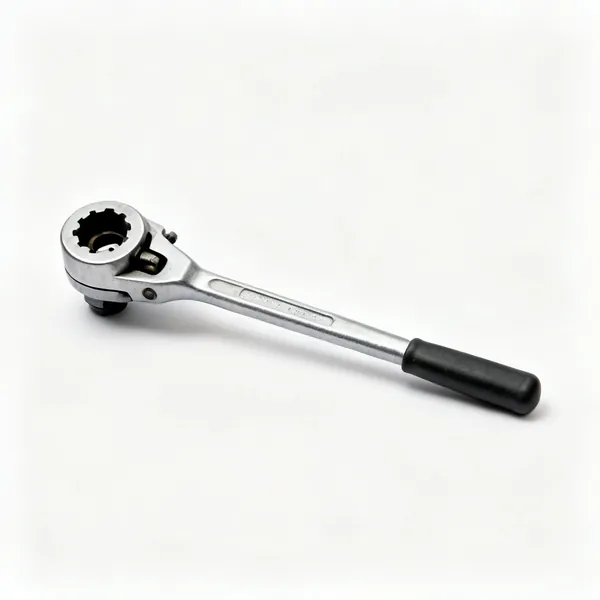
  • A ratcheting pipe threading die stock with a long handle and a die head fitted

    Pipe threading die stock

    A ratcheting holder carrying dies that cut a tapered thread on steel pipe. Cutting oil is essential, because a dry cut tears the thread and a torn thread will not seal however much compound goes on it.

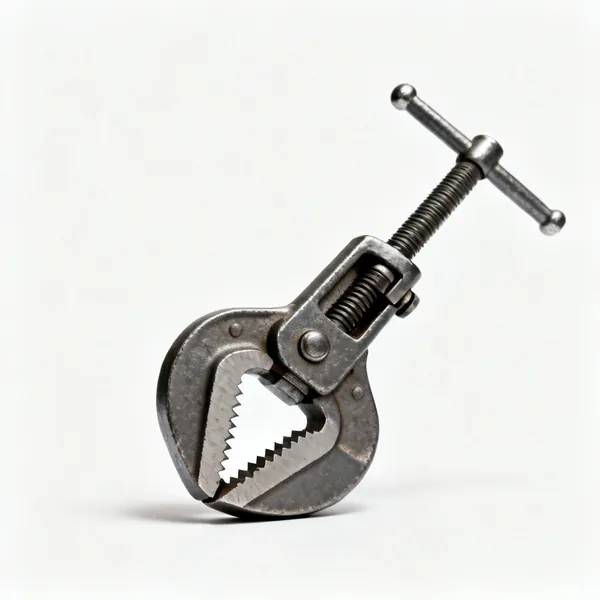
  • A yoke type pipe vice with a hinged top jaw and a serrated V shaped bottom jaw

    Pipe vice

    A chain or yoke vice that grips round pipe rigidly enough to be threaded. A bench vice crushes pipe and lets it turn, and either of those ruins the thread you are trying to cut.

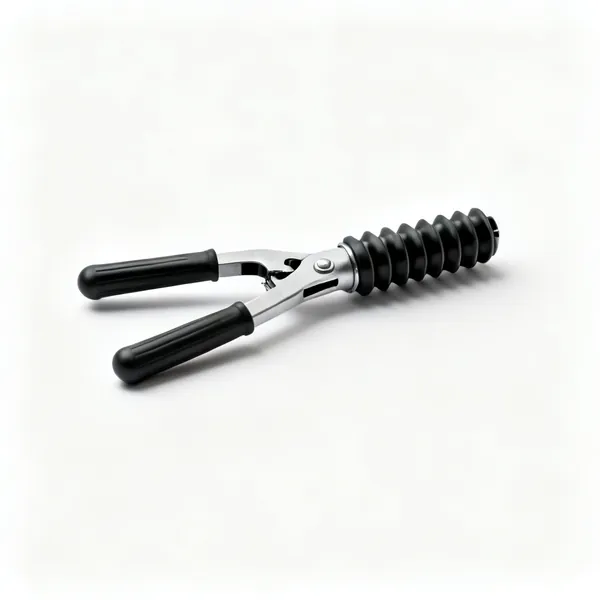
  • A hand tube expander tool with two handles and a segmented expanding head

    Tube expander

    Expands a pipe end so the same size slides inside it, making a joint with no coupling. One less fitting in the run, which on a long soldered pipe run adds up quickly.

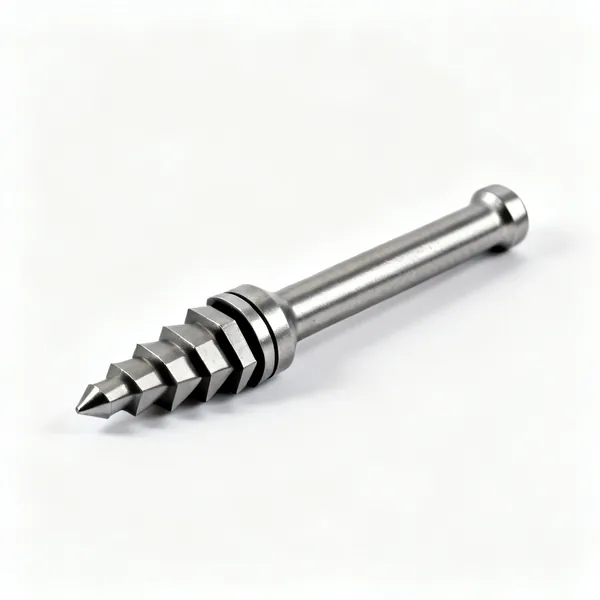
  • A set of steel swaging punches with stepped tapered ends of graduated sizes

    Swaging punches

    Stepped punches driven into a pipe end to form a socket for the next size. Cruder than an expander and considerably cheaper, and adequate where the joint will be soldered anyway.

Making the joint 10

Four systems, four sets of tools. Almost nothing here transfers from one to another.

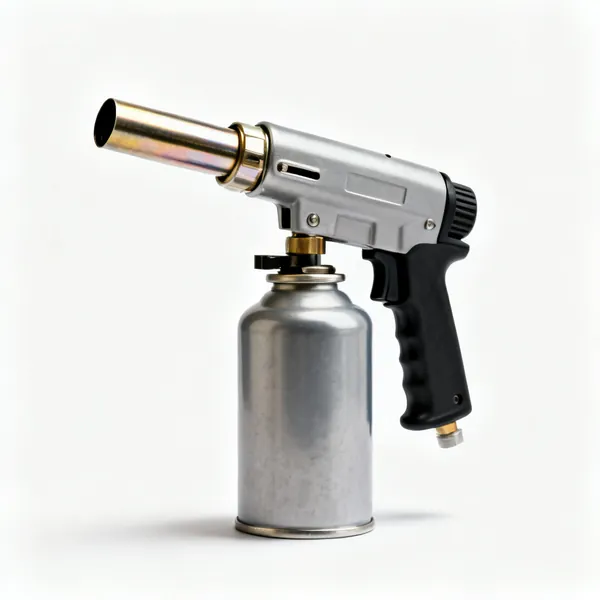
  • A handheld plumbers blowtorch with a gas canister and a burner headEssential

    Blowtorch

    Heats a soldered joint until capillary action draws solder into the socket. Heat the fitting, not the solder, and stop as soon as it flows: overheating burns the flux and the joint then will not take.

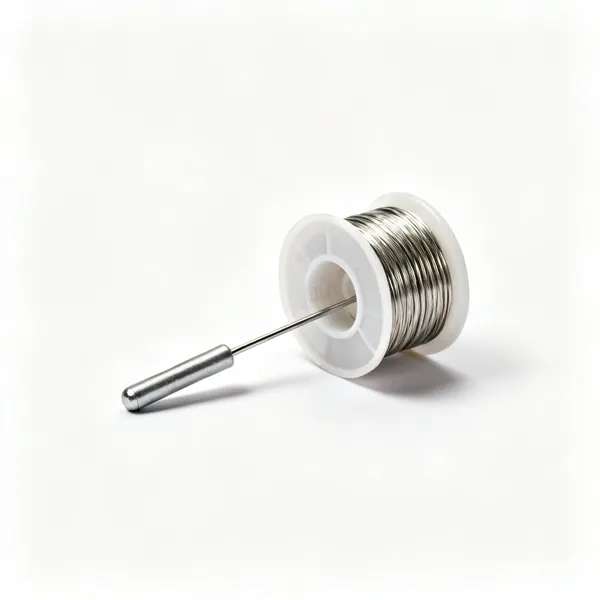
  • Lead free solder: A coil of lead free plumbing solder wire on a small reelEssential

    Lead free solder

    Wire solder drawn into the joint by capillary action once the fitting is hot enough. Lead free is required on anything carrying drinking water, and it needs slightly more heat than the old alloys.

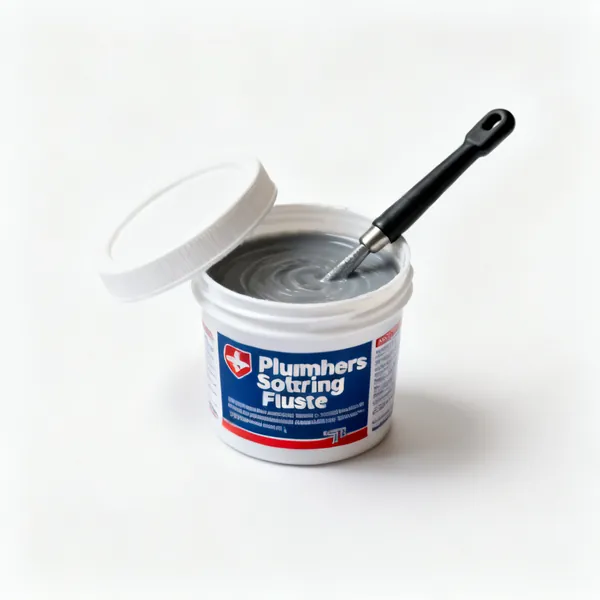
  • A small tub of plumbers soldering flux paste with the lid offEssential

    Soldering flux

    Paste that dissolves oxide and lets solder wet the metal. It works on a cleaned surface and cannot rescue a dirty one, which is the misunderstanding behind most failed solder joints.

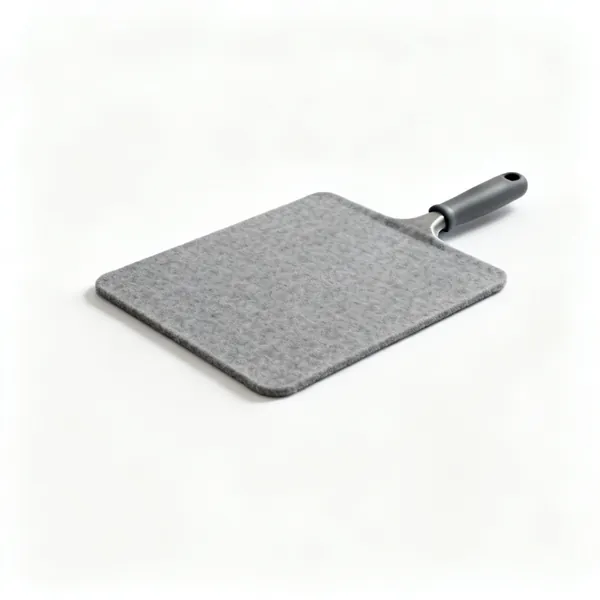
  • Heat proof mat: A grey fibre heat proof soldering mat, a flat rectangular padEssential

    Heat proof mat

    A fibre mat placed behind a joint being soldered in a stud wall or against a joist. Soldering near timber without one is how a torch job becomes a fire, sometimes hours afterwards.

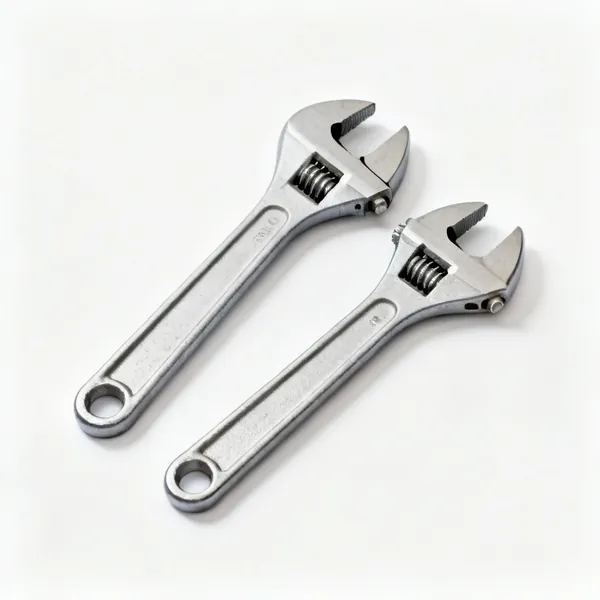
  • Two adjustable spanners of different sizes with knurled adjusting screwsEssential

    Adjustable spanners

    A pair, because a compression joint needs one spanner holding the fitting and one turning the nut. Working with a single spanner twists the pipe and the joint behind it comes loose.

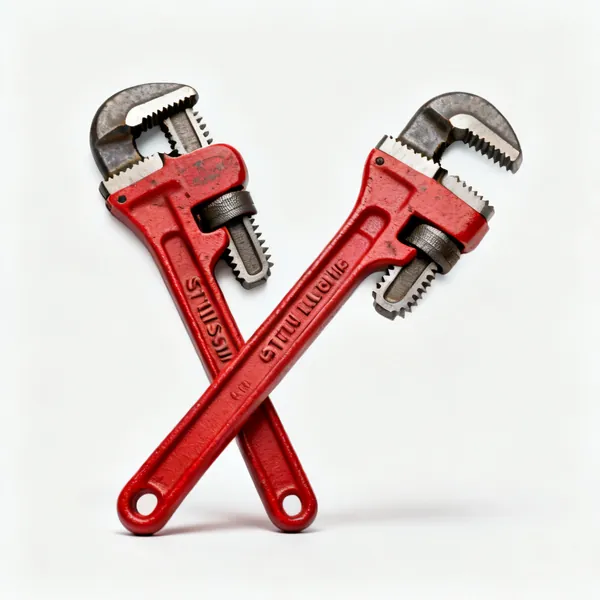
  • Two Stillson pipe wrenches with serrated jaws and long red handlesEssential

    Pipe wrenches

    Hardened serrated jaws that bite harder the more you pull, for threaded steel pipe. Also a pair, for the same reason, and never used on copper or chrome because they mark whatever they hold.

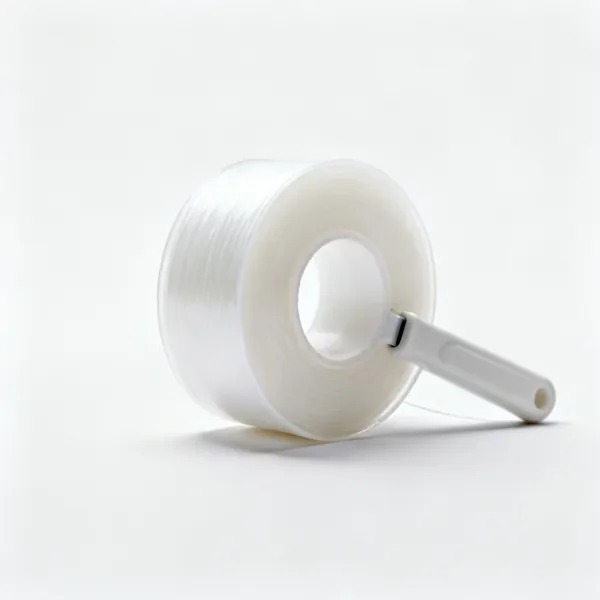
  • PTFE tape: A roll of white PTFE plumbers thread seal tape partly unwoundEssential

    PTFE tape

    Wrapped clockwise onto a male thread to seal it. Thin tape for water and thicker gas grade for gas, and it seals a well cut thread rather than filling a damaged one.

  • A tin of plumbers jointing compound paste with the lid removed

    Jointing compound

    Paste used with hemp on large tapered threads, where tape alone is not enough. Standard on steel pipework and on older fittings whose threads have been cut more than once.

  • A tin of plastic pipe solvent cement with a brush in the lidEssential

    Solvent cement

    Welds rigid plastic pipe and fitting into one piece chemically. It grabs in seconds, so the run must be dry fitted and marked first because there is no repositioning once the socket is wet.

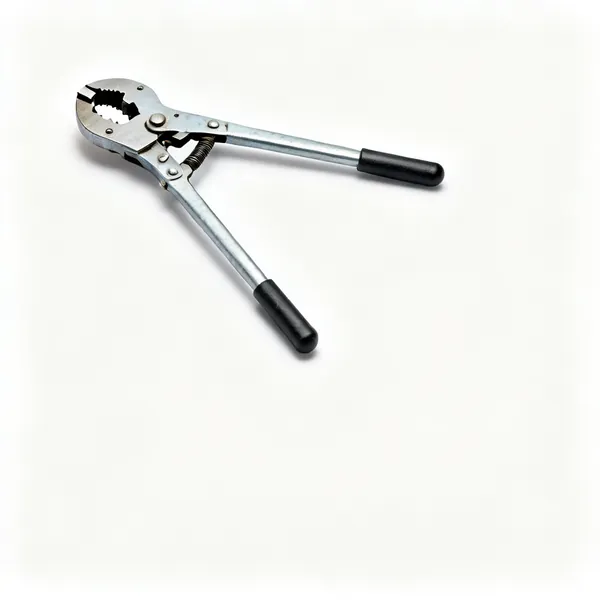
  • A manual hand press tool for pipe fittings with two long handles and a crimping jaw

    Hand press tool

    Crimps a press fitting onto copper or multilayer pipe permanently, with no flame at all. The reason it appears here is fire risk: in an occupied building a press joint avoids hot work entirely.

Measuring and supporting 8

A run that starts a few millimetres out finishes a long way out. All of this is cheaper than cutting joints back out.

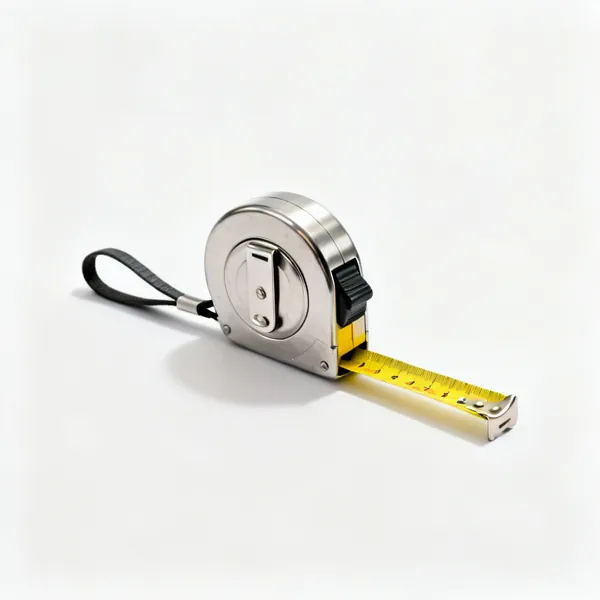
  • A retractable steel tape measure with a yellow blade and a belt clipEssential

    Tape measure

    Measured to the fitting shoulder rather than the pipe end, allowing socket depth at both ends. Forgetting that allowance is the single most common reason a cut length comes out short.

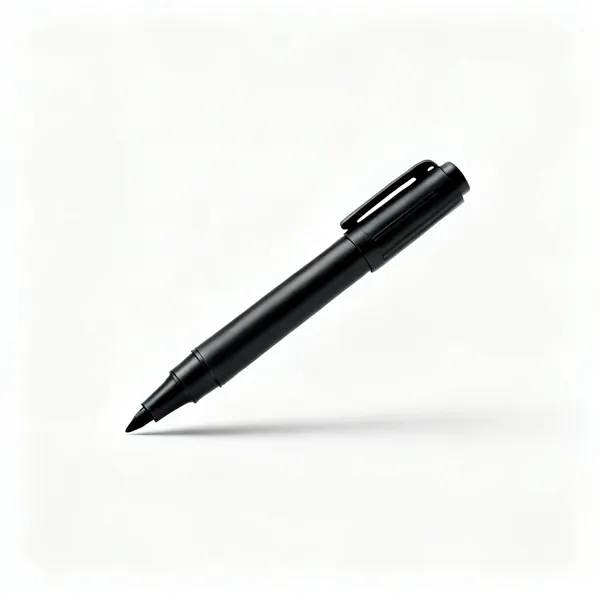
  • Pipe marker: A black permanent marker pen with the cap offEssential

    Pipe marker

    A marker that writes on wet, greasy or oxidised pipe. An ordinary pen will not mark copper reliably, and a mark you cannot see is a cut in the wrong place.

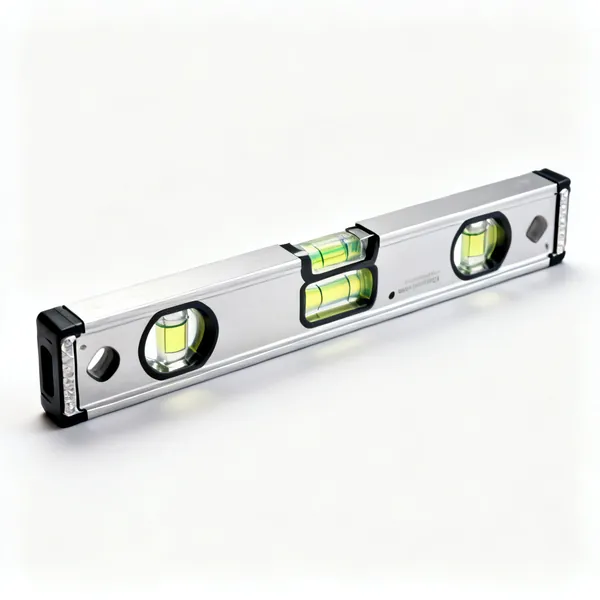
  • An aluminium spirit level with three glass vials and machined edgesEssential

    Spirit level

    Sets a run level, or deliberately not level where a fall is needed. On waste pipe the gradient is the whole design, and eye alone is nowhere near accurate enough over a few metres.

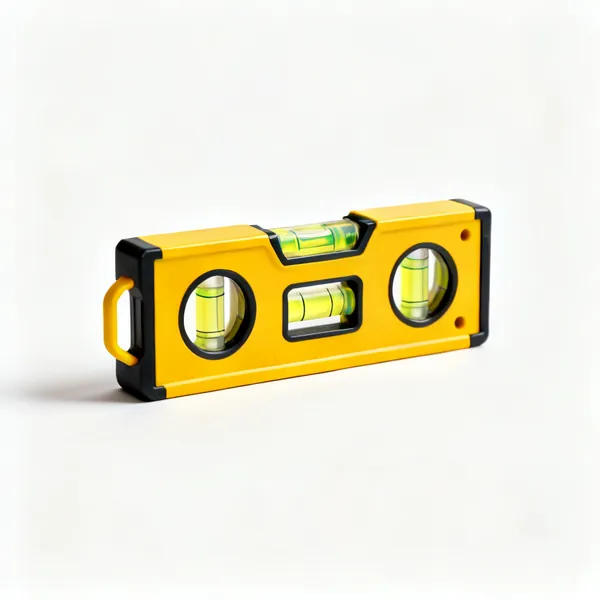
  • Torpedo level: A short magnetic torpedo spirit level with three vials and a yellow bodyEssential

    Torpedo level

    A short magnetic level that sits on a pipe in a confined space. Under a sink or in a joist bay there is rarely room for anything longer, which is why this is the one that gets used.

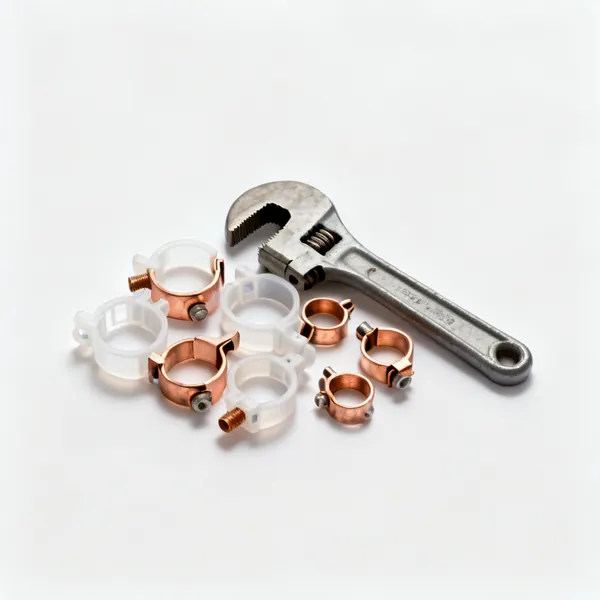
  • A handful of plastic and copper pipe clips of different sizesEssential

    Pipe clips

    Support the run so it does not sag, which would lose the fall and stress every joint. Fitted as you go, because retrofitting clips to a finished run means working around what is already there.

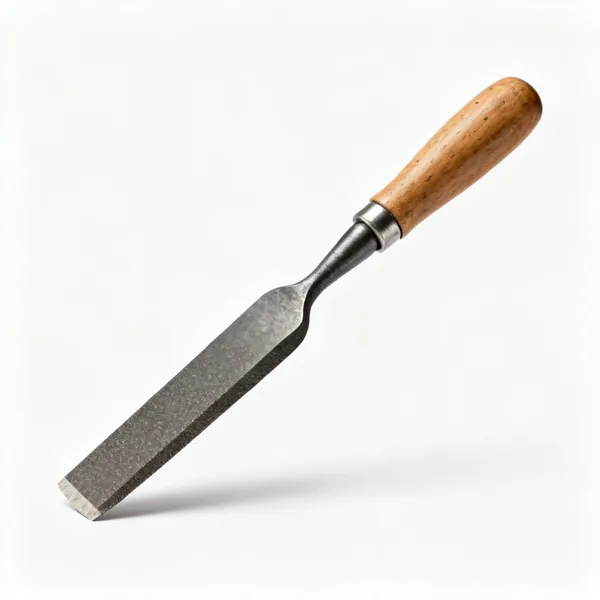
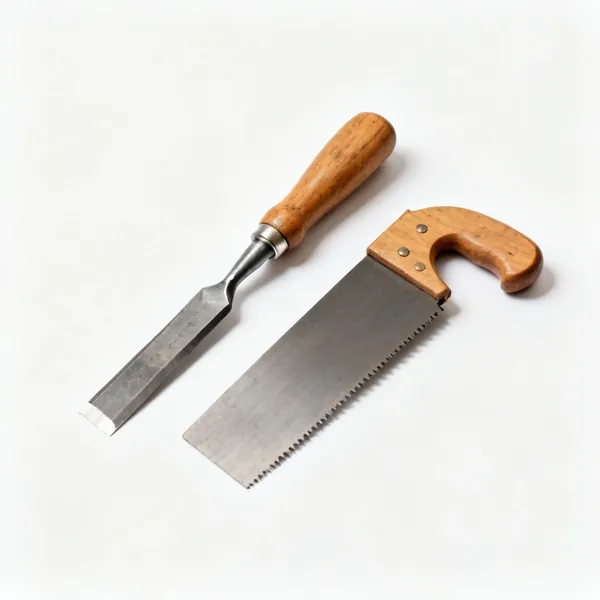
  • Joist notching tools: A wood chisel and a pad saw laid side by side

    Joist notching tools

    A chisel and pad saw for notching a joist to take a pipe run. There are limits on depth and position for structural reasons, and a notch cut in the wrong place weakens the floor.

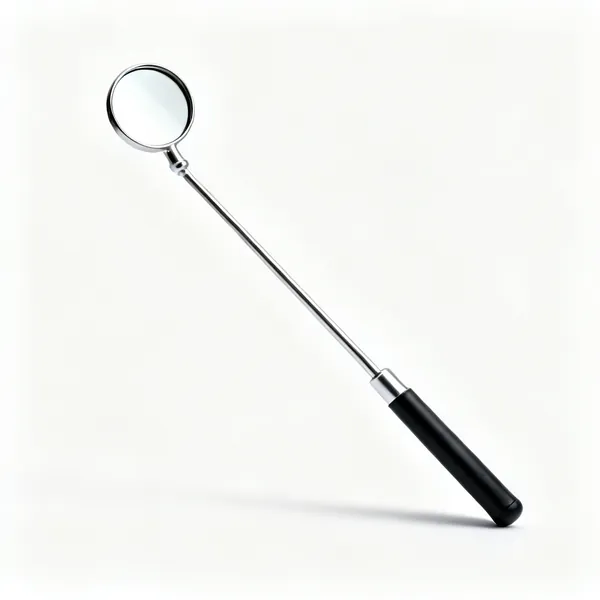
  • A telescopic inspection mirror with a small round mirror on an extending metal shaft

    Inspection mirror

    A small mirror on a telescopic stem for seeing behind a pipe run or into a boxed void. Most of what you need to check on a fitting is on the side facing the wall.

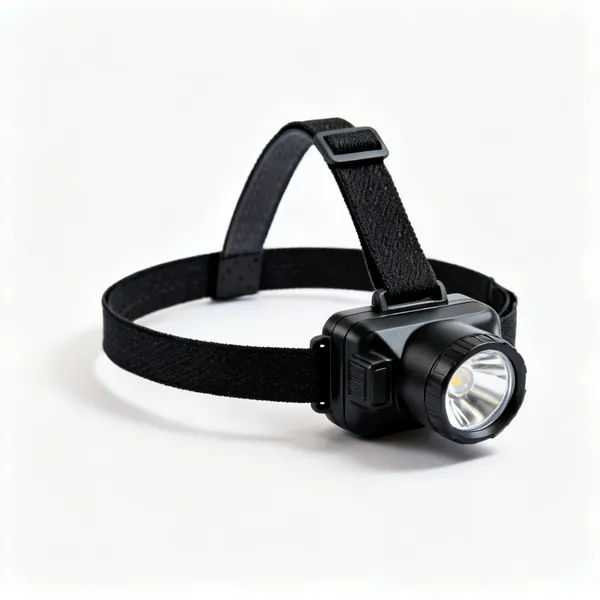
  • A black LED head torch with an adjustable elastic headbandEssential

    Head torch

    Both hands free with light where you are looking, which under a floor or in a cupboard is the difference between working and guessing. Almost all pipework lives somewhere unlit.

Working with pipe

The material decides the tools. Get that straight first, because a copper tool on steel pipe does nothing useful.

The material decides everything

Copper is cut with a wheel cutter, joined by solder or by compression, and bent cold with a former. Steel is cut with a wheel cutter or a hacksaw, threaded with a die, and joined with tapered threads and jointing compound. Plastic is cut with shears or a wheel, and joined by solvent weld or push fit.
Very little crosses over. A pipe wrench on copper crushes it. A copper bender does nothing to steel. Buying tools before deciding what you are working in is how a bag ends up full of things that do not fit the job.

Copper
Wheel cutter, deburring reamer, bender, and either a torch or compression fittings.
Steel
Wheel cutter or hacksaw, threading dies, a reamer, two pipe wrenches and jointing compound.
Plastic
Shears or a plastic wheel cutter, and solvent cement or push fit. Almost no metalwork tools apply.
Multilayer
Its own press tool and calibrated cutters. Not interchangeable with copper tooling despite looking similar.

Reaming and cleaning is not optional

Cutting pipe leaves a raised burr on the inside edge. On a soldered joint that burr disrupts flow and traps debris. On a compression joint it stops the olive seating evenly, and on a push fit it can shave the O ring as the pipe goes in.

Deburr the inside, clean the outside back further than the fitting will cover, and on copper abrade to bright metal. Every one of those steps takes seconds and each is a common cause of a joint that weeps six months later.

Ream the inside
The burr from the cutter. It affects flow, seating and the O ring in a push fit, all differently and all badly.
Clean beyond the fitting
Flux and solder travel. Cleaning only what the fitting covers leaves oxide right where the joint ends.
Bright metal on copper
Abrasive strip or wire wool. Solder will not wet an oxidised surface, and no amount of flux fixes that.
Cut square
An angled cut leaves a gap on one side of the fitting socket. A wheel cutter guarantees square; a hacksaw does not.

Bend rather than fit where you can

Every fitting is a potential leak and a restriction to flow. A bend is neither. On copper up to 22mm a lever bender makes a clean bend in seconds and removes two solder joints from the run.

The limits are radius and wall thickness. Too tight a radius flattens the bore, and thin wall pipe kinks. A bender's former sets the radius for you, which is the whole reason to use one rather than bending by hand over your knee.

Fewer joints, better flow
A bend has no seam to leak and less restriction than an elbow. Two fewer joints per corner.
Use the former
The guide sets the radius and supports the wall. Freehand bending flattens the bore even when it looks fine.
Springs for awkward spots
An internal or external spring bends soft pipe where no bender will fit, at the cost of accuracy.
Mark the centre of the bend
Benders bend around the mark rather than from it, so measure to the centre line and check the tool's own scale.

Threaded steel pipe

Steel pipe threads are tapered, which is what makes them seal: the thread tightens progressively as it goes in. That is also why a tapered thread must not be wound in fully by hand and then forced, and why over-tightening splits fittings.

Cutting a thread needs a die stock and cutting oil, and the pipe must be reamed afterwards because threading pushes a burr inward. Two pipe wrenches are then needed to tighten, one holding and one turning, or you simply twist the run.

Tapered, not parallel
BSPT and NPT seal on the taper. A parallel thread needs a washer or an O ring instead.
Oil the die
Dry threading tears the thread and blunts the die. Cutting oil is the difference between a seal and a leak.
Two wrenches
One to hold, one to turn. Using one wrench twists the whole run and loosens the joint behind it.
Compound or tape
PTFE tape for small threads, jointing compound and hemp for large ones. Neither rescues a badly cut thread.

Getting the run where it should be

A pipe run that is a few millimetres out at the start is a long way out by the end, and correcting it later means cutting joints out. Marking, levelling and supporting as you go is faster than any correction.

Falls matter as much as straightness on anything carrying waste. A soil or waste run needs a consistent gradient, usually around 1 in 40, and a level with a fall gauge or a simple packing block is how that gets set rather than guessed.

Mark to the fitting, not the pipe
Allow the socket depth at each end. This is the measurement people get wrong and it shortens every length.
Set the fall
Around 1 in 40 on waste. Too shallow and it blocks, too steep and the water outruns the solids.
Clip as you go
An unsupported run sags, which loses the fall and stresses the joints. Clips are cheap and retrofitting them is not.
Dry fit first
Assemble the run without solvent or solder and check it reaches. Solvent weld gives you about ten seconds to change your mind.
Frequently asked questions

What tools do I need for pipe fitting?
A wheel pipe cutter, a deburring reamer, a tape measure and marker, a spirit level, two adjustable spanners and abrasive strip cover most work. Add a pipe bender and a blowtorch for copper, threading dies and two pipe wrenches for steel, and shears for plastic.
What is the difference between a pipe wrench and a pipe cutter?
A pipe wrench grips and turns pipe, using hardened serrated jaws that bite in harder the more you pull. A pipe cutter is a hardened wheel rolled around the pipe to part it cleanly. One assembles and dismantles, the other cuts, and neither substitutes for the other.
Why do I need to ream pipe after cutting it?
Cutting leaves a raised burr on the inside edge. It restricts flow, traps debris, prevents a compression olive from seating evenly and can shave the O ring in a push fit connector. Reaming takes a couple of seconds and prevents a joint that weeps months later.
Should I bend copper pipe or use elbow fittings?
Bend where you can. A bend has no joint to leak and restricts flow less than an elbow, and it removes two soldered connections per corner. Use fittings where the radius would be too tight, where access prevents the bender working, or on pipe too thin walled to bend.
What size pipe cutter do I need?
For domestic work, a cutter covering 6mm to 28mm handles almost everything, plus a mini cutter for pipe already fixed against a wall. Larger cutters exist for 35mm and above, and for steel a heavy duty ratcheting cutter or a hacksaw is needed instead.
Can I use the same tools on plastic and copper pipe?
Some of them. A tape, level and marker are common to both. Cutting tools are not: a copper wheel cutter tends to crack rigid plastic, and plastic shears will not touch copper. Joining tools have nothing in common at all, since one is heat or compression and the other is solvent or push fit.
What is a pipe slice?
A small ring shaped cutter that clips fully around the pipe and is rotated by hand, cutting in a couple of turns. It needs almost no clearance, which makes it the tool for a pipe already fixed close to a wall or joist where a normal cutter cannot rotate.
How tight should a threaded pipe joint be?
Hand tight plus about two to three turns with a wrench on most tapered threads, and the taper does the sealing rather than the force. Over-tightening splits cast and brass fittings, and it will not fix a leak caused by a poorly cut thread or missing compound.