Disclosure

Garden tools for digging

Spades, forks, broadforks and mattocks for garden soil, all 28 grouped by the job. The soil picks the tool rather than the hole: clay parts along fracture lines so a fork beats a spade, and stony ground needs breaking before anything will enter it.

12 are marked essential, which for most gardens is a spade, a fork and a rake.

Part of the full garden tools list, 122 tools in 10 groups.

Spades 7

Flat bladed and sharp edged, for soil that parts. Blade size decides how much work each lift is.

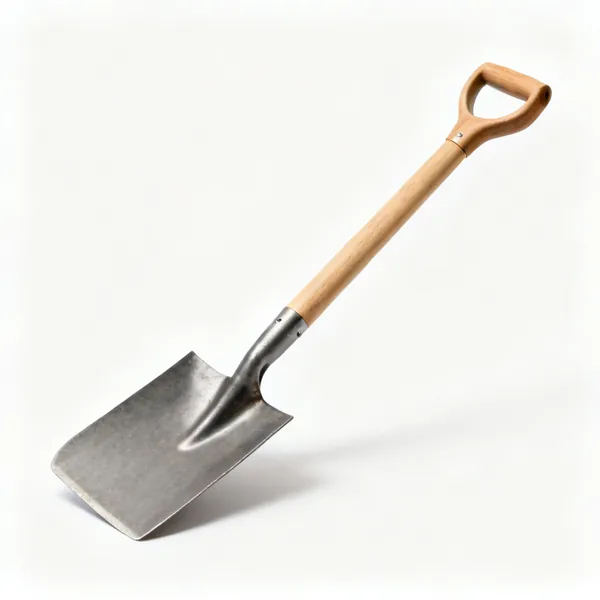
  • A garden digging spade with a flat rectangular steel blade and a wooden shaft with a D handleEssential

    Digging spade

    A flat rectangular blade on a D handle, and the default for turning open ground. It slices rather than scoops, which makes it right for loam and wrong for wet clay.

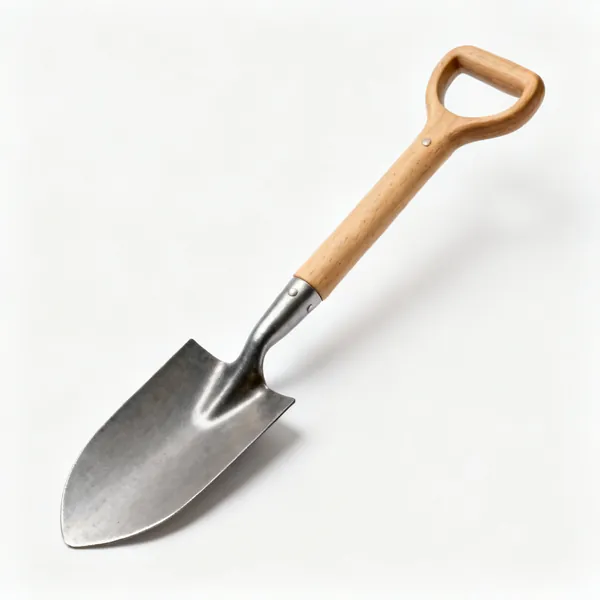
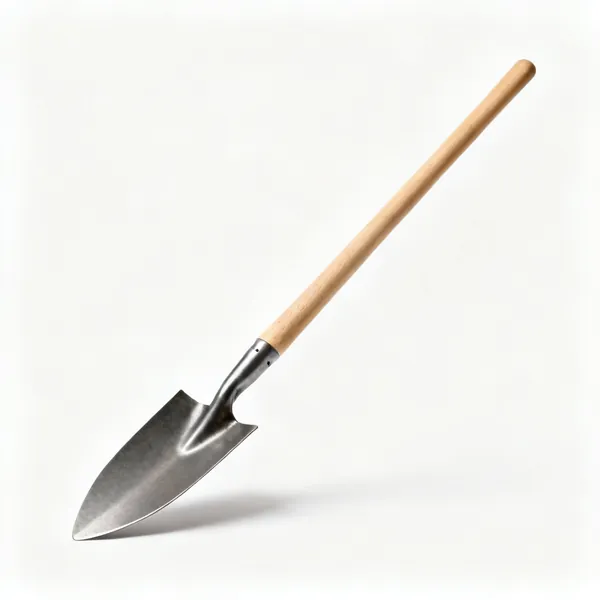
  • A small border spade with a narrow flat steel blade and a short wooden shaft with a D handleEssential

    Border spade

    A smaller blade taking a lighter load and fitting between established plants. Not a lesser tool: many people move more soil per hour because each lift costs so much less.

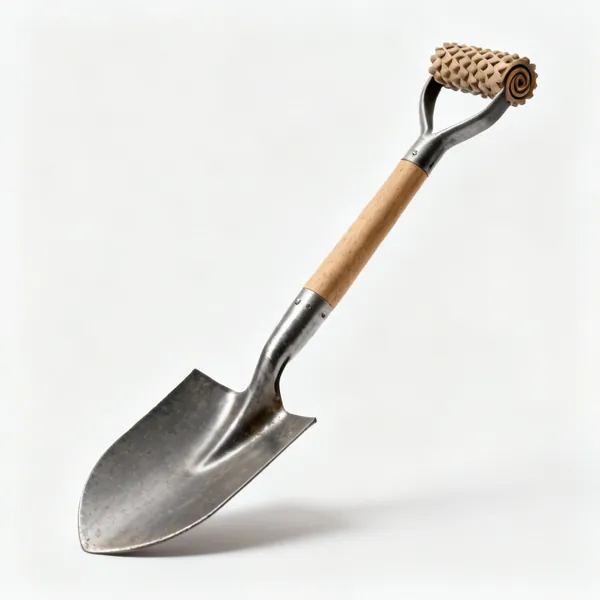
  • Treaded spade: A garden digging spade with a rolled tread on the top edge of the steel blade

    Treaded spade

    A rolled top edge to the blade so it can be stood on comfortably in soft shoes. It adds weight, and it is what makes stepping the blade in possible without boots.

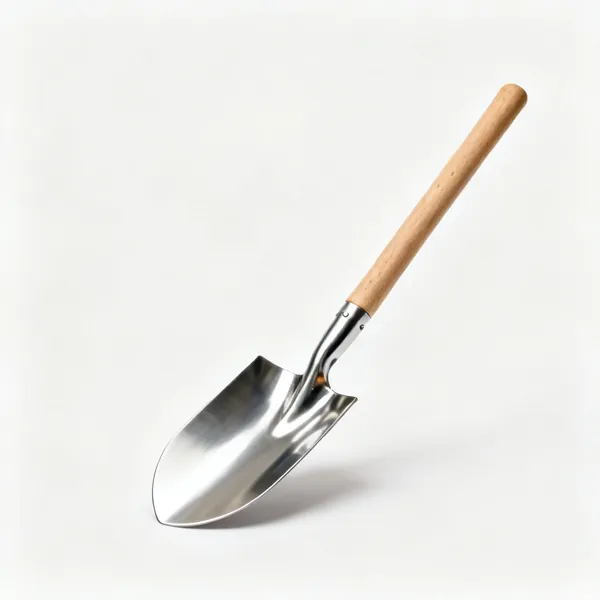
  • Stainless spade: A stainless steel garden digging spade with a bright polished blade and a wooden shaft

    Stainless spade

    Soil releases from stainless far more easily, which in clay is the difference you notice most. It takes a less sharp edge than carbon steel, which matters in turf and roots.

  • A grafting spade with a long narrow slightly curved steel blade and a wooden shaft

    Grafting spade

    A long narrow dished blade that drives deep and slices roots on the way down. For planting and for breaking into ground where a spade stops at the first root it meets.

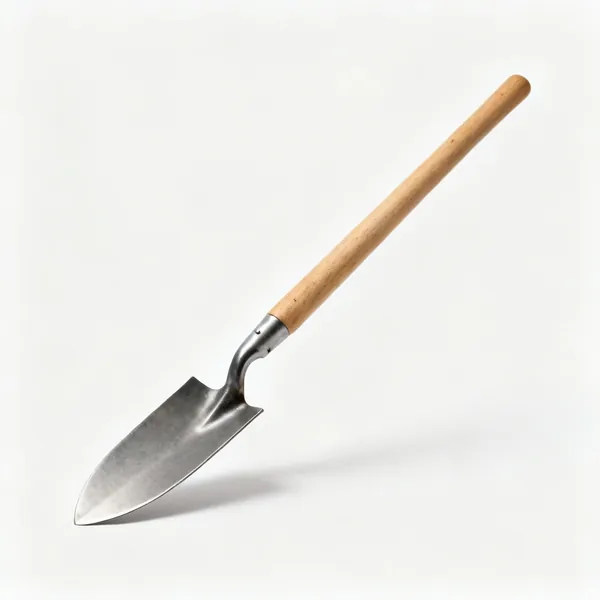
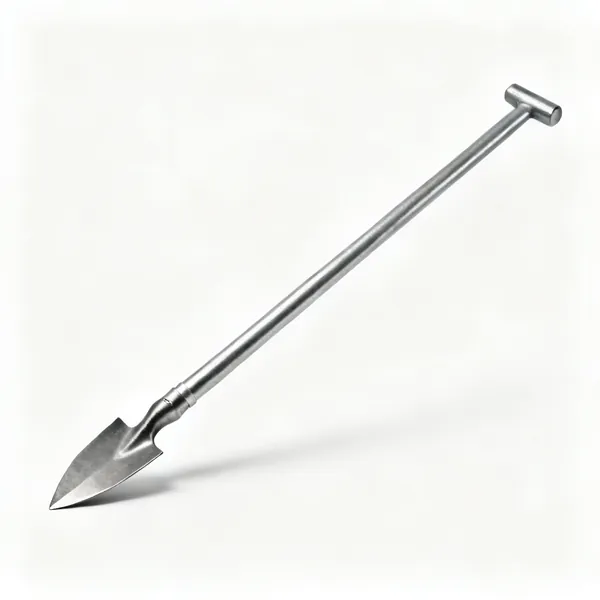
  • A transplanting spade with a very narrow long tapered steel blade and a long wooden shaft

    Transplanting spade

    A very narrow long blade for lifting a shrub with its root ball intact. It cuts a circle around the plant rather than levering under it, which is what keeps the ball together.

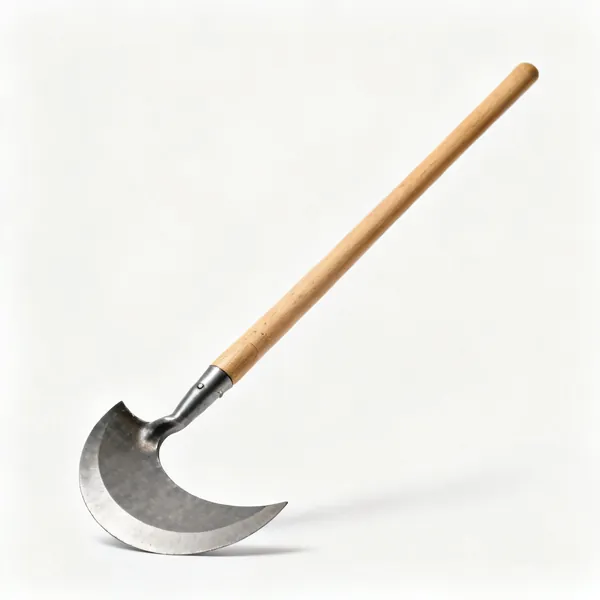
  • A garden edging iron with a half moon crescent shaped steel blade and a long wooden shaft

    Edging iron

    A half moon blade for cutting a bed edge or slicing turf before it is lifted. The curve lets it rock along a line, which a straight spade blade cannot do cleanly.

Forks 7

Tines rather than a blade. They split heavy soil along its fracture lines and nothing sticks to them.

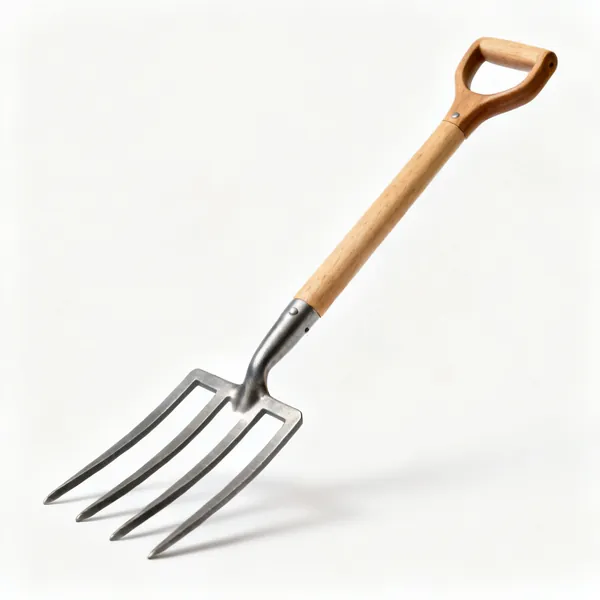
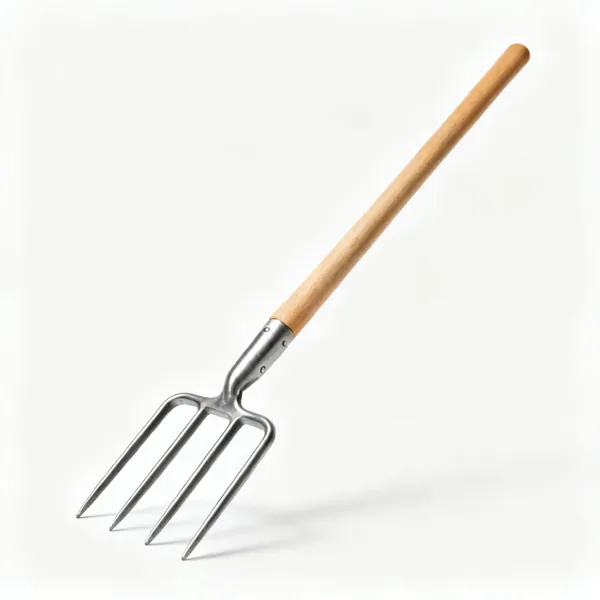
  • A garden digging fork with four square section steel tines and a wooden shaft with a D handleEssential

    Digging fork

    Four square section tines that penetrate heavy soil and break it as you lever back. In clay this is the tool a spade is usually mistaken for, and it is far faster.

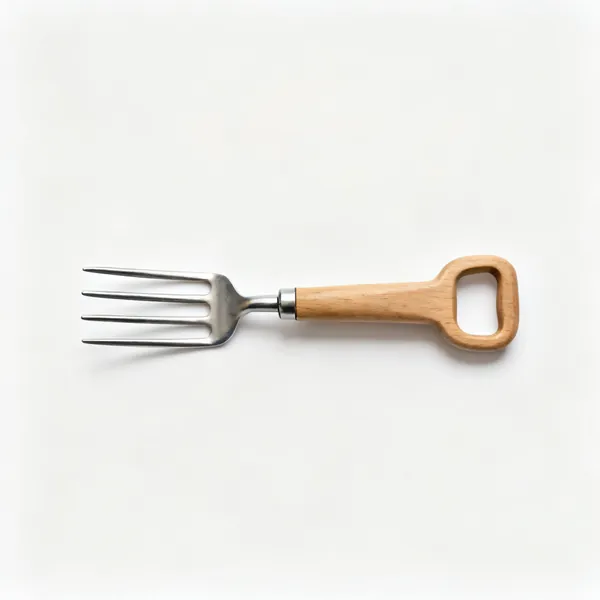
  • A small border fork with four short steel tines and a short wooden shaft with a D handleEssential

    Border fork

    A smaller four tine fork for working between plants without cutting their roots. The narrower head gets in close and the lighter load suits repetitive bed work.

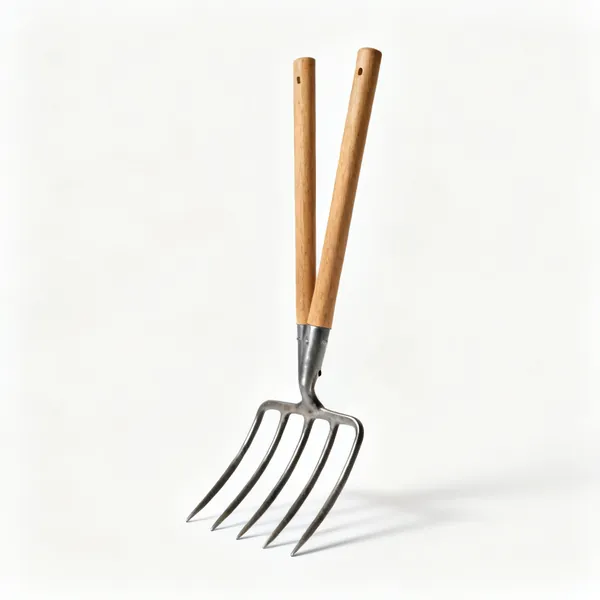
  • A broadfork with a wide head of five long steel tines and two tall upright wooden handles

    Broadfork

    A wide head of long tines stepped in and levered back to loosen deep soil without inverting it. It relieves compaction while leaving the soil profile and structure intact.

  • A potato fork with four flat wide blunt ended steel tines and a wooden shaft

    Potato fork

    Flat blunt ended tines that lift root crops without spearing them. A square tined fork pierces a good share of a potato crop, and a pierced potato will not store.

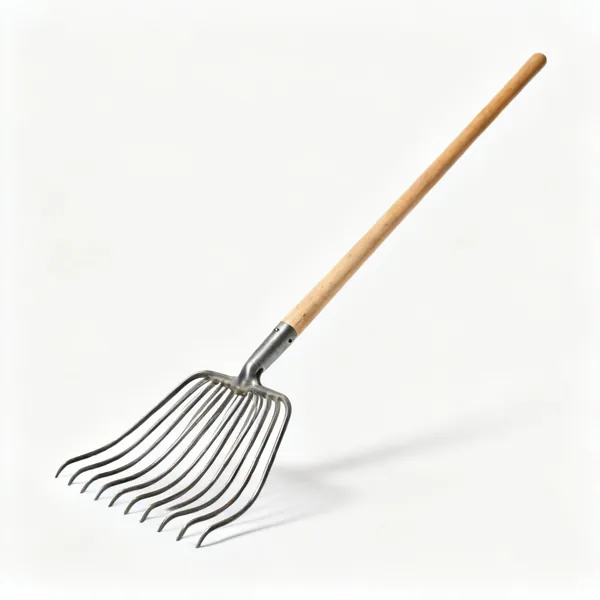
  • Compost fork: A muck fork with many long slender curved steel tines and a long wooden shaft

    Compost fork

    Many long curved tines for turning a heap and spreading mulch. The curve holds a load of compost that would slide straight off a digging fork.

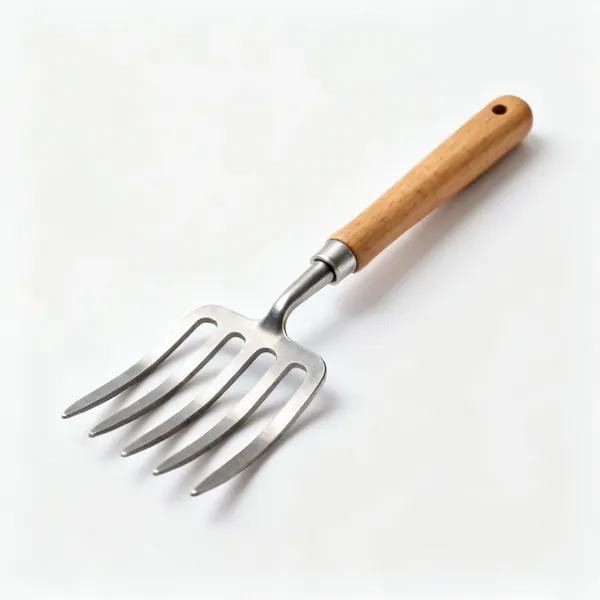
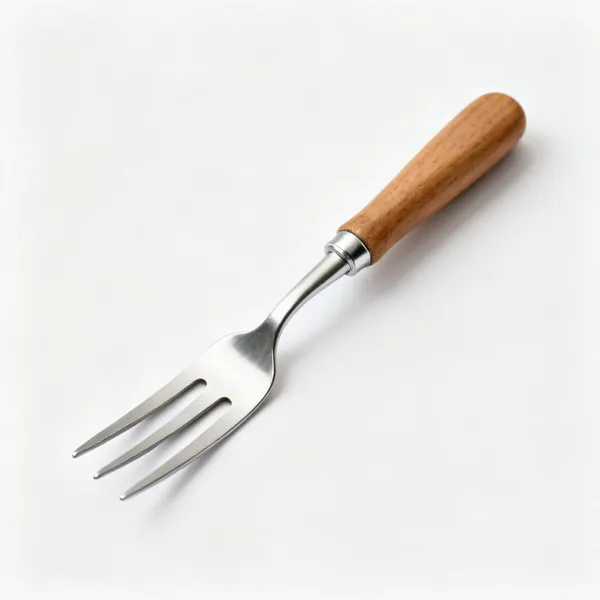
  • A stainless steel hand fork with three short tines and a wooden handleEssential

    Hand fork

    Three short tines for close work, loosening soil around plants and lifting weeds by the root. The tool most gardeners use most often, and cheap to buy properly.

  • A lawn aerating fork with four narrow hollow steel tines and a wooden shaft

    Aerating fork

    Narrow solid or hollow tines for relieving compaction in turf and beds without turning anything. The lightest possible intervention where the problem is air rather than structure.

Breaking hard ground 6

Where pushing stops working. Swung weight and pure leverage, in layers rather than all at once.

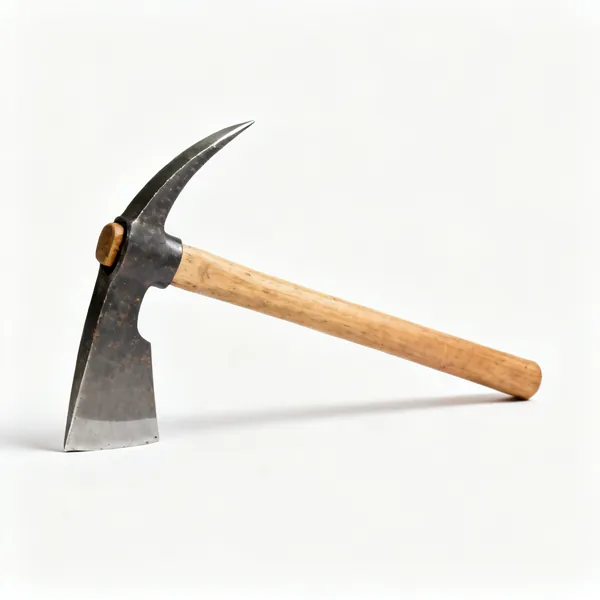
  • A pick mattock with a broad adze blade one side and a sharp point the other on a wooden handleEssential

    Pick mattock

    A broad adze one side and a point the other, swung so its weight breaks the ground. The point splits stone and set subsoil, and the adze then clears what it has loosened.

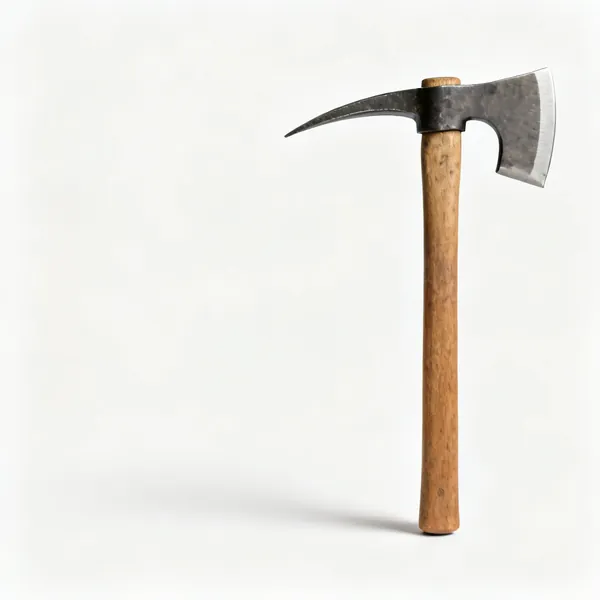
  • A cutter mattock with a broad adze blade one side and a vertical axe blade the other

    Cutter mattock

    An adze opposite an axe blade, for ground full of roots rather than stone. The axe edge severs a root in one swing where a spade would bounce and blunt itself.

  • A long solid steel digging bar with a chisel point at one end and a flat tamping end at the other

    Digging bar

    A solid steel bar dropped point first, breaking compacted ground and levering out stone. Its own weight does the work, so it is lifted and released rather than swung.

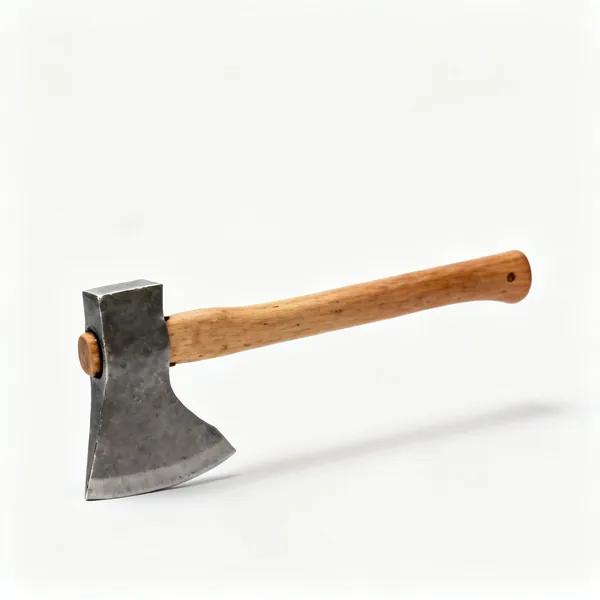
  • A heavy root axe with a short thick steel blade and a short wooden handle

    Root axe

    A short heavy axe with a thick reground edge for chopping roots in gritty soil. Deliberately a sacrificial tool, since soil destroys an edge no felling axe should lose.

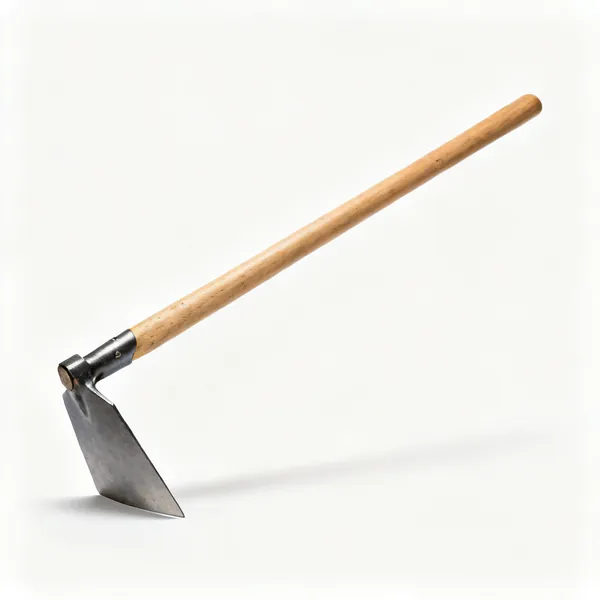
  • Grubbing hoe

    Grubbing hoe

    A heavy wide blade swung to break and drag soil in one action. It clears a neglected bed of matted perennial root faster than any fork, and it does not discriminate.

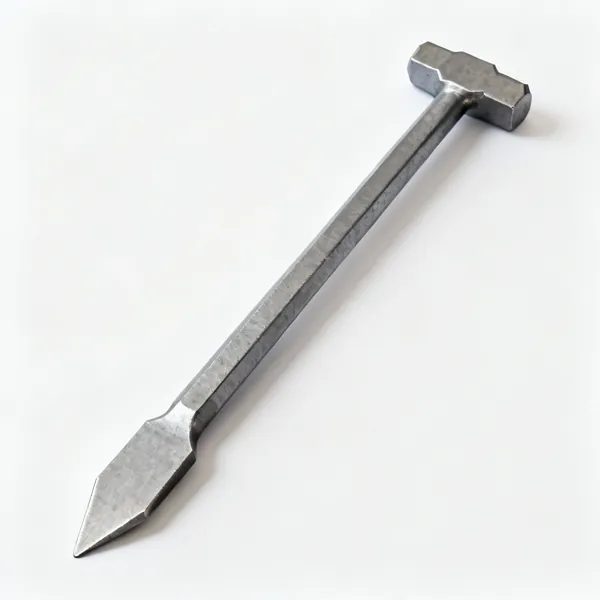
  • A hexagonal steel crow bar with a chisel shaped flattened end

    Crow bar

    A hexagonal bar with a chisel end for levering roots and stones out of a hole. Lighter than a digging bar, so it is used as a lever rather than dropped as a breaker.

Moving spoil and finishing 8

Getting the soil where it needs to be and the surface into a state you can plant into.

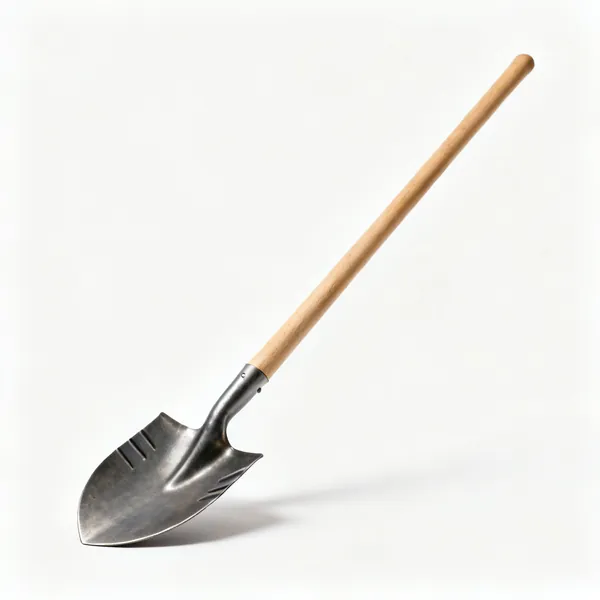
  • A round point shovel with a curved pointed steel blade with raised sides and a long wooden shaftEssential

    Round point shovel

    A curved pointed blade with raised sides for scooping and throwing loose material. The curve holds a load that a flat spade blade spills at the first lift.

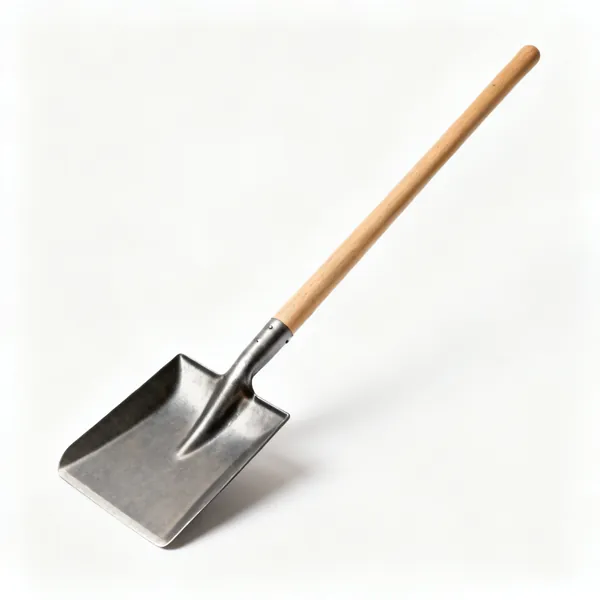
  • A square mouth shovel with a flat fronted steel blade with raised sides and a long wooden shaft

    Square mouth shovel

    A flat front for clearing loose soil off a hard surface and shifting sand or gravel. The straight edge scrapes a path clean, which a pointed blade cannot.

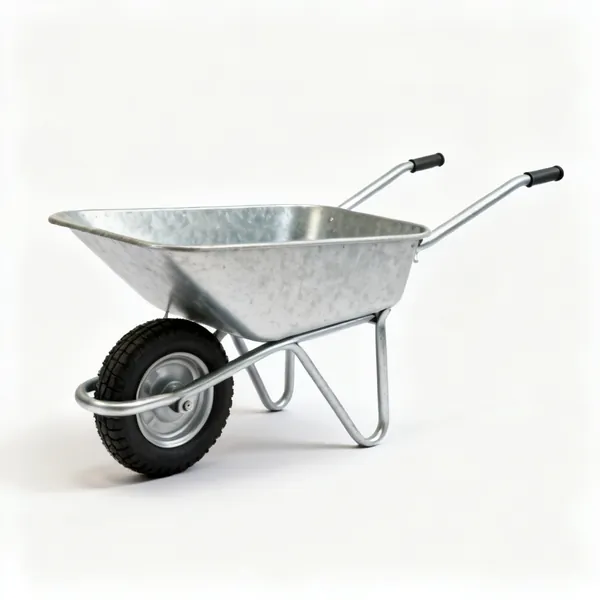
  • A metal wheelbarrow with a single pneumatic wheel, two tubular handles and two legsEssential

    Wheelbarrow

    Moves spoil in one trip rather than twenty, and doubles as a mixing tray. Barrow capacity usually sets the pace of a digging job rather than the digging itself.

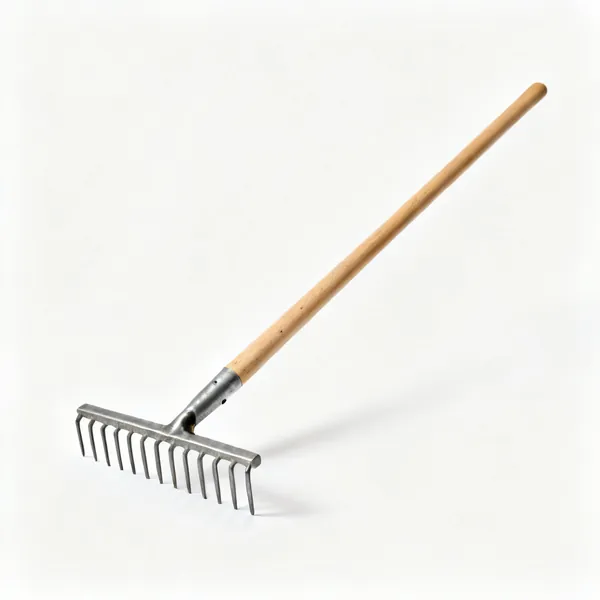
  • A garden soil rake with a straight steel head of short rigid tines and a long wooden shaftEssential

    Soil rake

    Levels and breaks down clods after digging. Used back edge first it drags a rough surface flat, which is how a seed bed is actually finished rather than merely raked.

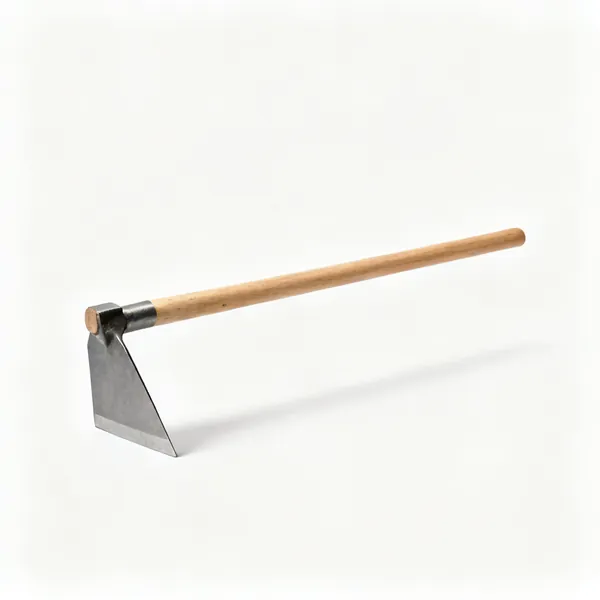
  • Draw hoe

    Draw hoe

    A flat blade at a right angle pulled toward you to draw a drill, earth up a row or slice weeds. It works the surface standing upright, which is easier than any hand tool.

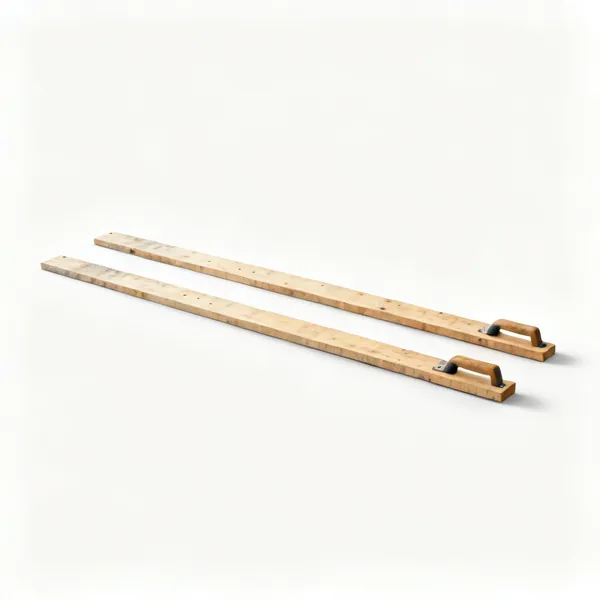
  • Working boards: Two long wooden scaffold boards lying flat side by sideEssential

    Working boards

    Stood on so your weight spreads rather than compacting the soil you have just loosened. On wet clay this is what makes the difference between working and smearing.

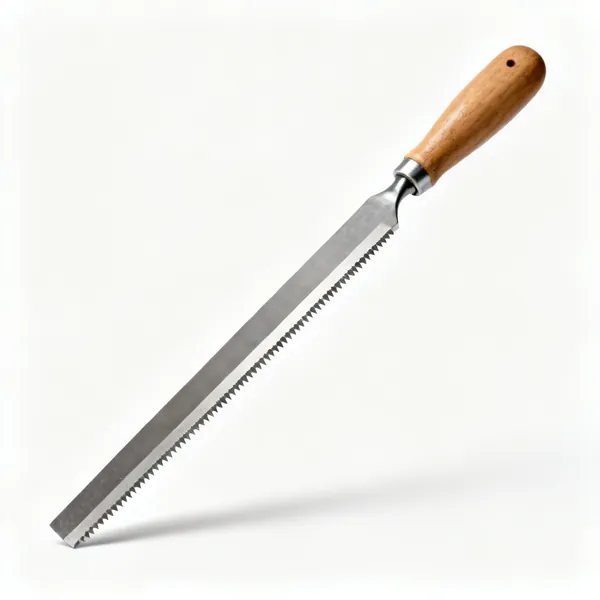
  • Sharpening file: A flat metal file with a wooden handle and parallel toothed facesEssential

    Sharpening file

    A few strokes along a spade's leading edge, which nobody does and which cuts turf and roots noticeably more easily. The cheapest improvement to a digging tool there is.

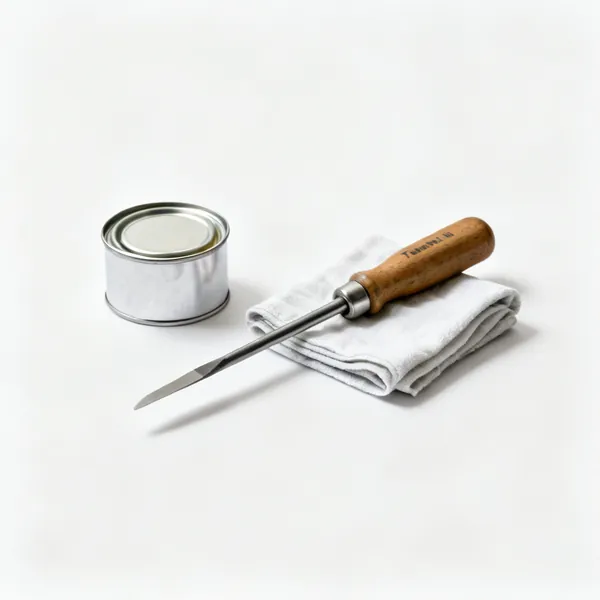
  • Oil and cloth: A small tin of tool oil beside a folded clothEssential

    Oil and cloth

    Wiped over bare steel before storage. Soil holds moisture against a blade and pits it, and a pitted blade drags through soil in a way a clean one does not.

Digging garden soil

Read the soil, use your foot rather than your arms, and dig considerably less than you were told to.

The soil picks the tool

A spade blade slices, so it works in soil that parts. In wet clay it does not slice, it compresses, and the clay sticks to the blade and to itself. A fork's tines split clay along its natural fracture lines and nothing clings to them, which is why a fork moves heavy ground perhaps three times faster.

Stony or compacted ground defeats both, because neither will penetrate past a stone or into set subsoil. That is what a mattock is for: it is swung, so its weight breaks the ground rather than being pushed into it.

Loam and sand
Spade. It slices cleanly and lifts a full load, which is exactly what these soils allow.
Clay
Fork. The tines split it along its fracture lines and, unlike a blade, nothing sticks to them.
Stony or compacted
Mattock or bar. Swung weight breaks ground that no amount of pushing will enter.
Never dig wet clay
It smears and sets like concrete, and the damage takes years of frost and organic matter to undo.

Dig much less than tradition says

Annual digging of established beds was standard advice for a century and the evidence has moved. Turning soil over breaks up the fungal networks and structure that took a season to build, brings buried weed seed up into the light, and releases carbon. Beds that are mulched rather than dug generally have fewer weeds and better structure within two or three years.

Digging still has its place: breaking new ground, relieving genuine compaction, incorporating a large volume of organic matter into poor soil, and lifting root crops. What it does not need to be is annual and routine.

Mulch instead, on established beds
Compost on the surface. Worms take it down, and weed seed stays buried where it cannot germinate.
Fewer weeds, not more
Digging brings buried seed into the light. An undisturbed mulched bed gets cleaner each year.
Dig for a reason
New ground, real compaction, or lifting crops. Not because it is autumn.
Loosen rather than turn
A broadfork or a fork rocked back relieves compaction without inverting the soil profile.

Digging without hurting yourself

Two rules cover most of it: keep the load close, and turn your feet rather than your spine. A twisting lift with a full spade held out at arm's length is the movement that causes most digging injuries, and it is entirely avoidable.

Use your foot to drive the blade in rather than your arms, because your body weight is far greater than your arm strength and costs you nothing. Then lever the load out on the shaft rather than lifting it dead. The tool is a lever and using it as one is the difference between a morning's work and three days of recovery.

Foot, not arms
Step the blade in. Your weight is greater than your arm strength and free to use.
Lever, do not lift
Pull back on the handle to break the load out. The shaft over the ground is a lever.
Move your feet to throw
Never twist under load. Turn the whole body, and the spine stays in line.
Half loads, twice as often
Faster overall and much easier afterwards. A full spade is not a target.

Digging spade or border spade

A digging spade has a blade around 290mm by 190mm. A border spade is noticeably smaller, and that is not a cheaper version: a smaller blade means a smaller load, which means less strain per lift and it fits between established plants.

Anyone who finds a full size spade heavy going should try a border spade before concluding digging is beyond them, because many people move more soil in an hour with the smaller tool. The same applies to forks.

Digging spade
The default for open ground, where the weight per lift is not the limiting factor.
Border spade
Smaller load, more lifts per hour, and it fits between plants. Often the faster tool in practice.
Handle to your hip
With the blade on the ground. Too short means bending, which is where back injuries start.
Ash over fibreglass for repair
Both are strong. A broken ash shaft can be replaced and most fibreglass ones cannot.

A clean blade is a sharp blade

Soil left on steel holds moisture and pits it, and pitted steel drags in the ground, which means more effort for the same hole. Scraping a blade clean after use is thirty seconds that measurably reduces how hard the tool is to use next time.

A spade also benefits from being sharpened, which surprises people. A file run along the leading edge at a shallow angle makes a real difference in turf and root filled soil.

Scrape and dry
Soil holds water against the steel. Pitting follows, and a pitted blade drags in every cut.
Sharpen the leading edge
A few strokes of a file at a shallow angle. Nobody does it and it cuts turf noticeably better.
Oil bare steel
An oily rag before storage prevents the rust a damp shed produces over one winter.
Hang it up
Blade off the concrete. A shed floor is the dampest part of the shed.

Frequently asked questions

What garden tools do I need for digging?
A digging spade, a digging fork and a soil rake cover most garden digging. Add a border spade and border fork for working between plants, a mattock for stony or compacted ground, and a wheelbarrow. That is genuinely the whole list for a domestic garden.
Should I use a spade or a fork?
A spade in loam and sand, where it slices cleanly and lifts a full load. A fork in clay, where a spade compresses rather than slices and the clay sticks to it. A fork's tines split heavy soil along its fracture lines, which is several times faster in wet ground.
Do I need to dig my garden every year?
No, and on established beds it is usually counterproductive. Turning soil over breaks the structure and fungal networks, brings buried weed seed into the light and releases carbon. Mulching with compost instead generally gives fewer weeds and better soil within two or three years.
What is no dig gardening?
Leaving soil undisturbed and adding organic matter to the surface, where worms and soil life take it down. It suppresses weeds because buried seed stays buried, and it preserves the structure and fungal networks digging destroys. Digging is kept for new ground and real compaction.
Why should I not dig wet clay?
Because it smears rather than breaking, which destroys the structure and sets almost like concrete as it dries. The damage takes years of frost cycles and added organic matter to undo. Wait until it is damp rather than wet, or work from a board.
How do I dig without hurting my back?
Drive the blade in with your foot rather than your arms, lever the load out on the shaft instead of lifting it dead, keep the load close to your body, and turn your feet rather than twisting your spine to throw. Smaller loads more often also help considerably.
What is a broadfork for?
Loosening deep soil without turning it over. A wide head of long tines is stepped in and levered back, which relieves compaction and lets air and water down while leaving the soil layers and structure intact. It is the main digging tool of a no dig approach.
What is the difference between a digging spade and a border spade?
Blade size. A digging spade is around 290mm by 190mm and a border spade noticeably smaller, which means a lighter load per lift and access between established plants. Many people move more soil per hour with the border spade, so it is not simply a lesser tool.