Disclosure

Tools for edging lawns

Half moon irons, edging shears and rotary edgers, all 28 grouped by two jobs that get confused. Cutting a new line is done once or twice a year and trimming to it every few weeks, and doing the first when you needed the second is why borders creep.

12 are marked essential: really a half moon iron and a pair of edging shears.

Part of the full garden tools list, 122 tools in 10 groups.

Cutting a new edge 7

The once or twice a year job. Vertical, 75mm to 100mm deep, and against something straight.

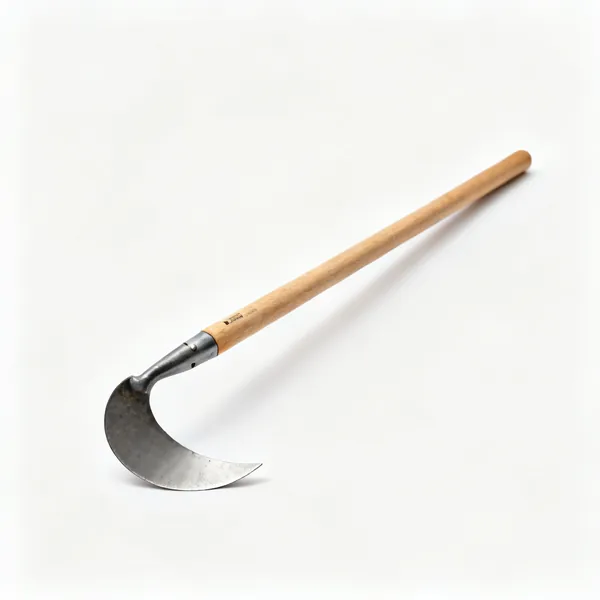
  • Half moon edging iron: A garden edging iron with a half moon crescent shaped steel blade and a long wooden shaftEssential

    Half moon edging iron

    A crescent blade on a shaft pushed vertically down with your foot. The curve lets you rock it along the line, which is what gives a continuous edge rather than the scallops a straight spade leaves.

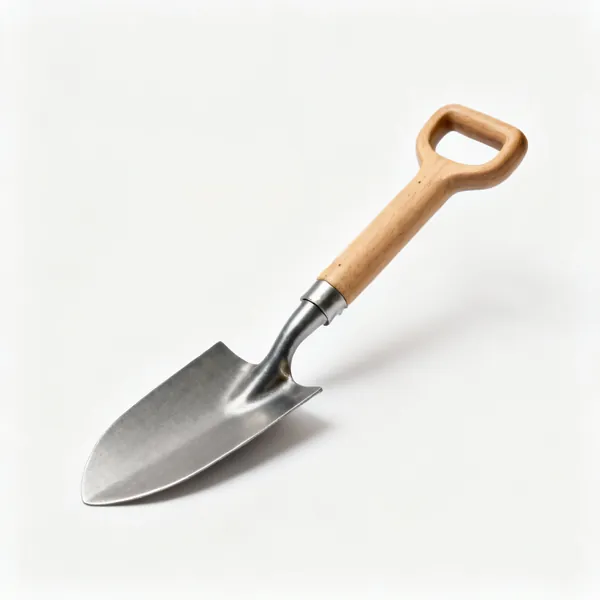
  • A small border spade with a narrow flat steel blade and a short wooden shaft with a D handle

    Border spade

    A narrow flat blade that cuts an edge where a half moon will not fit, and lifts the strip out afterwards. Its straight edge leaves a slightly faceted line, so it is a substitute rather than a first choice.

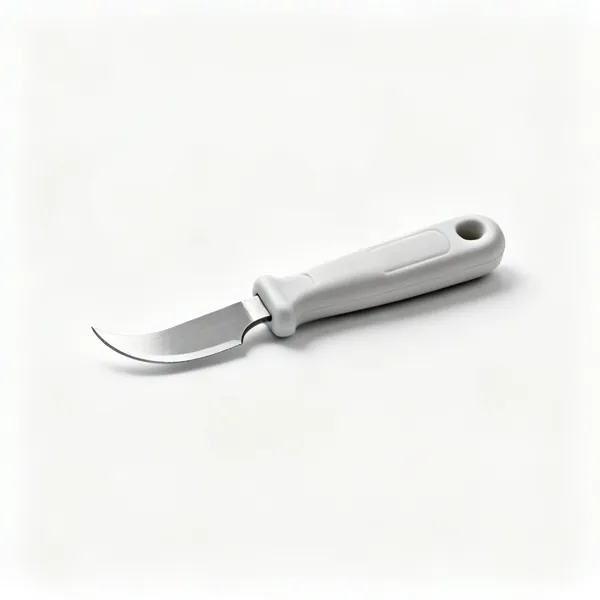
  • A hand edging knife with a short curved steel blade and a moulded plastic handle

    Hand edging knife

    A short curved blade used kneeling, for edges too tight for a long tool. Around paving, tree bases and inside a corner, where a half moon iron cannot be swung.

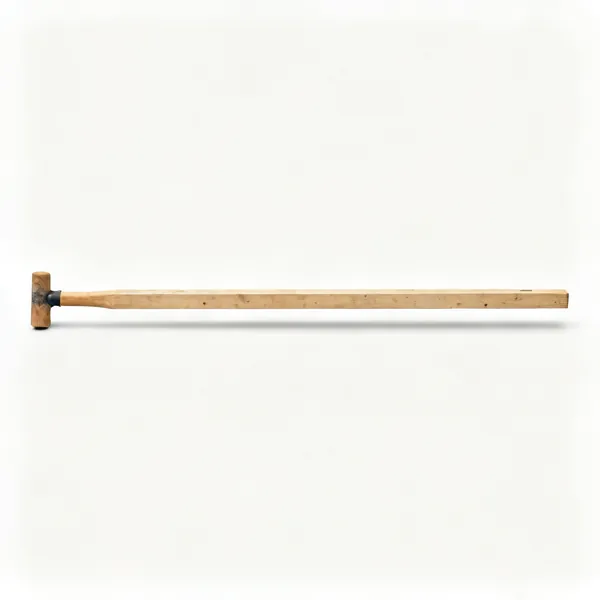
  • Edging plank: A long straight wooden scaffold board lying flatEssential

    Edging plank

    A straight board laid on the turf for the iron to cut against. The iron follows whatever it is placed against, and freehand over five metres wanders visibly however careful each cut is.

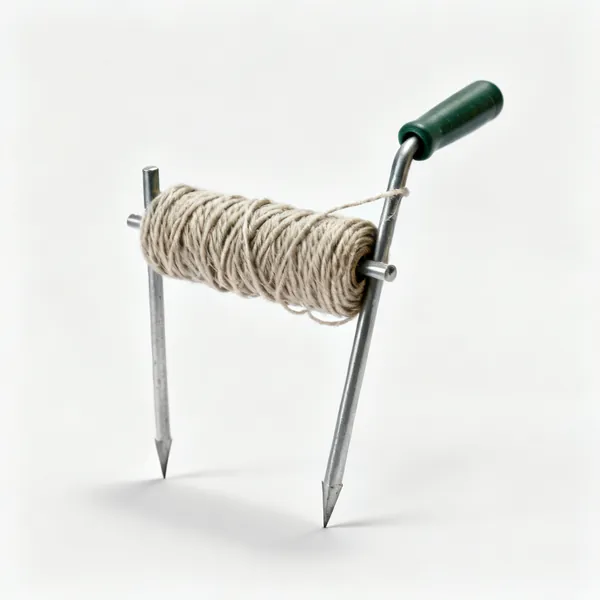
  • String line: A garden line with string wound on two pointed metal pegsEssential

    String line

    Two pegs and a taut line for a straight run longer than any plank. It is the cheapest tool on this page and it decides whether a straight edge is actually straight.

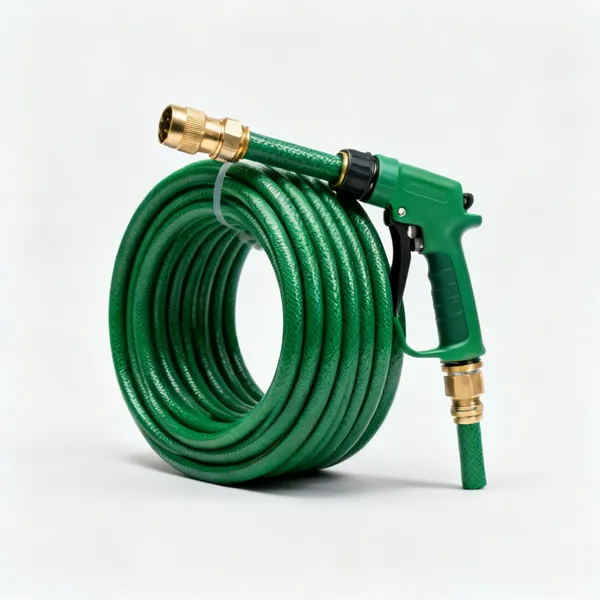
  • Hosepipe: A coiled green garden hose with a brass connectorEssential

    Hosepipe

    Laid on the grass and adjusted until the curve looks right from the house, then cut along. There is no better way to set out a curve, and no measuring involved at all.

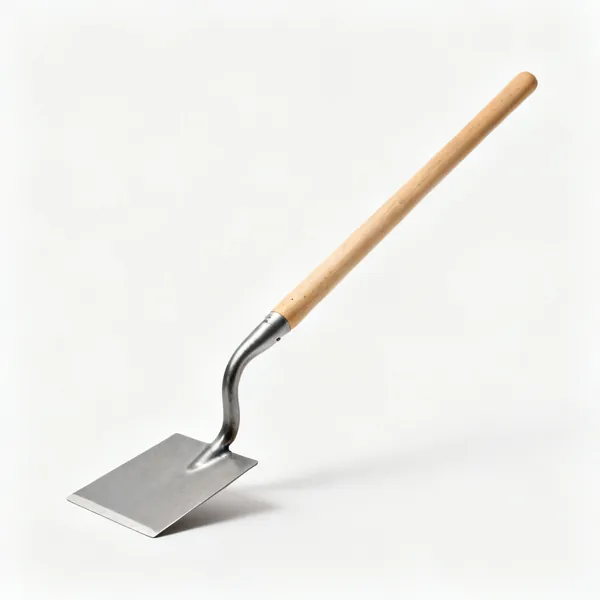
  • A turf lifter tool with a flat horizontal steel blade on a bent wooden shaft

    Turf lifter

    A flat blade on a bent shaft pushed under the cut strip to lift it out whole. Turf left lying along a fresh edge re-roots and closes the line up within weeks.

Trimming to the edge 7

The every few weeks job. Removes overhanging leaf and nothing else, which is what stops the line moving.

  • Long handled edging shearsEssential

    Long handled edging shears

    Blades set at right angles to the handles, held vertically to trim grass overhanging a cut edge. The right angle is the whole design: it lets you work upright along the line.

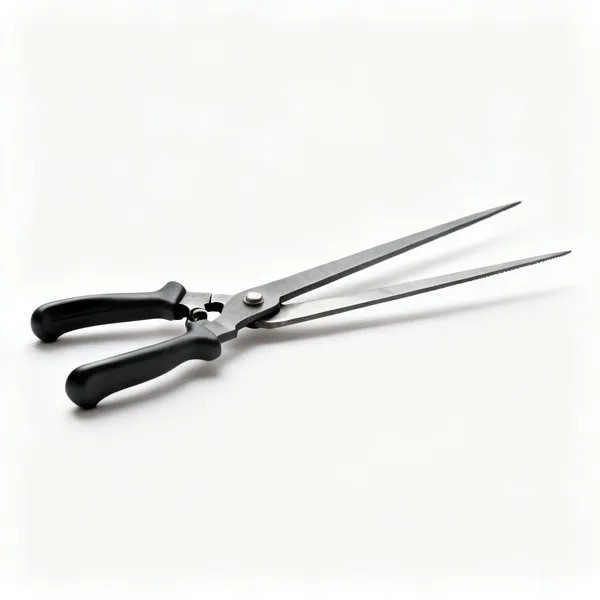
  • A pair of grass shears with two long straight blades and shaped handlesEssential

    Grass shears

    Two long blades pivoted like scissors, held horizontally for the grass a mower missed. Slower per metre than anything else here and precise in a way no machine is.

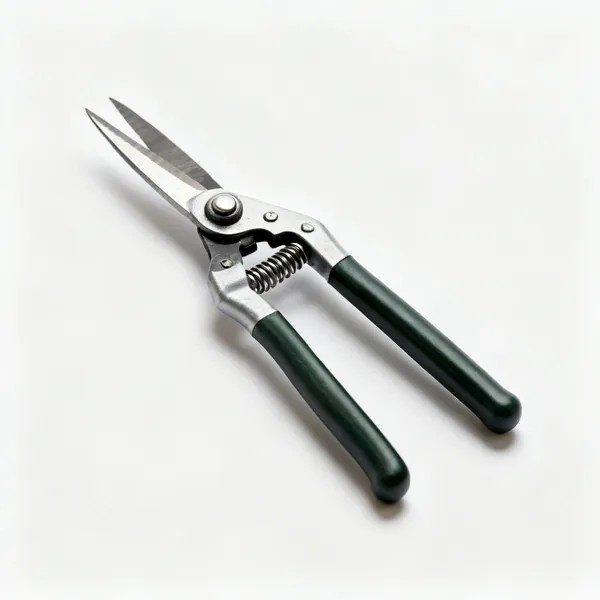
  • One handed shears: A pair of one handed grass shears with a swivelling head, sprung handle and short blades

    One handed shears

    Sprung shears squeezed in one hand, often with a swivelling head so the blades stay level while your wrist does not. For an edge around a tree, a step or an obstacle.

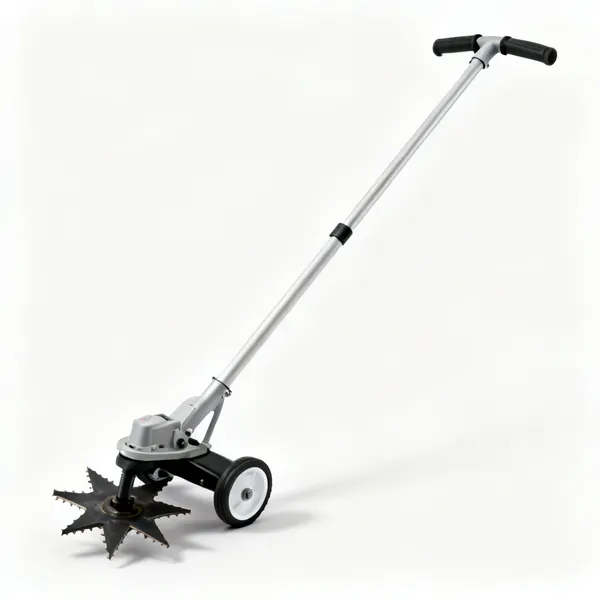
  • Rotary edger: A rotary lawn edger with a star shaped cutting wheel, guide wheel and a long handle

    Rotary edger

    A star wheel on a shaft rolled along the edge, slicing and lifting the overhang in one pass. Faster than shears on a long straight run, and it will not follow a tight curve.

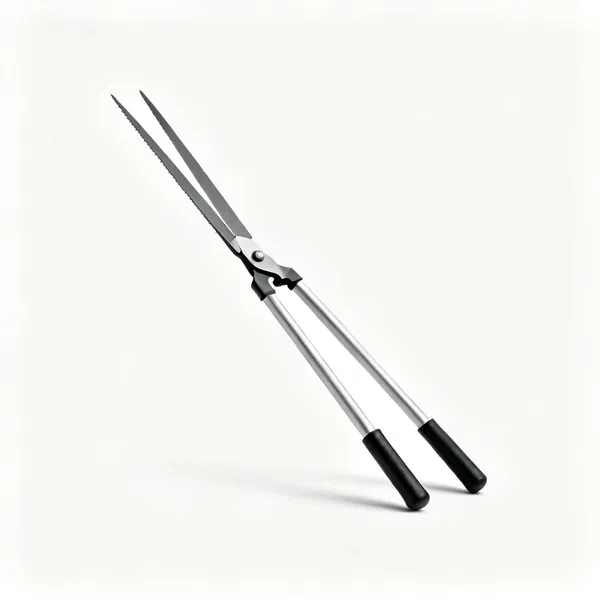
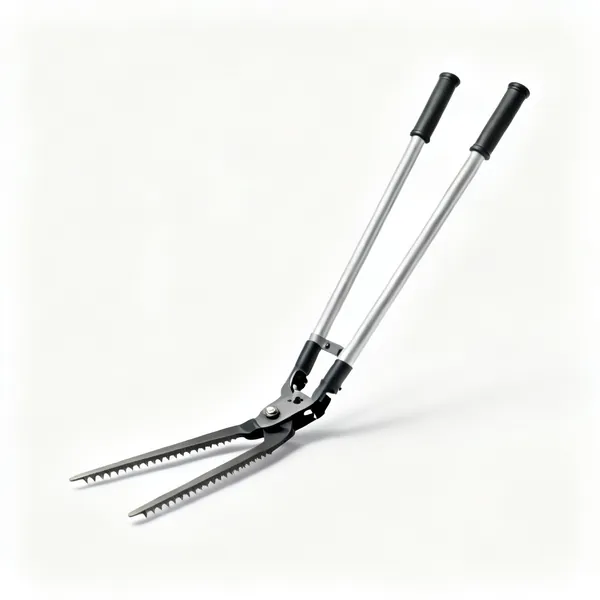
  • A pair of long handled grass shears with two tall tubular handles and horizontal blades

    Long handled grass shears

    The same horizontal blades on a long shaft, for the strip of grass a mower leaves against a hard edge. It covers a long run at walking pace, which hand shears on a border of any length do not.

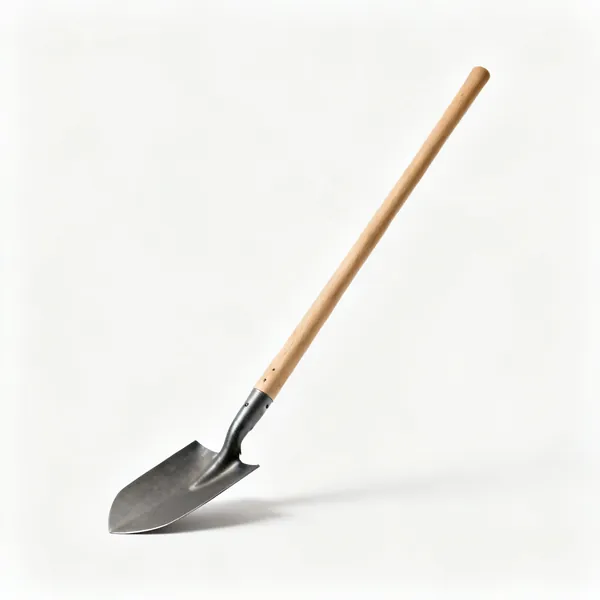
  • A narrow straight bladed edging spade with a long wooden shaft

    Edging spade

    A narrow straight blade for slicing along an existing line without recutting it deeper. It refreshes the face of an edge rather than moving it, which is a different job again.

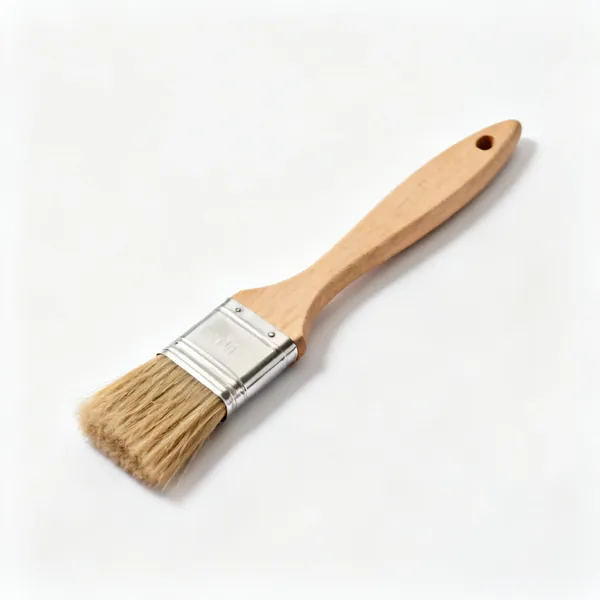
  • A stiff bristled hand brush with a wooden handleEssential

    Hand brush

    Sweeps trimmings off the edge and off the paving beside it. Cut grass left along a fresh edge is what makes an otherwise sharp line look unfinished from a distance.

Hard edging, to remove the job 7

A strip set flush with the lawn that the mower runs over. Costs more once and saves both the annual cut and the fortnightly trim.

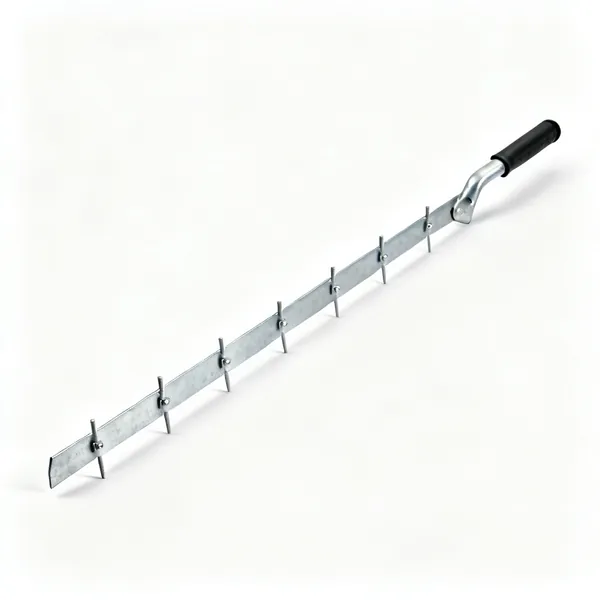
  • Steel edging strip: A length of galvanised steel garden edging strip with fixing pins

    Steel edging strip

    A flexible galvanised or corten strip pinned into the ground, following a curve as easily as a straight line. Set flush, since a proud strip scalps the mower and shows as a bald line.

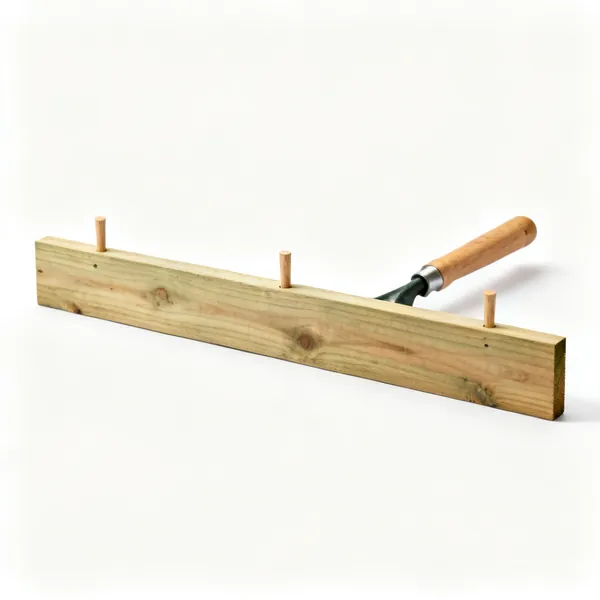
  • Timber edging: A length of treated timber garden edging board with wooden pegs

    Timber edging

    Treated boards pegged into the ground, cheapest to install and shortest lived of the hard options. Straight runs only, since a board will not follow a tight curve.

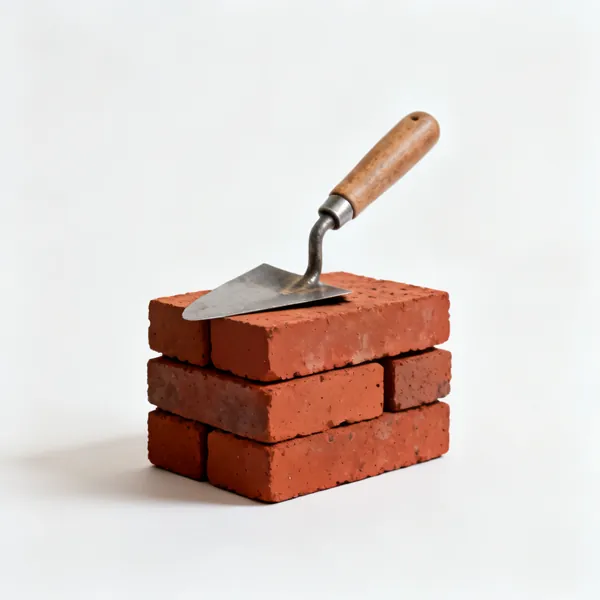
  • Brick edging: A small stack of red clay bricks

    Brick edging

    Bricks or setts bedded in mortar level with the turf. The longest lived option and the most work, and it also gives a mowing strip you can put a wheel on.

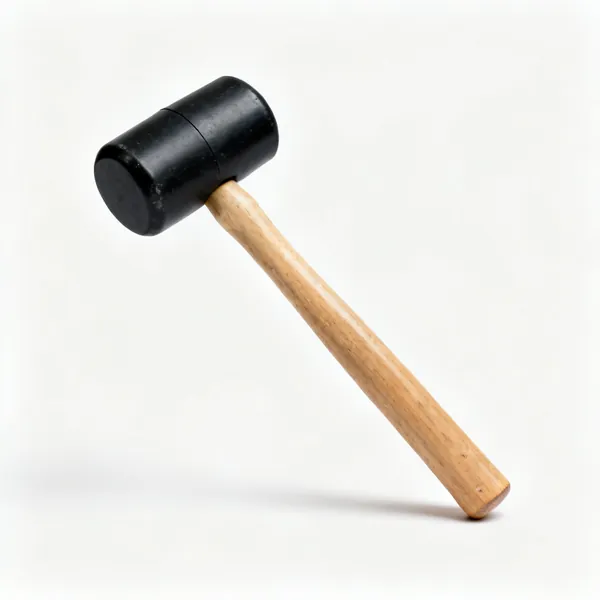
  • A rubber mallet with a black rubber cylindrical head and a wooden handle

    Rubber mallet

    Drives edging pins and taps a strip down to level without deforming it. A steel hammer bends a thin edging strip at the point of every blow.

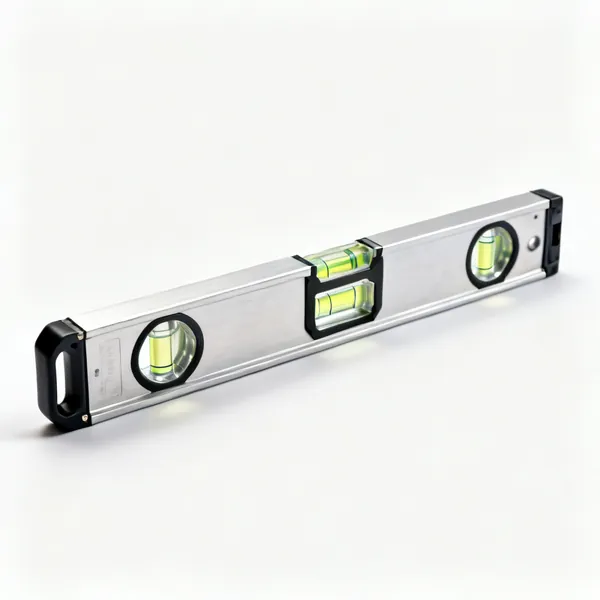
  • An aluminium spirit level with three glass vials and machined edges

    Spirit level

    Sets a hard edge flush with the turf rather than proud of it. Proud by 10mm and the mower scalps along the whole run, which is worse than no edging at all.

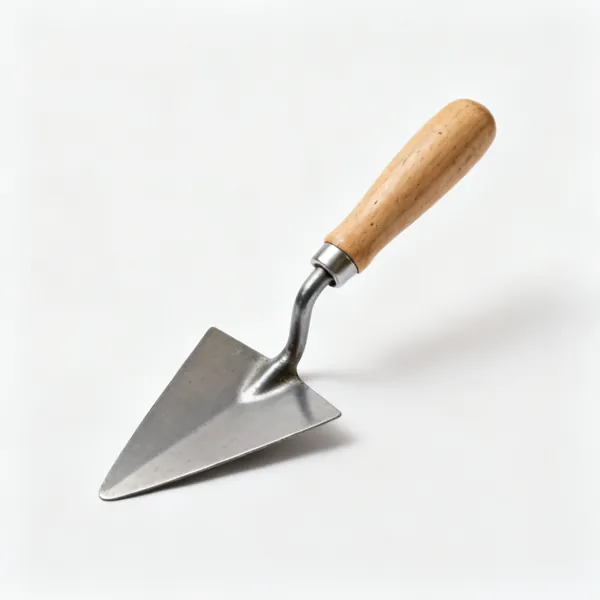
  • A small pointing trowel with a triangular steel blade and a wooden handle

    Pointing trowel

    Beds and points a brick or sett edging. A mortar bed is what stops brick edging settling unevenly within its first winter.

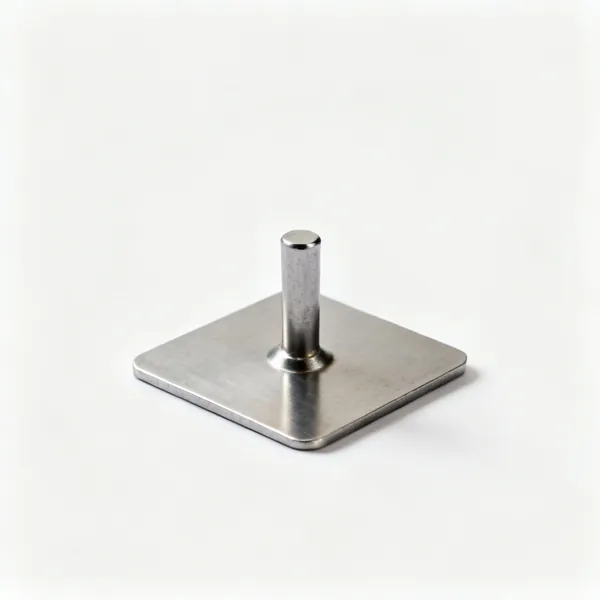
  • A small hand tamper tool, a square flat steel plate with a short vertical stub handle on top

    Hand tamper

    Compacts the base under a hard edge. Uncompacted ground settles, and an edging strip that has settled unevenly cannot be lifted and relaid without redoing the lawn beside it.

Keeping the tools cutting 7

Grass is soft and springy, which exposes a dull edge faster than any other material. A sharp iron does the job in half the time.

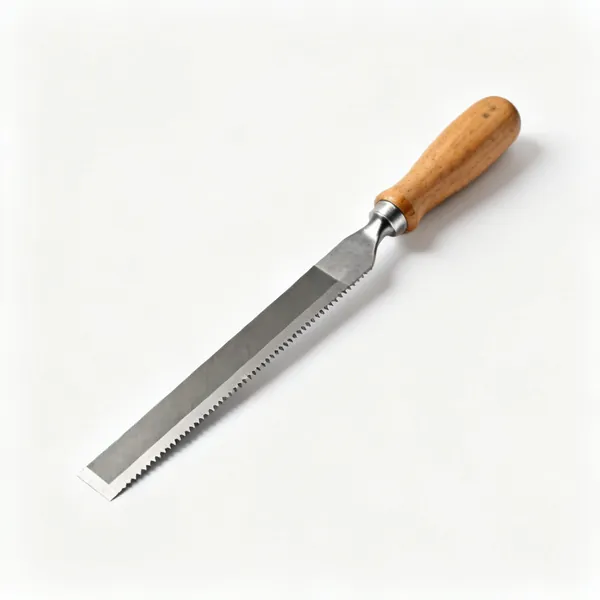
  • Flat file: A flat metal file with a wooden handle and parallel toothed facesEssential

    Flat file

    Sharpens a half moon iron along its existing bevel in a few strokes. It halves the effort of cutting an edge, and hardly anyone has ever done it to theirs.

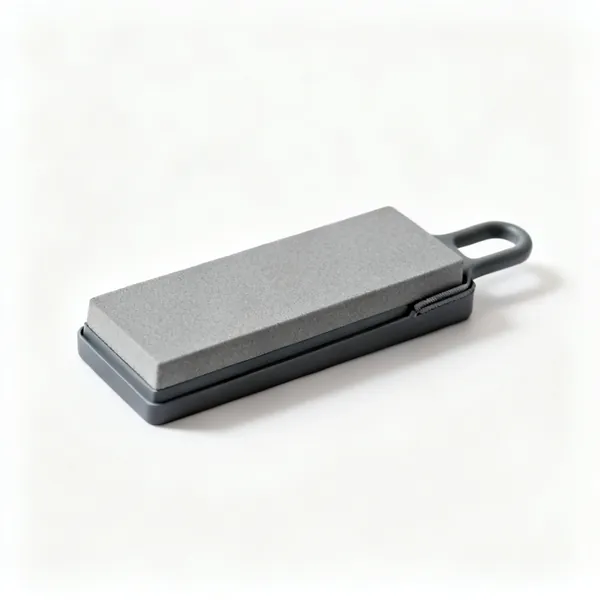
  • A small rectangular grey pocket sharpening stoneEssential

    Sharpening stone

    Puts a finish edge on shears after filing. On grass the difference between filed and honed is visible, because a torn tip browns within a day and a cut one does not.

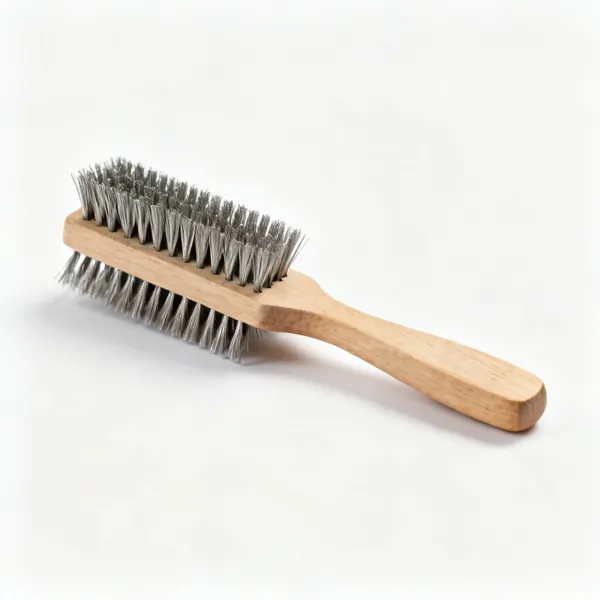
  • A hand wire brush with rows of stiff steel bristles and a wooden handleEssential

    Wire brush

    Removes dried sap and soil from a blade. Both hold moisture against the steel, and a pitted blade drags through turf in a way a clean one does not.

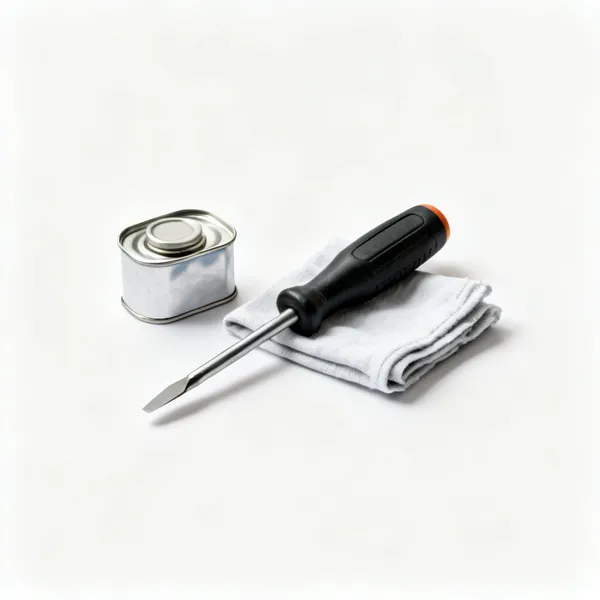
  • Oil and cloth: A small tin of tool oil beside a folded clothEssential

    Oil and cloth

    Wiped over bare steel after cleaning. Thirty seconds a session, and it is the difference between a tool that stays sharp and one that needs work before it will cut.

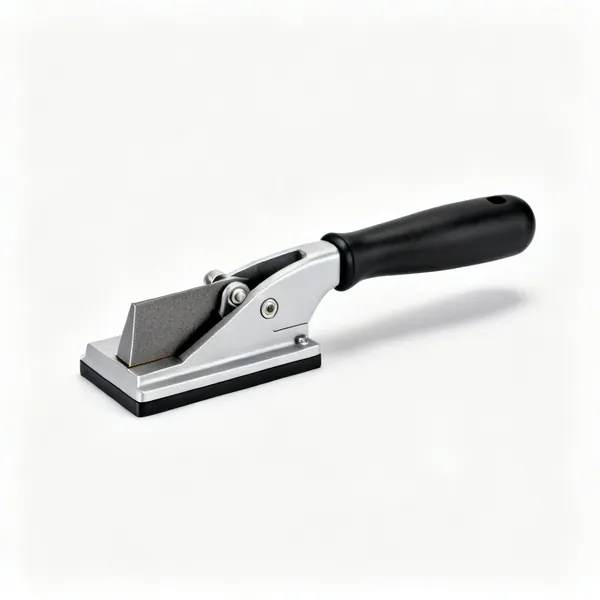
  • Shear sharpener: A handheld shear sharpening tool with a guide and a carbide sharpening insert

    Shear sharpener

    A guided carbide or diamond tool that holds the correct bevel against a shear blade. It removes the guesswork, which matters because both blades must still meet cleanly afterwards.

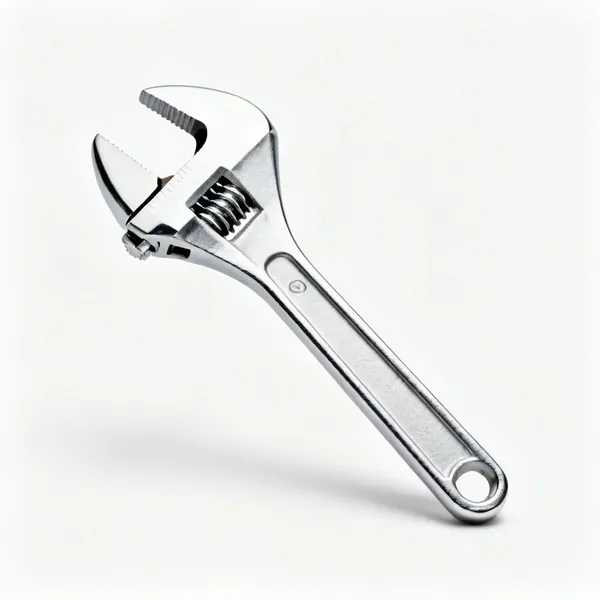
  • An adjustable spanner with a knurled worm adjusting screw and a chrome body

    Adjustable spanner

    Tightens the pivot bolt on shears. A loose pivot lets the blades part as they close, and no amount of sharpening compensates for blades that are not meeting.

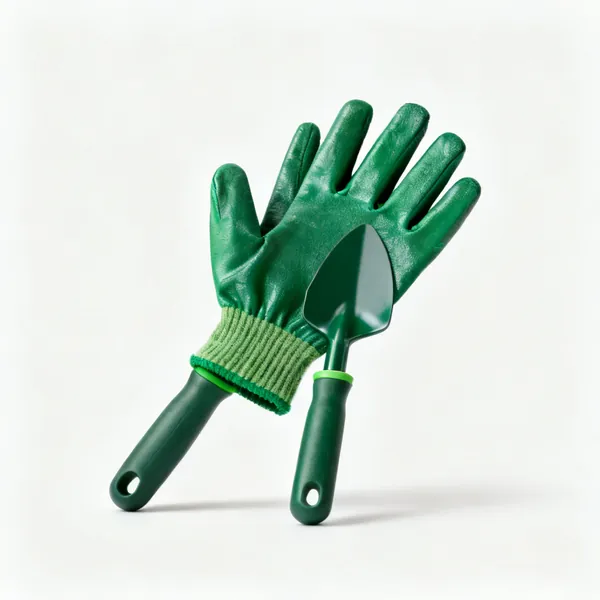
  • A pair of green gardening gloves with a coated palm and a knitted cuffEssential

    Gardening gloves

    Grip on a shaft and protection from the blade at rest. A half moon iron leaning against a wall is still sharp enough to open a shin, which is how most people meet theirs.

Cutting and keeping a lawn edge

Cut the line once, then trim to it. The two jobs need different tools and mixing them up is what moves the edge.

Cutting an edge and trimming an edge

Cutting a new edge means slicing vertically down through the turf to define where the lawn stops. That is done once or twice a year with a half moon iron, and it removes a strip of turf.

Trimming means cutting the grass that has grown out horizontally over that line. That is done every few weeks with shears held vertically, and it removes only leaf. Doing the first job when the second was needed is why a border is 100mm wider than it was three years ago.

Cut once or twice a year
A half moon iron, slicing vertically. It defines the line and removes turf.
Trim every few weeks
Edging shears held vertically. It removes overhanging leaf and nothing else.
Never recut monthly
Each cut moves the line a few millimetres inward, and after three years the bed is much wider.
Spring for the cut
Once growth starts, so the edge knits back rather than sitting raw all winter.

Getting the line right

For a straight edge, work against a plank or a taut string line. A half moon iron follows whatever it is placed against, and freehand over five metres wanders visibly even when each individual cut looks fine.

For a curve, lay a hosepipe on the grass and adjust it until the shape looks right from the house rather than from where you are standing. Then cut along it. A gentle continuous curve reads as deliberate; a series of shallow arcs reads as a mistake.

Plank or string for straight
The iron follows what it is against. Freehand over five metres always wanders.
Hosepipe for curves
Adjust the shape on the ground until it looks right, then cut to it.
Judge it from the house
Not from where you are kneeling. That is the view the shape will be seen from.
Fewer, longer curves
One sweeping curve beats four shallow ones, and it is much easier to mow around.

The cut has to be vertical

An edge cut at an angle undercuts the turf, so the overhang dries out, dies back and crumbles within a season. Then the line has to be recut, which is how the border creeps.

Keep the blade vertical and step down on it with your full weight rather than pushing with your arms. The depth wants to be around 75mm to 100mm, enough to cut through the root mat and into the soil below it.

Vertical, not angled
An undercut edge dries out and crumbles, and then it needs recutting. That is the creep.
75 to 100mm deep
Through the root mat and into the soil. Shallower and the grass roots straight back over.
Step, do not push
Your body weight does the work. Pushing with your arms gives a shallow angled cut.
Remove the strip
Lift the cut turf out rather than leaving it. Left in place it re-roots and the edge closes up.

Gutter edges and hard edges

A cut edge with a small trench behind it, sometimes called a gutter edge, keeps grass from creeping into the bed and gives a shadow line that reads crisply from a distance. It needs recutting annually and it looks like professional work.

A hard edge, meaning a brick, timber or metal strip set flush with the lawn, removes the job almost entirely. It costs more to install and then a mower runs straight over it and no edging is needed at all. On a lawn you intend to keep for years it is the cheapest option overall.

Gutter edge for looks
A shallow trench behind the cut gives a shadow line, and it needs recutting annually.
Hard edge to remove the job
Metal, timber or brick flush with the turf. The mower runs over it and nothing needs trimming.
Set it flush, not proud
A proud edging strip scalps the mower blade and shows as a bald line along the lawn.
Cheapest over time
A hard edge costs more once and saves the annual cut and the fortnightly trim thereafter.

A sharp iron does the job in half the time

A half moon iron is a cutting tool and almost nobody sharpens one. A blunt one tears through turf and needs real force; a sharp one slices with your weight alone and leaves a clean face that knits back quickly.

The same is true of edging shears. They cut grass, which is soft and springy and therefore unforgiving of a dull edge, so a blunt pair pushes the grass over rather than cutting it and it springs back up uncut.

File the iron
A few strokes along the leading edge. It halves the effort, and hardly anyone does it.
Clean off the sap and soil
Both hold moisture against the steel, and a pitted blade drags in every cut afterwards.
Shears need a tight pivot too
A loose pivot lets the blades part, and no amount of sharpening fixes that.
Brown tips mean blunt
If cut grass browns at the tip within a day or two it was torn rather than cut.

Frequently asked questions

What tools do I need to edge a lawn?
A half moon edging iron for cutting the line, and a pair of long handled edging shears for trimming the overhang between cuts. That is genuinely all most lawns need. Add a plank or string line for straight runs and a hosepipe for setting out curves.
What is a half moon edging iron?
A crescent shaped blade on a shaft, pushed vertically down through turf with your foot to cut a clean line. The curve lets you rock it along the line, which is what gives a continuous edge rather than the scalloped one a straight spade blade leaves.
How often should I edge a lawn?
Cut the line once or twice a year, usually in spring. Trim the grass that grows out over it every few weeks through the growing season. Cutting a fresh line every month is the reason borders end up considerably wider than they were originally.
How deep should a lawn edge be cut?
Around 75mm to 100mm, deep enough to go through the root mat and into the soil beneath. Any shallower and the grass simply roots back across the line within a few weeks, so the work does not last.
Why does my lawn edge keep crumbling?
Almost certainly because the cut was angled rather than vertical, which undercuts the turf. The unsupported overhang then dries out, dies back and crumbles away. Keep the blade vertical and step down on it with your weight rather than pushing with your arms.
How do I cut a curved lawn edge?
Lay a hosepipe on the grass and adjust it until the shape looks right viewed from the house rather than from where you are standing, then cut along it. One long sweeping curve looks deliberate and mows easily; several shallow arcs look like a mistake.
Are rotary lawn edgers any good?
On a long straight run, yes, and they are quicker than shears. A star wheel rolled along the edge slices and lifts the overhang in one pass. They will not follow a tight curve, and they do not cut a new line, so a half moon iron is still needed for that.
Is it worth installing a hard lawn edge?
On a lawn you intend to keep for years, yes. A metal, timber or brick strip set flush with the turf lets the mower run straight over it, which removes both the annual cut and the fortnightly trim. It costs more once and less over time. Set it flush, never proud.