Disclosure

Lawn care tools

Mowers, scarifiers, aerators, spreaders and rakes, all 30 arranged by the lawn care year rather than by tool type. Almost every poor lawn is mown too short, compacted and never fed, and none of those is fixed by mowing more often.

15 are marked essential: enough to cover mowing and the autumn work properly.

Part of the full garden tools list, 122 tools in 10 groups.

Mowing 7

The weekly job through the season. Height and blade sharpness matter far more than the machine.

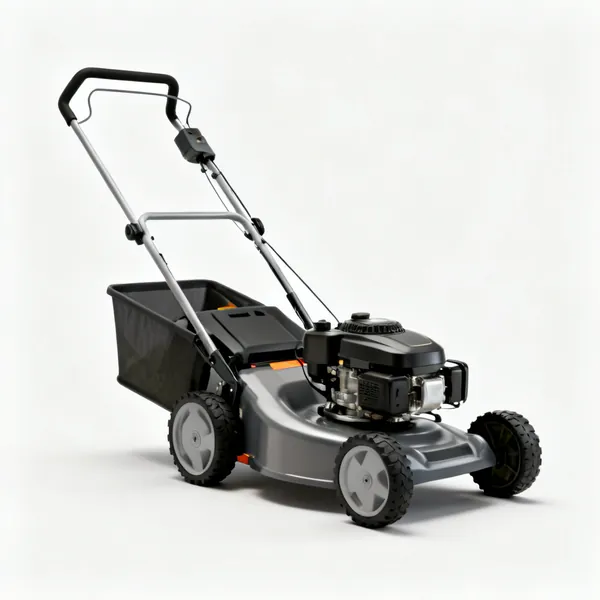
  • Rotary mower: A petrol rotary lawn mower with four wheels, a grass box and a push handleEssential

    Rotary mower

    A horizontal blade spinning under a deck, cutting by impact. Tolerant of long grass and uneven ground, and it needs a genuinely sharp blade or it tears the leaf and browns the tips.

  • Cylinder mower: A cylinder lawn mower with a helical blade reel, rear roller and a long handle

    Cylinder mower

    A helical blade scissoring grass against a fixed bed knife, which is the cleanest cut available. It gives a fine finish on a flat lawn and struggles with long grass, twigs and bumps.

  • Spare mower blade: A straight steel rotary lawn mower blade with a central mounting holeEssential

    Spare mower blade

    A consumable, and the single cheapest improvement to most lawns. A blunt blade tears the leaf so the tips brown, which people usually blame on watering or feeding.
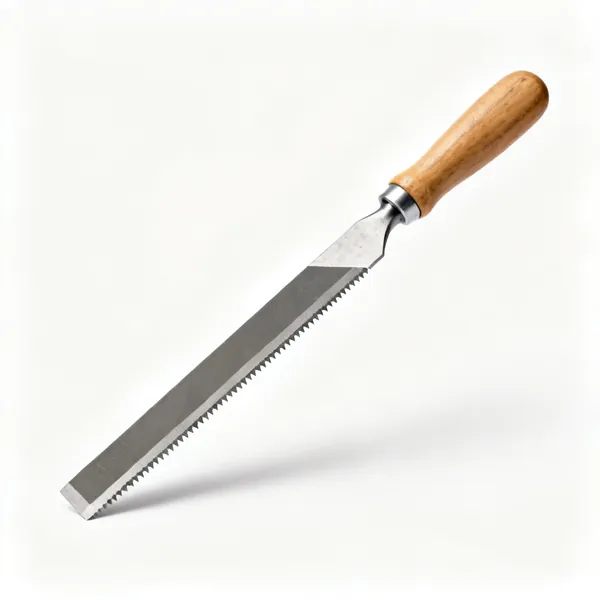
  • Blade sharpening file: A flat metal file with a wooden handle and parallel toothed facesEssential

    Blade sharpening file

    Restores the bevel on a mower blade in a few minutes. Balance matters as much as sharpness, since an unevenly sharpened blade vibrates and wears the spindle bearings.

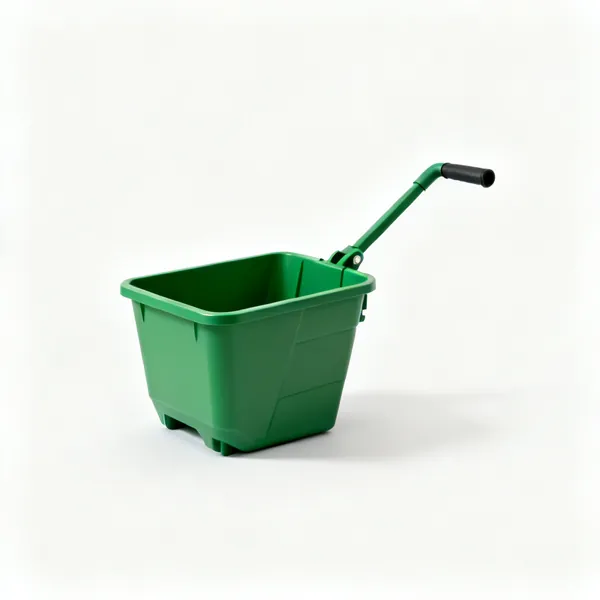
  • A green plastic lawn mower grass collection box with a handle

    Grass collection box

    Collects clippings rather than returning them. Worth using when the lawn is long or diseased, and worth leaving off in dry weather, since clippings return nitrogen and moisture.

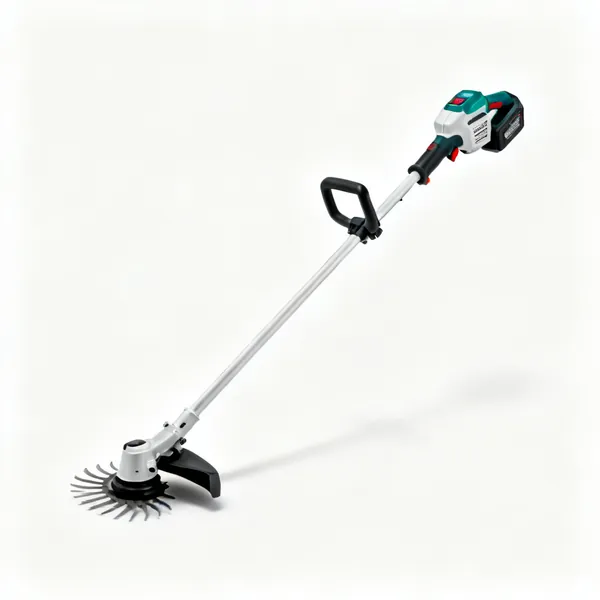
  • A cordless grass strimmer with a long shaft, guard and cutting headEssential

    Strimmer

    A nylon line cutting where a mower cannot reach, along walls and around obstacles. It shreds rather than cuts, so keep it off tree bark, which it strips and kills the tree.

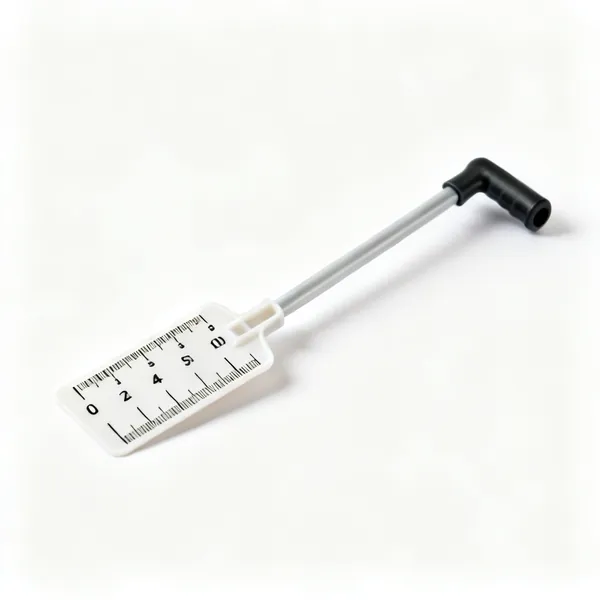
  • A small plastic lawn mower cutting height gauge with graduated markings

    Height gauge

    Checks the actual cut height, which is often not what the mower's setting claims. It matters because the difference between 20mm and 35mm is the difference between a stressed lawn and a healthy one.

Scarifying and aerating 8

The two autumn jobs almost nobody does, and the two that make the biggest difference.

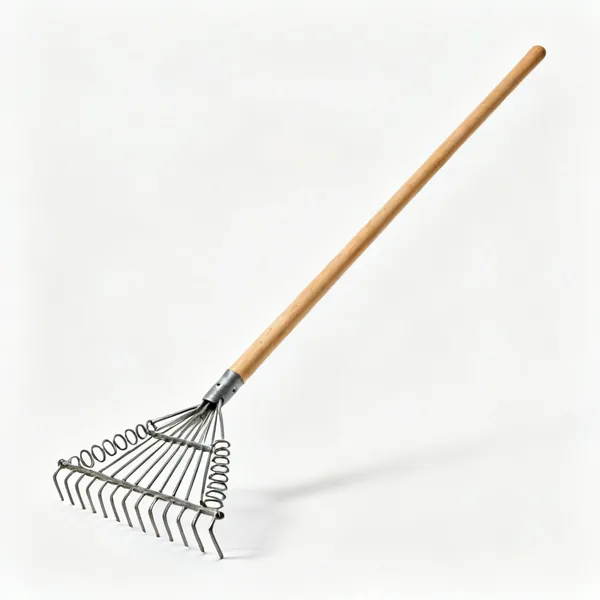
  • Spring tine rake: A spring tine lawn rake with a fan of long springy metal tines and a long wooden handleEssential

    Spring tine rake

    Springy tines that pull thatch and dead moss out of the sward without tearing the turf. Hard work by hand over a whole lawn and it is the tool that reveals how much thatch there was.

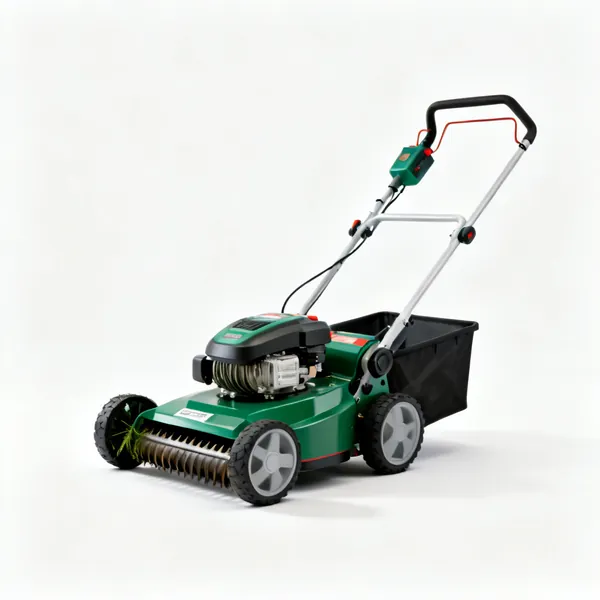
  • Powered scarifier: An electric lawn scarifier with a rotating blade drum, wheels, grass box and a push handle

    Powered scarifier

    Rotating blades that cut vertically into the thatch layer and lift it out. It does in twenty minutes what a rake does in an afternoon, and it removes far more material than expected.

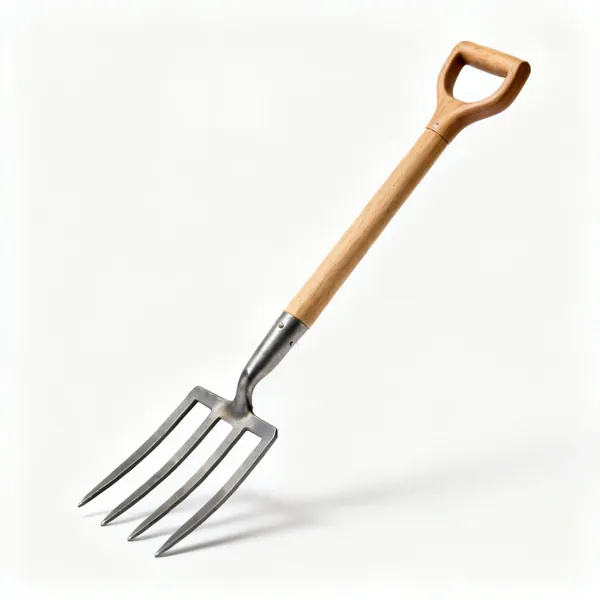
  • Garden fork: A garden digging fork with four square section steel tines and a wooden shaft with a D handleEssential

    Garden fork

    The simplest aerator: pushed in 100mm and rocked back every 150mm across the lawn. Slow and free, and on a small lawn it does the job as well as any machine.

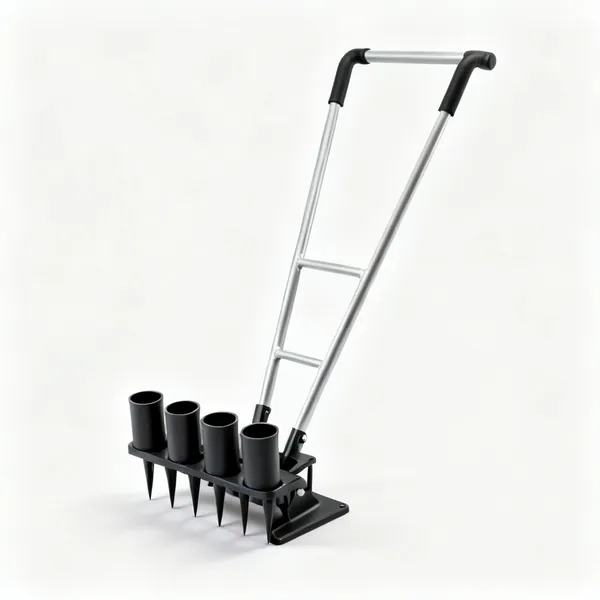
  • Hollow tine aerator: A hollow tine lawn aerator with four hollow tubes on a foot plate and two upright handlesEssential

    Hollow tine aerator

    Hollow tubes that remove a plug of soil rather than compressing it aside. That distinction is the whole point: it genuinely relieves compaction where solid spiking does not.

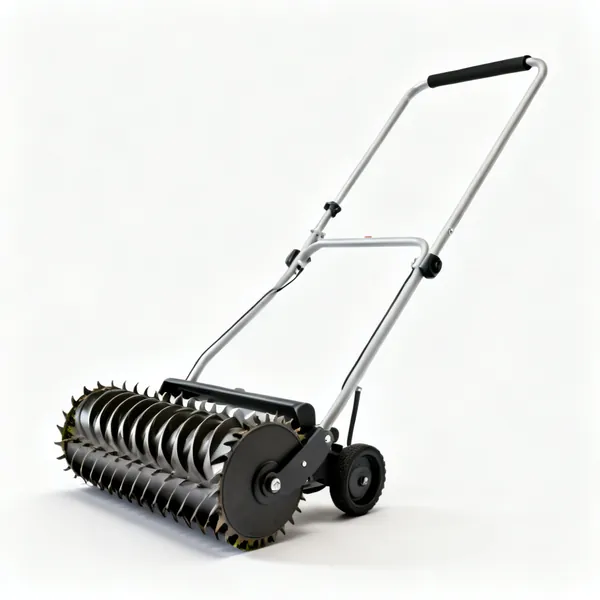
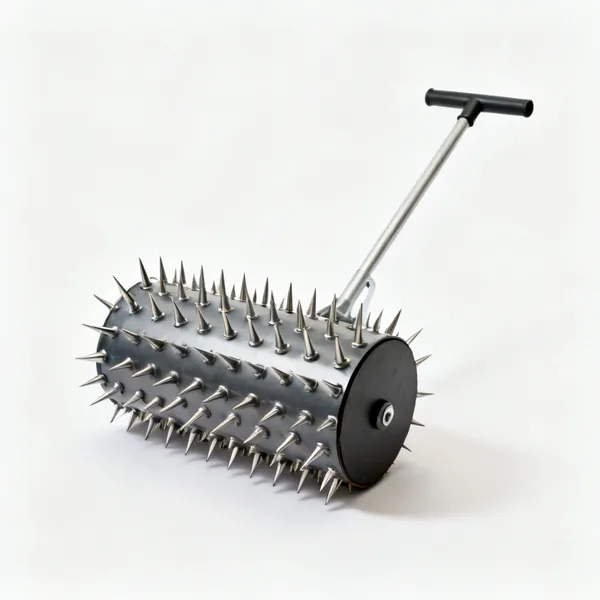
  • Spiked aerator roller: A spiked lawn aerator roller drum with rows of steel spikes and a long handle

    Spiked aerator roller

    A drum of solid spikes rolled or towed across the lawn. Fast over a large area, and it relieves only surface compaction because it compresses the soil around each hole.

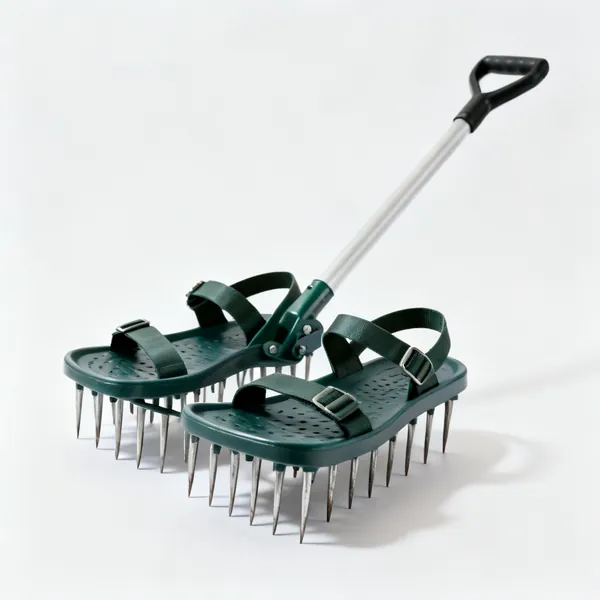
  • A pair of lawn aerator sandals, plastic soles with long steel spikes and straps

    Aerator sandals

    Spiked plates strapped to your feet. Genuinely used, genuinely awkward, and they only spike rather than hollow tine, so they help least on the soil that needs it most.

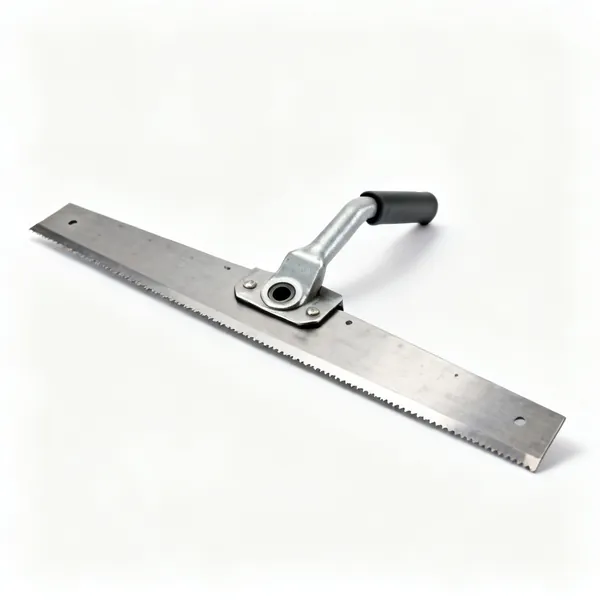
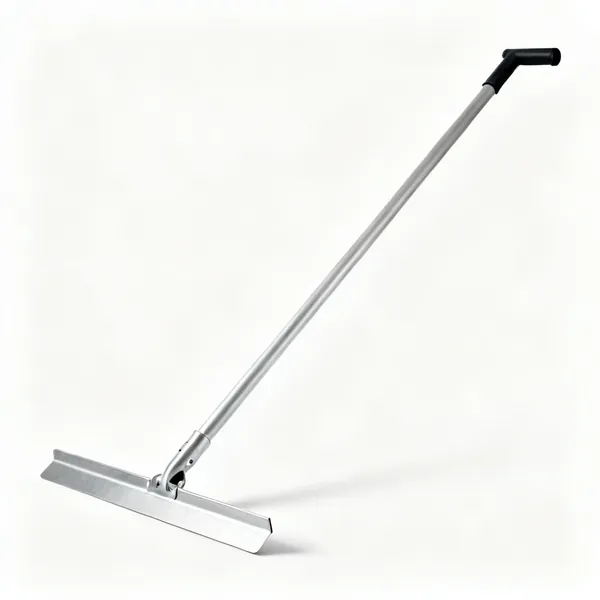
  • A lawn topdressing lute, a long flat aluminium blade on a long handle

    Topdressing lute

    A long flat blade drawn across the lawn to work sand or topdressing into aeration holes. Filling the holes is what makes hollow tining last more than one season.

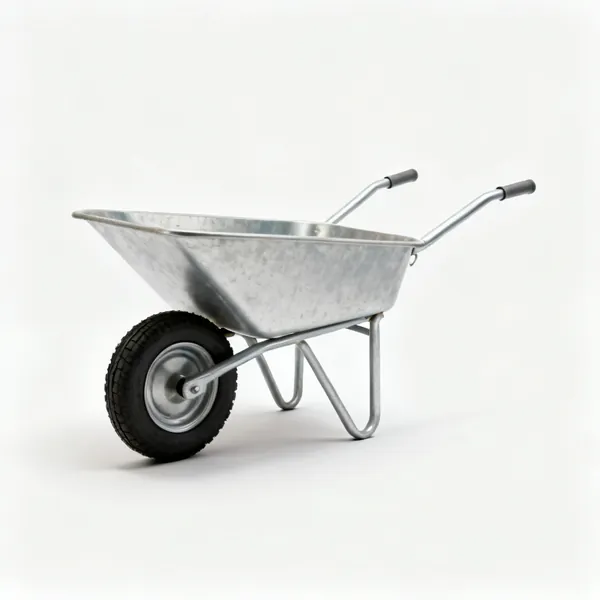
  • A metal wheelbarrow with a single pneumatic wheel, two tubular handles and two legsEssential

    Wheelbarrow

    Carries the thatch off and the topdressing on. Scarifying a small lawn produces several barrow loads, which surprises everyone the first time they do it.

Feeding and treating 7

Twice a year with different feeds. Even application matters more than which product it is.

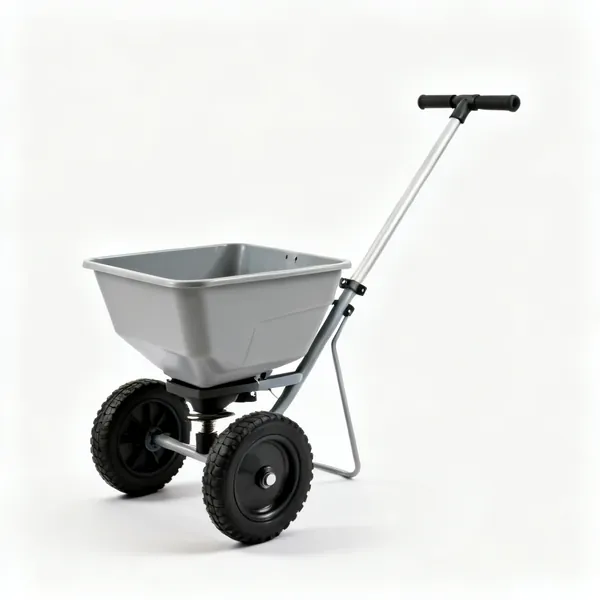
  • A push along drop spreader with a hopper, two wheels and a long handleEssential

    Drop spreader

    Releases granules straight down between two wheels at a set rate, so coverage is even and edges are sharp. Hand scattering leaves stripes and scorched patches visible for months.

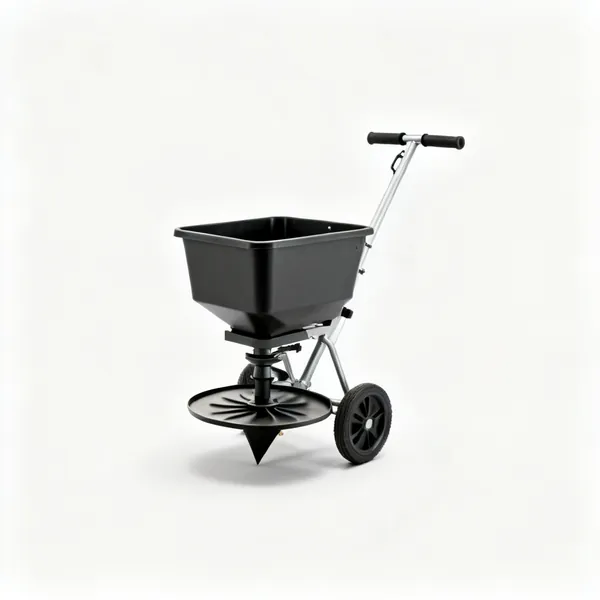
  • Rotary spreader: A push along rotary broadcast spreader with a hopper, spinning plate and a handle

    Rotary spreader

    Flings granules in a wide arc, covering a large lawn quickly. Faster than a drop spreader and less precise at the edges, so it throws feed into beds and onto paving.

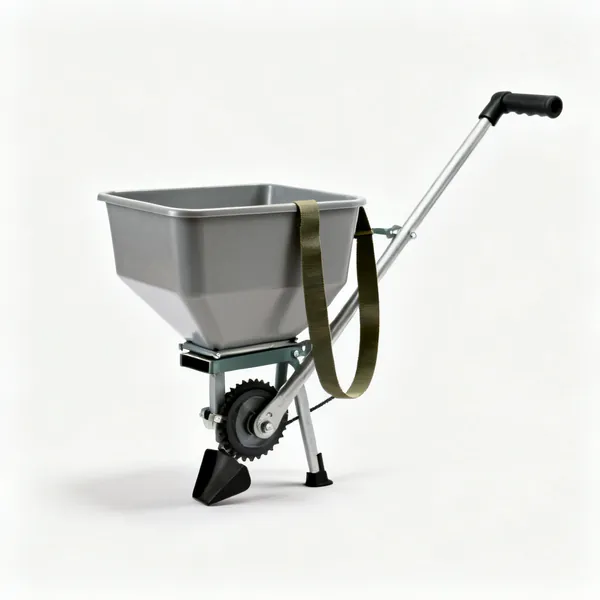
  • Hand spreader: A hand held crank operated seed and feed spreader with a hopper and a shoulder strap

    Hand spreader

    A crank operated hopper for a small lawn or a patch. More even than a hand, less even than a wheeled spreader, and it costs a fraction of either.

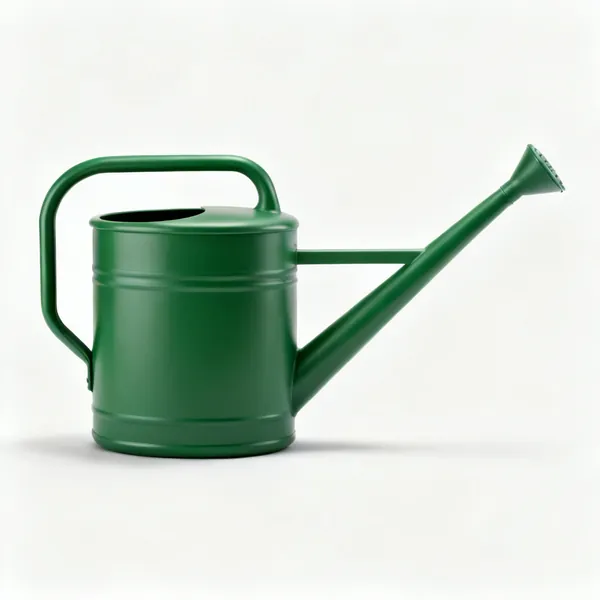
  • Watering can with dribble bar: A green watering can with a long horizontal dribble bar attachment

    Watering can with dribble bar

    Applies liquid feed and treatment evenly across a measured width. A rose head puddles and streaks, and a dribble bar lays an even band you can walk in strips.

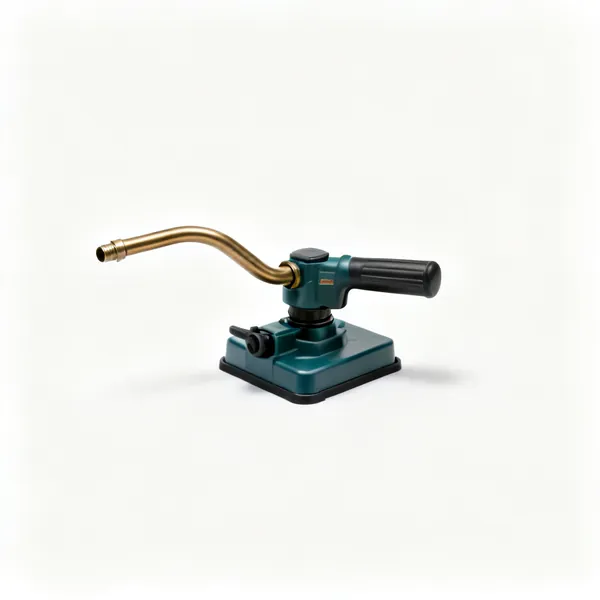
  • Oscillating sprinkler: An oscillating lawn sprinkler with a curved brass arm on a plastic baseEssential

    Oscillating sprinkler

    Waters in even bands, which matters after feeding and seeding. A hose held by hand puts most of the water in the first three metres and none where it is needed.

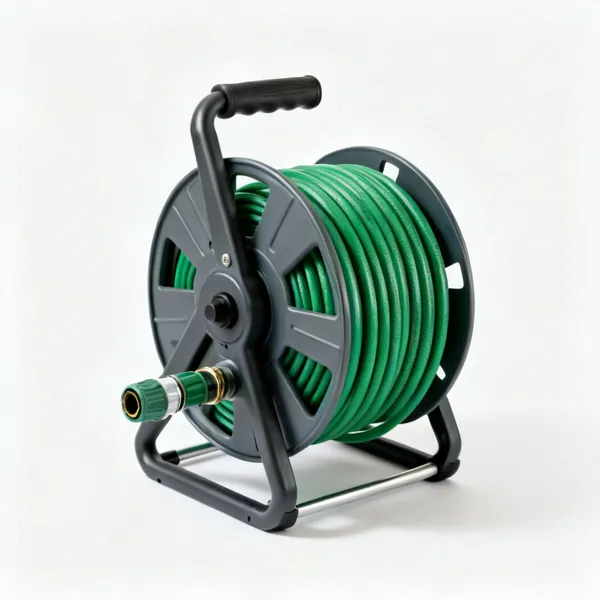
  • Hose and reel: A garden hose reel with green hose wound on it and a connectorEssential

    Hose and reel

    Reaches the whole lawn without kinking. A kinked hose loses most of its flow, and new grass seed dying because it dried out once is the usual result.

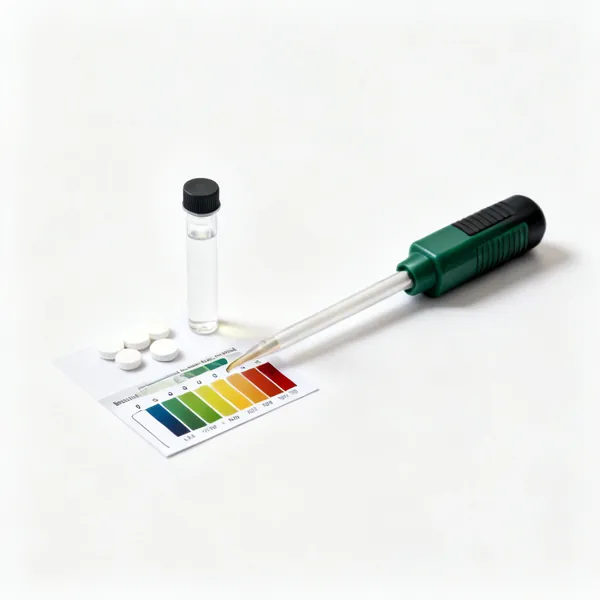
  • Soil pH tester: A soil pH testing kit with a small vial, tablets and a colour chart

    Soil pH tester

    Reads whether the soil is too acidic for grass, which is one of the causes of persistent moss. It answers a question that no amount of feed and treatment will otherwise resolve.

Seeding, repair and clearing 8

Filling what the autumn work opened up, and keeping the surface clear so the grass gets light.

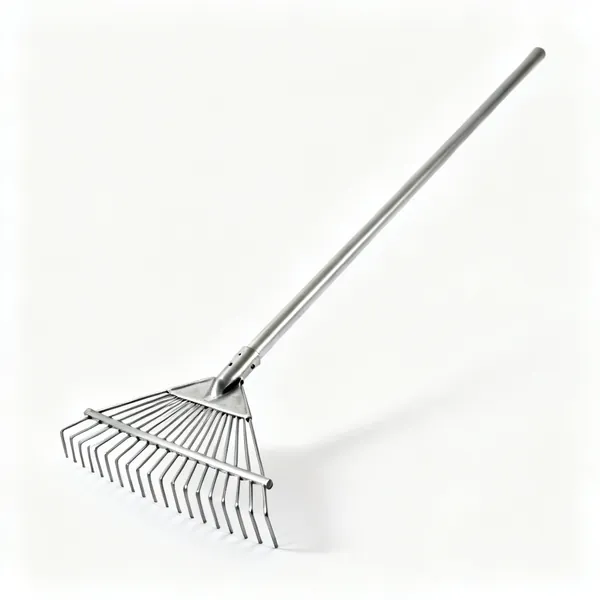
  • A wide landscape rake with a long straight steel head of rigid tines on a long handleEssential

    Landscape rake

    A wide rigid head for levelling soil and working seed into the surface. Seed needs soil contact, and this is the tool that gives it without burying the seed too deep.

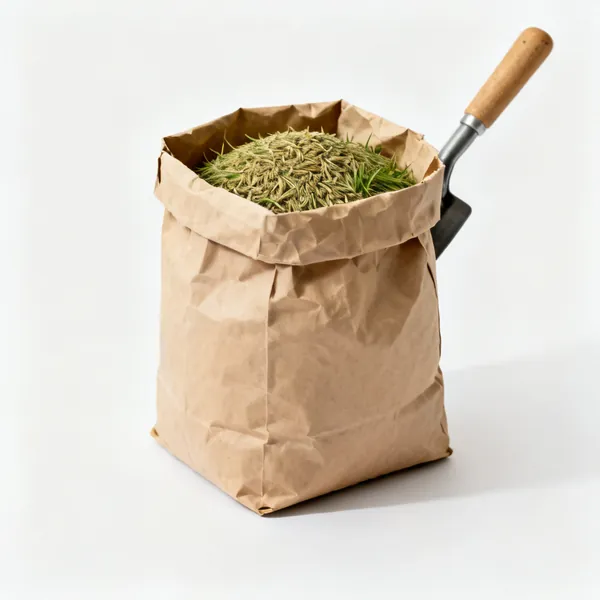
  • An open paper sack of grass seed with seed visible at the topEssential

    Grass seed

    Matched to the site: a shade mix under trees, a hard wearing mix on a route, fine fescue for a formal lawn. The wrong mix thins out however well it is cared for.

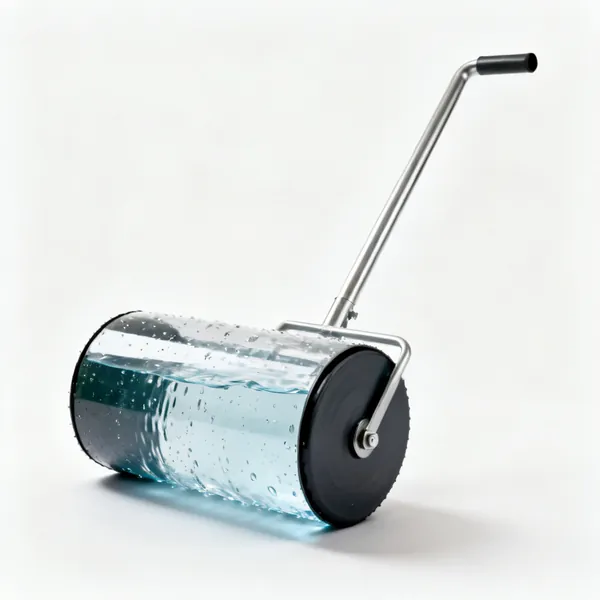
  • A water filled lawn roller drum with a long steel handle

    Lawn roller

    A water filled drum that presses seed into contact and settles a repaired patch. Used lightly: rolling a wet lawn compacts it, which is the problem aerating exists to fix.

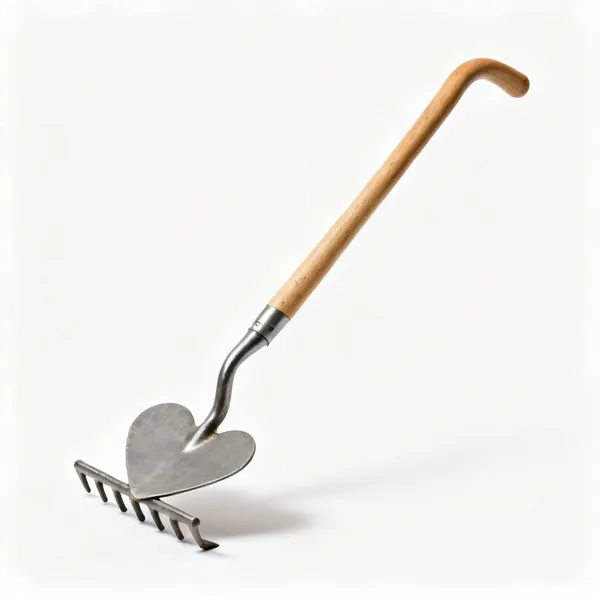
  • A turfing iron with a flat heart shaped steel blade on a bent wooden shaft

    Turfing iron

    A flat heart shaped blade for lifting and patching turf. It cuts a neat piece out and a matching piece in, which is how a worn patch is repaired rather than reseeded.

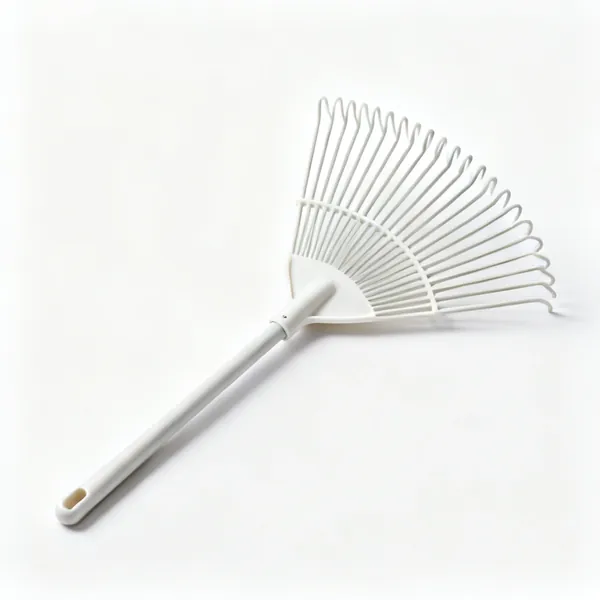
  • A wide plastic leaf rake with a fan of light springy tines on a long handleEssential

    Leaf rake

    A wide fan of light tines for clearing leaves without tearing the turf. Leaves left on a lawn over winter kill the grass beneath them in a few weeks by excluding light.

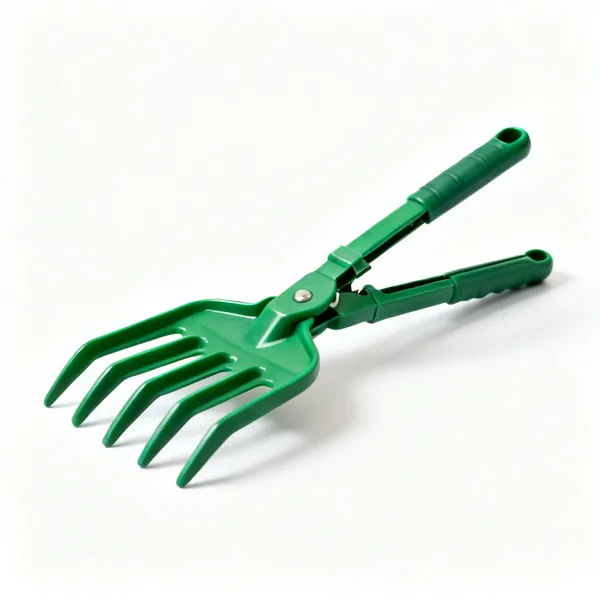
  • Leaf grabs: A pair of large green plastic leaf grabbing hands

    Leaf grabs

    Two large plastic hands for lifting a raked pile in one movement. It turns the slow half of leaf clearing, which is picking the pile up, into a few seconds.

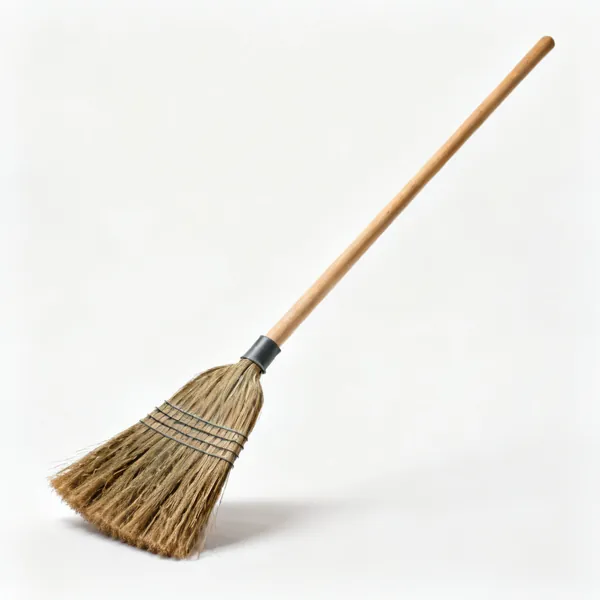
  • Stiff broom: A stiff bristled yard broom with a long wooden handle

    Stiff broom

    Brushes worm casts and topdressing across the surface. Worm casts smeared by a mower wheel are where bare patches and weed seedlings start.

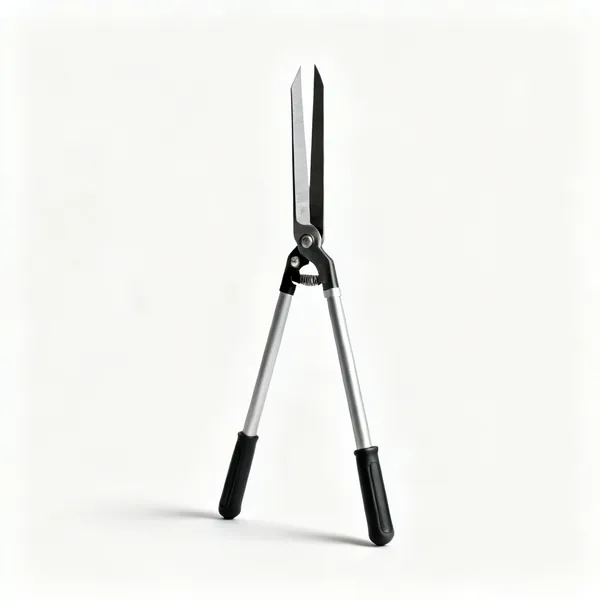
  • Edging shearsEssential

    Edging shears

    Trim the overhang along a cut edge, which is what makes a mown lawn read as finished. The lawn edge is judged before the lawn itself from any distance.

The lawn care year

Mow high, scarify and aerate in autumn, feed twice a year. Those three change more than any machine you buy.

Mow higher than you think

Cutting short is the most common single mistake. A longer leaf photosynthesises more, shades the soil so it dries out less, and out-competes weed seedlings that need light to establish. Scalping does the opposite of all three and it is why a close mown lawn goes brown first in a dry summer.

Around 25mm to 40mm suits most domestic lawns, higher in summer and higher again in shade. Never remove more than a third of the leaf in one cut, so in fast growth mow more often rather than lower.

25 to 40mm for most lawns
Higher in summer, higher again in shade. Short grass browns first and lets weeds in.
Never more than a third
Of the leaf height in one cut. Taking more shocks the grass and it recovers slowly.
Sharp blade, not a blunt one
A blunt blade tears the leaf and the tips brown within two days. That is the usual cause.
Vary the direction
Mowing the same way every time lays the grass over and compacts wheel lines into the surface.

Scarifying and aerating are the two jobs that matter

Thatch is the layer of dead material between the leaf and the soil. Left to build, water and feed cannot get through it and the lawn thins from below. Scarifying rakes it out, and it looks brutal: a properly scarified lawn looks ruined for two weeks and then better than it has ever been.

Compaction is the other half. Soil pressed solid by feet and mower wheels has no air in it, so roots stay shallow. Aerating punches holes through it, and hollow tining, which removes a plug rather than just spiking, is considerably more effective.

Scarify in autumn
Or early spring. It looks like you have wrecked the lawn for a fortnight, then it thickens.
Hollow tine beats spiking
Removing a plug relieves compaction. Spiking a solid soil just compresses the sides of the hole.
Both, then feed and seed
The holes and the cleared thatch are how seed and feed reach the soil. Do them in that order.
Not in drought or frost
The lawn needs to be growing to recover from either job. Autumn with moisture in the soil is ideal.

Feeding twice, with different feeds

Spring feed is high in nitrogen to drive leaf growth. Autumn feed is low in nitrogen and higher in potassium and phosphate, to build roots and toughen the grass for winter. Using a spring feed in autumn produces soft growth that disease takes over the winter.

Even spreading matters more than the product. Hand scattering gives stripes and patches that show for months, and a spreader with a consistent rate is the difference between a fed lawn and a striped one.

Spring feed is high nitrogen
For leaf growth once the soil warms up. Applied to a dry lawn with rain forecast.
Autumn feed is not
Low nitrogen, higher potassium. Spring feed in autumn gives soft growth that disease takes.
Use a spreader
Hand scattering leaves stripes and burnt patches that are visible for months afterwards.
Water it in
Or apply before rain. Granular feed left dry on the leaf scorches it.

Seeding and patching

Grass seed needs soil contact, moisture and warmth. Scattered on a hard surface it feeds birds; raked lightly into loosened soil and kept damp it germinates in one to three weeks depending on temperature.

Autumn is the best time in most climates, because the soil is warm and moisture is reliable. Spring works and needs watering. Midsummer rarely works at all without daily watering, which is more commitment than most people expect.

Soil contact is everything
Rake it lightly in. Seed sitting on the surface germinates poorly and mostly gets eaten.
Autumn, then spring
Warm soil and reliable moisture. Midsummer needs daily watering to work at all.
Keep it damp, not wet
Until it has germinated and rooted. Letting it dry out once at that stage kills the lot.
Match the seed to the site
A shade mix in shade, a hard wearing mix on a route. The wrong mix thins out whatever you do.

Moss is a symptom, not a problem

Moss establishes where grass is struggling, and the causes are shade, compaction, poor drainage, low fertility and mowing too short. Killing the moss without changing any of those means it returns within a season, which is why people treat the same patch every year.

So the sequence is to fix the cause, then scarify the dead moss out, then feed and overseed the bare ground it leaves. Treating moss alone is the step that achieves the least.

Find the cause first
Shade, compaction, drainage, low fertility, or scalping. Moss is telling you which.
Treat, then scarify out
Dead moss still blocks light and water. Raking it out is the part that has the effect.
Overseed the bare patches
Removing moss leaves gaps, and something will fill them. Better that it is grass.
Shade may not be fixable
Under a dense tree, a shade tolerant mix or a different ground cover is a more honest answer.

Frequently asked questions

What tools do I need for lawn care?
A mower, a spring tine rake, a garden fork or hollow tine aerator, a scarifier or scarifying rake, a spreader, edging shears and a hose or sprinkler. That covers mowing, the autumn work, feeding and repair, which is the whole lawn year.
How short should I cut my lawn?
Around 25mm to 40mm for most domestic lawns, higher in summer and higher again in shade. Cutting short is the most common mistake: a longer leaf shades the soil, holds moisture and crowds out weed seedlings. Never remove more than a third of the leaf in one cut.
What is scarifying and do I need to do it?
Raking out the thatch, the layer of dead material between the leaf and the soil that stops water and feed getting through. If your lawn feels spongy underfoot, yes. It looks like you have wrecked the lawn for a fortnight and then it comes back noticeably thicker.
What is the difference between spiking and hollow tining?
Spiking pushes a solid tine in, which relieves surface compaction and compresses the soil around the hole. Hollow tining removes a plug of soil entirely, which genuinely relieves compaction and leaves a space for topdressing. Hollow tining is considerably more effective.
When should I feed my lawn?
Twice a year with different feeds. A high nitrogen feed in spring for leaf growth, and a low nitrogen, higher potassium feed in autumn to build roots and harden it for winter. Using a spring feed in autumn produces soft growth that disease takes over the winter.
When is the best time to sow grass seed?
Autumn in most climates, because the soil is still warm and moisture is reliable. Spring works but needs watering. Midsummer rarely succeeds without daily watering. In all cases rake the seed lightly into loosened soil, since seed on a hard surface mostly gets eaten.
How do I get rid of moss in my lawn?
Fix the cause first, because moss establishes where grass is struggling: shade, compaction, poor drainage, low fertility or mowing too short. Then treat it, scarify the dead moss out, and overseed the bare ground. Treating moss alone means it returns within a season.
Why does my grass go brown at the tips after mowing?
A blunt mower blade, almost always. It tears the leaf rather than cutting it, and the torn tip dies back and browns within a day or two. Sharpening or replacing the blade fixes it, and it is the cheapest improvement available to most lawns.