Disclosure

Tools for pruning

Secateurs, loppers, hedge shears and snips for shrubs, roses and hedges, all 28 grouped by what they cut. The tools are the easy part: where you cut and when is what decides whether pruning helps the plant or harms it.

13 are marked essential: a good pair of secateurs, loppers and shears.

Part of the full garden tools list, 122 tools in 10 groups.

Secateurs and snips 7

For stems up to about 15mm, which is most of what a shrub needs. Bypass, and sharp.

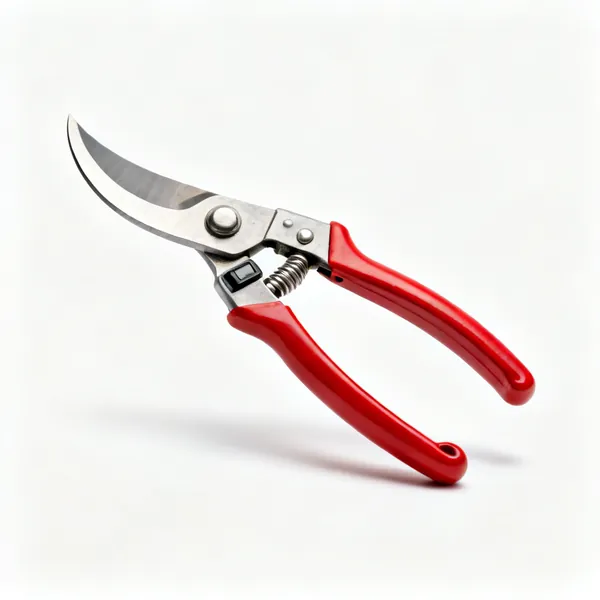
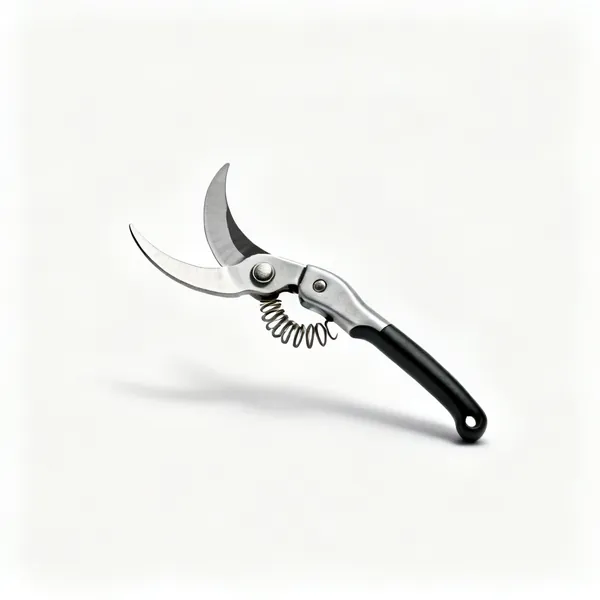
  • A pair of bypass secateurs with a curved steel blade, red handles and a locking catchEssential

    Bypass secateurs

    Two curved blades passing each other to slice a stem cleanly. The single most used tool in a garden, and worth buying a brand that sells replacement blades and springs.

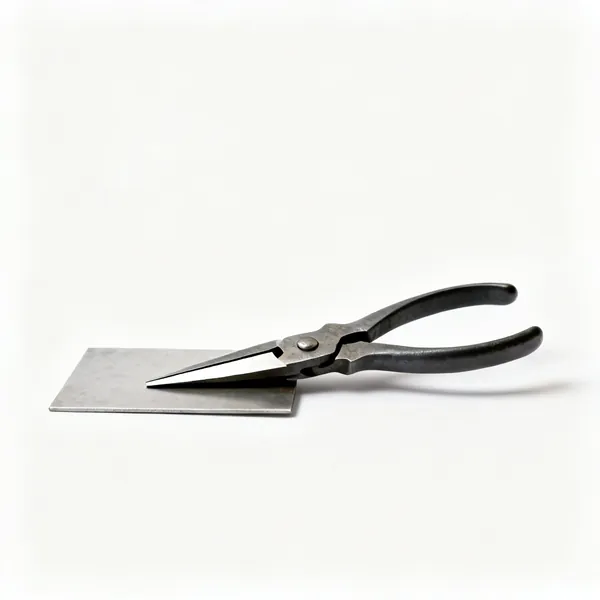
  • A pair of anvil secateurs with a single straight blade closing onto a flat metal plate

    Anvil secateurs

    One blade closing onto a flat plate, which crushes rather than slices. Fine on dead wood, wrong on anything living, and cheaper, which is why so many people own the wrong type.

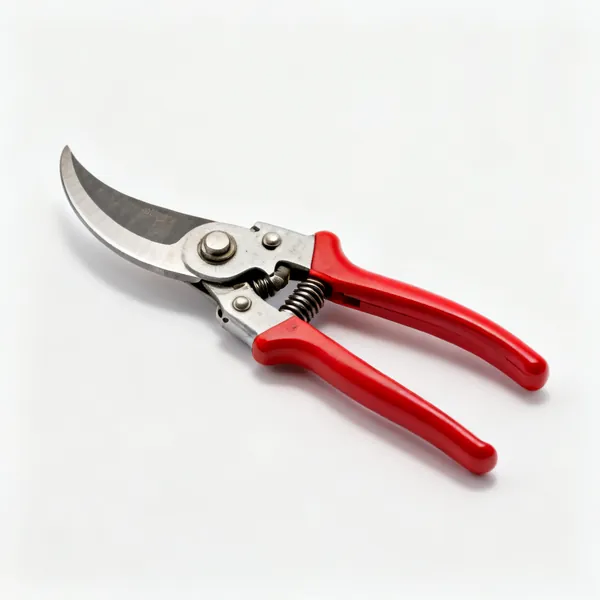
  • A pair of ratcheting secateurs with red handles, a curved cutting blade and visible ratchet mechanism

    Ratcheting secateurs

    Hold their progress between squeezes, so a thick stem takes three light presses. The gain is largest above 15mm, and on thin stems the extra stages just slow you down.

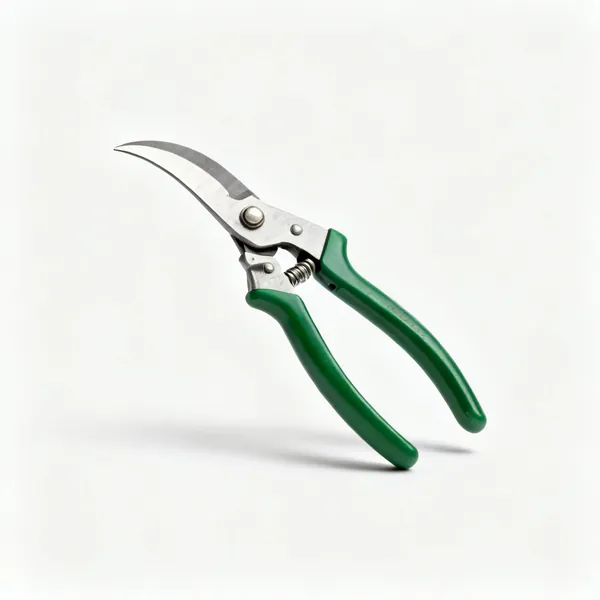
  • Left handed secateurs: A pair of left handed bypass secateurs with a curved blade and green handles

    Left handed secateurs

    Mirrored blades and a catch on the other side, because right handed secateurs used left handed force the blades apart. It is a genuine difference rather than a marketing one.

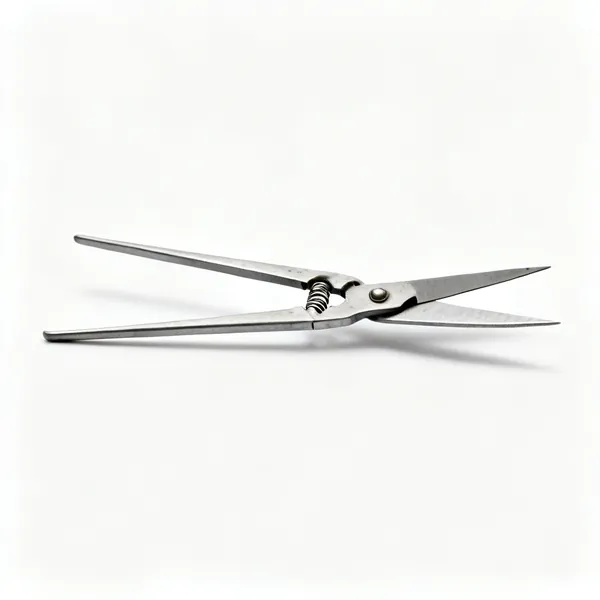
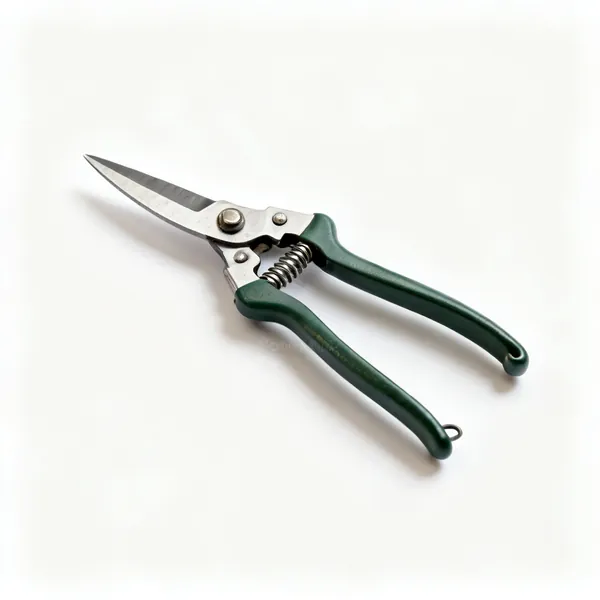
  • A pair of narrow pointed garden snips with thin straight blades and a coil springEssential

    Garden snips

    Narrow pointed blades for deadheading, cutting flowers and thinning soft growth. They reach into a plant where secateurs are too broad to enter without damaging what stays.

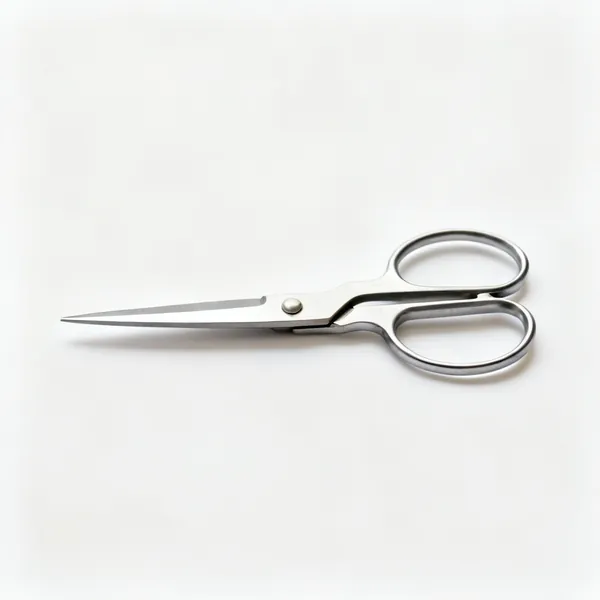
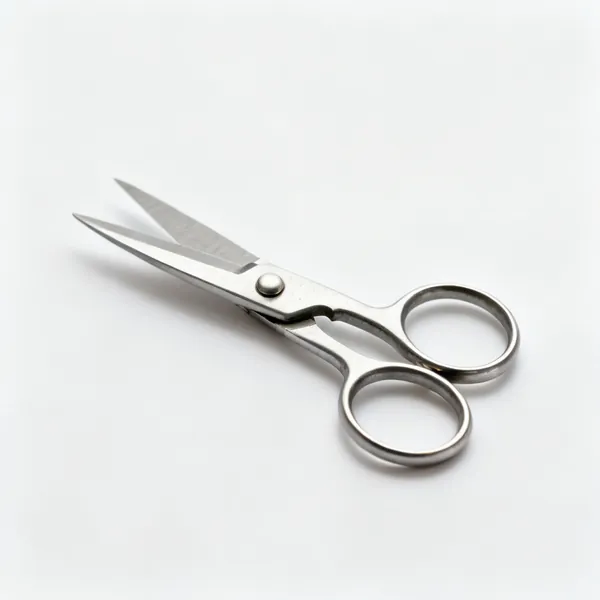
  • A pair of flower shears with short straight steel blades and round looped handles

    Flower shears

    Short straight blades meeting along their whole length, so a stem is cut rather than pinched at the tip. For cutting flowers, where a crushed stem will not take up water.

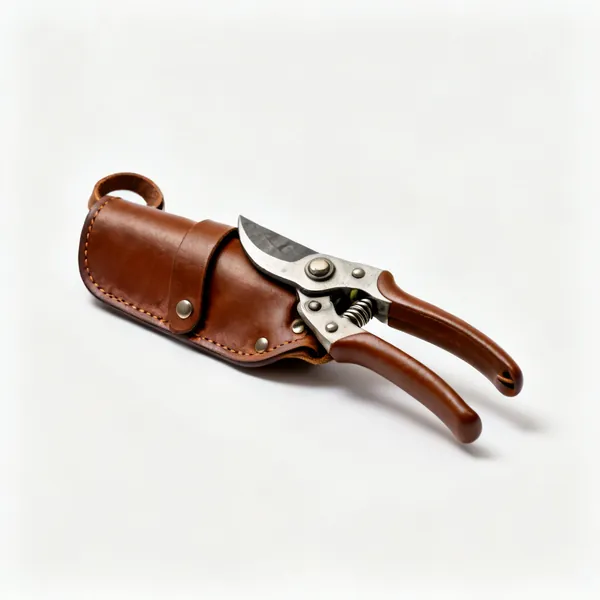
  • A brown leather secateur holster with a belt loop

    Secateur holster

    A belt holster so the tool is with you rather than put down in a bed. Secateurs laid on the soil are the most commonly lost garden tool by a wide margin.

Loppers and pruning saws 7

Above about 15mm. Leverage rather than strength, and a saw sooner than most people reach for one.

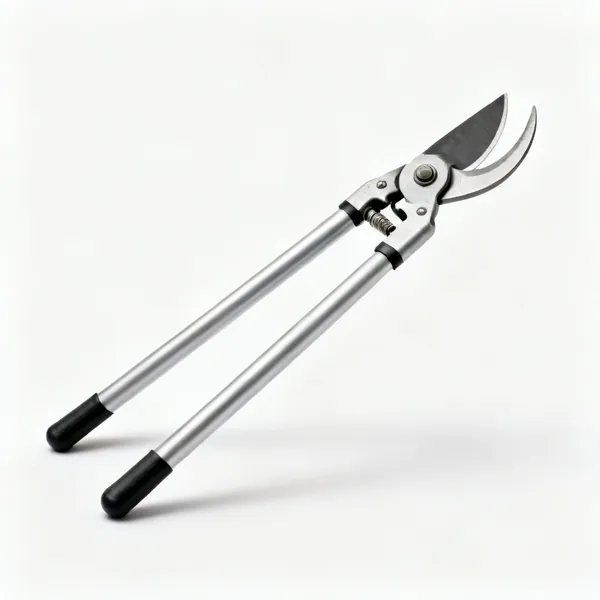
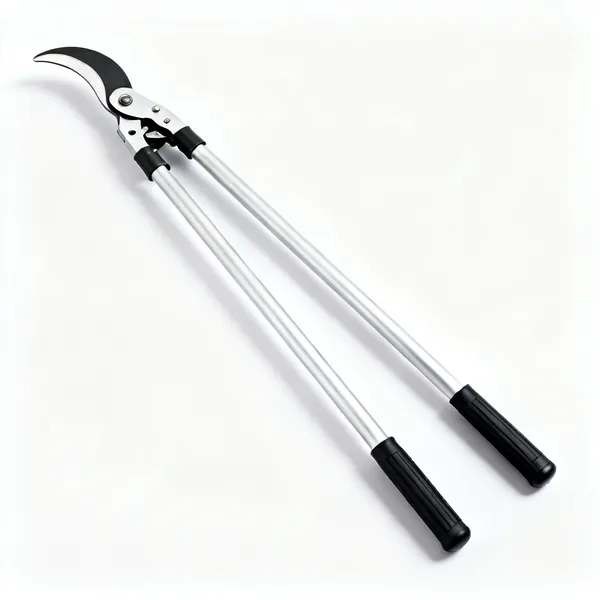
  • A pair of bypass loppers with two long tubular handles and a curved cutting headEssential

    Bypass loppers

    Long handled bypass cutters to about 30mm, using leverage rather than force. Forcing them past capacity springs the blades out of line and they never close cleanly again.

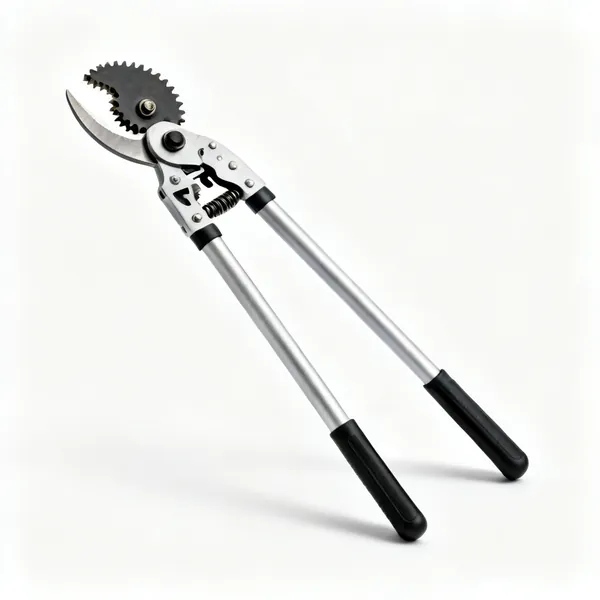
  • Geared loppers: A pair of geared bypass loppers with long handles and a compound gear mechanism at the head

    Geared loppers

    A compound linkage multiplying your squeeze, taking them to about 50mm in soft wood. Slower per cut and it handles what would otherwise need a saw and more space.

  • Telescopic loppers: A pair of telescopic bypass loppers with extending tubular handles and a curved head

    Telescopic loppers

    Extending handles for the back of a shrub border without standing in it. Reach rather than power, and at full extension the leverage is noticeably worse.

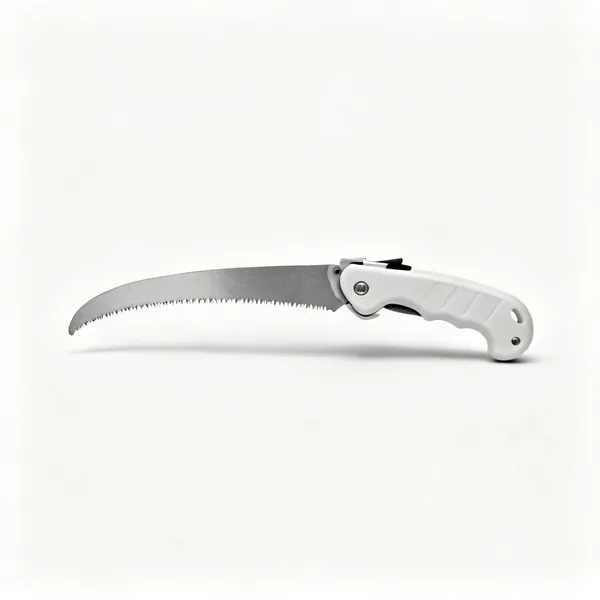
  • A folding pruning saw with a curved blade folded into a moulded plastic handleEssential

    Folding pruning saw

    A curved blade with coarse teeth cutting on the pull, folding into its handle. Above 30mm a saw is faster and kinder to the plant than forcing loppers through.

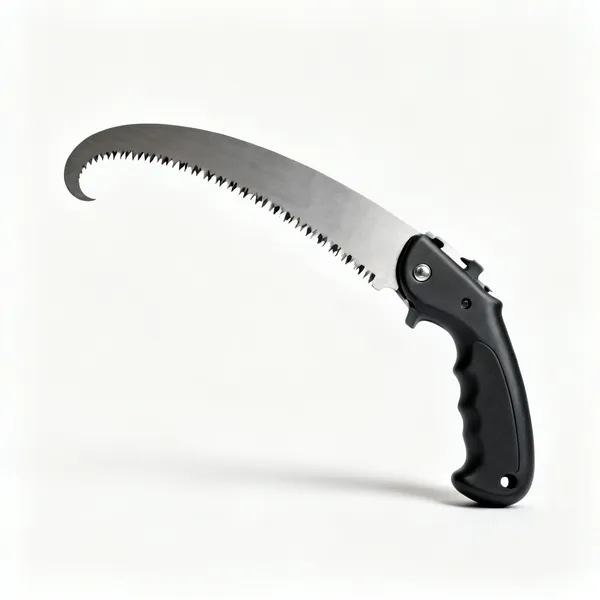
  • Fixed pruning saw: A curved pruning saw with a hooked blade, coarse teeth and a moulded pistol grip handle

    Fixed pruning saw

    A longer curved blade with a full grip, for repeated cuts where a folding saw is too small. Green wood clogs a fine saw, which is why the teeth are set this coarsely.

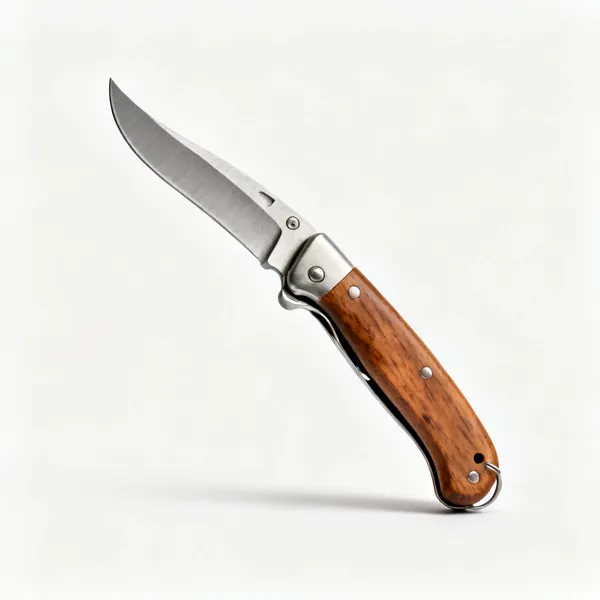
  • A folding pruning knife with a curved single bevel steel blade and a wooden handle

    Pruning knife

    A curved single bevel blade for paring a ragged cut smooth and for taking soft growth. It leaves a cleaner face than any secateur, which is why it survives in fruit growing.

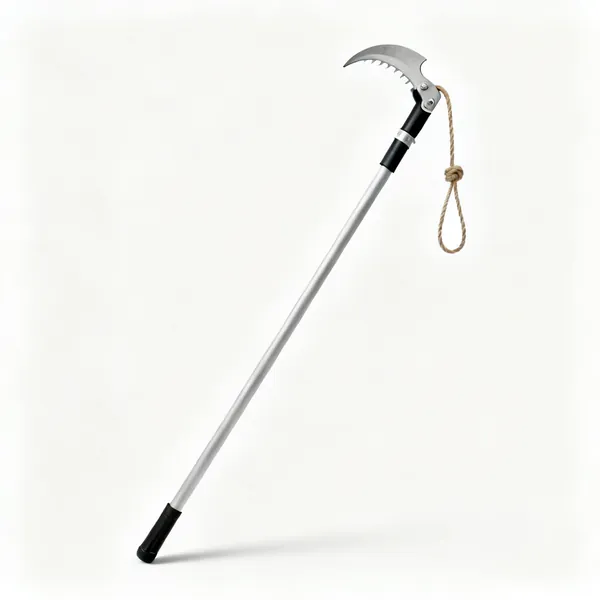
  • Pole pruner: A pole lopper with a hooked cutting head, pull rope and a long telescopic pole

    Pole pruner

    A hooked jaw on a pole for the top of a tall shrub or a climber on a wall. Included here for the shrub border rather than for tree work, which the tree page covers.

Hedges and topiary 7

Soft growth cut to a shape rather than individual stems cut to a bud. A different action entirely.

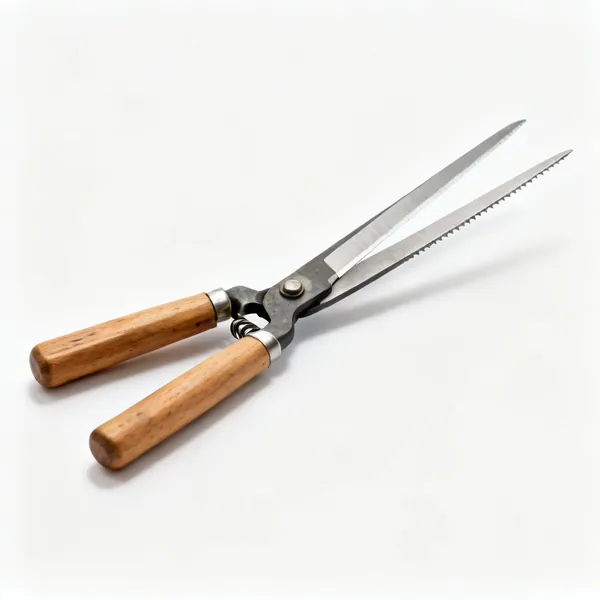
  • A pair of hedge shears with two long straight blades and wooden handlesEssential

    Hedge shears

    Two long blades cutting soft growth to a line. Weight and balance decide whether an hour of hedge cutting is possible, because the tool is held out at arm's length throughout.

  • One handed shears: A pair of one handed topiary shears with short blades and a sprung handle

    One handed shears

    Sprung shears squeezed in one hand for small topiary and tight detail. They cut a few leaves at a time, which is what shaping rather than shearing requires.

  • A pair of small japanese topiary shears with round steel blades and looped handles

    Topiary shears

    Small round blades on looped handles for shaping a form rather than trimming a face. The looped handles let the whole hand drive a very small precise cut.

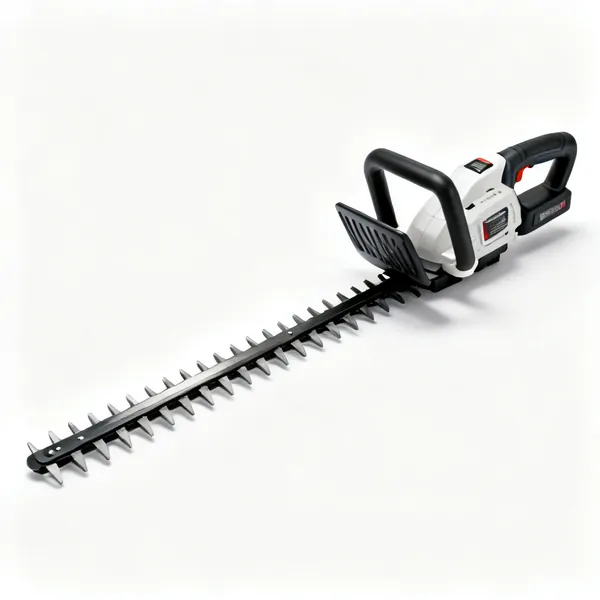
  • Powered hedge trimmer: A cordless hedge trimmer with a long toothed blade bar, guard and two handles

    Powered hedge trimmer

    Reciprocating blades for a long hedge, where shears would take a day. It tears rather than slices on anything woody, so it suits soft annual growth only.

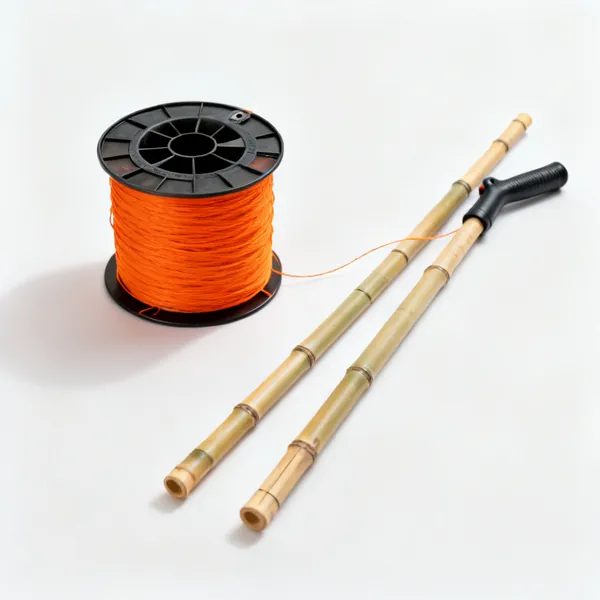
  • String line and canes: A string line reel with bright orange builders line beside two bamboo canesEssential

    String line and canes

    A taut line at the finished height, so the top of the hedge is straight rather than approximately level. Cutting a hedge by eye produces a visible dip along its length.

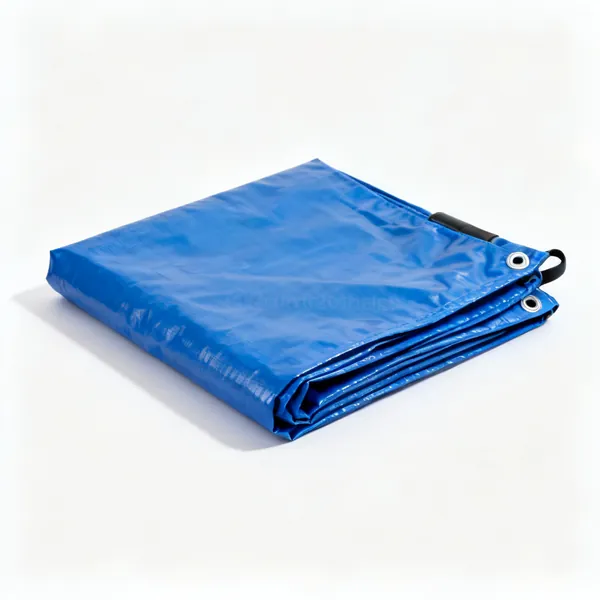
  • A folded blue polypropylene ground sheet with eyeletsEssential

    Ground sheet

    Laid under the hedge so clippings can be gathered in one lift. Clearing hedge trimmings out of a border afterwards takes longer than the cutting did.

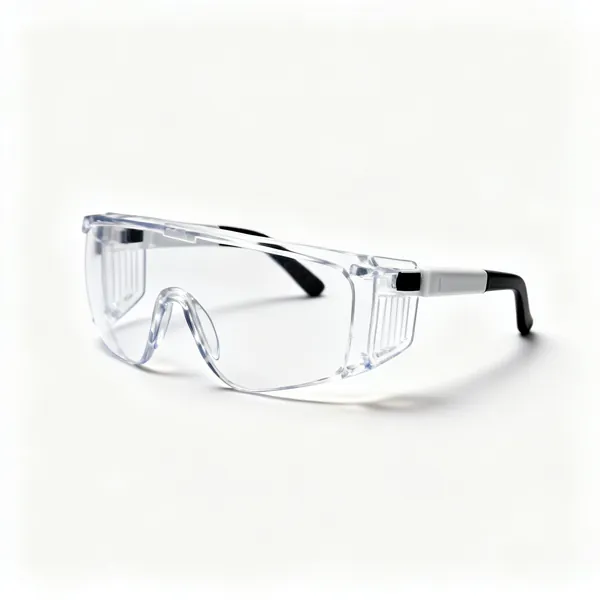
  • A pair of clear lens safety glasses with side shieldsEssential

    Safety glasses

    Hedge cutting is done at face height with cut ends springing back. Marked essential because a stem in the eye is the characteristic injury of this particular job.

Sharpening and hygiene 7

A blunt bypass blade crushes exactly as an anvil pruner does, so this group is part of pruning rather than maintenance.

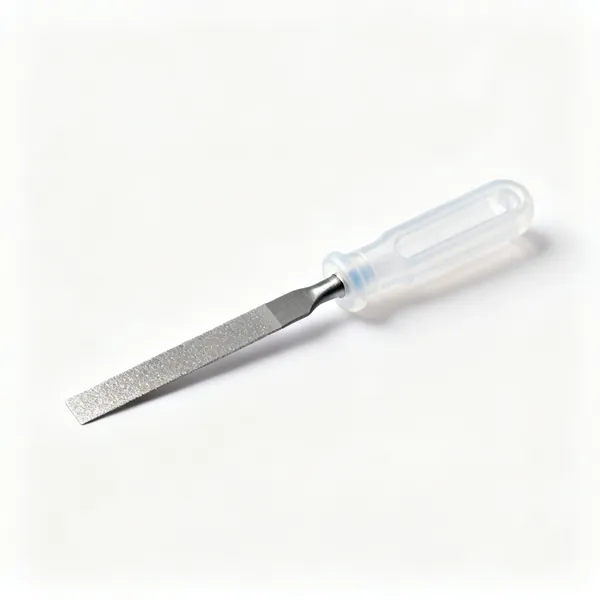
  • A small diamond sharpening file with a plastic handleEssential

    Diamond sharpening file

    Restores the bevel on secateurs and loppers in a few strokes, on the bevel side only. Grinding the flat back removes the reference the blades close against.

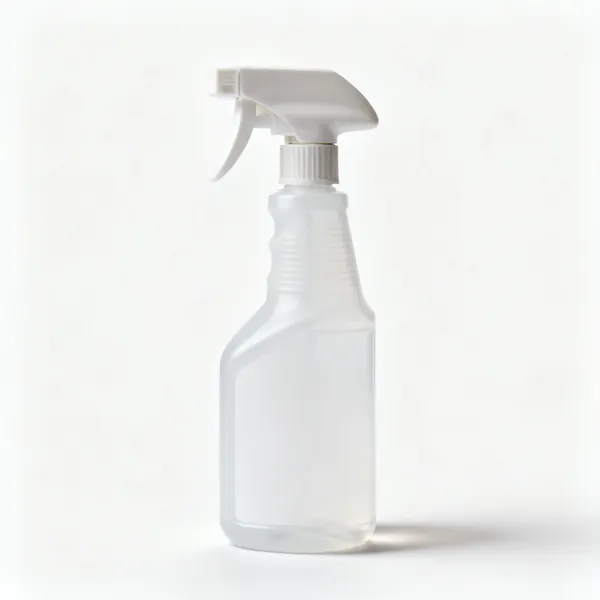
  • Blade disinfectant: A spray bottle of tool disinfectant with a trigger nozzleEssential

    Blade disinfectant

    Wiped between plants, and immediately after cutting anything diseased rather than at the end of the plant. Canker, silver leaf and box blight all travel on a blade.

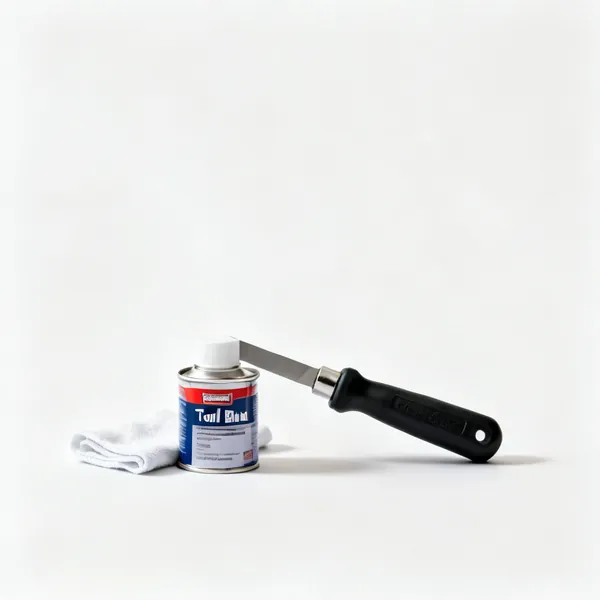
  • A small can of tool blade oil with a cloth beside itEssential

    Blade oil

    Wiped on after cleaning, because disinfectant strips the oil film and sap is corrosive. A pitted blade drags and then crushes, which is the fault sharpening will not fix.

  • Replacement blades: A pair of replacement curved secateur blades and a coil spring

    Replacement blades

    Secateur blades and springs are consumable, and a nicked blade leaves a ragged cut no sharpening corrects. Whether spares exist is decided when you buy the tool.

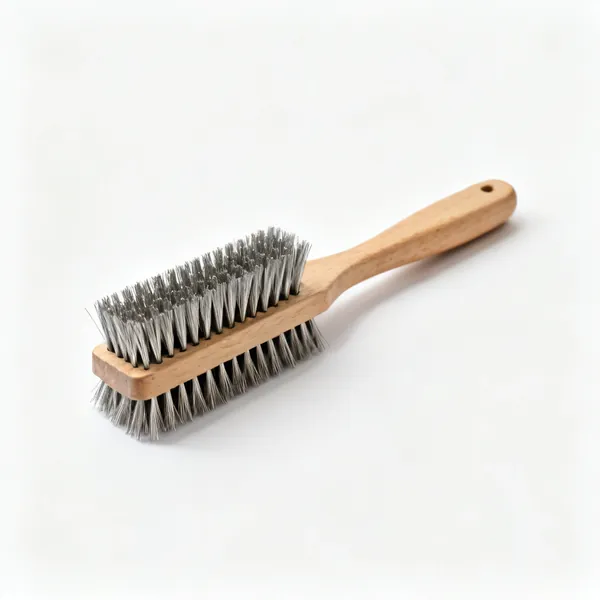
  • A hand wire brush with rows of stiff steel bristles and a wooden handle

    Wire brush

    Removes dried sap, which sets hard enough that a cloth will not shift it. A sap coated blade cuts noticeably worse and holds moisture against the steel.

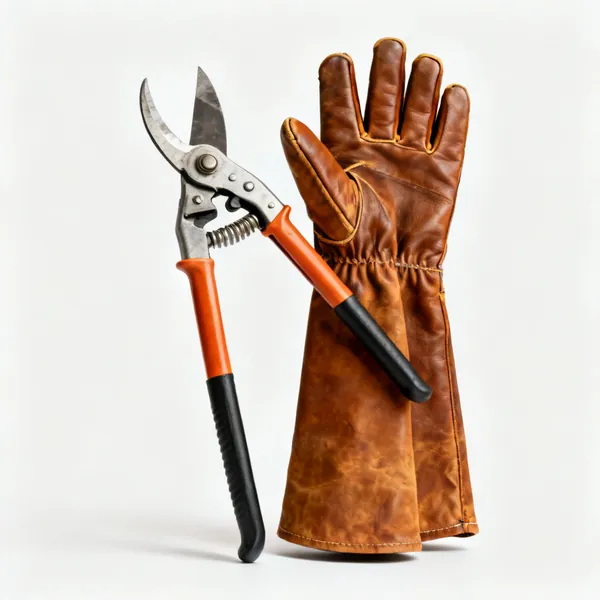
  • Pruning gloves: A pair of long cuffed leather pruning gauntlet glovesEssential

    Pruning gloves

    Long cuffed gauntlets for roses and brambles, where a short glove leaves the forearm exposed to exactly what you are reaching past. Thorn punctures also infect readily.

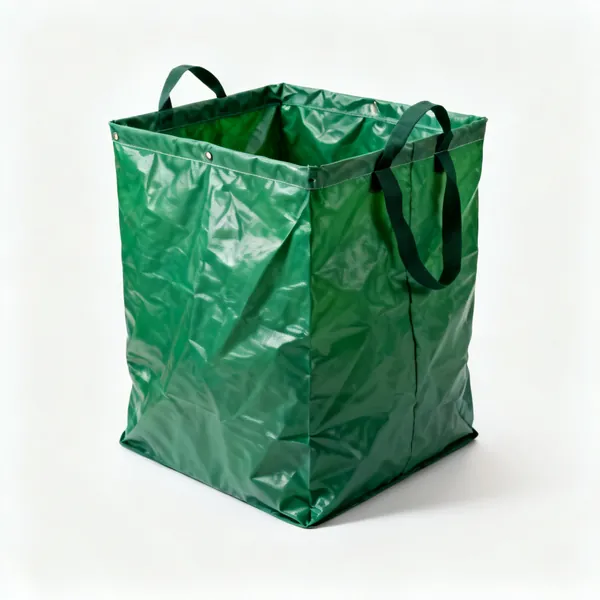
  • A large collapsible green garden waste bag with two handlesEssential

    Garden waste bag

    Prunings take several times the volume of the branch they came from. Diseased material goes in the bin rather than this, because a cool compost heap returns it to the garden.

Pruning shrubs, roses and hedges

Cut above an outward facing bud, at the right time for that plant, and take out the dead and crossing growth first.

Cut above an outward facing bud

A cut just above a bud, sloping away from it, sends growth in the direction that bud faces. Choose an outward facing one and the shrub opens up; choose an inward facing one and you get congested crossing growth that then has to be cut out again.

Leave about 5mm above the bud. Closer and the bud dries out; further and the stub above it dies back, which on a rose is where dieback enters the stem.

Outward facing bud
It sends new growth away from the centre, which is what keeps a shrub open.
About 5mm above it
Closer dries the bud out. Further leaves a stub that dies back into the stem.
Slope away from the bud
So water runs off rather than sitting against it. A flat cut holds a drop of water on the bud.
Opposite buds, cut straight
On a plant with paired buds a sloping cut favours one and kills the other.

The three Ds first, then shape

Before deciding what shape you want, take out everything dead, damaged and diseased. Then anything crossing or rubbing, because those wounds are where disease enters. Very often that is most of what needed doing and the shrub already looks better.

Only then start shaping, and stop more often than feels natural. Standing back every few cuts is the whole technique, because you cannot see the shape of a shrub from inside it.

Dead, damaged, diseased
In that order, and before any decision about shape. Often it is most of the job.
Then crossing and rubbing
Two stems rubbing wear through the bark, and that wound is where disease gets in.
Stand back constantly
Every few cuts. You cannot judge the shape of a shrub from arm's length inside it.
Stop early
You can always cut more next week. You cannot put a branch back on this week.

Timing depends on when it flowers

The rule that covers most shrubs is simple. Anything that flowers in spring on last year's growth is pruned straight after flowering, because pruning it in winter removes the flower buds. Anything that flowers in summer on this year's growth is pruned in late winter or early spring.

Get this backwards and the plant is healthy and never flowers, which is the commonest pruning complaint there is. Hedges are different again and are cut when growth allows, with bird nesting season checked first.

Spring flowering, prune after flowering
It flowers on last year's wood, so winter pruning cuts the flowers off.
Summer flowering, prune late winter
It flowers on this year's growth, so cutting back hard early gives more of it.
Cherries and plums in summer only
Winter cuts on prunus invite silver leaf. This exception matters and catches people out.
Check for nests, March to August
It is an offence to damage an active nest, and hedges are exactly where they are.

Bypass, not anvil

Bypass secateurs have two curved blades that pass each other like scissors, slicing the stem. Anvil types close a single blade onto a flat plate, which crushes the stem against it. On living wood a crushed cut dies back and is slow to heal.

Anvil pruners exist and they suit dead wood, where crushing does not matter. For anything living, bypass every time, and keep it sharp, because a blunt bypass blade also crushes rather than cutting.

Bypass for living wood
Two blades passing, slicing the stem. Anvil types crush it against a plate.
Anvil for dead wood only
Where crushing does not matter. They are cheaper and they are not a substitute.
Blunt bypass crushes too
Sharpness is not cosmetic here. A dull blade does what an anvil pruner does.
Match the tool to the stem
Secateurs to 15mm, loppers to 30mm, a saw above that. Forcing a tool springs its blades.

Clean blades between plants

Pruning tools carry disease from one plant to the next on the blade. It matters most with roses, fruit trees and box, where canker, silver leaf and box blight all move on a dirty blade.

A wipe with disinfectant between plants takes seconds. If you have just cut out something obviously diseased, clean before the next cut rather than the next plant, and put the prunings in the bin rather than the compost.

Wipe between plants
Seconds each time. Roses, fruit and box are where it matters most.
Clean immediately after diseased wood
Not at the end of the plant. The next cut is the one that spreads it.
Bin diseased prunings
A compost heap that does not get hot enough returns the disease to the garden.
Oil after cleaning
Disinfectant strips the oil film, and sap plus bare steel means a pitted blade within weeks.

Frequently asked questions

What tools do I need for pruning?
Bypass secateurs for stems up to about 15mm, loppers to about 30mm, a folding pruning saw above that, and hedge shears for soft growth. Add snips for deadheading and gloves for roses. That covers almost all pruning within arm's reach in a domestic garden.
Where should I cut when pruning a shrub?
About 5mm above an outward facing bud, sloping away from it so water runs off. New growth follows the direction the bud faces, so an outward facing bud opens the shrub up. On plants with paired opposite buds, cut straight across instead of sloping.
When should I prune a shrub?
It depends when it flowers. Spring flowering shrubs flower on last year's growth, so prune straight after flowering. Summer flowering shrubs flower on this year's growth, so prune in late winter or early spring. Getting it backwards gives a healthy shrub that never flowers.
What is the difference between bypass and anvil secateurs?
Bypass secateurs have two curved blades that pass each other and slice the stem. Anvil types close one blade onto a flat plate, crushing the stem against it. Use bypass on anything living, since a crushed cut dies back and heals slowly. Anvil types suit dead wood.
How thick a stem can secateurs cut?
About 15mm for most bypass secateurs. Beyond that use loppers to about 30mm, or a pruning saw. Forcing secateurs past their capacity springs the blades out of alignment permanently, after which they crush rather than cut whatever their size.
Should I clean my pruning tools between plants?
Yes, with a wipe of disinfectant, which takes seconds. Blades carry disease from one plant to the next, and it matters most with roses, fruit trees and box, where canker, silver leaf and box blight all travel on a dirty blade.
How do I prune a rose?
Take out dead, damaged and diseased stems first, then anything crossing or thin and weak. Then cut the remaining stems back to an outward facing bud, sloping away from it. Most bush roses are pruned in late winter, and prunings go in the bin rather than the compost.
When can I cut a hedge?
When growth allows, but check for active bird nests first, since damaging one is an offence and hedges are where they are. In practice that means avoiding roughly March to August for anything more than a light trim, and doing the main cut in late summer or winter.