Disclosure

Hand tools: the complete list, with names, pictures and uses

A complete hand tools list with a picture of each one, all 73 types grouped by the job they do, so tools that compete with each other sit side by side and the difference between them is easy to see.

31 are marked essential: the set that gets you through almost any repair or build without reaching for a power tool.

Hammers & mallets 8

Hammers differ by weight and by what the other end does. Getting that pairing right is most of the choice, and using a steel face where a soft one belongs is how things get marked.

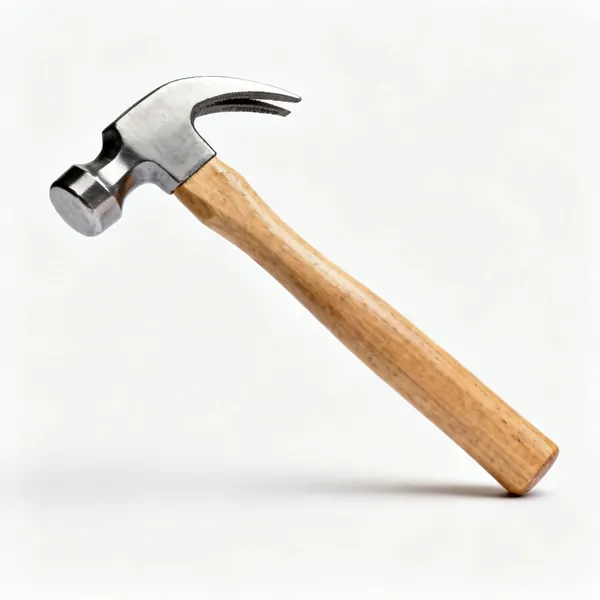
  • A claw hammer with a steel head and a wooden handleEssential

    Claw hammer

    The general purpose hammer. Drives nails with one end and pulls them with the other, which is why it is the one hammer most homes own. A 16oz head suits almost everyone.

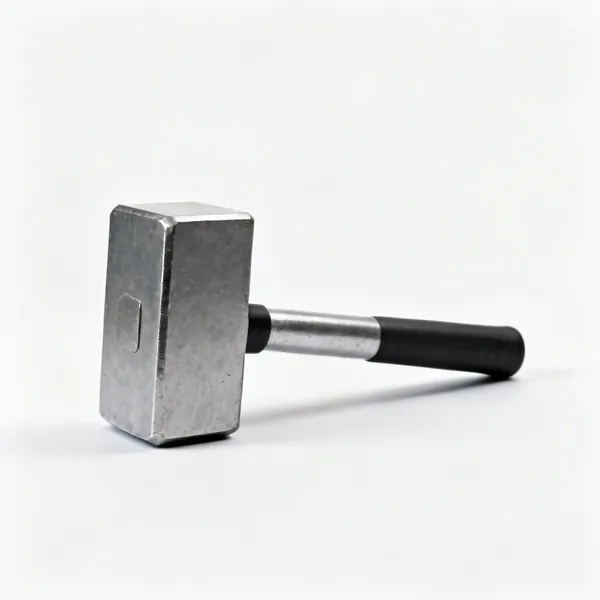
  • A club hammer with a heavy rectangular steel head and short handle

    Club hammer

    A heavy short handled hammer for hitting chisels, bolsters and steel pins. The weight does the work, so you guide it rather than swing it hard.

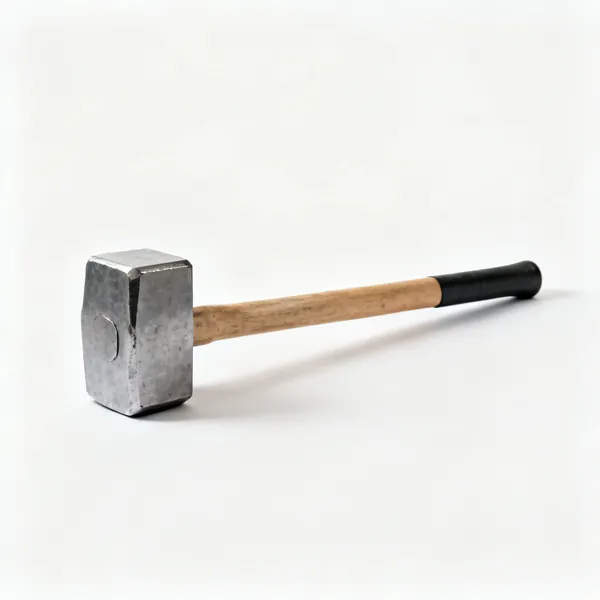
  • A long-handled sledgehammer with a large steel head

    Sledgehammer

    Two hands and a long handle, for breaking concrete, driving stakes and demolition. Pure force with no finesse, and easily too much tool for indoor work.

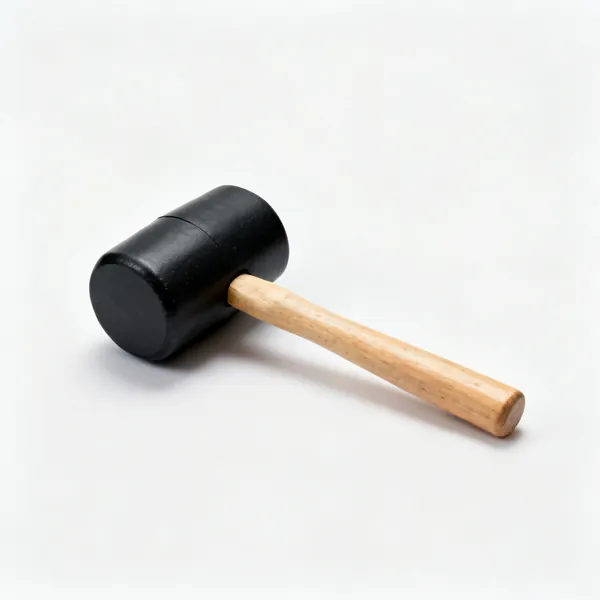
  • A rubber mallet with a black rubber head and wooden handleEssential

    Rubber mallet

    Hits hard without marking. For tapping paving flat, seating laminate boards and persuading parts together where a steel face would dent them.

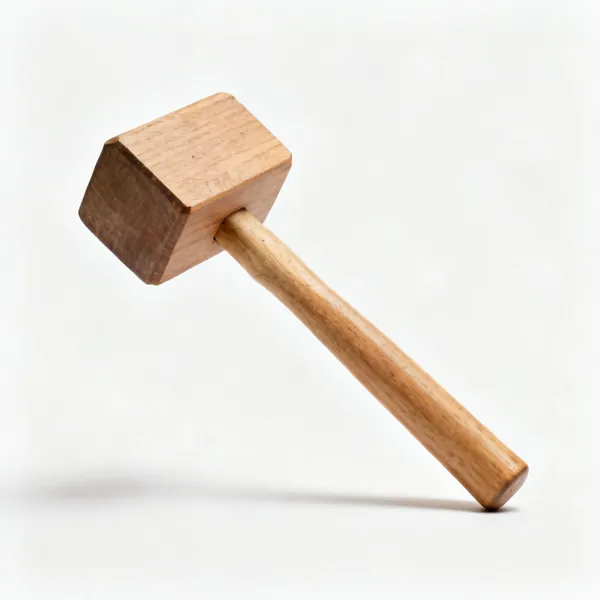
  • Wooden mallet: A wooden carpenter's mallet with a square head

    Wooden mallet

    The right thing to hit a wooden chisel handle with. Steel splits the handle over time, and a mallet spreads the blow across a wider face.

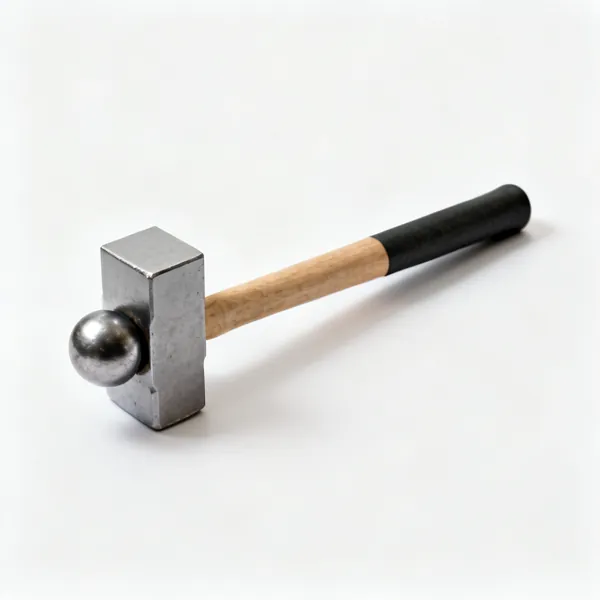
  • A ball pein hammer with one flat face and one rounded end

    Ball pein hammer

    A flat face and a rounded one, for metalwork. The ball end shapes rivets and spreads metal, which a claw hammer cannot do at all.

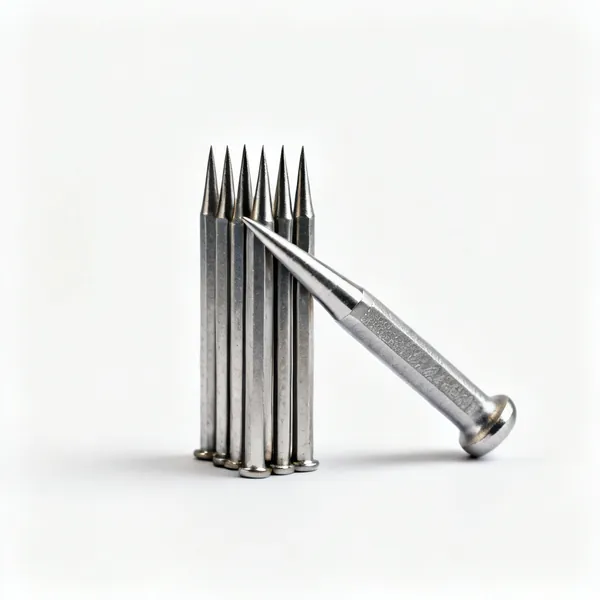
  • A set of steel nail punches with tapered tipsEssential

    Nail punch

    A tapered steel pin that drives a nail head below the surface so it can be filled. Without it the last blow always dents the timber around the nail.

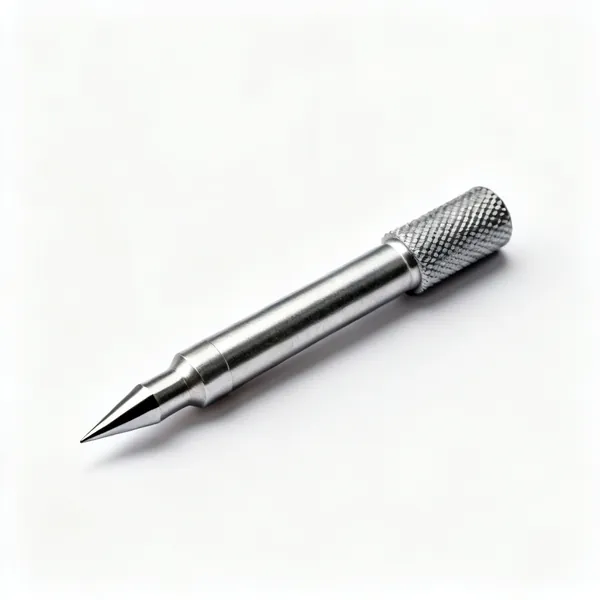
  • A steel centre punch with a knurled body and sharp point

    Centre punch

    Makes a small dimple to stop a drill bit wandering when starting a hole in metal. Two seconds of work that saves a scratched panel and an off centre hole.

Saws 5

Match the teeth to the material. A saw that rips timber fast will tear it if you wanted a clean edge, and a wood saw will not cut metal at any useful speed.

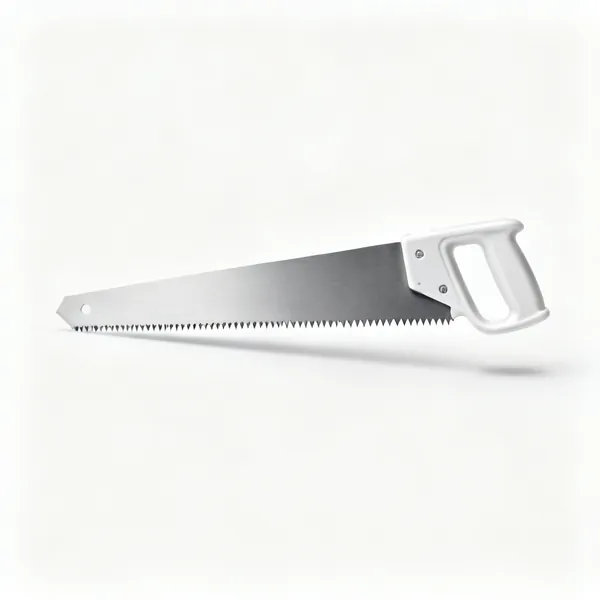
  • A hand saw with a wide toothed blade and a plastic handleEssential

    Hand saw

    Coarse teeth for cutting boards and timber to rough length. Fast and forgiving, but it leaves a ragged edge, so it is a cutting tool rather than a finishing one.

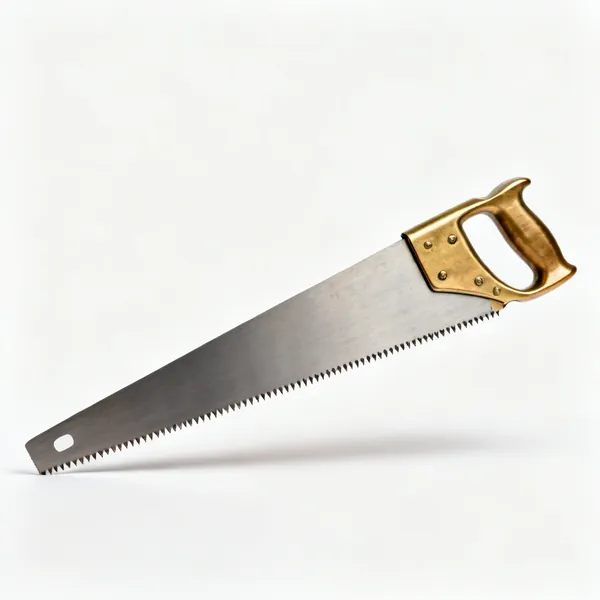
  • A tenon saw with a reinforced brass back and fine teethEssential

    Tenon saw

    Fine teeth and a stiffened back so the blade cannot flex. That is what lets it cut square and clean for joints, trim and anything that will be seen.

  • Coping saw

    Coping saw

    A thin blade in a sprung frame, for cutting curves and interior shapes. The blade can be threaded through a drilled hole to start a cut in the middle of a panel.

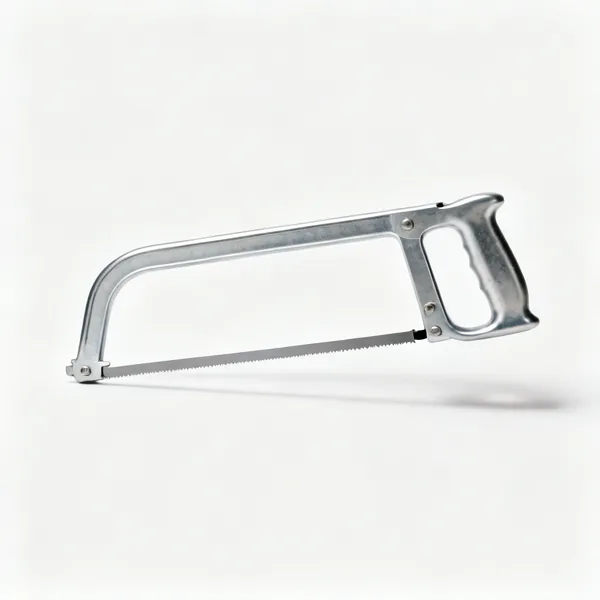
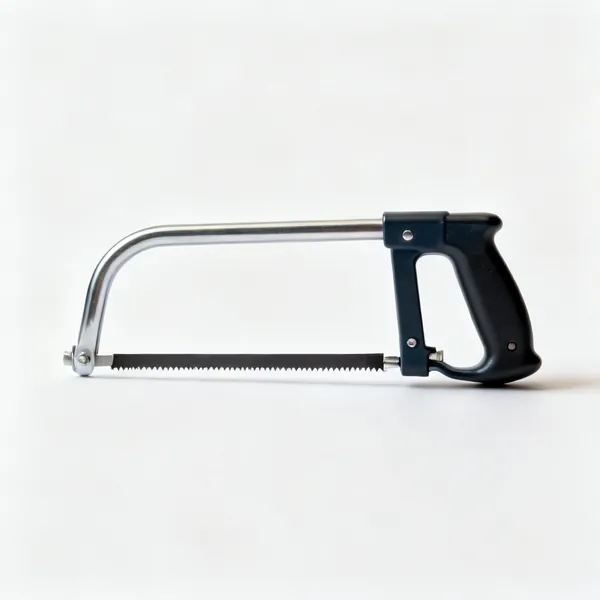
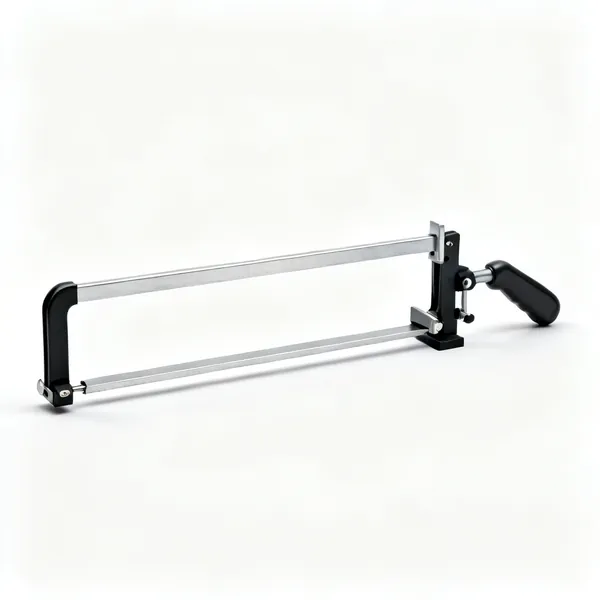
  • HacksawEssential

    Hacksaw

    Fine hardened teeth in a tensioned frame, for steel, bolts, pipe and plastic. Cuts on the push stroke, so fit the blade with the teeth facing forward.

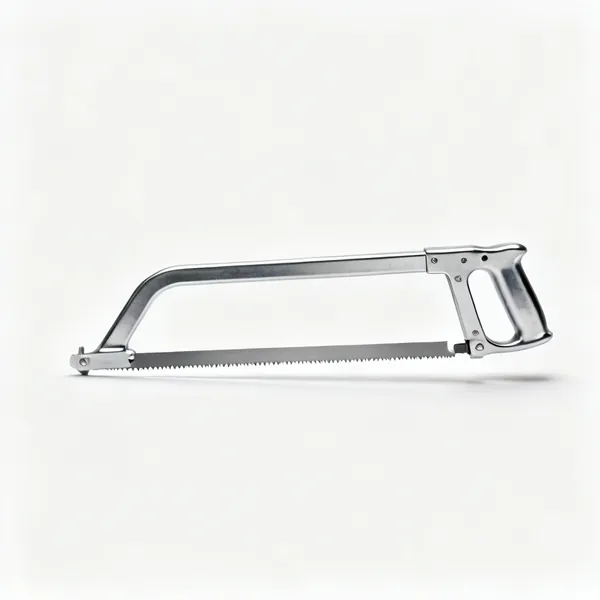
  • Junior hacksaw

    Junior hacksaw

    A small sprung hacksaw for cutting in tight spaces and through thin tube. Cheap, and it reaches places the full size frame simply cannot.

Knives & cutters 4

Blades and jaws for everything a saw is too crude for. All of these work better sharp, and all of them slip when they are blunt, which is when people get hurt.

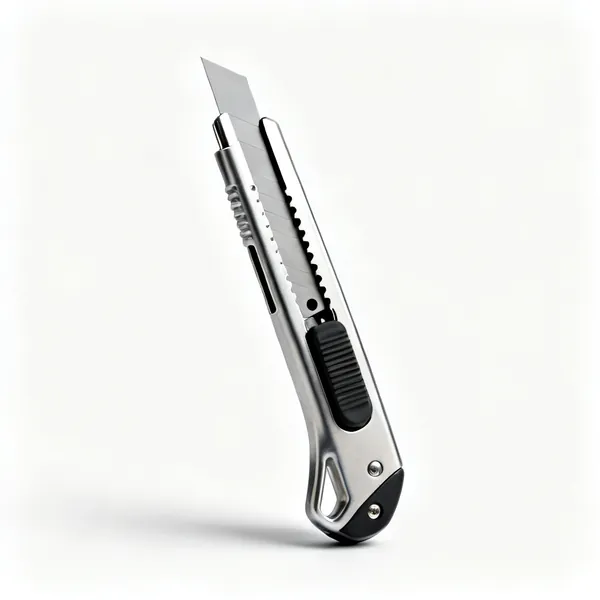
  • A retractable utility knife with a metal bodyEssential

    Utility knife

    A replaceable blade in a handle, for board, carpet, packaging and scoring plasterboard. Snap the blade forward the moment it drags, since a blunt one slips.

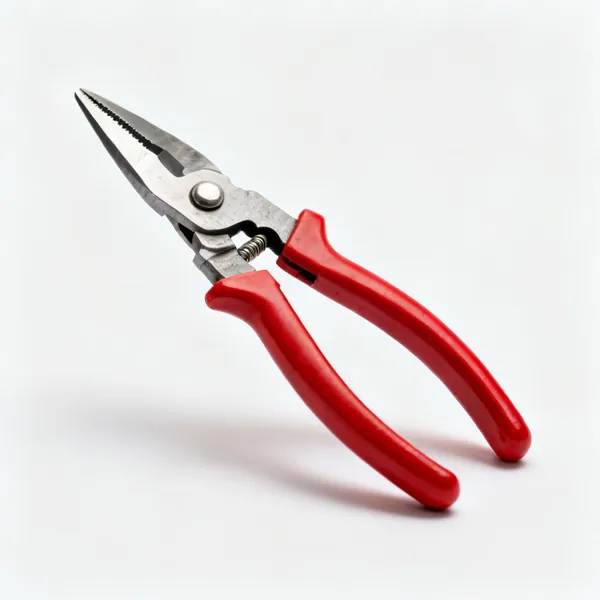
  • A pair of tin snips with red handles and short blades

    Tin snips

    Heavy shears that cut sheet metal, flashing and mesh. Straight and curved patterns exist, and using the wrong one makes the metal buckle rather than cut.

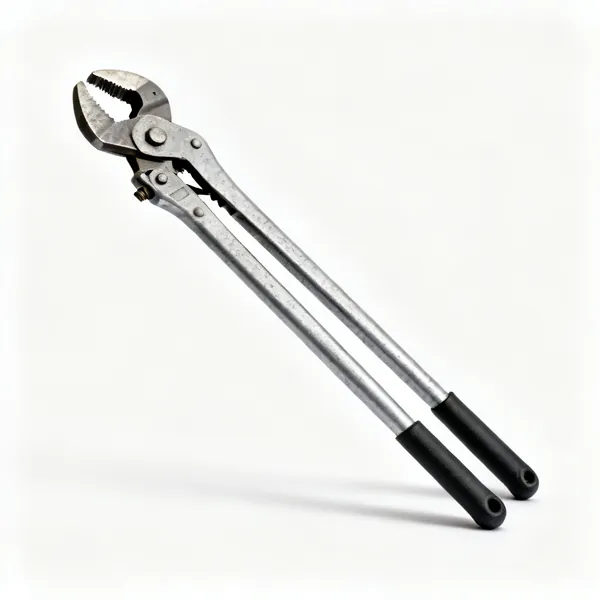
  • A pair of long-handled bolt cutters with short heavy jaws

    Bolt cutters

    Long handles multiplying force onto short hardened jaws, for chain, padlocks, rebar and bolts. Nothing else in a toolbox will get through a decent lock.

  • A copper pipe cutter with a cutting wheel and adjustment knob

    Pipe cutter

    A hardened wheel you tighten and rotate around copper pipe, giving a square burr free cut. Far cleaner than a hacksaw, which leaves swarf inside the pipe.

Screwdrivers 7

The most commonly owned tool and the most commonly wrong. The type and the size both have to match the screw, or you damage the head and then nothing will remove it.

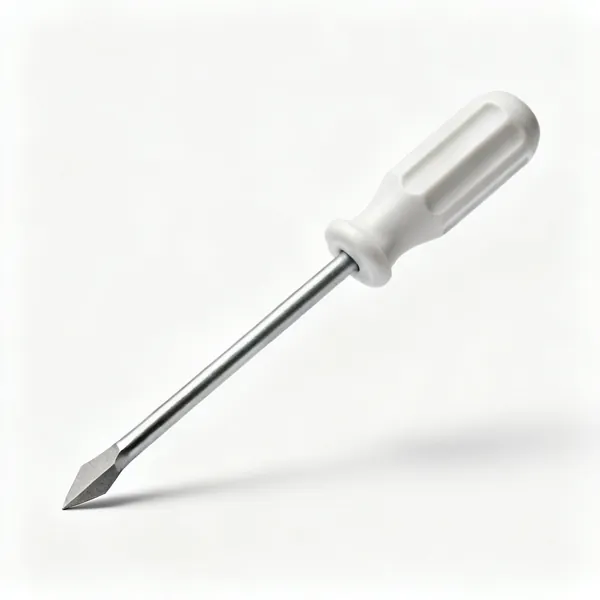
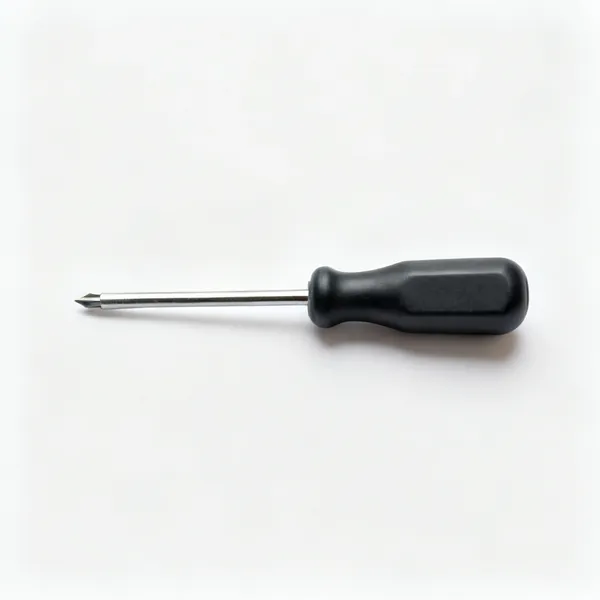
  • A flathead screwdriver with a single flat blade tipEssential

    Flathead screwdriver

    The straight slot driver. Sizes matter more here than anywhere else, because a tip narrower than the slot only touches the middle and twists straight out.

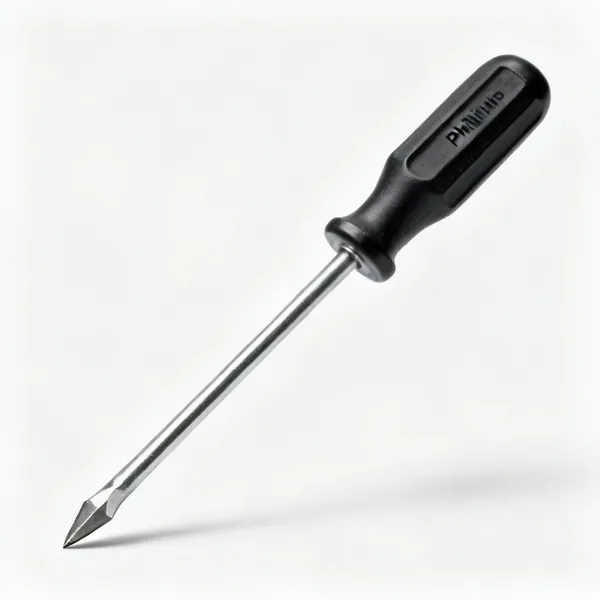
  • Phillips screwdriver: A Phillips cross-head screwdriver with a pointed tipEssential

    Phillips screwdriver

    The cross head with pointed arms, designed to cam out under high torque so the screw is not overtightened. That is a feature, though it rarely feels like one.

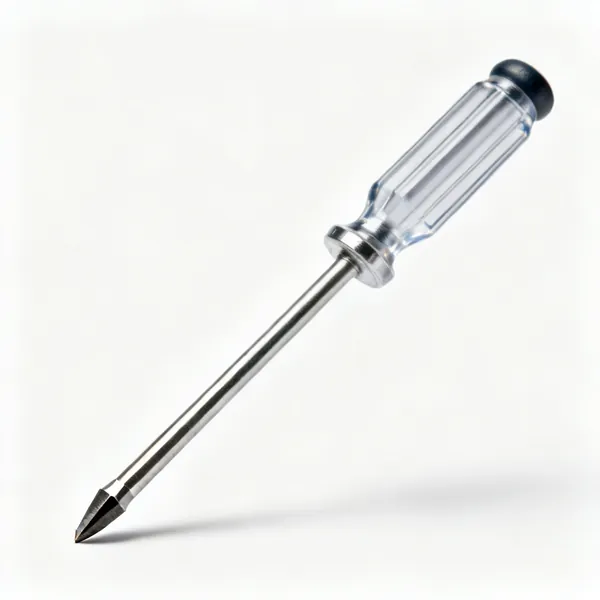
  • A Pozidriv screwdriver with a blunt cross tipEssential

    Pozidriv screwdriver

    Looks like Phillips but has extra fine lines between the arms and a blunter tip. It grips far better and does not cam out, and mixing the two is how screw heads get destroyed.

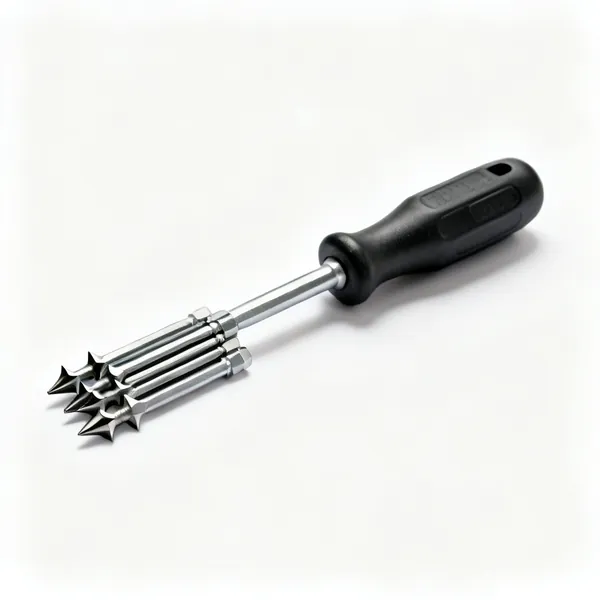
  • Torx drivers: A set of Torx star-tipped screwdrivers

    Torx drivers

    A six pointed star that grips without slipping, so it takes serious torque. Common on appliances, cars and flat pack furniture, and impossible to substitute with anything else.

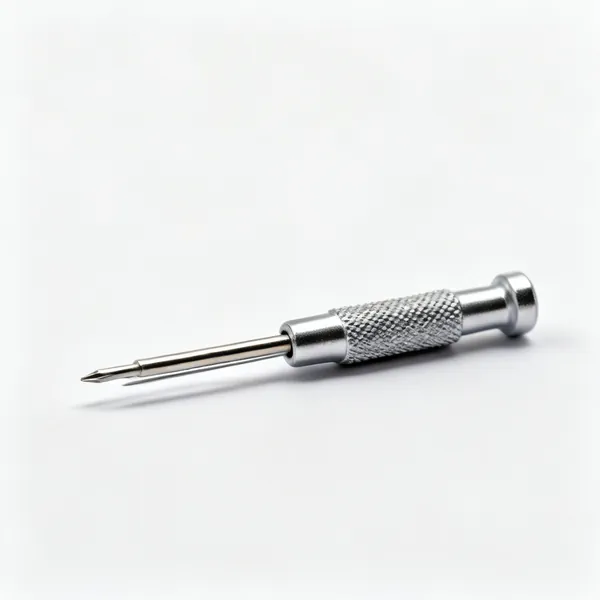
  • A set of small precision screwdrivers with knurled handles

    Precision screwdrivers

    Tiny drivers with a spinning cap you rest a fingertip on, for glasses, electronics and appliance covers. Not just small versions, the rotating end is what gives control.

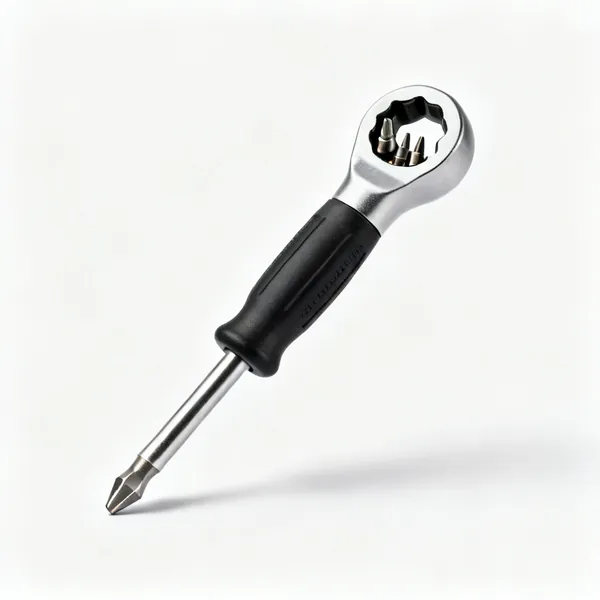
  • Ratchet screwdriver: A ratcheting screwdriver with interchangeable bits

    Ratchet screwdriver

    Lets you turn without regripping, which matters when you are working one handed or in a corner. Usually takes interchangeable bits, so one handle covers everything.

  • A short stubby screwdriver with a thick handle

    Stubby screwdriver

    Almost no shaft at all, for screws behind pipework or inside cupboards where nothing longer will fit. A single purpose tool that is the only option when you need it.

Pliers 7

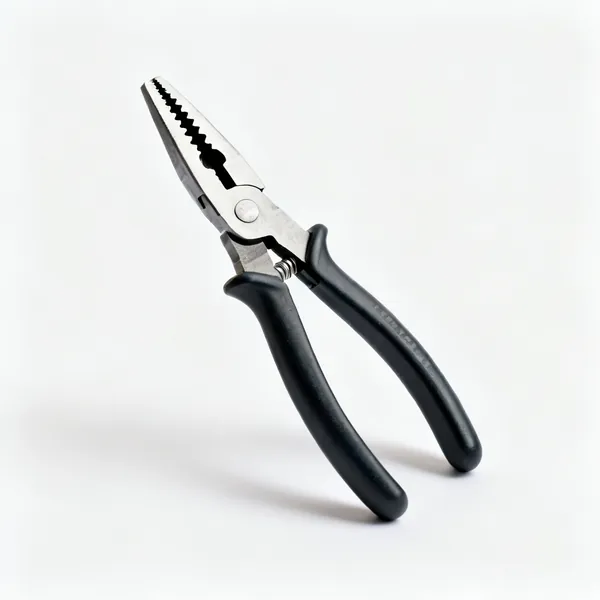
Holding, twisting and cutting wire. The mistake almost everyone makes is using these on nuts and bolts, which rounds the corners and makes the fastener unremovable.

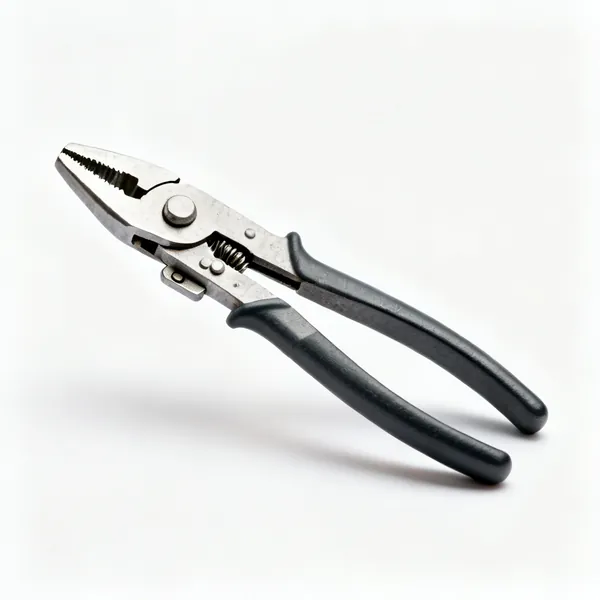
  • A pair of combination pliers with serrated jaws and side cuttersEssential

    Combination pliers

    Flat serrated jaws for gripping, a curved section for round stock and a cutter at the base. The general purpose pliers, and the one to own if you own one pair.

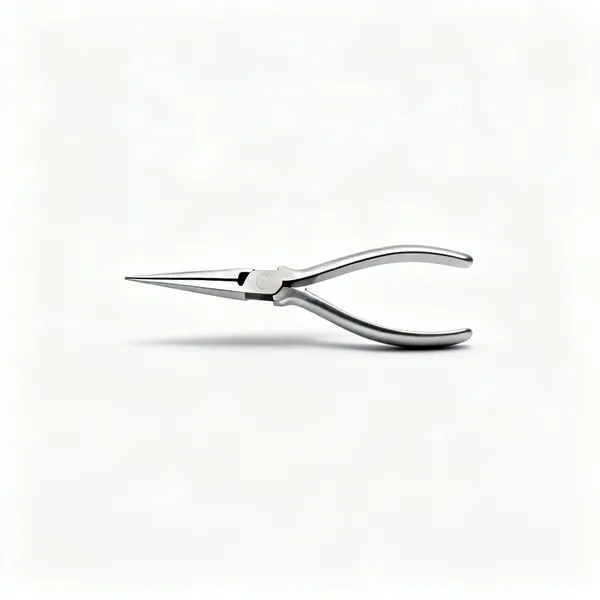
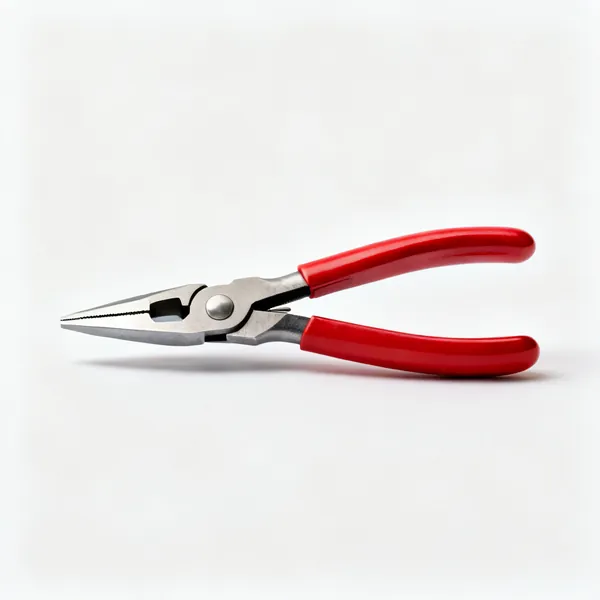
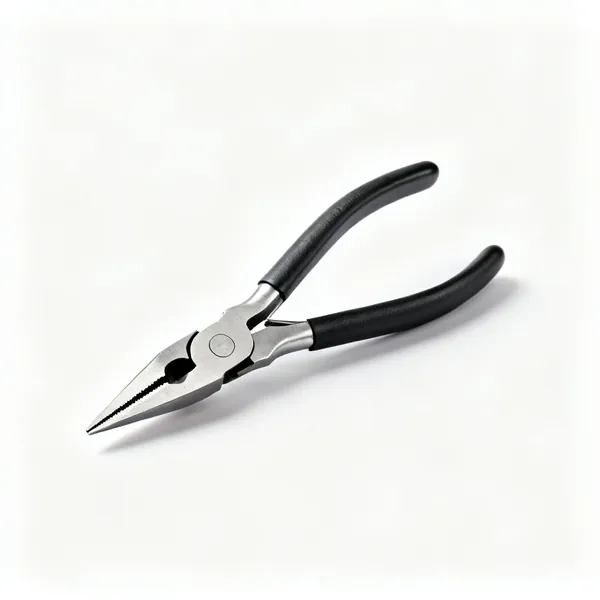
  • A pair of long nose pliers with slim tapered jawsEssential

    Long nose pliers

    Tapered jaws that reach into confined spaces and hold small parts. For electrical work, forming wire loops and retrieving whatever fell behind the panel.

  • A pair of diagonal side cutters with red handlesEssential

    Side cutters

    Hardened jaws that cut wire, cable ties and nails flush to a surface. Cutting only, and using them as pliers ruins the edge.

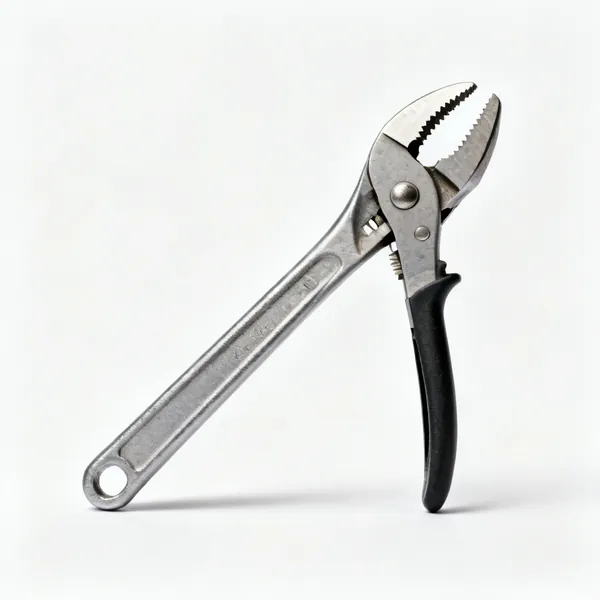
  • A pair of water pump pliers with adjustable slip-joint jawsEssential

    Water pump pliers

    Adjustable jaws that stay parallel across a wide range, for pipe, nuts and anything round and stubborn. The plumbing tool that also solves half the jobs in a house.

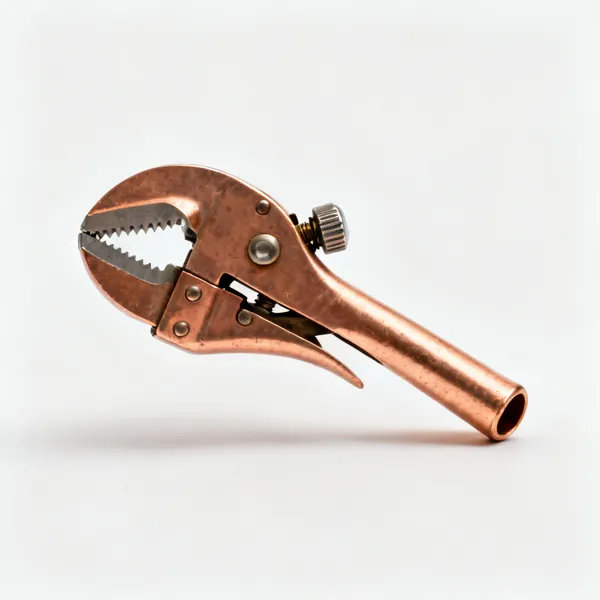
  • A pair of locking pliers with an adjusting screw and release lever

    Locking pliers

    Clamp shut and stay shut with real force, acting as a third hand or an emergency spanner. They mark whatever they grip, so keep them off finished surfaces.

  • A pair of wire strippers with graduated cutting notches

    Wire strippers

    Cut the insulation without nicking the conductor inside. A nicked wire is a wire that will break later at exactly the point you cannot see.

  • Circlip pliers

    Circlip pliers

    Pointed tips that expand or compress retaining rings in grooves. Mechanical work only, and genuinely impossible to improvise safely.

Spanners & sockets 8

Turning nuts and bolts without damaging them. A socket grips all six faces and a spanner grips two, so use a socket whenever there is room to get one on.

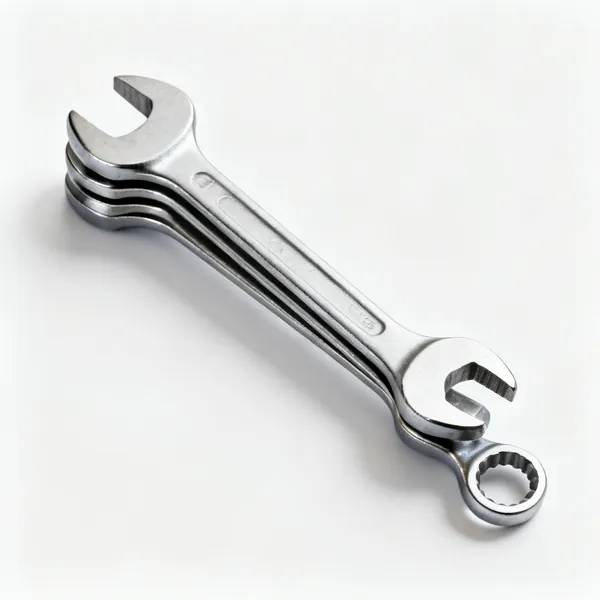
  • A set of combination spanners with open and ring endsEssential

    Combination spanners

    An open jaw at one end and a ring at the other, in matched sizes. The ring end grips properly, the open end fits where the ring will not. A set covers most fasteners in a house.

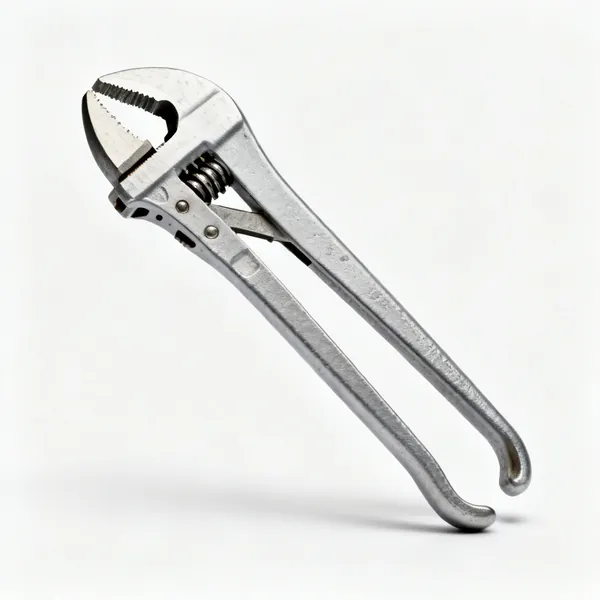
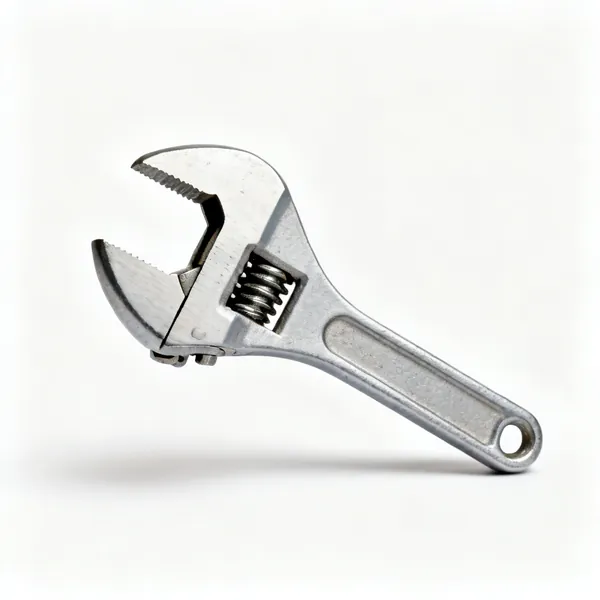
  • An adjustable spanner with a worm screw and movable jawEssential

    Adjustable spanner

    One tool for many sizes, at the cost of a little slop. Fine for plumbing fittings and occasional use, and the wrong choice for anything tight, where it will slip and round the nut.

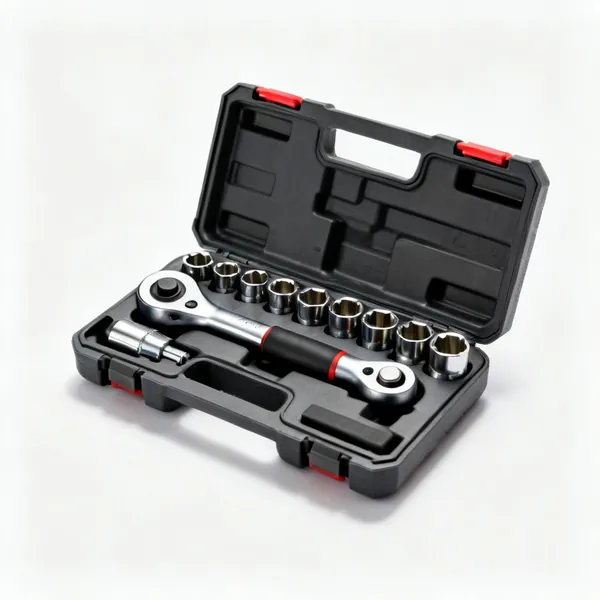
  • A socket set in a case with a ratchet handle and multiple socketsEssential

    Socket set

    Sockets on a ratchet handle, which is faster and far kinder to fasteners than any spanner. If you work on anything mechanical, this is the first purchase.

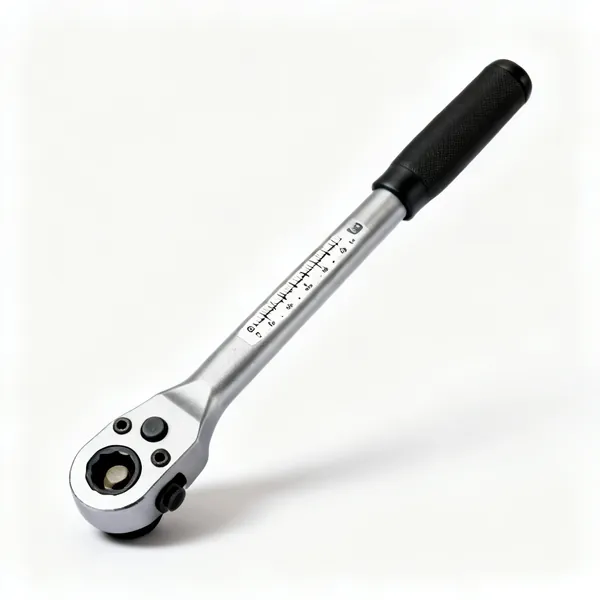
  • A click-type torque wrench with a scale on the handle

    Torque wrench

    Clicks when a fastener reaches a set tightness. Essential on wheel nuts, engine work and anything where too tight and too loose are both dangerous.

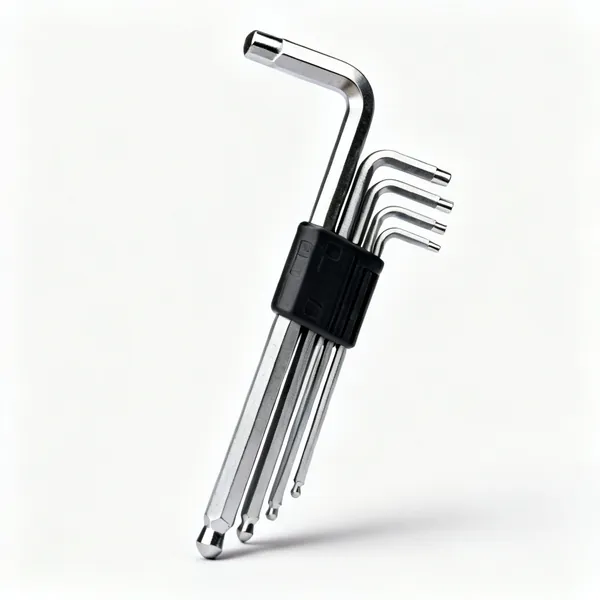
  • A set of L-shaped hex allen keys of graduated sizesEssential

    Allen keys

    Hex bars for recessed socket screws, which means nearly all flat pack furniture and a lot of machinery. Get a proper set rather than relying on the folded one in the box.

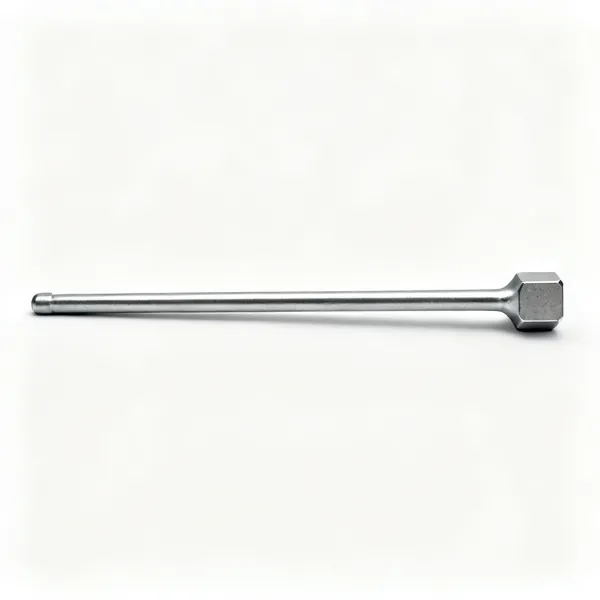
  • A long steel breaker bar with a square drive end

    Breaker bar

    A long non ratcheting handle for seized fasteners. The length gives leverage a ratchet cannot survive, and using a ratchet for this is how ratchets break.

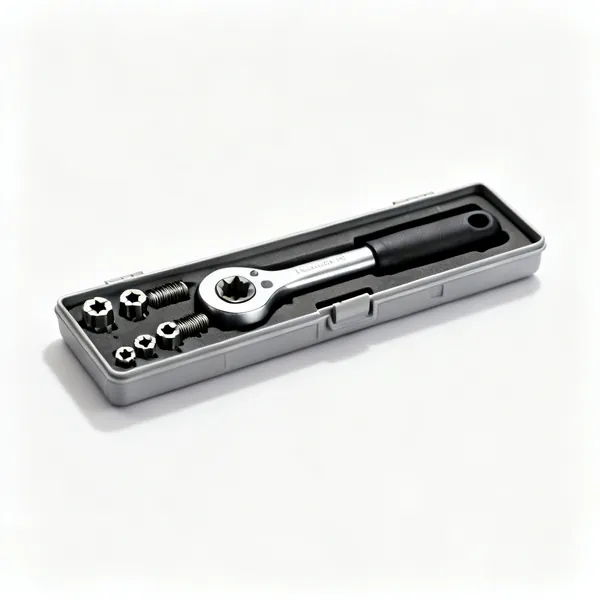
  • A tap and die set in a case with a tap wrench

    Tap and die set

    Cuts new threads and cleans up damaged ones, in a hole with a tap or on a rod with a die. The rescue tool when a thread has stripped and the part is not replaceable.

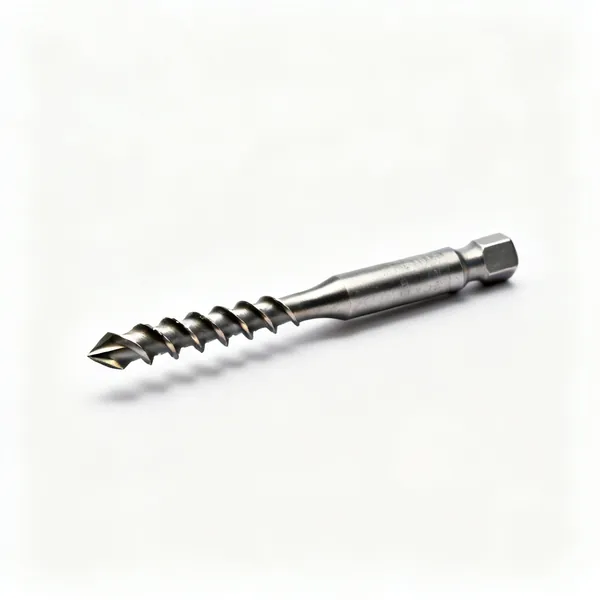
  • A set of screw extractor bits with reverse spiral flutes

    Screw extractor

    A reverse threaded bit that bites into a drilled out screw head and backs it out. For the fastener that is already destroyed and holding your project hostage.

Levels, squares & tape measures 9

Where accuracy is either won or lost. Every cut after a bad measurement is wrong, so this is the group to buy properly and look after.

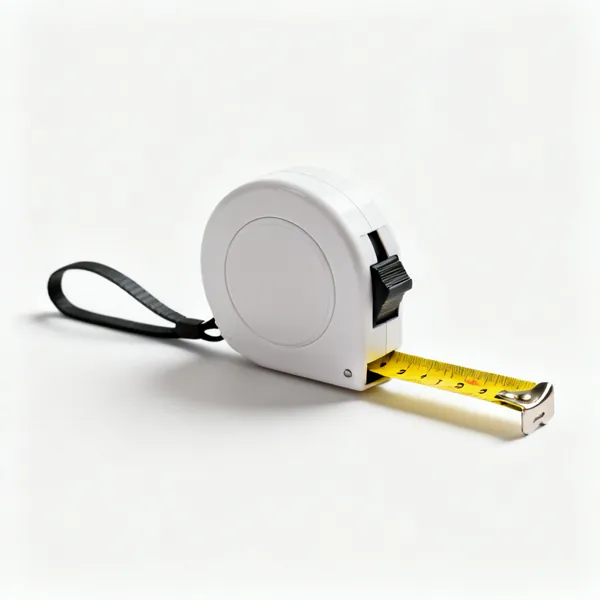
  • A retractable tape measure with a yellow blade and belt clipEssential

    Tape measure

    The tool every job starts with. The hook is meant to move slightly, by exactly the thickness of the hook, so it reads correctly pushed or pulled. A bent one reads wrong forever.

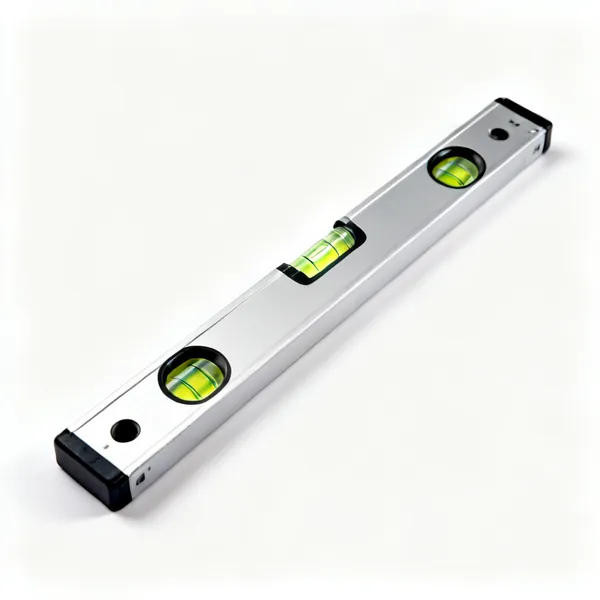
  • A spirit level with two bubble vials in an aluminium bodyEssential

    Spirit level

    A bubble in a vial telling you what is level and plumb. Longer is more accurate, but a 600mm level fits in a bag and covers most household work.

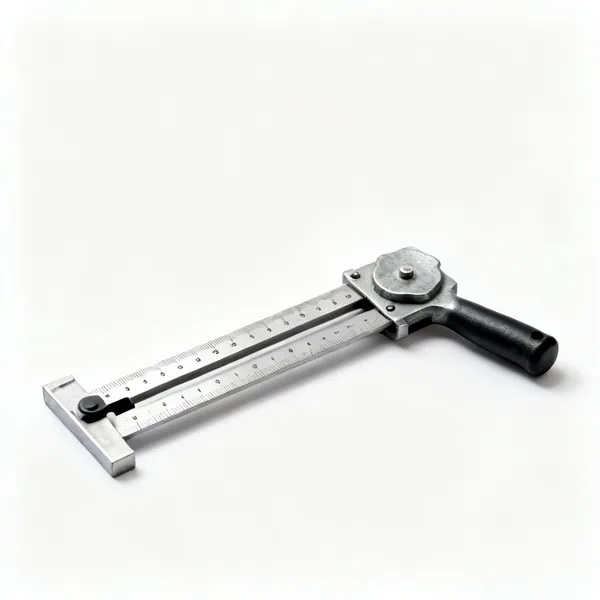
  • A combination square with a sliding steel rule and cast headEssential

    Combination square

    A sliding rule and a head that gives ninety and forty five degrees, plus a depth gauge and a scriber. Probably the most useful marking tool there is.

  • A try square with a wooden stock and steel blade

    Try square

    A fixed ninety degree blade and stock, for marking square across timber and checking a cut. Simpler and more rigid than a combination square, and cheaper to keep accurate.

  • A sliding bevel gauge with a locking blade and wooden handle

    Sliding bevel

    Copies an existing angle and transfers it to the work without needing to know what it is. Invaluable in old houses, where nothing is the angle you assumed.

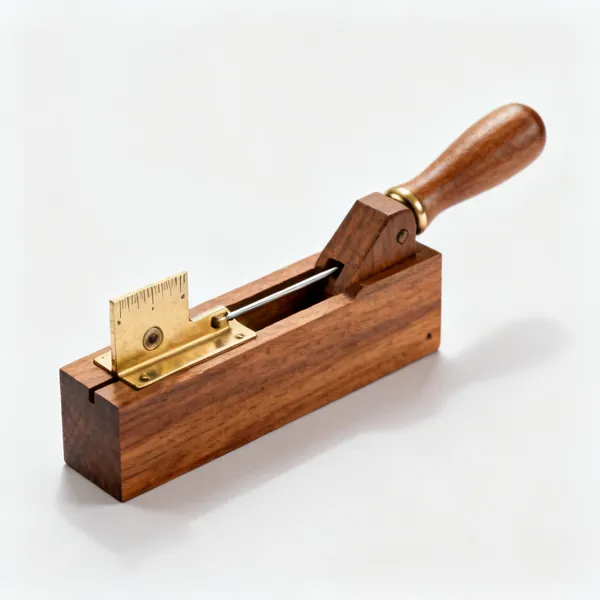
  • A wooden marking gauge with a brass-faced fence and scribing pin

    Marking gauge

    A pin at a set distance from a fence, so it scribes a line parallel to an edge over and over. Joinery relies on that repeatability more than on any measurement.

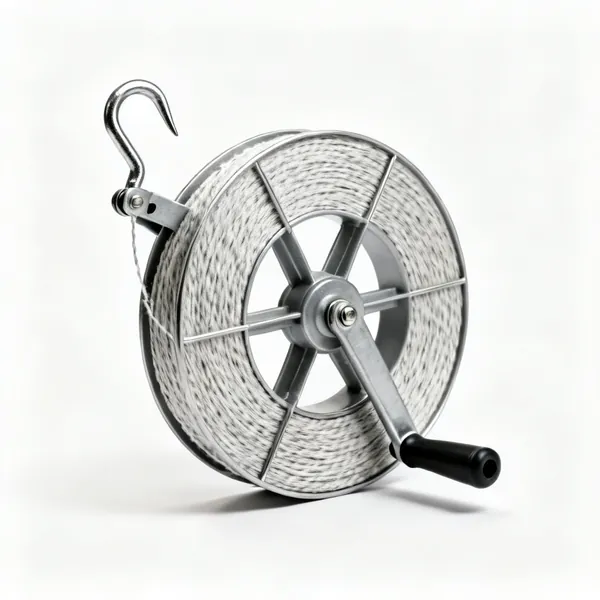
  • A chalk line reel with a hook and crank handle

    Chalk line

    A chalked string you snap against a surface to leave a straight line over metres. The fast way to mark a floor or a wall where no straight edge is long enough.

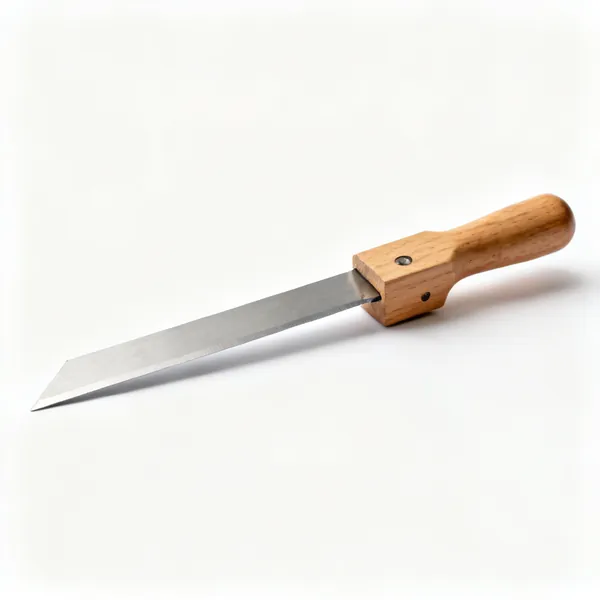
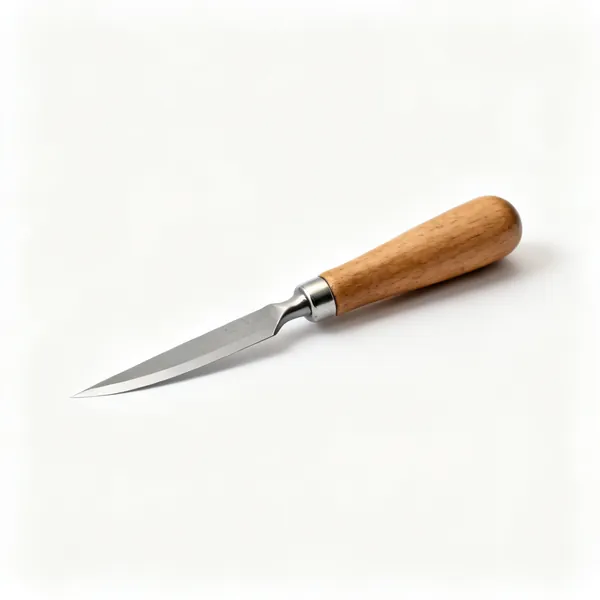
  • A marking knife with a single-bevel blade and wooden handle

    Marking knife

    Scores a line rather than drawing one, which severs the fibres so a chisel or saw follows it exactly. The difference between a joint that closes and one that nearly does.

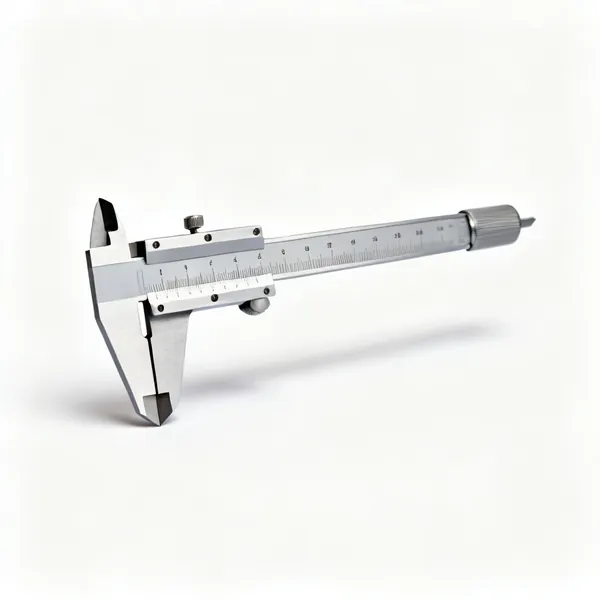
  • A vernier caliper with a sliding jaw and graduated scale

    Vernier caliper

    Measures thickness, internal and external diameters and depth to a fraction of a millimetre. For anything mechanical, where a tape measure is far too coarse.

Planes, chisels & files 8

Removing material by hand, with control a machine cannot match. All of these need to be genuinely sharp, and all of them are dangerous when they are not.

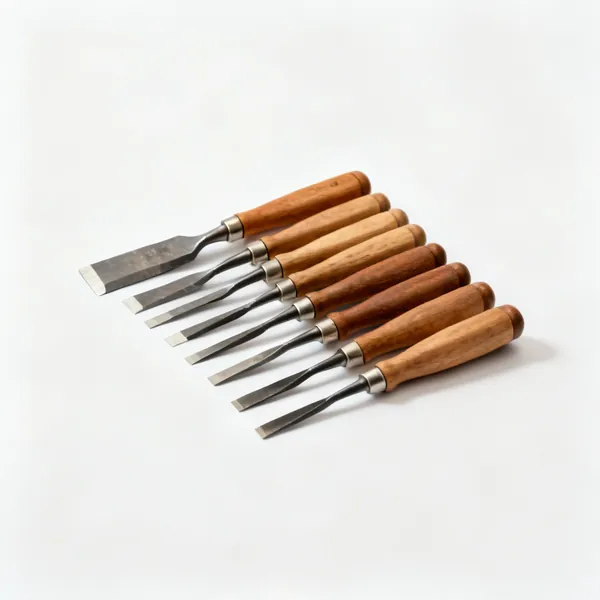
  • A set of wood chisels with wooden handles of graduated widthsEssential

    Wood chisels

    Sharpened steel blades for paring, cutting joints and cleaning up. A set of four covers most work. Hit them with a wooden mallet, never a steel hammer.

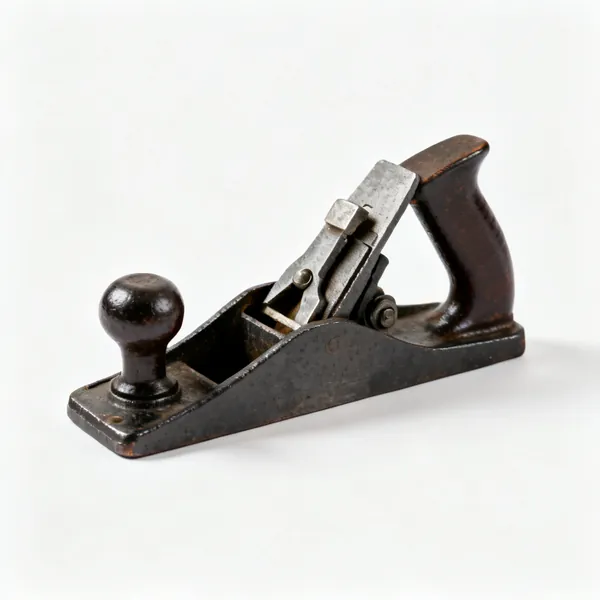
  • A small block plane with a cast iron body and adjustable mouthEssential

    Block plane

    A small plane held in one hand, for trimming end grain, easing edges and fitting a door that binds. The plane most people actually reach for.

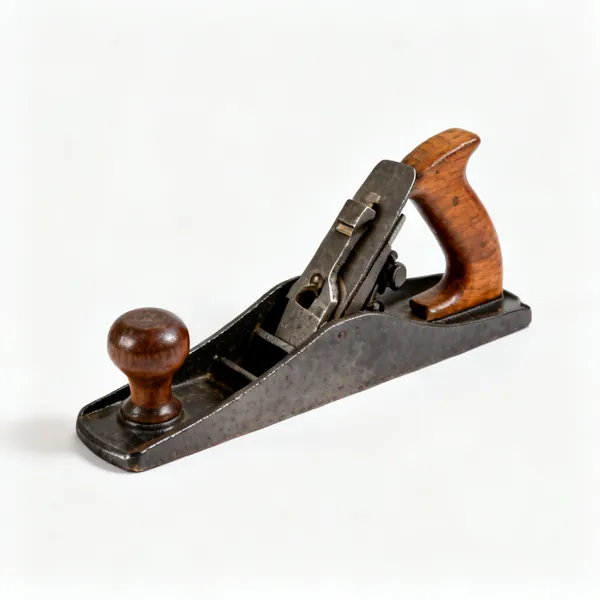
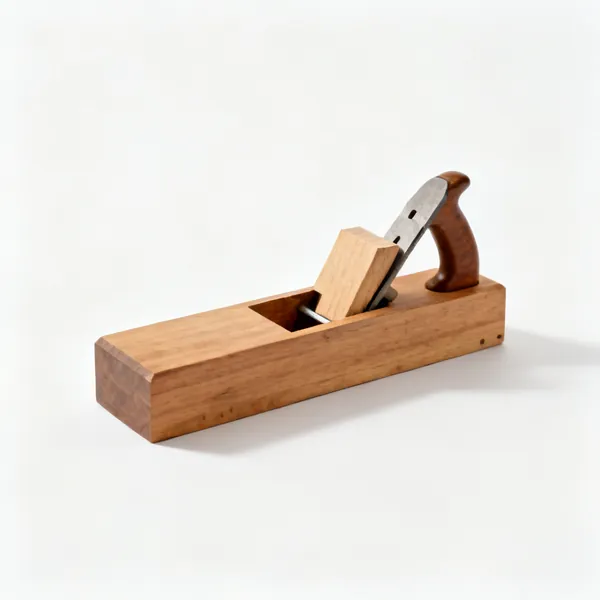
  • A bench plane with a long cast iron sole and wooden handles

    Bench plane

    A long soled plane pushed with two hands, which is what makes a board genuinely flat and straight rather than merely smooth. Length is what bridges the hollows.

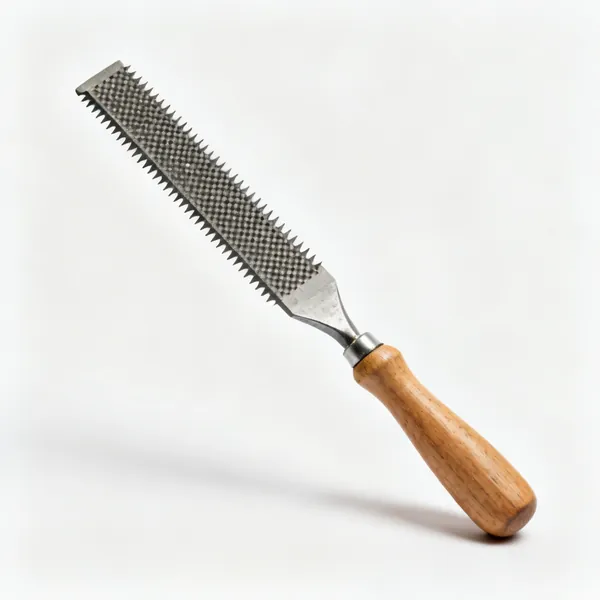
  • A wood rasp with coarse raised teeth and a wooden handle

    Rasp

    Coarse individual teeth that remove wood fast on curves and awkward shapes. Leaves a rough surface, so it is a shaping tool you follow with a file or abrasive.

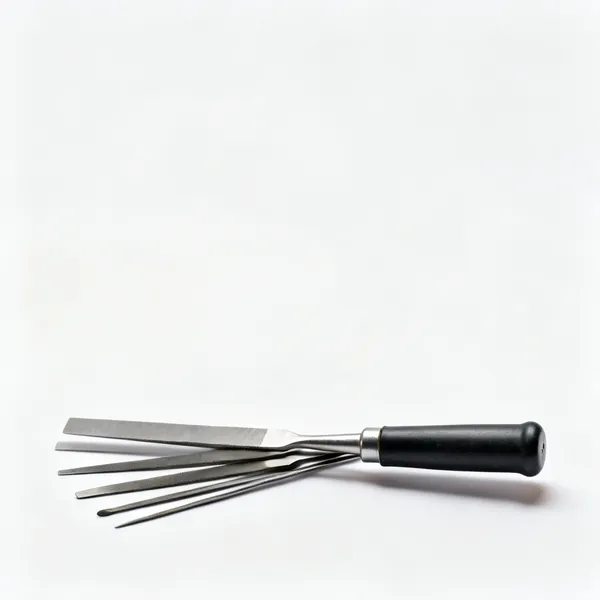
  • File set: A set of metal files in flat, round and half-round profilesEssential

    File set

    Fine parallel teeth for metal, in flat, half round and round profiles. Deburring a cut edge, easing a hole and sharpening a blade all need these.

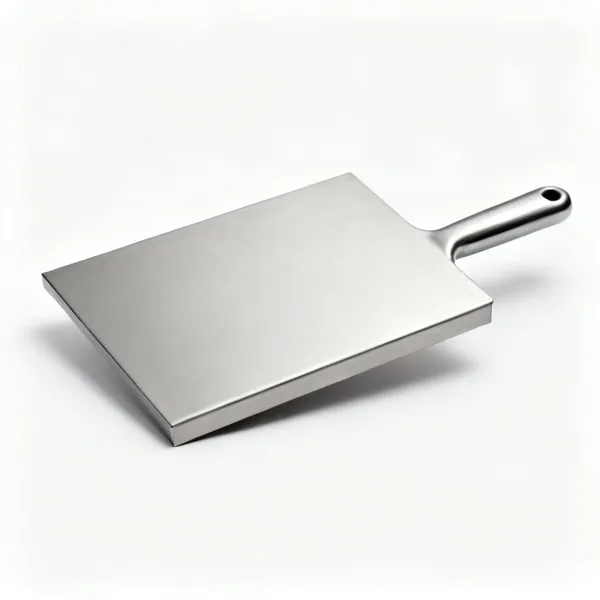
  • A rectangular steel cabinet scraper plate

    Cabinet scraper

    A flat steel plate with a burnished edge that takes off shavings finer than sandpaper, without the dust or the swirl marks. The traditional way to finish a surface.

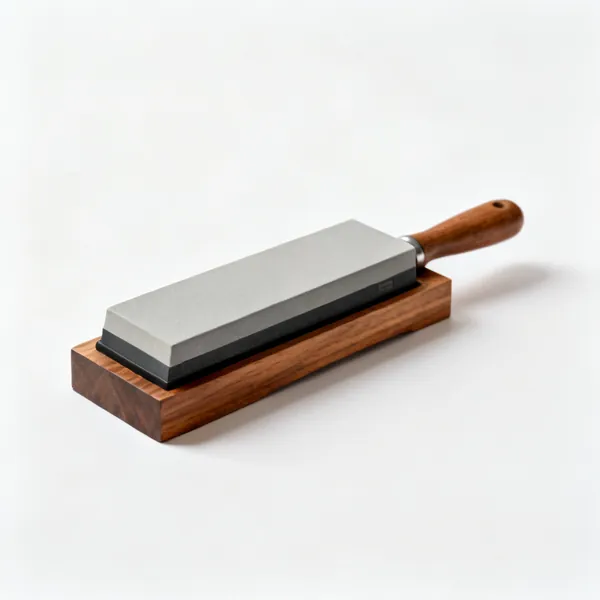
  • Sharpening stone: A rectangular sharpening whetstone on a wooden baseEssential

    Sharpening stone

    Puts an edge back on chisels, planes and knives. Buy this at the same time as your first chisel, because a blunt chisel is both useless and the more dangerous of the two.

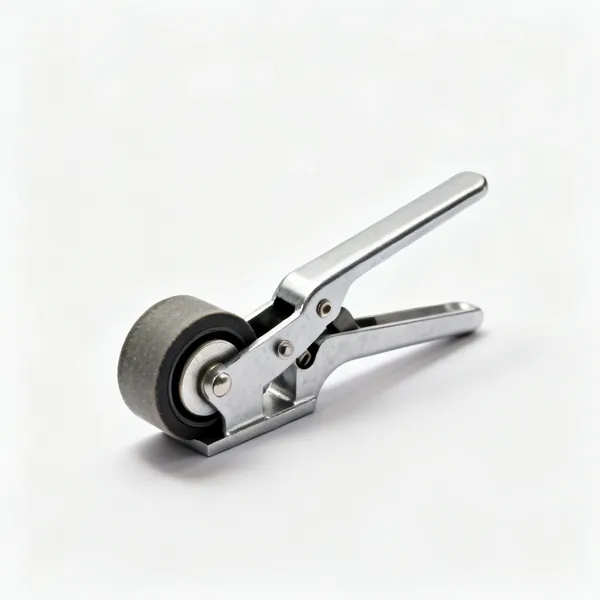
  • A metal honing guide clamp with a roller wheel

    Honing guide

    Holds a blade at a fixed angle on the stone so every sharpening matches the last. Removes the one part of sharpening that takes real practice.

Clamps & vices 7

Work that moves cannot be cut accurately or glued properly. You will always want more clamps than you own, and that is the normal state of a workshop.

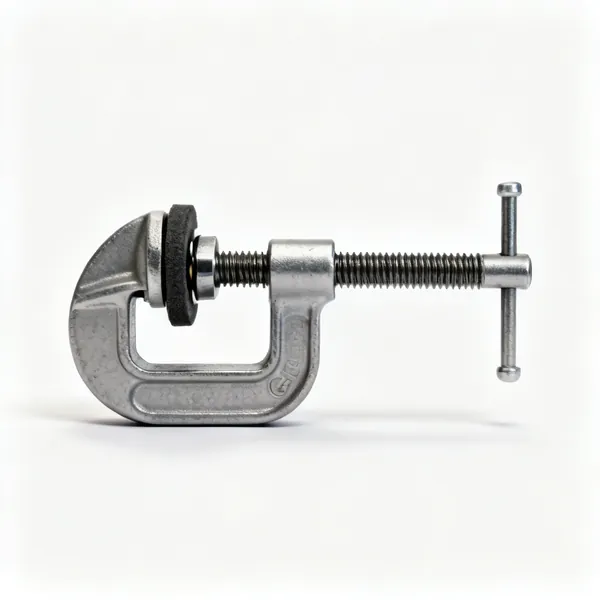
  • A G clamp with a screw thread and swivel padEssential

    G clamp

    A screw in a rigid frame, giving serious pressure in a small space. Slow to adjust, and it holds harder than anything else of its size.

  • Quick release clamp: A one-handed trigger clamp with plastic jawsEssential

    Quick release clamp

    A trigger grip you tighten one handed, which matters when the other hand is holding the work. Less force than a G clamp, far faster to use.

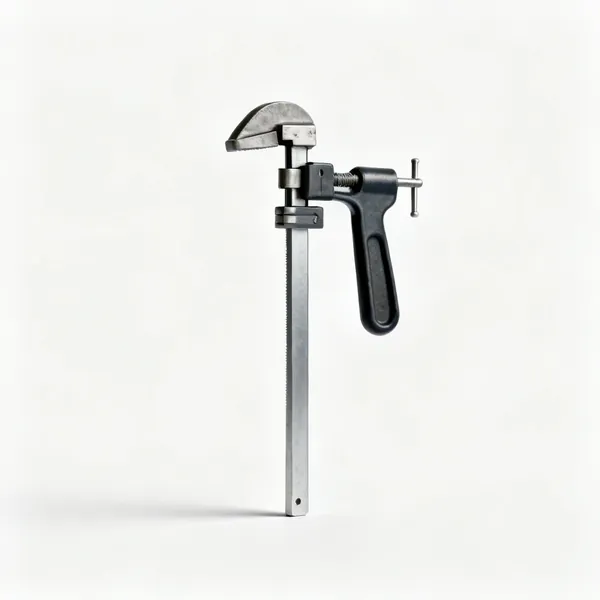
  • An F clamp with a sliding arm on a steel bar

    F clamp

    A sliding arm on a bar, so it opens much wider than a G clamp while still applying real pressure. The general purpose workshop clamp.

  • A long sash clamp with a steel bar and adjustable stop

    Sash clamp

    A long bar clamp for pulling whole panels and frames together while glue sets. Nothing shorter will span a table top or a door.

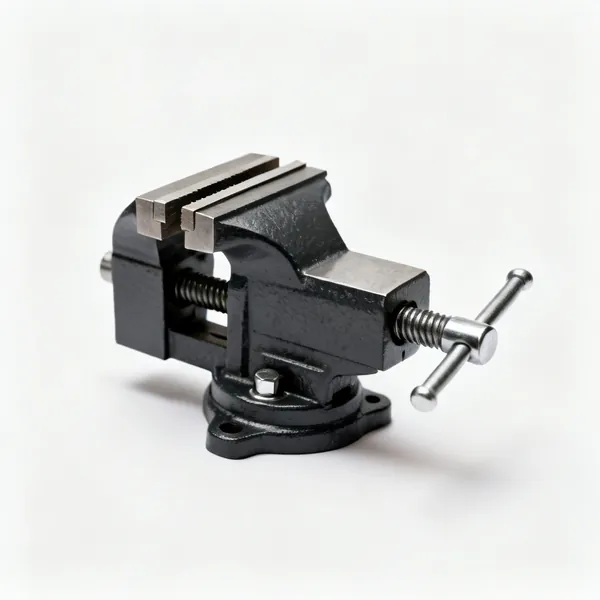
  • A bench vice with parallel jaws and a screw handleEssential

    Bench vice

    Fixed to the bench, it holds work solidly so both hands are free to cut, file or saw. Turns a table into a workshop more than any other single item.

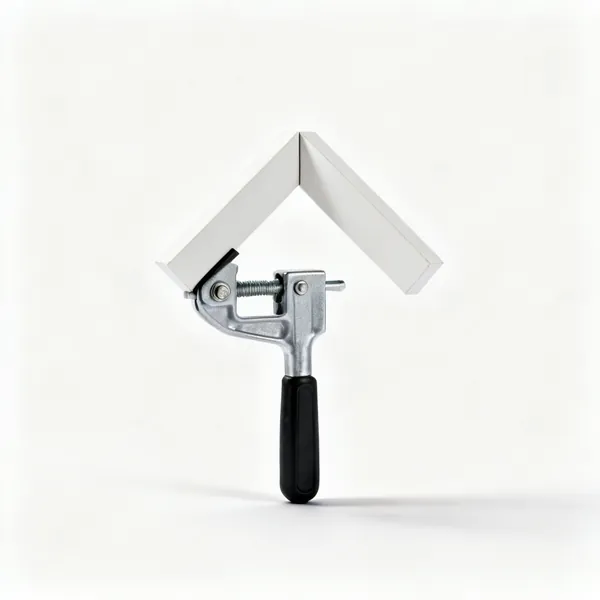
  • Corner clamp

    Corner clamp

    Holds two pieces at exactly ninety degrees while you fix them. Boxes, frames and cabinets go square with one instead of guesswork and swearing.

  • A wooden bench hook with a raised stop block

    Bench hook

    A simple wooden block that hooks over the bench edge and gives the work something to push against while sawing. Cheap, often homemade, and it makes hand sawing far more accurate.

Staple guns & riveters 5

Fixings that are not screws, and the tools that place them. Each of these does something no screwdriver can.

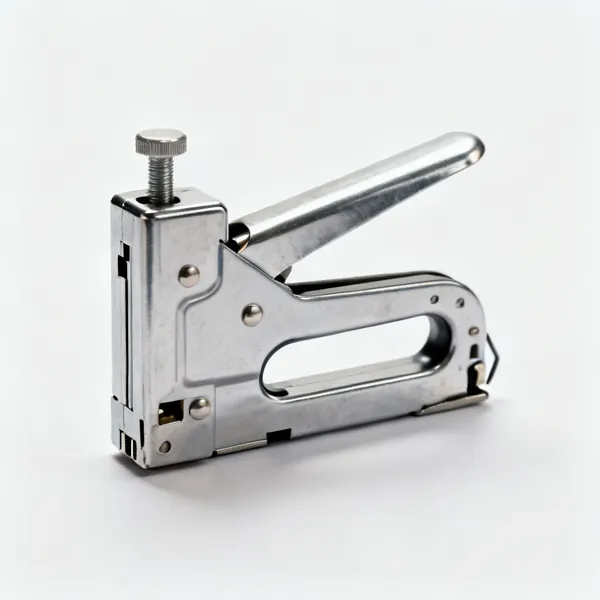
  • A manual staple gun with a metal body and squeeze handle

    Staple gun

    A sprung mechanism firing staples into timber, for fabric, netting, carpet gripper and cable. Squeeze harder than you expect and hold it flat to the surface.

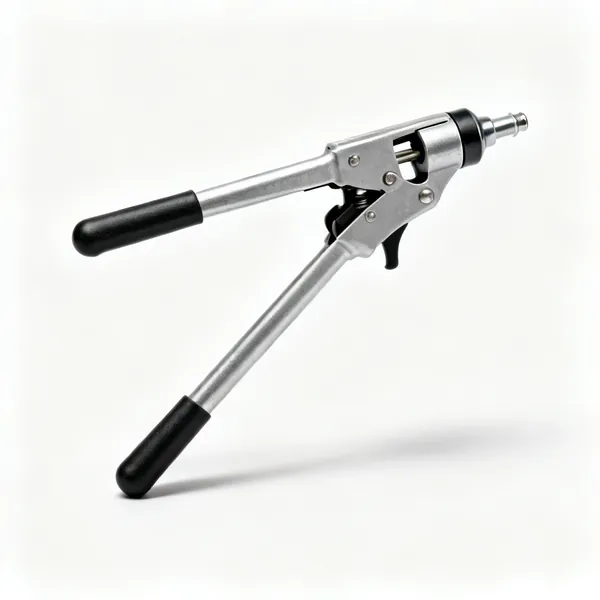
  • A hand pop rivet gun with long handles and a nose piece

    Pop rivet gun

    Pulls a rivet to join sheet material permanently from one side only, which is the point: you never need access behind. For metal panels, gutters and repairs.

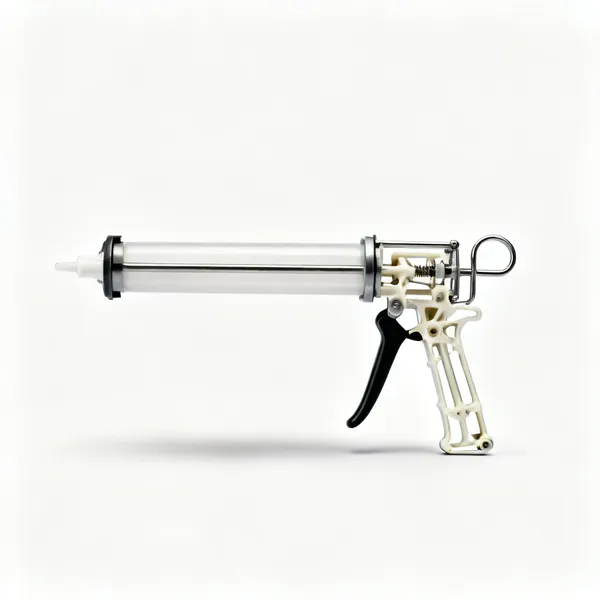
  • A skeleton caulking gun with a trigger and plunger rodEssential

    Caulking gun

    Squeezes sealant or adhesive from a cartridge in a controlled bead. Release the trigger before you lift, or it keeps flowing and you have a mess to clean up.

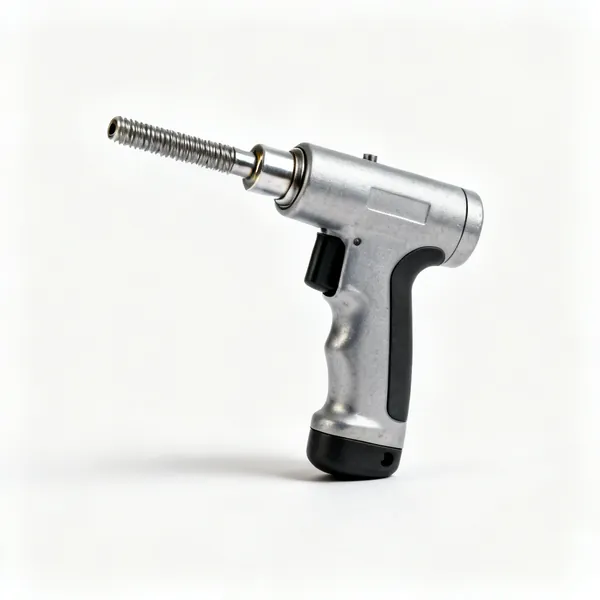
  • Rivet nut tool: A rivet nut setting tool with threaded mandrels

    Rivet nut tool

    Sets a threaded insert into thin sheet, so a bolt can be used where the material is too thin to tap. Common in vehicle and enclosure work.

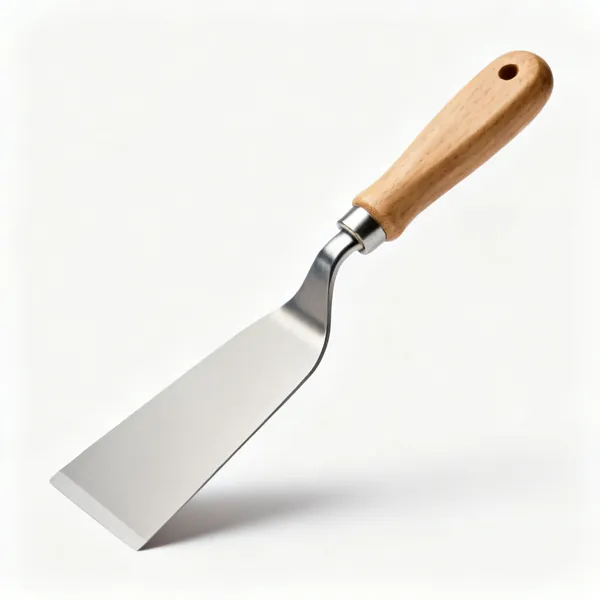
  • A putty knife with a flexible flat blade and wooden handleEssential

    Putty knife

    A flexible blade for filling holes, spreading filler and scraping off old paint. Flex is what lets it follow a surface instead of gouging it.

Pry bars & crowbars 5

Taking things apart. Levering is what wrecks screwdrivers and chisels, so it is worth owning the tools that are actually built for it.
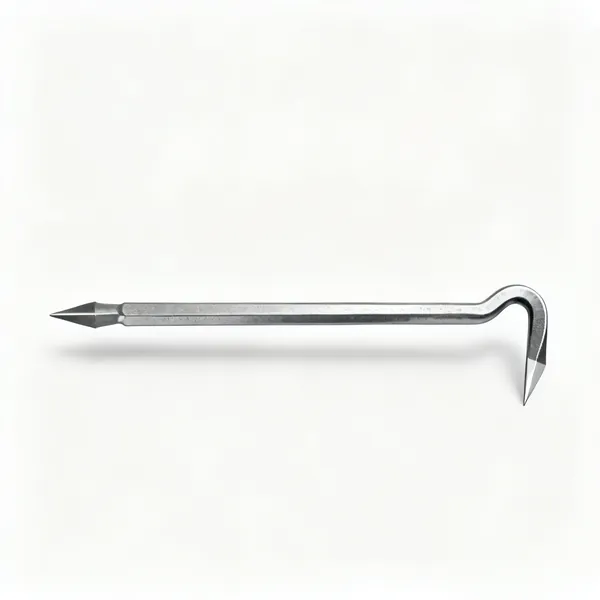
  • A flat steel pry bar with a bent chisel endEssential

    Pry bar

    A flattened steel bar for separating timber, lifting boards and opening anything nailed shut. Cheap, and it saves the screwdriver you would otherwise have bent.
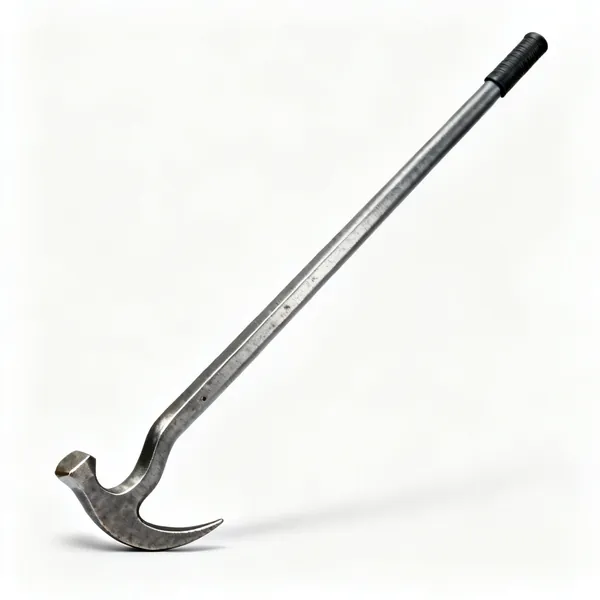
  • A long steel wrecking bar with a curved claw end

    Wrecking bar

    A long heavy crowbar with a claw, for structural demolition and pulling large nails. The leverage is the whole point, so length matters more than weight.

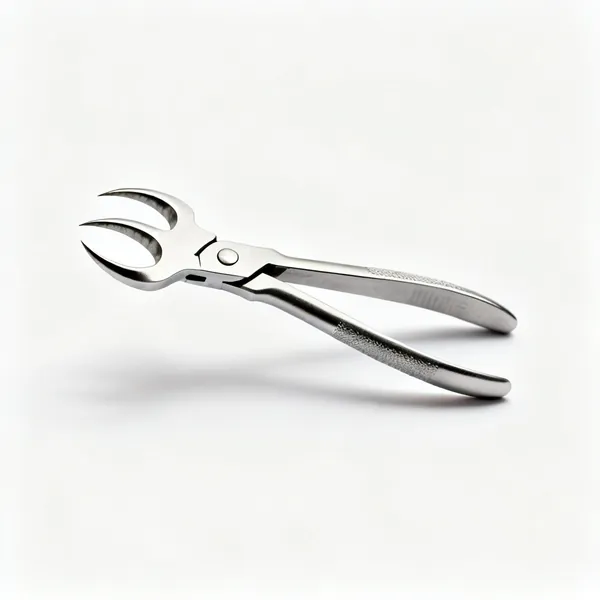
  • A cat's paw nail puller with sharpened curved claws

    Nail puller

    Sharpened jaws that dig under a nail head sunk below the surface and lever it out. Gets nails a claw hammer cannot even reach.

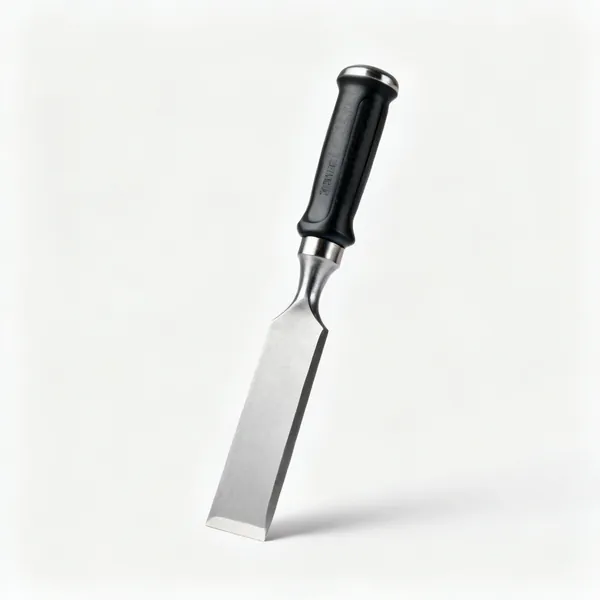
  • A bolster chisel with a wide flat blade and a protective grip

    Bolster chisel

    A wide flat masonry chisel struck with a club hammer, for lifting tiles, splitting bricks and cutting into plaster. Wear glasses, because brick fragments travel.

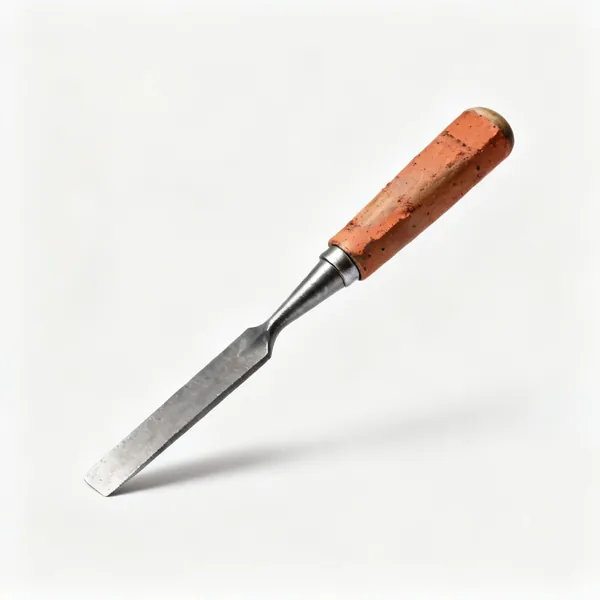
  • A narrow brick chisel with a hardened steel blade

    Brick chisel

    Narrower than a bolster, for cutting out individual bricks and raking mortar joints. Slower than an angle grinder and far kinder to the surrounding wall.

Choosing hand tools

The list above is what exists. This is how to tell a tool that will last thirty years from one that will let you down on its third job.

Why hand tools still matter

It is tempting to assume a cordless equivalent has replaced everything here. It has not. A hand tool has no battery to be flat, no cord to reach, and it works in a space no power tool fits into. Most of these also give you something a motor cannot: feel. You know when a chisel is about to break through, and you can stop.

The other argument is money. A good hand tool is cheap relative to a power tool and it outlives you. A decent set of chisels bought once will still be working when three cordless drills have come and gone, which is why the tools a tradesperson inherits are almost always these.

How to tell a good one from a bad one

Hand tools are honest. There is no motor hiding the quality, so the things that matter are visible before you buy.

One piece beats assembled
On anything you strike or lever, a tool forged from one piece of steel outlasts one bolted or welded together. On a hammer, look for the head and shaft running through as a single unit or a properly wedged wooden handle, not a head glued onto a tube.
Hardened steel where it counts
Screwdriver tips, spanner jaws and chisel edges are the parts that fail. Cheap versions round off, spread, or chip on the first stubborn fastener, and then damage everything they touch afterwards.
The handle decides whether you use it
You will hold these for hours. A handle that raises a blister in twenty minutes is a tool that stays in the box, however good the business end is.
Sets are usually padding
A forty piece screwdriver set contains six sizes you need and thirty four you do not. Buying the six good ones separately costs about the same and works far better.
Check it against the fastener, not the label
Phillips and Pozidriv look identical and are not. A Phillips driver in a Pozidriv screw slips and chews the head out, which is the single most common reason people think screws are badly made.
Weight is a specification
A heavier hammer drives a nail in fewer blows and tires you faster. Match it to the work rather than buying the biggest: 16oz for general carpentry, 20oz and up for framing.

What to buy first, in order

Starting from nothing, this order gets you useful fastest and wastes least.

Stage one: the household set
A claw hammer, a decent screwdriver set covering flat, Phillips and Pozidriv, combination pliers, an adjustable spanner, a utility knife, a tape measure, a spirit level and a set of allen keys. That handles furniture, fittings, minor repairs and most flat pack disasters.
Stage two: when you start making things
A hand saw and a tenon saw, a combination square, a set of wood chisels and a sharpening stone, a block plane, two or three clamps, and a nail punch. This is the point where the work starts looking deliberate rather than approximate.
Stage three: the specialists
Socket set and torque wrench for anything mechanical, hacksaw and files for metal, water pump pliers and pipe cutter for plumbing, bolster and brick chisel for masonry. Buy the group that matches the job in front of you.

Sharp tools are safer tools

Chisels, planes and knives all arrive blunter than they should be, and every one of them gets more dangerous as it dulls. A sharp edge bites where you put it. A blunt one skates across the work and into whatever is behind it, usually your other hand.

Sharpening is also what separates a hand tool from a frustrating ornament. A cheap chisel that is genuinely sharp will outperform an expensive one that is not, so if you buy chisels or planes, buy a stone at the same time and learn to use it.

A stone and a guide is enough
You do not need a workshop of equipment. One combination stone and a cheap honing guide will keep chisels and plane irons in better condition than most workshops manage.
Little and often
Thirty seconds of honing every few uses is easier than grinding a wrecked edge back into shape once a year.
Never sharpen on a bench grinder unless you know how
It is fast enough to overheat the steel, and once an edge turns blue it has lost its hardness permanently. Slow and wet is what you want.

Mistakes that cost money

Using pliers on a nut
Pliers round the corners off, and once rounded no spanner will grip it either. It turns a two minute job into drilling the fastener out.
The wrong screwdriver
Too small a tip, or Phillips in a Pozidriv head, destroys the screw and then the driver. Match both the type and the size.
Buying the giant set
Two hundred pieces in a moulded case is a marketing decision. You will use perhaps thirty, and the case takes up more room than a proper tool bag holding better tools.
Levering with a screwdriver
It bends the shaft, ruins the tip and occasionally snaps. A pry bar costs very little and is the tool for that job.
Leaving steel damp
An unheated garage over one winter is enough to pit a plane sole or seize an adjustable spanner. Oiled and dry, the same tools last decades.
Cheap tape measures
A tape with a loose hook or a bent blade reads differently every time, and every measurement after it is wrong. This is the last place to save money.

Making them last

Almost nothing here wears out from use. It gets damaged by neglect, and the prevention is trivial.

Wipe steel before storing
Fingerprints hold moisture and moisture makes rust. A wipe with an oily rag after a session is enough to prevent it entirely.
Protect the edges
Chisels and saws tossed loose in a drawer chip each other. A cheap blade guard or a slotted rack keeps them usable.
Check hammer heads for movement
A loose head is how hammers become projectiles. If it moves at all, re wedge it or replace it, and do not use it in the meantime.
Keep a file card handy
Files clog with material and then stop cutting and start scratching. A stiff brush across them restores most of their bite.
Do not store tools resting on their cutting edge
Planes go on their side, chisels in a rack. A sole or an edge deforms under its own weight surprisingly easily over years.

Frequently asked questions

What hand tools should every home have?
A claw hammer, a screwdriver set covering flat, Phillips and Pozidriv, combination pliers, an adjustable spanner, a utility knife, a tape measure, a spirit level and allen keys. That set handles furniture assembly, fittings and most small repairs without anything powered.
What is the difference between hand tools and power tools?
Hand tools are driven by you, power tools by a motor. Hand tools cost less, need no battery, fit into spaces a machine cannot, and give you the feel to stop before you go too far. Power tools win on speed and on repetitive work.
What are the main types of hand tools?
They group by what they do: striking, cutting and sawing, turning fasteners, gripping, measuring and marking, shaping and smoothing, clamping, and prying. This page is organised in that order, so related tools sit together.
Are expensive hand tools worth the money?
For anything you strike, lever or cut with, yes. Cheap steel rounds off, chips or bends and then damages the work. For a tool you will use twice, a budget version is fine. Never buy cheap on a tape measure, a chisel or a spanner.
What is the difference between Phillips and Pozidriv screwdrivers?
They look almost identical. Pozidriv has extra small lines between the arms of the cross and a blunter point. Using a Phillips driver in a Pozidriv screw makes it slip and destroy the head, which is why so many screws seem to strip for no reason.
Do I need both a hand saw and a tenon saw?
If you are cutting anything to fit, yes. A hand saw is for cutting boards roughly to length. A tenon saw has finer teeth and a stiffened back, so it cuts straight and clean for joints and trim. One is not a substitute for the other.
What size claw hammer should I buy?
A 16oz hammer is the general purpose choice and comfortable for most people. Go to 20oz or heavier only if you are framing regularly, since the extra weight drives nails faster but tires your arm and is clumsy on small work.
How often should I sharpen chisels and planes?
Hone them briefly every few uses rather than grinding them back once a year. A sharp edge is also a safer one: a blunt chisel skates off the work instead of biting, and that is how people cut themselves.
Should I buy a big tool set or individual tools?
Individual tools, almost always. Large sets are priced on piece count, so most of the contents are sizes you will never use, and the quality of the pieces you do use is lower than buying those few on their own.
How do I stop my tools rusting in a garage?
Keep them dry and wipe bare steel with an oily rag before storing. Damp air in an unheated garage over one winter is enough to pit a plane or seize a spanner, and the prevention takes ten seconds.
What is the difference between a spanner and a socket?
A spanner grips a nut from the side, so it works where there is no room above. A socket surrounds the nut and grips all six faces, so it is far less likely to slip or round the corners. Use a socket wherever you can get one on.
Why does my screwdriver keep slipping out of screws?
Usually the wrong size or the wrong type. A tip that is too small only touches the top of the slot and cams straight out. Match the tip to fill the head fully, and check whether the screw is Phillips or Pozidriv before you start.