Disclosure

Hand tools for cutting grass

Scythes, sickles, shears, edging tools and hand mowers, all 25 grouped by grass length. Long grass is sliced standing, short grass has to be cut against a second edge, and every tool here depends entirely on being sharp.

11 are marked essential: for most gardens shears, a sickle and an edging tool.

Part of the full hand tools list, 73 tools in 11 groups.

Long grass and clearing 7

Slicing through standing stems. The cut material falls clear of the blade, which is what lets these tools work in growth a shear would jam in.

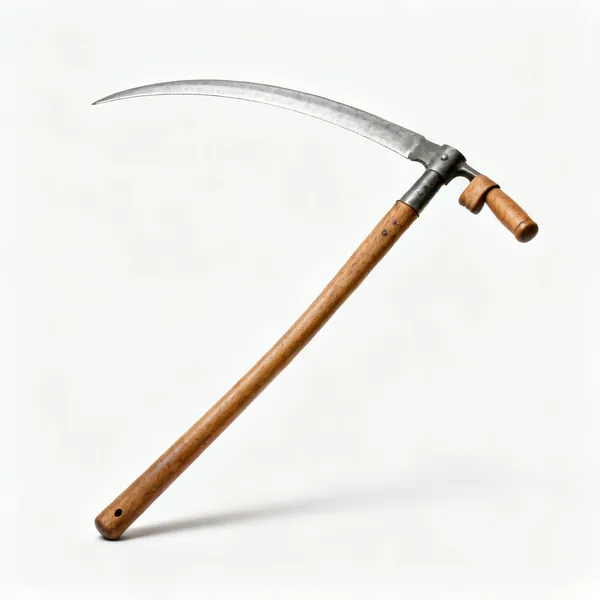
  • An austrian scythe with a long thin curved steel blade and a wooden snath with two grips

    Austrian scythe

    A light thin blade on a curved snath, cutting a swath around 1.5 metres wide with each turn of the body. Thinner and lighter than the English pattern, sharpened by peening, and far less tiring to use for a day.

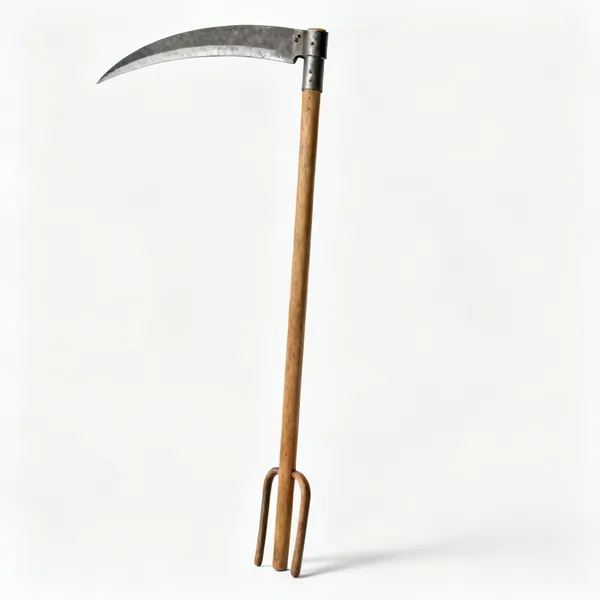
  • An english scythe with a heavy curved steel blade and a long straight wooden snath with two handles

    English scythe

    A heavier blade on a straight ash snath, sharpened with a file rather than peened. More robust in brambles and rough ground than the Austrian pattern, and considerably more work to swing all day.

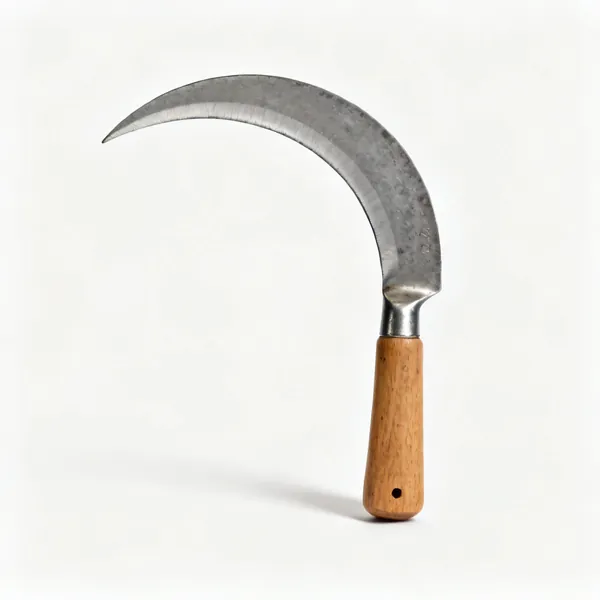
  • A sickle with a curved crescent shaped steel blade and a short wooden handleEssential

    Sickle

    A short crescent blade used one-handed, gathering a handful of grass and cutting through it close to the ground. The tool for a small patch, and for anywhere a scythe stroke has no room to run.

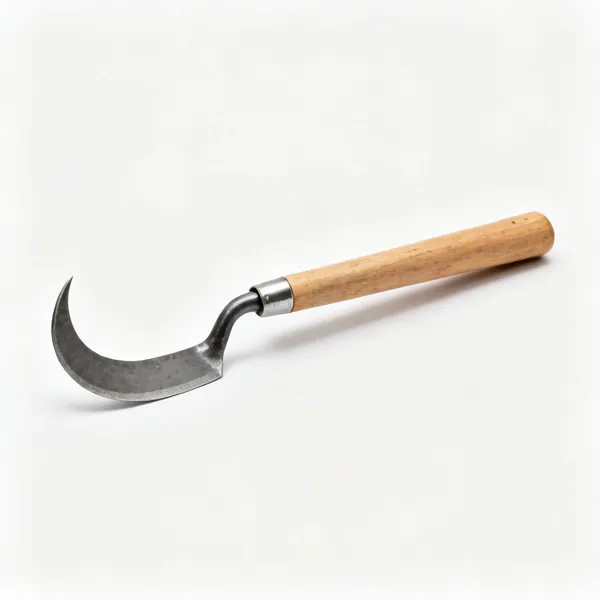
  • A grass hook with a short heavy curved steel blade and a wooden handle

    Grass hook

    A shorter, heavier hook than a sickle, swung rather than drawn. It chops through tough stems and light brambles that would simply bend under a thin sickle blade.

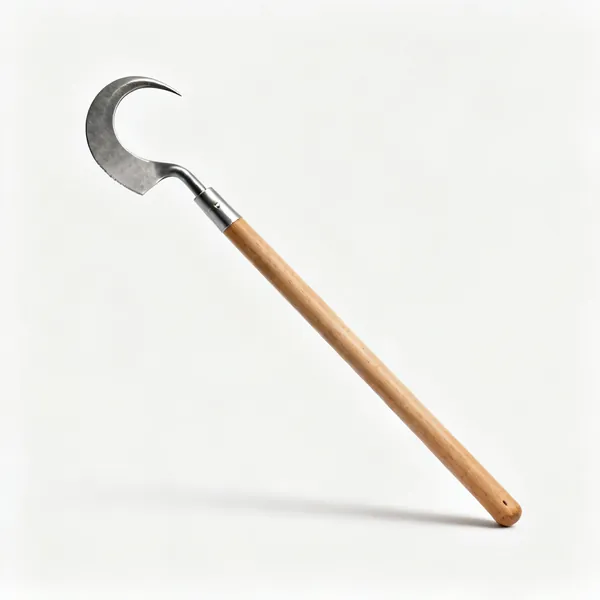
  • A brush hook with a heavy curved hooked steel blade on a long wooden handle

    Brush hook

    A heavy hooked blade on a long handle for clearing coarse growth and saplings among grass. Two-handed and swung, so it does work no grass tool will touch, at the cost of any finesse.

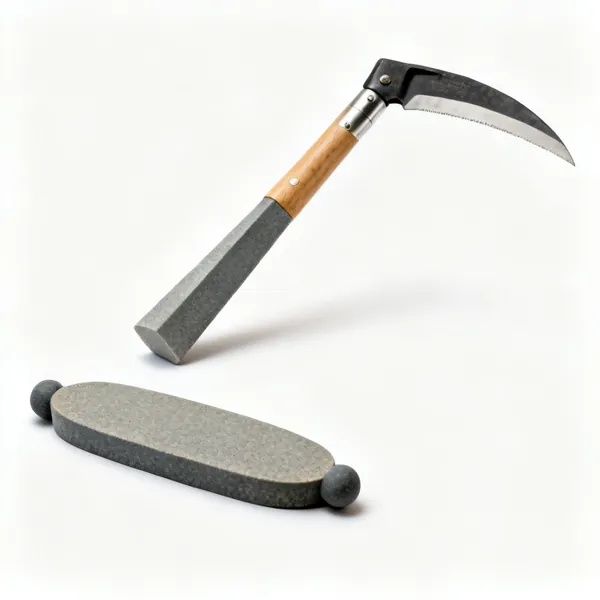
  • A tapered scythe honing stone, an oval sharpening stone with rounded ends

    Scythe honing stone

    A tapered natural or synthetic stone carried in a water-filled holster and drawn along the blade every few minutes. Not an accessory: an unhoned scythe is exhausting and cuts badly.

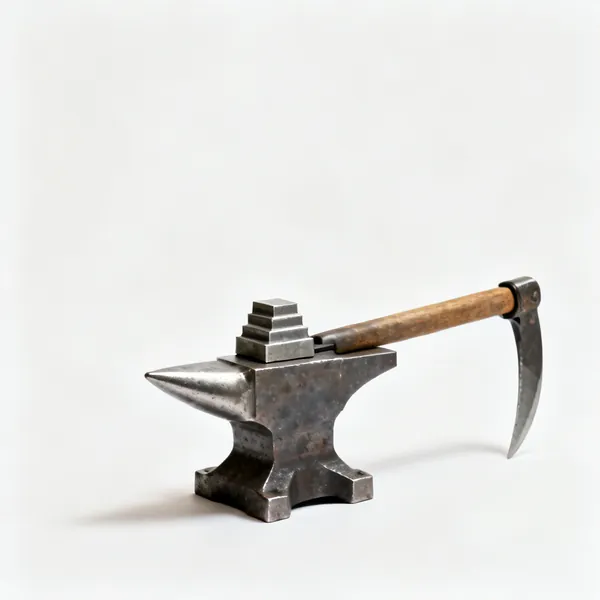
  • A scythe peening jig with a small steel anvil base and a stepped forming cap

    Peening jig

    A small anvil and caps that thin a scythe edge by cold forging rather than grinding. Peening moves metal instead of removing it, which is how an Austrian blade gets sharp enough to work properly.

Short grass and lawns 6

Cutting against a second edge, because a short stem cannot be sliced. This is where the cleanest cut in the garden comes from.

  • Hand cylinder mower: A hand push cylinder lawn mower with a helical blade reel, two wheels and a long handle

    Hand cylinder mower

    A helical blade turned by the wheels, scissoring grass against a fixed bed knife. That scissoring action is genuinely the cleanest cut available, and it leaves no browned tips at all.

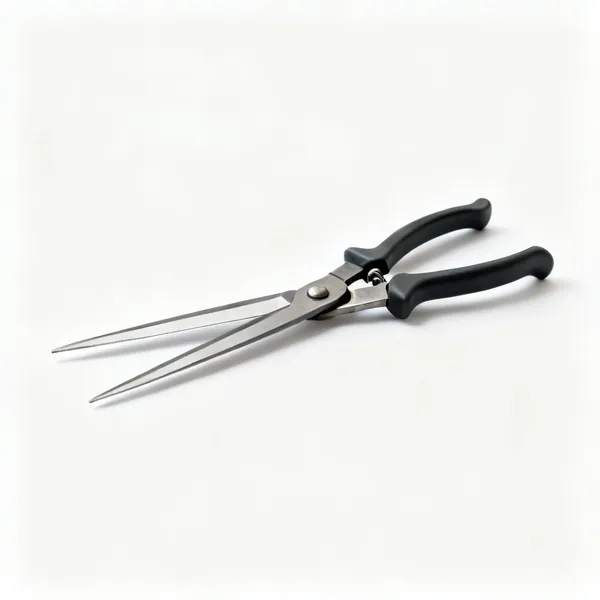
  • A pair of grass shears with two long straight blades and shaped handlesEssential

    Grass shears

    Two long blades pivoted like scissors, held horizontally to trim grass a mower has missed. Slower per square metre than anything else here and precise in a way that no machine is.

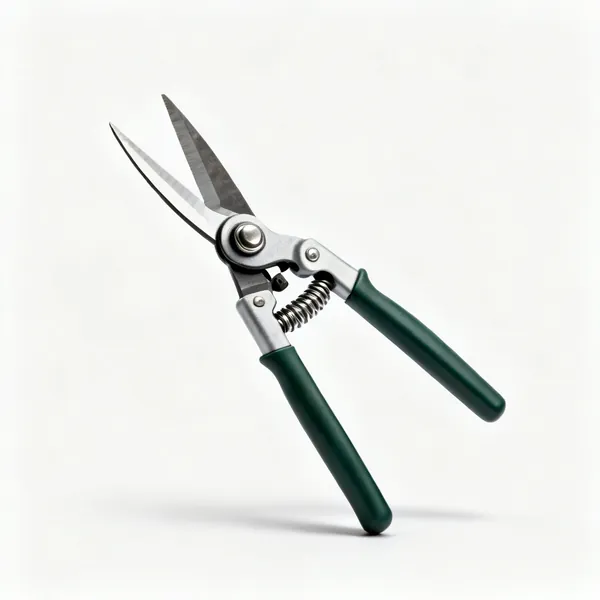
  • A pair of one handed grass shears with a swivelling head, sprung handle and short bladesEssential

    One handed grass shears

    Sprung shears squeezed in one hand, often with a swivelling head so the blades stay level while your wrist does not. For grass around obstacles, in a rockery or against a headstone.

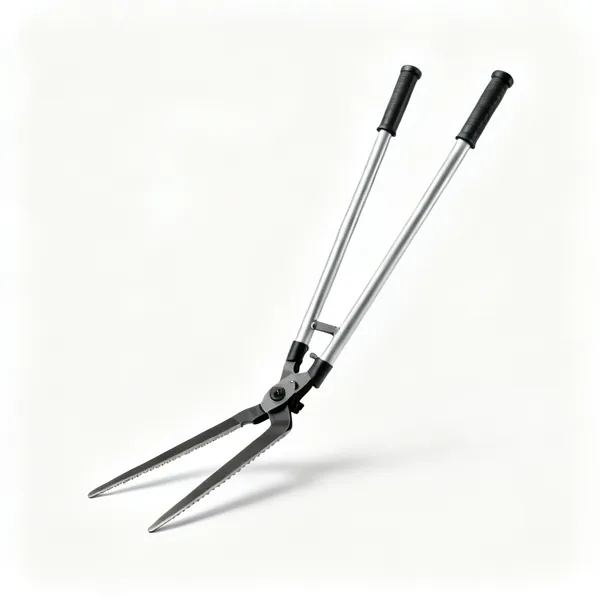
  • A pair of long handled grass shears with two tall tubular handles and horizontal blades

    Long handled grass shears

    Grass shears on a shaft so you cut standing upright. The saving is to your back rather than your time, which over an hour of edge work is the saving that matters.

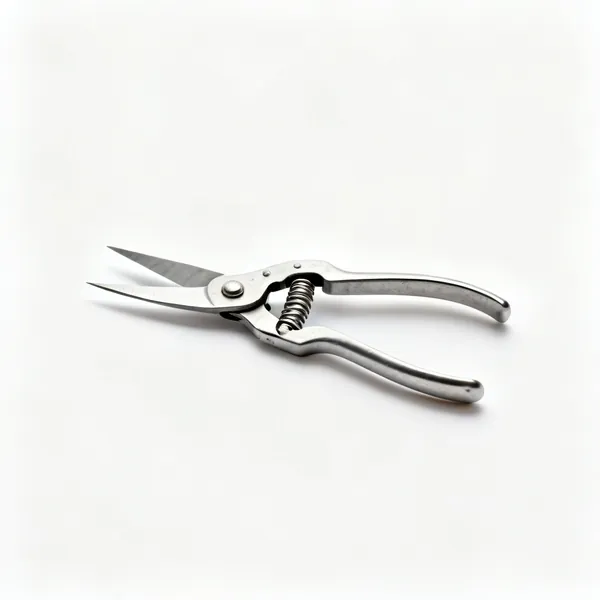
  • Single spring shears: A pair of single spring sheep shears, one piece of bent sprung steel with two pointed blades

    Single spring shears

    One piece of sprung steel bent into two blades, gripped in the palm. Crude and effective for small tufts, and there is nothing in them to loosen or adjust.

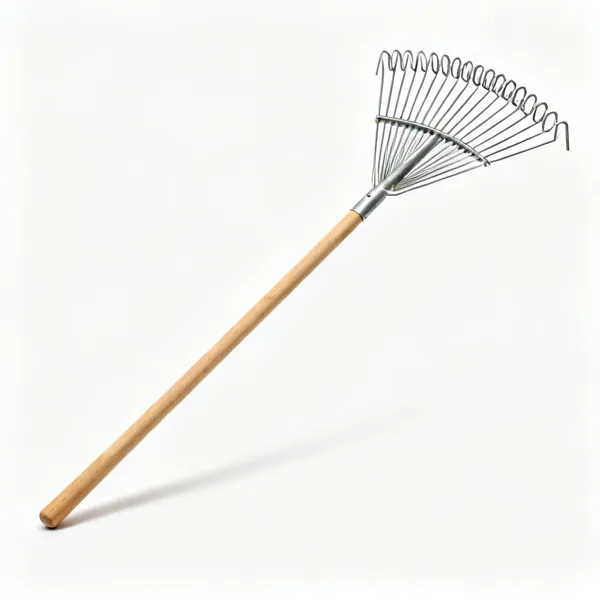
  • A spring tine lawn rake with a fan of long springy metal tines and a long wooden handleEssential

    Lawn rake

    Springy tines that lift cut grass and thatch off the lawn without tearing the turf. Grass left lying smothers the lawn beneath, so raking is part of cutting rather than tidying afterwards.

Edges and borders 6

The highest return per minute in the garden. A crisp edge makes an ordinary lawn look deliberately kept.

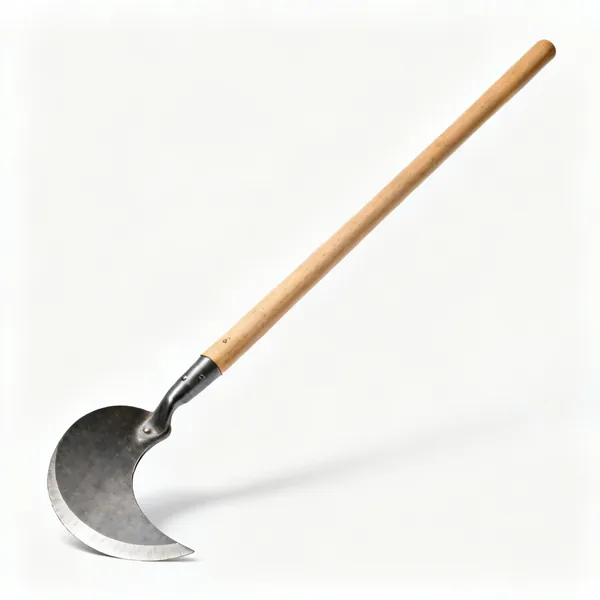
  • A garden edging iron with a half moon crescent steel blade and a long wooden shaftEssential

    Edging iron

    A half moon blade pushed down to cut a new vertical line through turf. The curve lets you rock along the line, which a straight spade blade cannot do without leaving a scalloped edge.

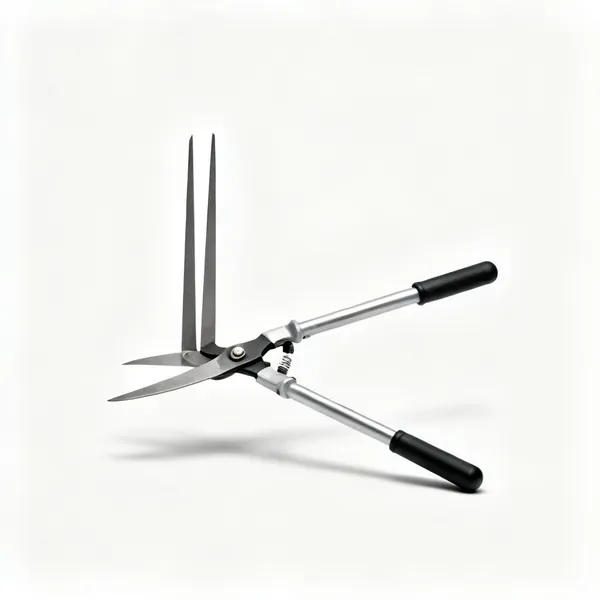
  • Edging shearsEssential

    Edging shears

    Long handles with blades set at right angles, held vertically to trim grass overhanging a cut edge. This is the every few weeks tool, while the edging iron is the once a season one.

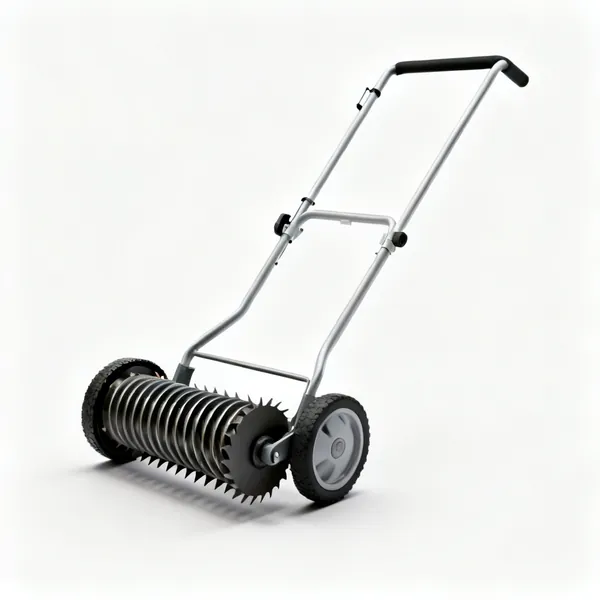
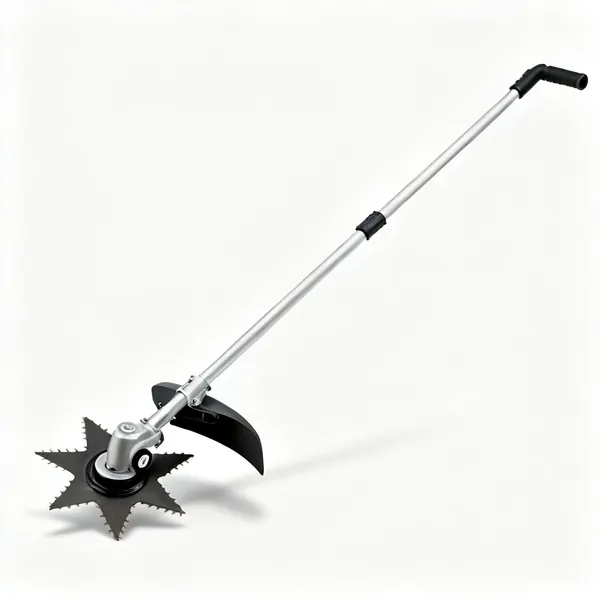
  • Rotary edger: A rotary lawn edger with a star shaped cutting wheel, guide wheel and long handle

    Rotary edger

    A star wheel on a shaft rolled along the edge to slice and lift the overhang. Faster than shears on a long straight run, and it will not follow a tight curve.

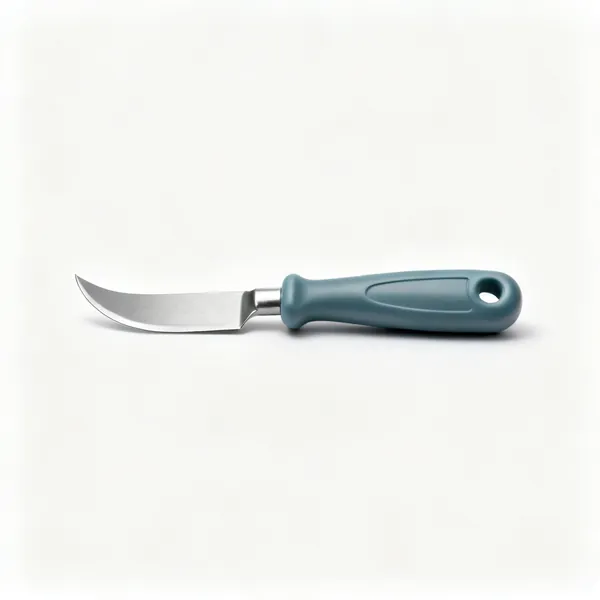
  • A hand edging knife with a short curved steel blade and a moulded plastic handle

    Hand edging knife

    A short curved blade for cutting an edge kneeling down, where a long tool cannot reach. Used around paving, tree bases and any edge shaped too tightly for the half moon.

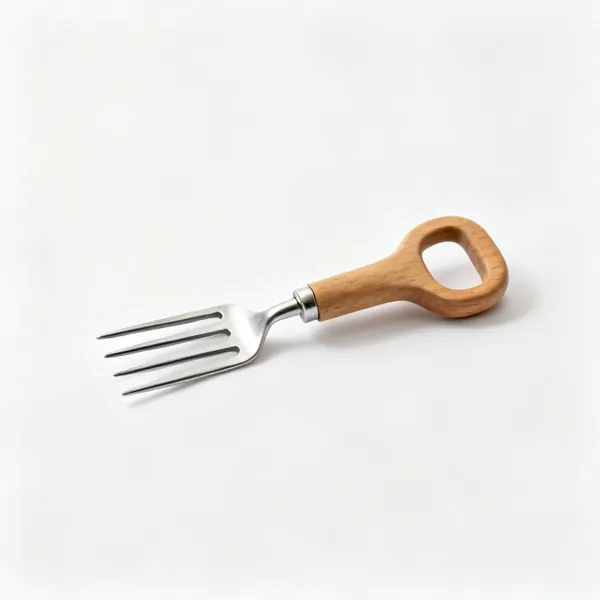
  • A small border fork with four short steel tines and a short wooden D handle

    Border fork

    A small four-tine fork for lifting grass that has crept into a bed. Grass spreads by runner rather than by seed at an edge, so it has to come out with the root or it returns.

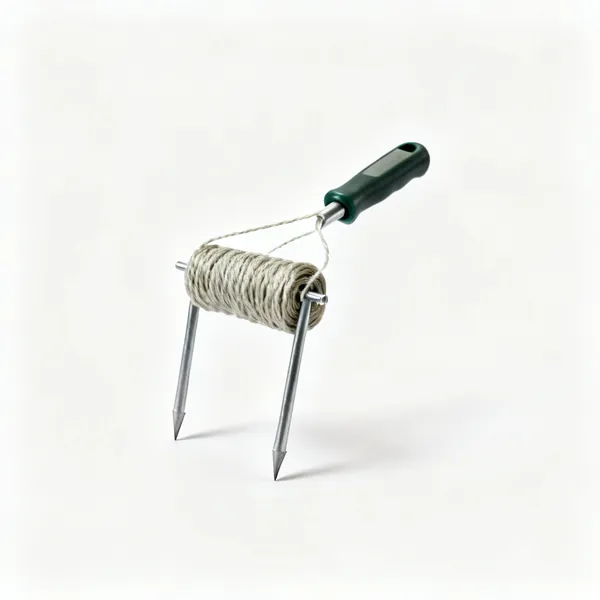
  • A garden line with string wound on two pointed metal pegs

    Garden line

    String on two pegs, giving the edging iron a straight line to follow. The cheapest tool on the page and the one that decides whether a straight edge is actually straight.

Keeping the edges sharp 6

Grass is soft and springy, so it exposes a dull edge faster than any other material. This group is what makes the rest work.

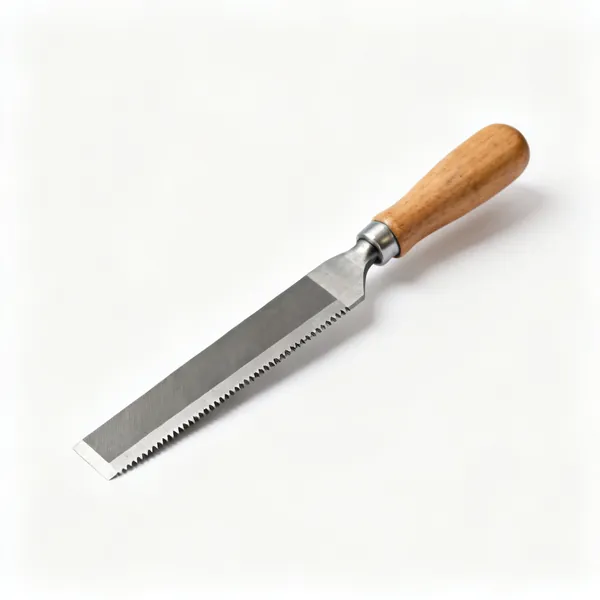
  • Flat file: A flat metal file with a wooden handle and parallel toothed facesEssential

    Flat file

    Sharpens a sickle, a hook or an English scythe by following the existing bevel. A few strokes in one direction only, because a file cuts on the push and dragging it back rounds the teeth.

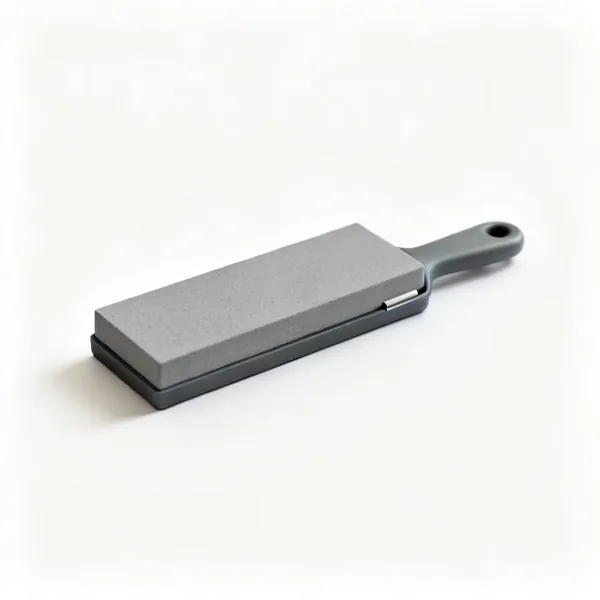
  • A small rectangular grey pocket sharpening stoneEssential

    Sharpening stone

    A pocket stone for putting a finish edge on shears and blades after filing. Grass is soft enough that the difference between filed and honed is visible in how cleanly it cuts.

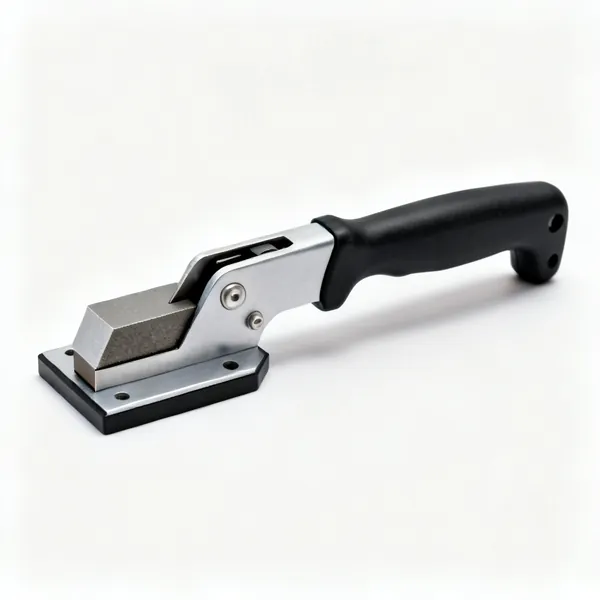
  • Shear sharpener: A handheld shear sharpening tool with a guide and a carbide sharpening insert

    Shear sharpener

    A guided carbide or diamond tool that holds the correct bevel angle against a shear blade. It removes the guesswork, which matters on shears because the two blades must still meet cleanly afterwards.

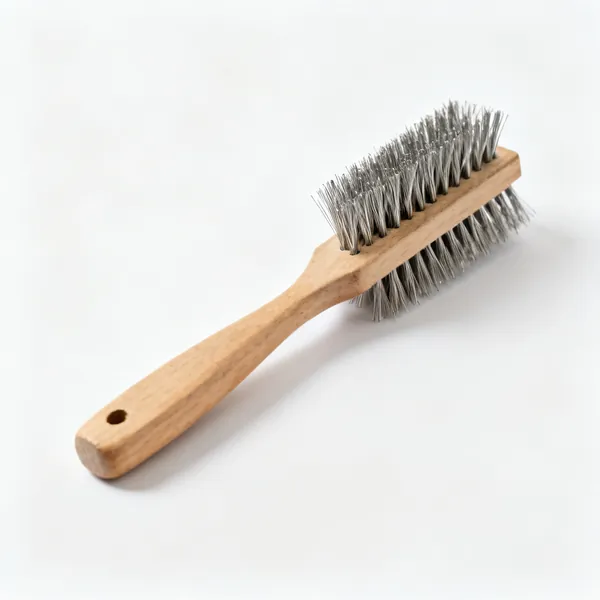
  • A hand wire brush with stiff steel bristles and a wooden handleEssential

    Wire brush

    Removes dried sap and rust from a blade. Grass sap is corrosive and sticky, and a blade left coated pits underneath, which then drags through every cut afterwards.

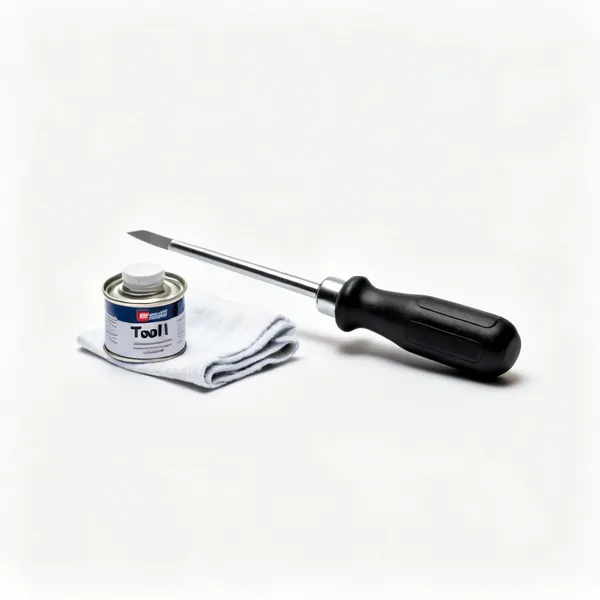
  • Oil and cloth: A small tin of tool oil beside a folded clothEssential

    Oil and cloth

    Wiped over bare steel after cleaning to keep it from rusting between uses. Thirty seconds after every session, and it is the difference between a tool that stays sharp and one that needs work before it cuts.

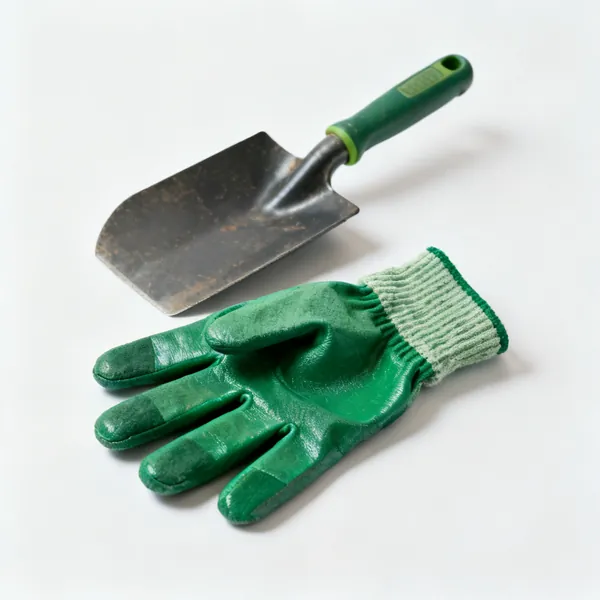
  • A pair of green gardening gloves with a coated palm and a knitted cuffEssential

    Gardening gloves

    Grass is not the hazard: the tool edges are, and so is what hides in long grass. A scythe or hook blade at rest is still sharp enough to cut a hand reaching past it.

Choosing a grass cutting tool

Grass length first, then whether you are clearing an area or finishing a line. Those two decide almost everything.

Long grass and short grass are different jobs

Long grass is cut by slicing through a standing stem, which is what a scythe and a sickle do. Short grass has to be cut against something, because there is not enough stem to slice: that is why shears have two blades and a mower has a bed knife.

Using the wrong one is immediately obvious. A scythe in a lawn skims over the top of it. Shears in waist high grass jam on the second cut, because the cut material has nowhere to go.

Over 200mm
Scythe or sickle. Slicing a standing stem, and the cut grass falls clear of the blade.
Under 100mm
Shears or a hand mower. Two edges are needed because a short stem cannot be sliced through.
Awkward and small
One handed grass shears. Slower per square metre and the only thing that fits around a headstone or a rockery.

A scythe is a technique, not just a blade

A scythe cuts on a shallow slicing arc with the blade riding just above the ground, driven by turning the body rather than swinging the arms. Done properly it is close to effortless and quiet, and it clears rough grass genuinely faster than a strimmer.

Done wrong it is exhausting and it chops rather than cuts. The two things that matter are that the blade is razor sharp, peened rather than merely ground, and that the snath is set to your height so the blade lies flat on the ground on its own.

Set the snath
With the blade flat on the ground the upper grip should reach your hip. An ill-fitted snath makes the whole thing hard work.
Turn, do not swing
The power comes from rotating the torso. Swinging the arms tires you out and cuts worse.
Peen, then hone
An Austrian blade is thinned by peening on an anvil, then honed in the field. Grinding alone never gets it sharp enough.
Cut with dew on
Damp grass cuts far more easily than dry, which is why the traditional time to mow is early morning.

Edges are what make a lawn look cut

A lawn with a ragged edge looks unkempt however well the middle is mown, and a crisp edge makes an average lawn look cared for. It is the highest return per minute in the whole garden.

Two separate jobs are involved. An edging iron cuts a new vertical line through the turf, which is done once or twice a year. Edging shears then trim the overhanging grass along that line, which is done every few weeks.

Cut the line once
A half moon edging iron, against a plank for a straight run or a hose for a curve.
Trim it often
Long handled edging shears, held vertically. Quick, and it is what keeps the line looking new.
Do not recut every time
Cutting a fresh line each month moves the edge and the bed grows steadily wider.

Everything here depends on being sharp

Grass is soft and springy, which makes it unforgiving of a dull edge: a blunt blade pushes the stem over rather than cutting it, and the grass springs back up uncut. This is more true of grass than of almost any other material.

The good news is that all of these tools are sharpened with a simple stone or file and it takes a couple of minutes. A scythe is honed every few minutes of use, which sounds tedious and is actually the rhythm of the work.

Hone in the field
A scythe blade is honed every five to ten minutes with a stone carried in a water holster. That is normal, not a fault.
Shears need both
Sharpen the bevel and keep the pivot tight. A loose pivot lets the blades part and no sharpness will help.
Brown tips mean blunt
If cut grass browns at the tip within a day or two, it was torn rather than cut. Sharpen the blade.
Clean off the sap
Grass sap is corrosive and sticky. Wipe the blade and oil it, or it will pit and then drag.

When hand tools genuinely beat a machine

On a wet or steep bank where a mower cannot get traction. In a wildflower meadow where you want stems cut cleanly and left standing in a windrow. Around obstacles, headstones and planting where a strimmer would shred anything it touched.

Also anywhere noise matters. A hand tool works at six in the morning without waking anyone, which for a small lawn is often the whole argument.

Wet and steep
No traction problem, no fuel spilling on a slope, no wheel ruts in soft ground.
Meadow and wildlife
A scythe cuts cleanly and leaves a windrow, so seed drops and insects can move out of the cut area.
Around obstacles
A strimmer line strips bark and paint. Shears stop exactly where you stop them.
Quiet
No engine, no charge, nothing to start, and no reason not to work early or late.

Frequently asked questions

Can you cut grass with hand tools instead of a mower?
Yes, and for some situations hand tools are better. A scythe clears rough long grass faster than a strimmer, a hand cylinder mower gives a fine finish on a small lawn, and shears reach places no machine can. For a large area of ordinary lawn a powered mower is still quicker.
What is the difference between a scythe and a sickle?
A sickle is a short curved blade used one-handed, close to the ground, cutting a small area at a time. A scythe has a long blade on a two-handed shaft and cuts a wide swath standing upright. The sickle is for small patches, the scythe for clearing ground.
Is a scythe faster than a strimmer?
In long grass and in competent hands, yes, and noticeably so. A scythe cuts a swath about 1.5 metres wide with each stroke and leaves the grass in a neat row. It is also silent and needs no fuel. It is slower than a strimmer on short tough growth and around obstacles.
How often does a scythe blade need sharpening?
Honed with a stone every five to ten minutes of cutting, which is part of the working rhythm rather than a sign of a problem. Peened on an anvil to thin the edge every few hours of use. A properly sharp scythe takes very little effort, and a dull one is exhausting.
What are grass shears used for?
Trimming grass in places a mower cannot reach: around trees, along walls, beside steps and between planting. Long handled versions save bending for edge work, and one handed versions are for close detail. They cut rather than shred, so the tips do not brown.
Do I need an edging iron and edging shears?
They do different jobs. An edging iron cuts a new vertical line through turf, which you do once or twice a season. Edging shears trim the grass that grows out over that line, which you do every few weeks. Recutting the line every time makes the bed grow wider.
Are hand push mowers any good?
On a small, reasonably flat lawn, very. A cylinder mower scissors the grass between a rotating blade and a fixed bed knife, which is a cleaner cut than any rotary machine and leaves no browned tips. They struggle with long grass, twigs and uneven ground.
When is the best time to cut grass by hand?
Early morning while the dew is still on it. Damp grass is heavier and stands up better, so it cuts far more easily than dry grass, which folds away from the blade. This is why traditional mowing started at dawn, and it makes a real difference with a scythe.