Choosing a wood cutting tool
Grain direction first, then how accurate the cut has to be. Those two answers narrow this list to two or three tools.
Ripping and crosscutting are different cuts
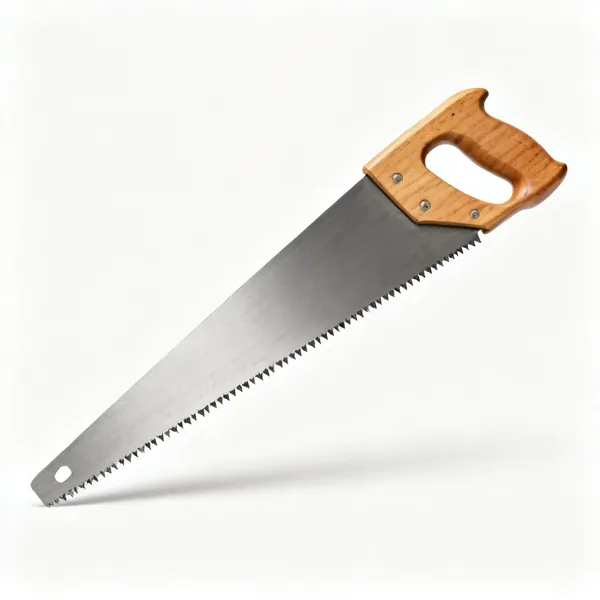
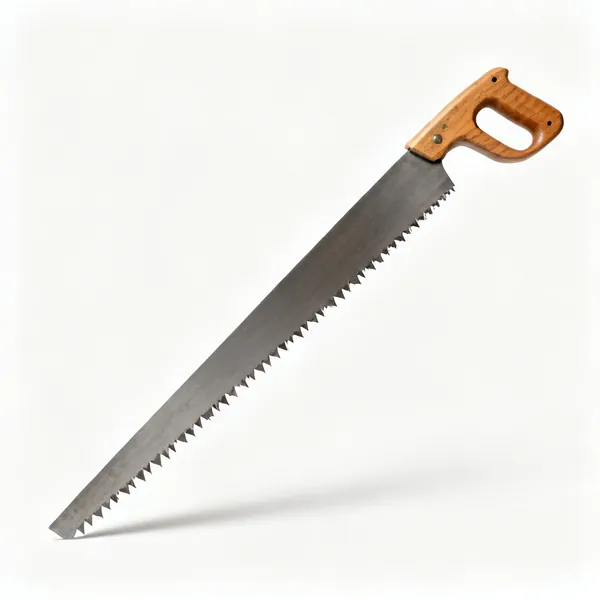
A rip cut runs along the grain and a crosscut runs across it. A rip tooth is filed straight across, like a row of tiny chisels, and it shaves the fibres out of the kerf. A crosscut tooth is filed at an angle to a point, so it slices through the fibres like a row of knives.
Use the wrong one and the saw still cuts, badly. A rip saw dragged across the grain tears the surface and jumps. A crosscut saw pushed along the grain clogs and takes three times as long. Almost every complaint about a hand saw comes down to this.
- Rip
- Along the grain. Chisel-shaped teeth, coarse pitch, and it clears its own waste as long as you keep the stroke long.
- Crosscut
- Across the grain. Knife-pointed teeth, finer pitch, and it leaves a surface that needs no cleaning up.
- Universal
- Modern hardpoint saws compromise between the two. Fine for site work, never as good as either at its own job.
Teeth per inch decides speed against finish
Tooth count is the other number that matters. Fewer, larger teeth take a bigger bite and cut faster, but they leave a rough edge and tear out on the far side. More, smaller teeth cut slowly and leave a face that needs little work afterwards.
The practical rule is to keep at least three teeth in the material at all times. That is why a fine dovetail saw cannot cut a fence post and a coarse rip saw destroys thin plywood: in each case the tooth count is wrong for the thickness.
- 4 to 7 TPI
- Fast rough cutting in thick stock. Framing, fence rails, firewood sizing.
- 8 to 12 TPI
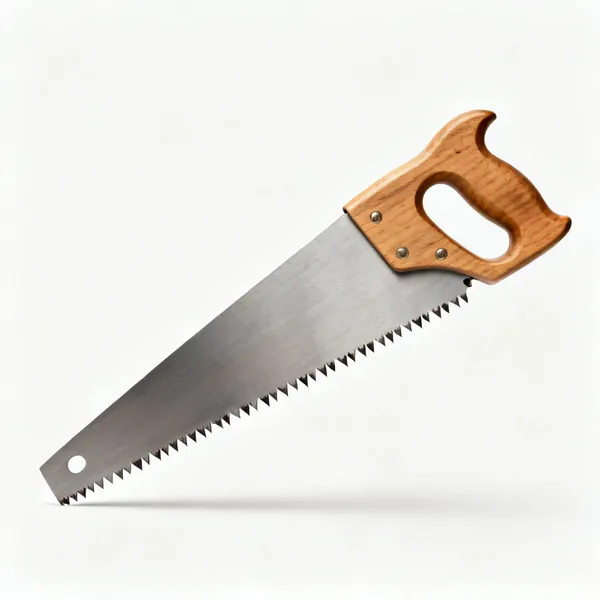
- General joinery. Cuts boards to length with an edge you can plane straight away.
- 14 to 20 TPI
- Joints, trim, thin stock. Slow, precise, and it will not tear the far face.
Push saws and pull saws
Western saws cut on the push stroke, which means the blade must be thick enough not to buckle under compression. Japanese saws cut on the pull stroke, so the blade is in tension and can be far thinner. A thinner blade removes less wood, so the cut is finer and takes less effort.
The trade-off is control. A pull saw starts easily and tracks well, but it is less forgiving if you try to steer mid-cut, and the thin blade will kink if you force it. Neither tradition is better. Many workshops now hold both.
- Push
- Thicker plate, stiffer, more tolerant of being steered and of rough handling. Easier to sharpen at home.
- Pull
- Thinner kerf, less effort, cleaner surface. Hardened teeth on most, so they are replaced rather than sharpened.
- Starting
- A pull saw starts on the pull with almost no pressure. Forcing it is the usual reason a beginner kinks one.
When to split instead of saw
Splitting follows the grain rather than crossing it, so it takes a fraction of the effort and leaves a surface stronger than any sawn one. The fibres run unbroken along the length, which is why riven oak lath and split shingles outlast sawn equivalents.
The limit is that you get what the grain gives you. A split follows a knot or a twist and there is nothing you can do about it mid-cut. Sawing is what you choose when the dimension matters more than the fibre.
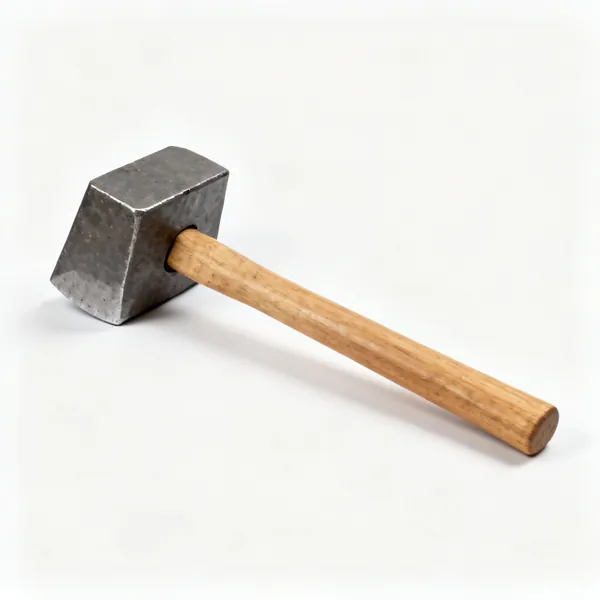
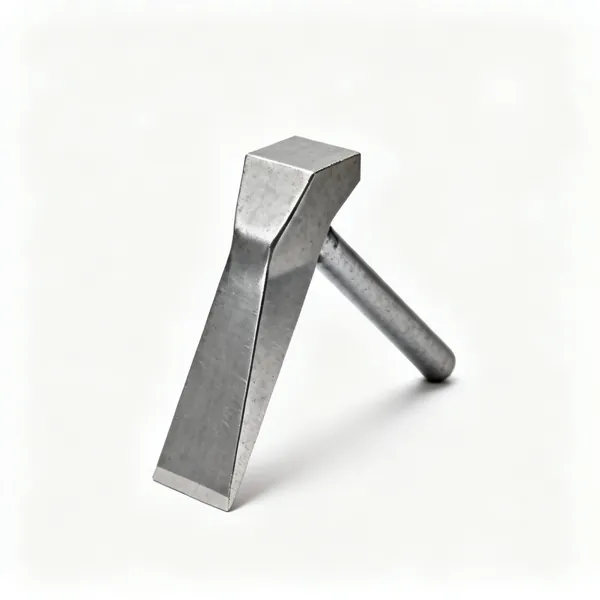
- Froe and maul
- Controlled riving. The froe lever steers the split, within the limits the grain allows.
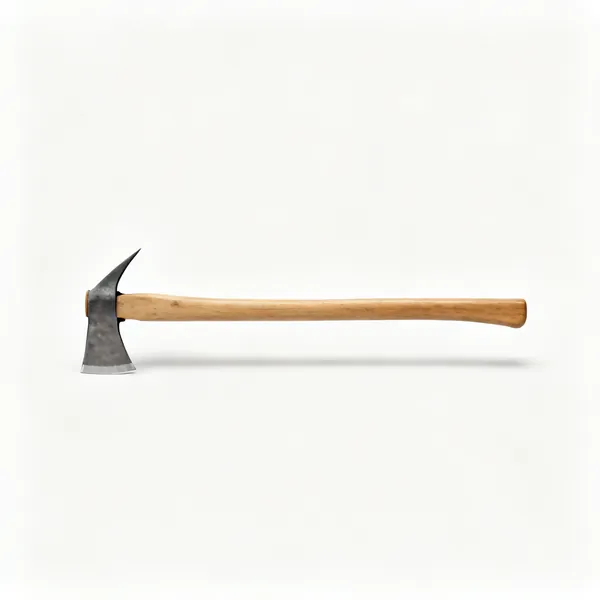
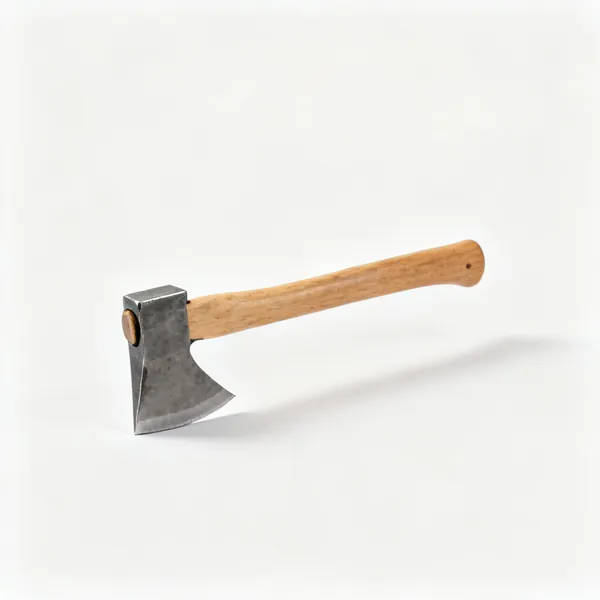
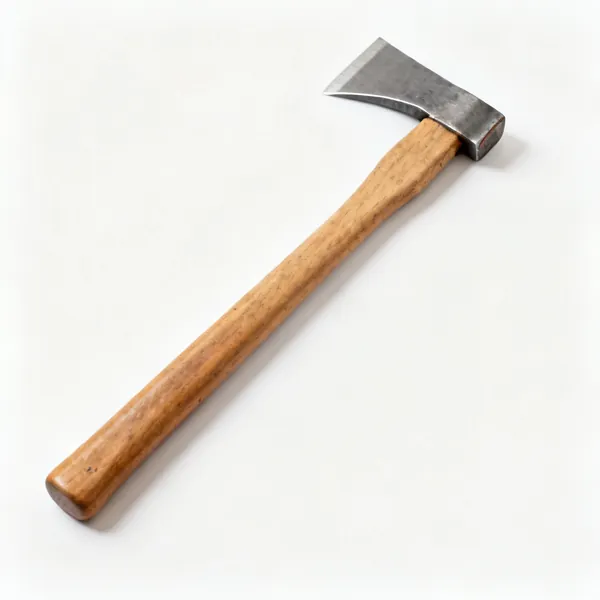
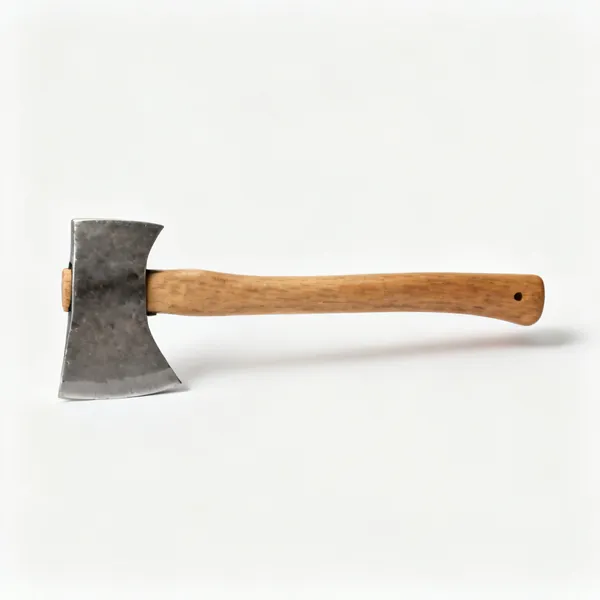
- Splitting axe
- Wedge-shaped head that forces fibres apart rather than cutting them. Not a felling tool.
- Straight grain only
- Knotty or spiral-grained stock will not rive cleanly, and forcing it wastes the piece.
A sharp tool is the safe one
Every tool here works by being sharper than the wood is hard. A blunt saw needs force, and force is what makes it jump out of the kerf. A blunt axe glances off instead of biting. Almost every injury with these tools happens at the moment they stop cutting and start skating.
Traditional saws can be sharpened with a file and a saw set, and that skill is worth having if you own more than a couple. Hardpoint saws cannot be resharpened at all, which is the real cost of the cheaper option.
- Test on your thumbnail
- A sharp edge catches. A blunt one slides. It takes a second and it is the only check that matters.
- Saw set
- Teeth need a slight alternating bend so the kerf is wider than the plate. Without set, the saw binds.
- Hardpoint means disposable
- The induction-hardened teeth that stay sharp longer are too hard to file. When it dulls, it is finished.
Frequently asked questions
- What is the difference between a rip saw and a crosscut saw?
- The tooth shape. A rip saw has teeth filed straight across like small chisels, which shave fibres out when cutting along the grain. A crosscut saw has teeth filed to angled points that slice fibres when cutting across the grain. Each is slow and rough at the other's job.
- Which hand saw should I buy first?
- A panel saw around 10 TPI. It crosscuts boards to length cleanly, will rip short lengths at a push, and is short enough to store and control easily. Add a tenon saw next, because a panel saw cannot cut a joint accurately.
- Are Japanese pull saws better than Western saws?
- They cut a finer kerf with less effort, because pulling puts the blade in tension so it can be thinner. Western saws are stiffer, more forgiving of rough use, and can be resharpened at home. Different tools rather than better ones, and plenty of workshops keep both.
- How do I stop a saw from wandering off my line?
- Start the kerf with the saw held at a low angle using the thumb of your other hand as a guide, and take the first few strokes almost weightlessly. Once the kerf is established the saw follows it. Wandering is nearly always a bad start, not a bad stroke.
- What is a tenon saw for if I already own a hand saw?
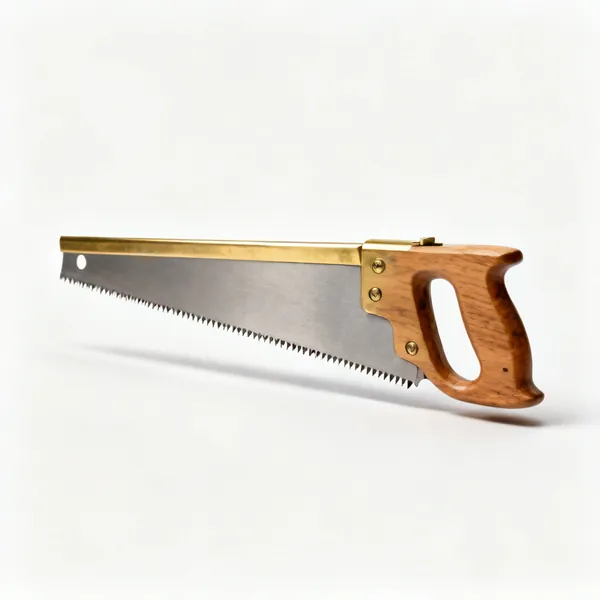
- Accuracy. A tenon saw has a stiffened brass or steel back that stops the thin blade flexing, so the cut stays exactly where you put it. That is what makes it the tool for joints, where a hand saw's flexible plate would wander enough to spoil the fit.
- Can I cut a curve with a hand saw?
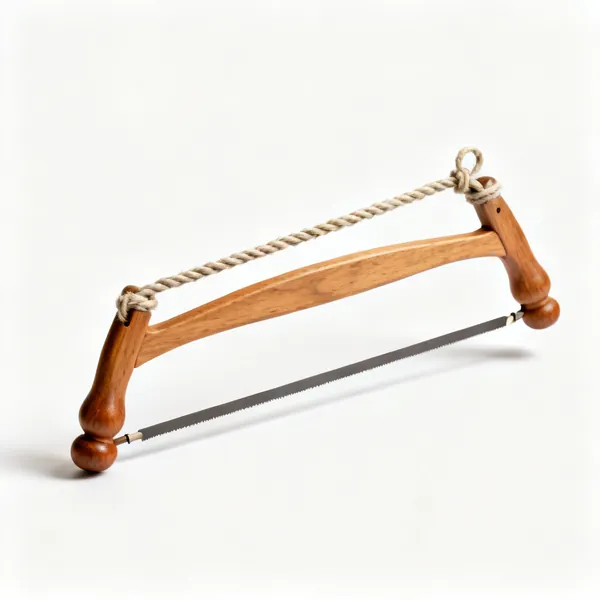
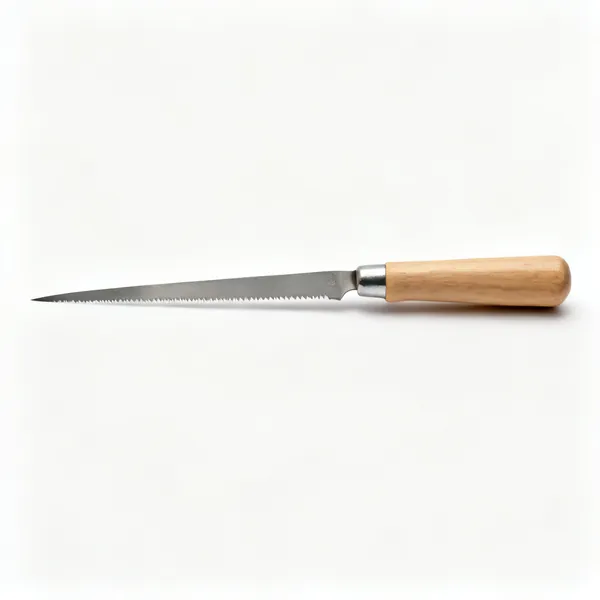
- Not with a straight-bladed one. A coping saw handles tight curves in thin stock, a bow saw handles larger sweeping curves in thicker wood, and a keyhole saw starts a cut in the middle of a panel. All three work by having a narrow blade that can turn in the kerf.
- What is the difference between an axe and a splitting maul?
- An axe has a thin, sharp head that cuts across fibres, for felling and limbing. A maul has a heavy blunt wedge that forces fibres apart along the grain, for splitting rounds. Using an axe to split is slow and buries the head; using a maul to cut does nothing at all.
- Do I need to sharpen a new hand saw?
- A hardpoint saw, no, and you cannot: the teeth are induction hardened and too hard to file. A traditional saw usually benefits from a touch up out of the box, and will need a file and a saw set every so often through its life, which is the trade for it lasting decades.