Disclosure

Hand tools for planting

Trowels, dibbers, bulb planters and widgers, all 27 grouped by what is going into the ground: seed, seedlings, bulbs or plants. Everything here is sized to the root ball rather than to the gardener.

10 are marked essential: the ones that come out every time something goes in the ground.

Part of the full hand tools list, 73 tools in 11 groups.

Trowels and hand forks 7

The tools that come out every time. The blade to handle joint is the only part that ever fails, so it is the only part worth inspecting.

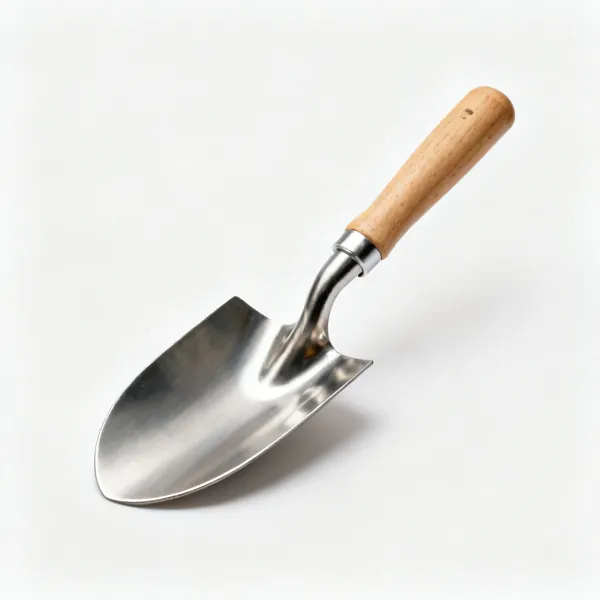
  • A stainless steel garden trowel with a scooped blade and a wooden handleEssential

    Garden trowel

    A scooped blade about 70mm wide for general planting and potting. Look for one piece construction or a full length tang, because a folded pressed tang in a plastic handle is where every failed trowel breaks.

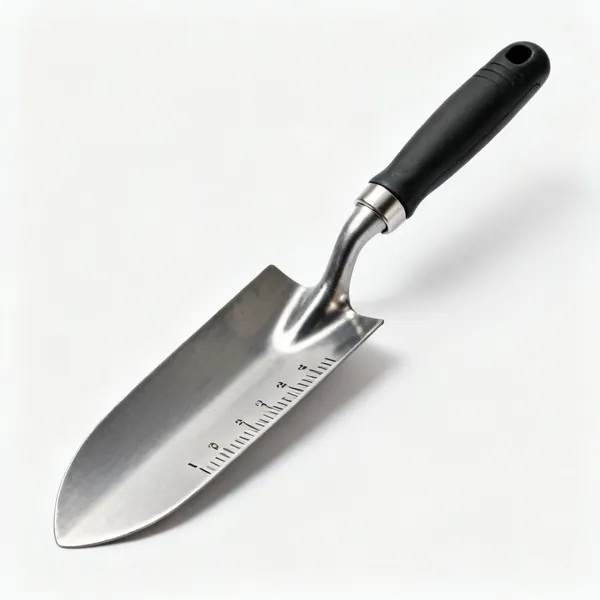
  • A narrow transplanting trowel with a long deep steel blade with etched depth markingsEssential

    Transplanting trowel

    A narrow deep blade with etched depth markings, sized to a root ball rather than to a hand. The graduations are the point: they make a row of plants sit at the same level instead of approximately so.

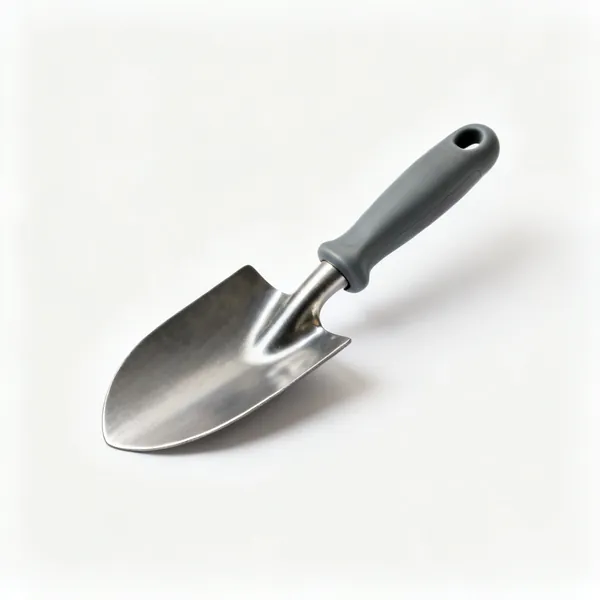
  • A short wide potting trowel with a deeply scooped steel blade and a moulded handle

    Potting trowel

    A short wide scoop for moving compost into pots without spilling it. Not a digging tool at all, and considerably faster than a standard trowel for filling a tray of pots.

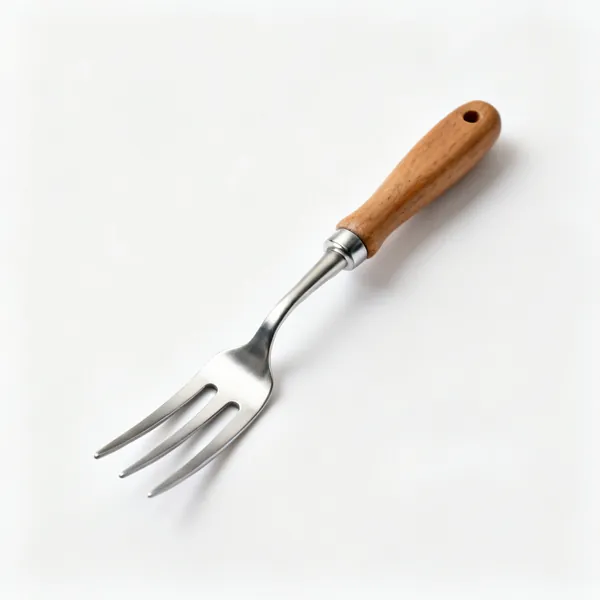
  • A stainless steel hand fork with three short tines and a wooden handleEssential

    Hand fork

    Three short tines for loosening soil around a plant and teasing out a weed root. Used alongside the trowel constantly, because loosening the sides of a hole matters as much as digging it.

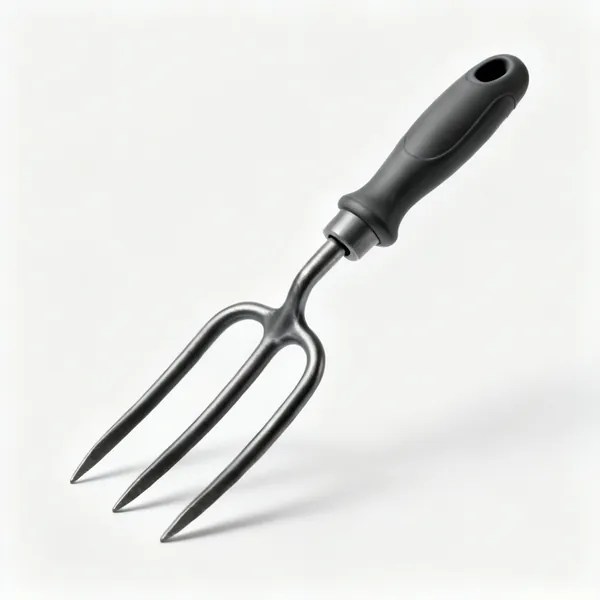
  • A three prong hand cultivator with curved claw tines and a moulded handle

    Hand cultivator

    Three curved claw tines dragged through the surface to break a crust and aerate soil before sowing. It works the top 30mm, which is exactly the layer a seed has to get through.

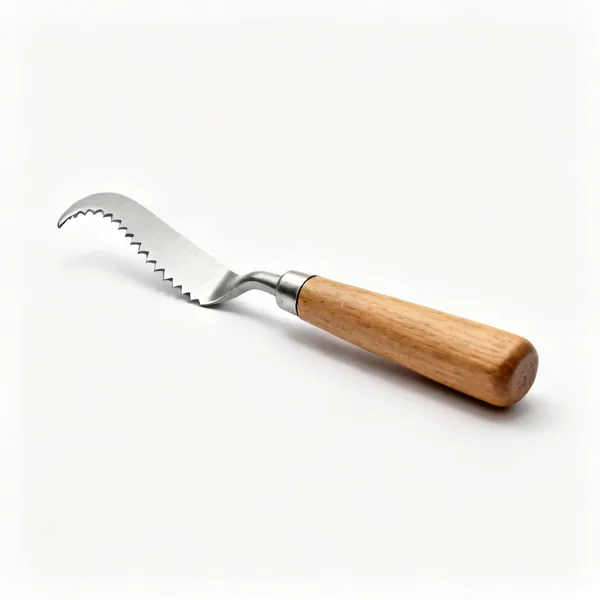
  • A weeding knife with a hooked notched steel blade and a wooden handle

    Weeding knife

    A hooked or notched blade that slices a tap root below the crown in a planted bed. It reaches between plants where a fork would disturb the roots of what you are keeping.

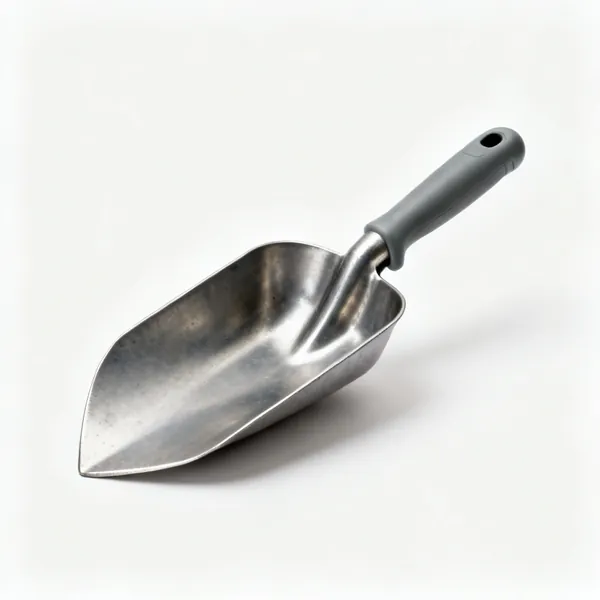
  • A deep steel soil scoop with high sides, a pointed tip and a moulded handle

    Soil scoop

    A deep sharp edged scoop that both digs and carries, with a serrated edge on some patterns for cutting roots. It handles the whole small planting job with one tool rather than two.

Sowing and seedlings 8

Small, blunt and gentle. Everything here exists to move a young plant without tearing its roots or crushing its stem.

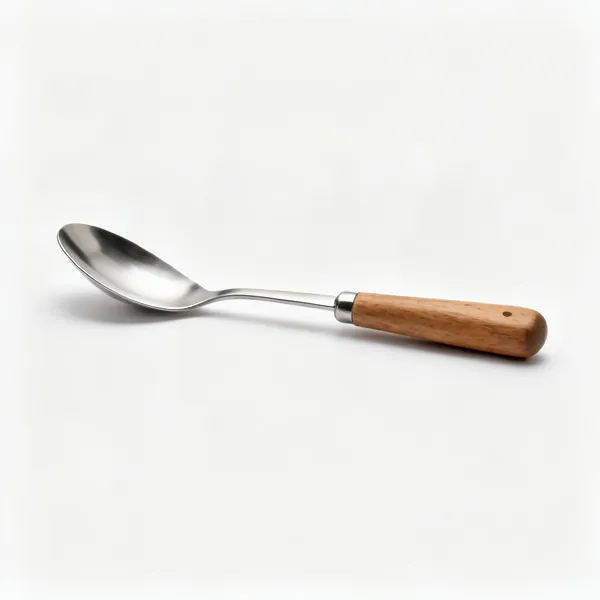
  • A widger, a narrow curved stainless steel spoon shaped hand tool with a wooden handleEssential

    Widger

    A narrow spoon shaped blade slid under a seedling to lift the root ball out intact. Pulling a seedling by the stem strips the root hairs and often kills it, and this is the tool that avoids both.

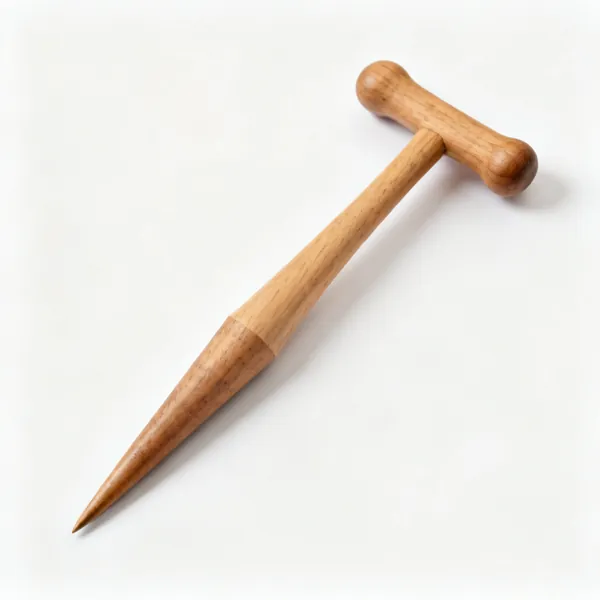
  • A wooden dibber, a tapered pointed hardwood tool with a rounded T handleEssential

    Dibber

    A tapered spike that makes a planting hole by displacing soil rather than removing it. The seedling is placed into an existing hole, so its roots never have to be pushed through soil.

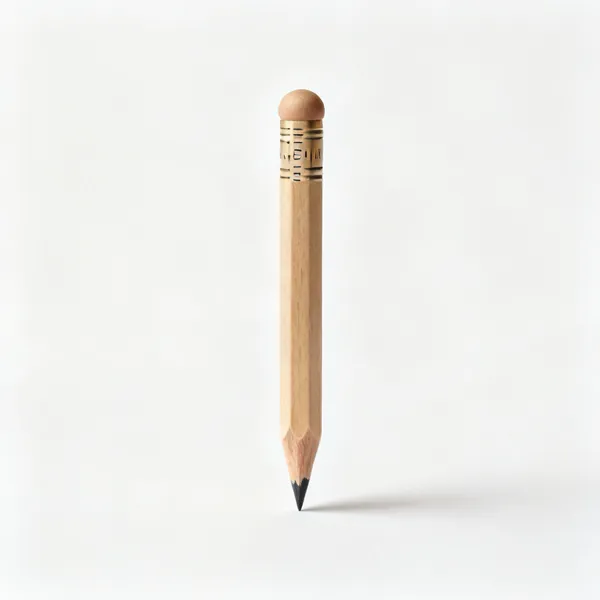
  • Mini dibber: A small pencil sized wooden dibber with a rounded top and depth markings

    Mini dibber

    A pencil sized dibber for cell trays and small pots, often with depth marks. A full size dibber in a 40mm cell displaces most of the compost, which is why the small one exists.

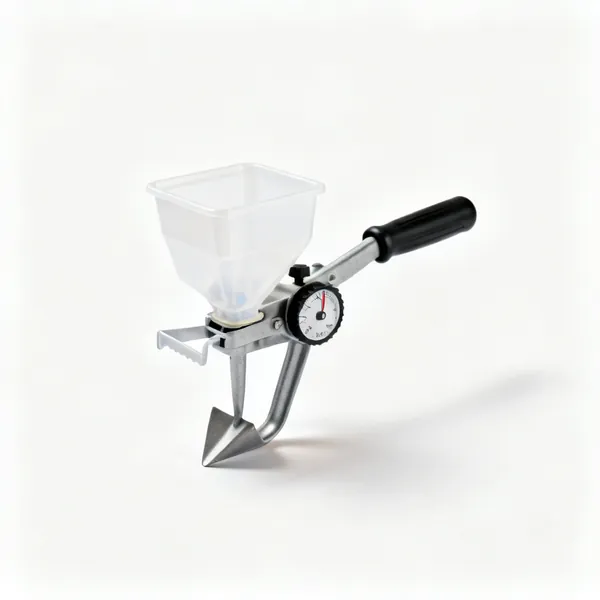
  • Hand seed sower: A hand held seed sower with a small plastic hopper and an adjustable dial gate

    Hand seed sower

    A small hopper with an adjustable gate that releases seed at a set rate. It spaces fine seed far more evenly than fingers, which matters because thinning is the tedious part of sowing.

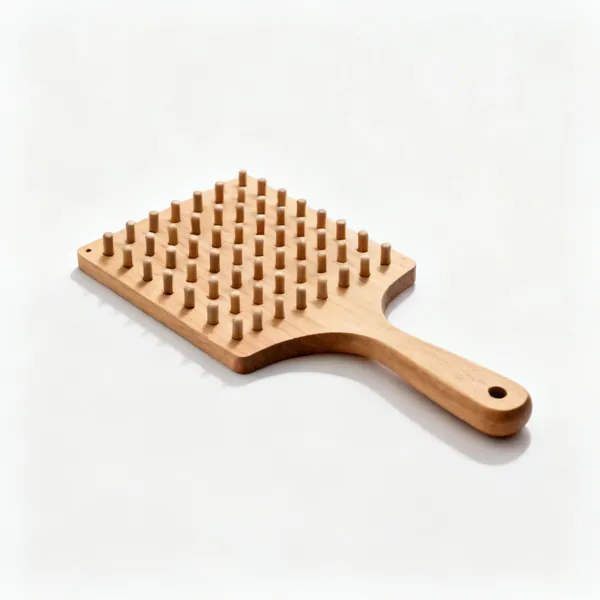
  • A wooden seed spacing board with a grid of evenly spaced short rounded pegs

    Seed spacing board

    A board of evenly spaced pegs pressed into a filled tray to make all the holes at once. It sets consistent spacing and depth across a whole tray in one movement.

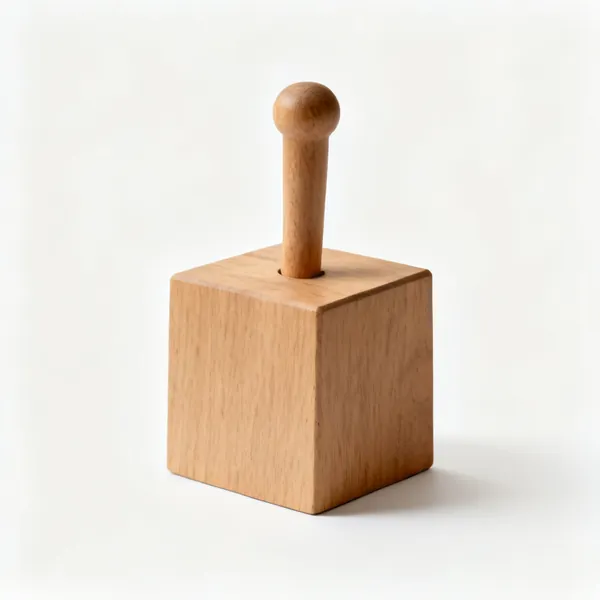
  • A wooden compost tamper, a flat square block with a short round handle on top

    Compost tamper

    A flat block with a handle for levelling and lightly firming compost in a tray before sowing. An uneven surface gives uneven sowing depth, and seed sown too deep does not come up at all.

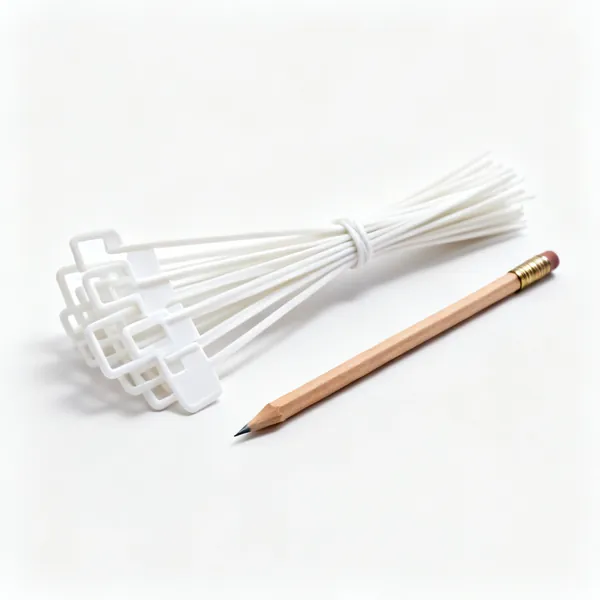
  • Plant labels and marker: A bundle of white plastic plant labels beside a pencilEssential

    Plant labels and marker

    Labels written at the moment of sowing, because within three weeks nothing is identifiable from its seedlings. Pencil on plastic outlasts most marker pens in sunlight.

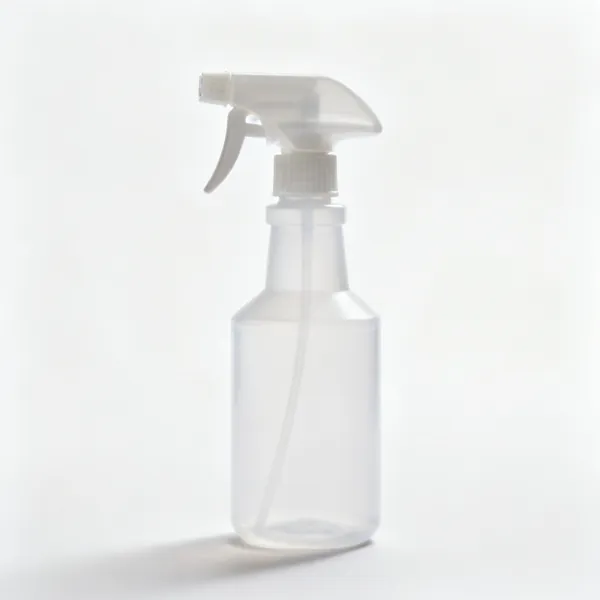
  • Hand mister: A plastic hand pump mister spray bottle with a trigger and nozzle

    Hand mister

    A fine spray that wets a seed tray without washing the seed out of position. A watering can, even with a rose, moves fine seed and buries some of it too deep.

Bulbs and plugs 6

Repetition is the problem here. A tool that ejects its plug cleanly is worth a great deal over a hundred bulbs.

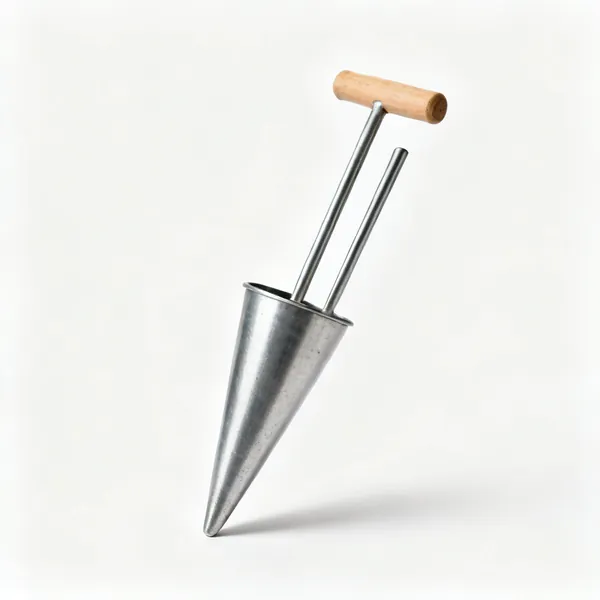
  • A long handled bulb planter with a tapered steel cylinder and two upright handlesEssential

    Long handled bulb planter

    A tapered steel cylinder pushed in with the foot, taking a plug of turf and soil out and releasing it on a squeeze of the handles. Standing upright is what makes a hundred bulbs possible.

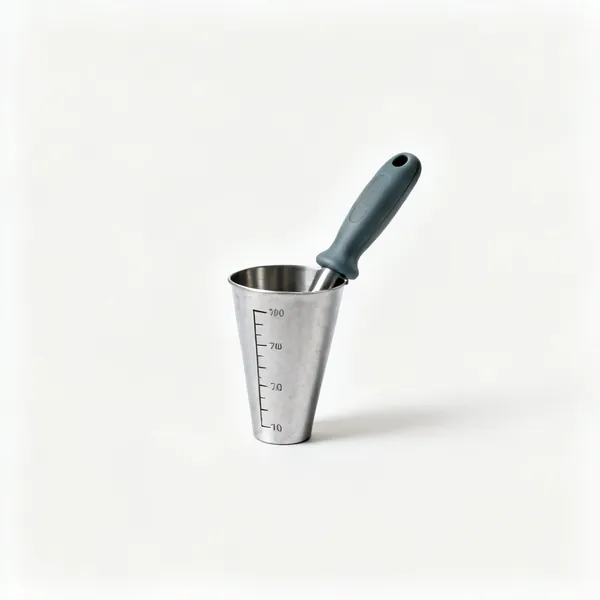
  • A hand bulb planter, a short tapered steel cylinder with depth markings and a moulded handleEssential

    Hand bulb planter

    A short barrel with a graduated scale, used kneeling in beds and containers. The scale is what makes depth repeatable, and depth is what decides whether a bulb flowers or comes up blind.

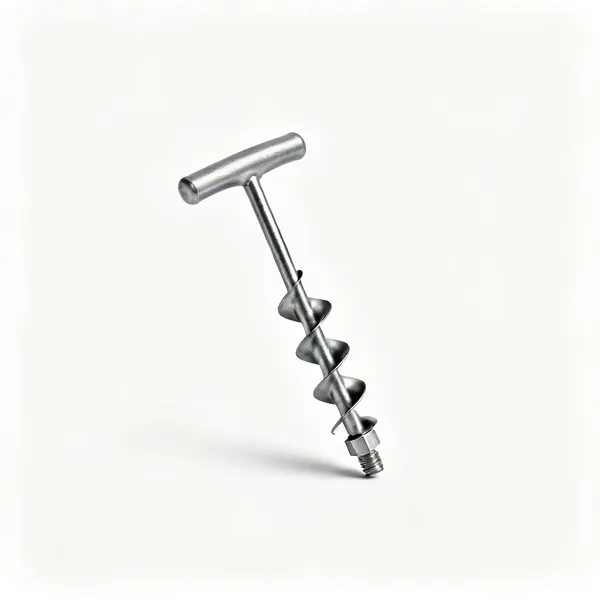
  • Bulb auger: A small steel bulb planting auger drill bit with a helical spiral flight and hex shank

    Bulb auger

    A small helical bit for a cordless drill that bores a planting hole in seconds. The one place power genuinely helps in planting, and it is defeated by stones like any auger.

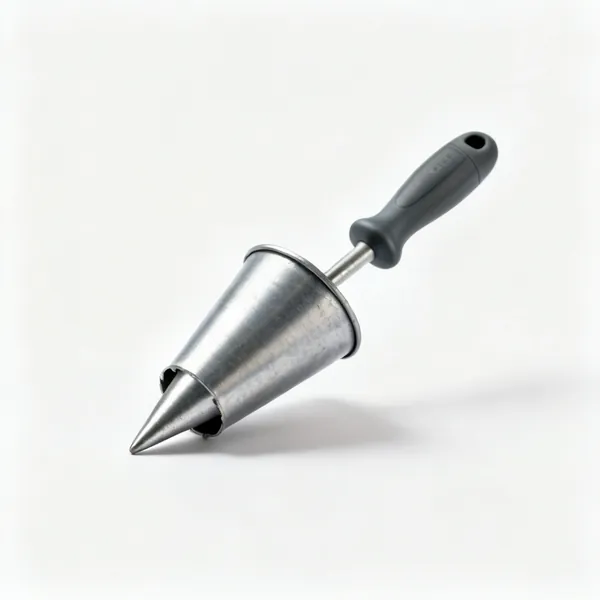
  • A plug planter, a small tapered steel tube with a moulded handle

    Plug planter

    A tapered tube sized to a module grown plug, making a hole that matches exactly. For planting out a tray of plugs it removes the guesswork and the tool never has to be adjusted.

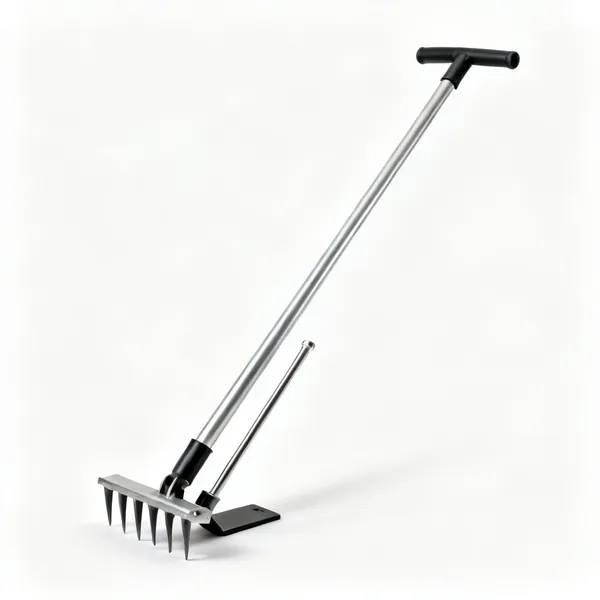
  • A long handled turf plug lifter with a steel tube, foot bar and ejector rod

    Turf plug lifter

    A long tube with a foot bar and a stepped ejector, for planting bulbs in grass at random spacing. It lifts the plug high enough to drop the bulb in without kneeling at all.

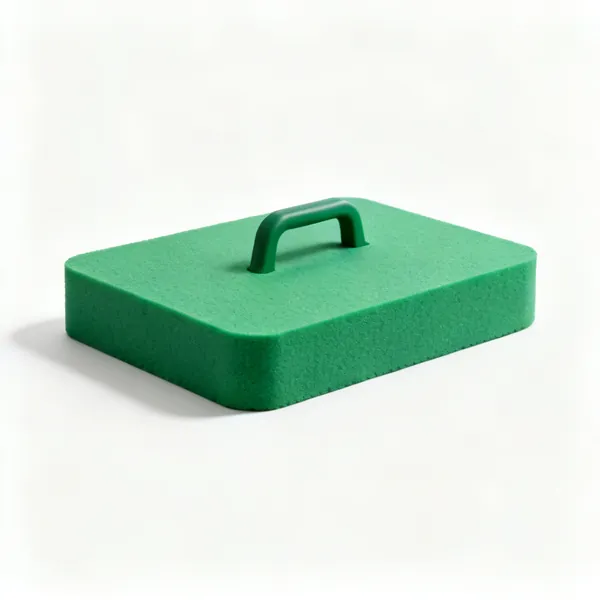
  • A thick green closed cell foam garden kneeling padEssential

    Kneeling pad

    Closed cell foam between your knees and cold wet ground. It is on this list because planting is done kneeling, and how long you can kneel is a real limit on how much gets planted.

Finishing the planting 6

Settling the plant in, and the small tools that decide whether it survives its first fortnight.

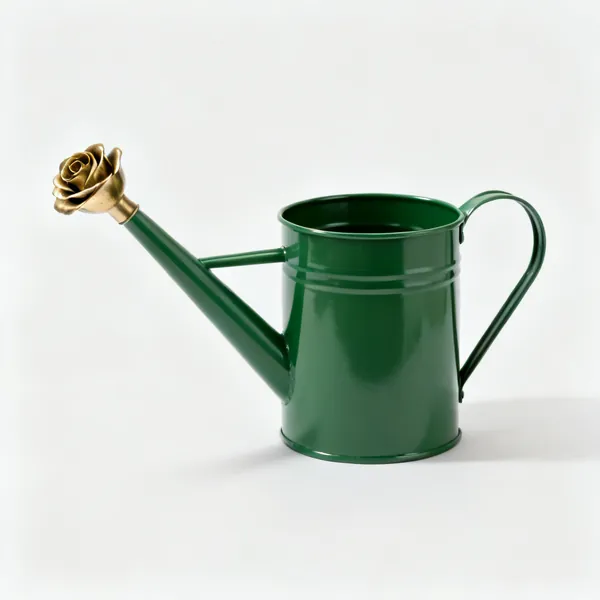
  • Watering can with rose: A green metal watering can with a long spout and a detachable brass rose headEssential

    Watering can with rose

    Settles soil around the roots better than any amount of pressing, and without compacting it. The rose spreads the flow so it does not wash the plant out of the hole it has just gone into.

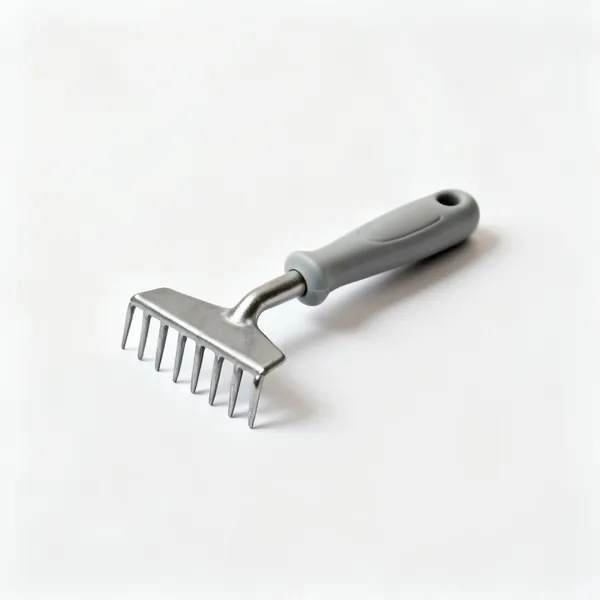
  • A small hand rake with a short head of rigid steel tines and a moulded handle

    Hand rake

    A short tined rake for levelling the surface of a bed after planting and drawing mulch into place. It works between plants where a full size rake would catch and pull them.

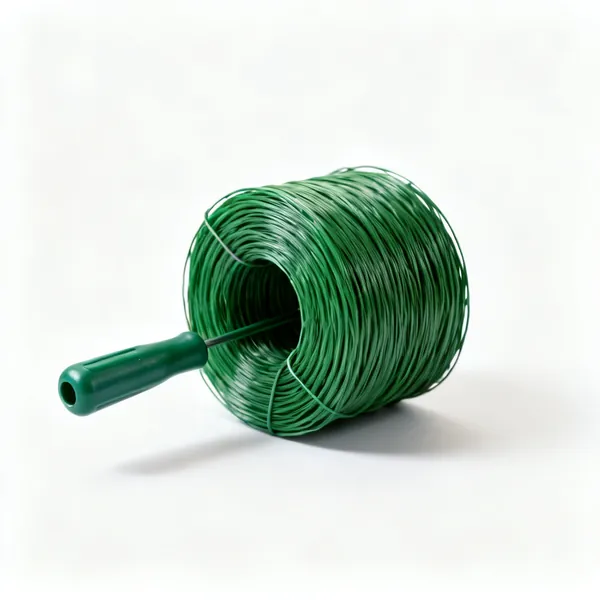
  • Plant ties: A roll of green soft plant tie wire partly unwound

    Plant ties

    Soft wire or twine to support a new plant against wind until its roots take. Loose is the rule, because a tie tightened around a stem cuts into it as the plant thickens.

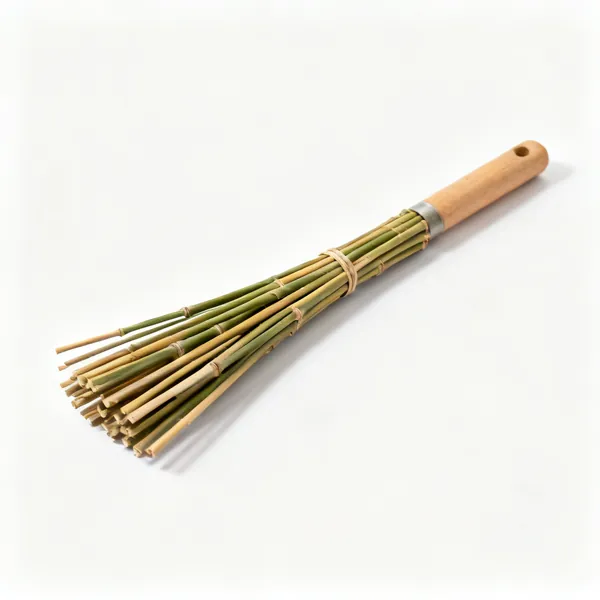
  • Support canes: A bundle of thin bamboo garden canes tied together

    Support canes

    Bamboo canes pushed in beside a new plant to carry a tie. Put them in at planting time, because doing it later means pushing a cane through the root ball you have just settled.

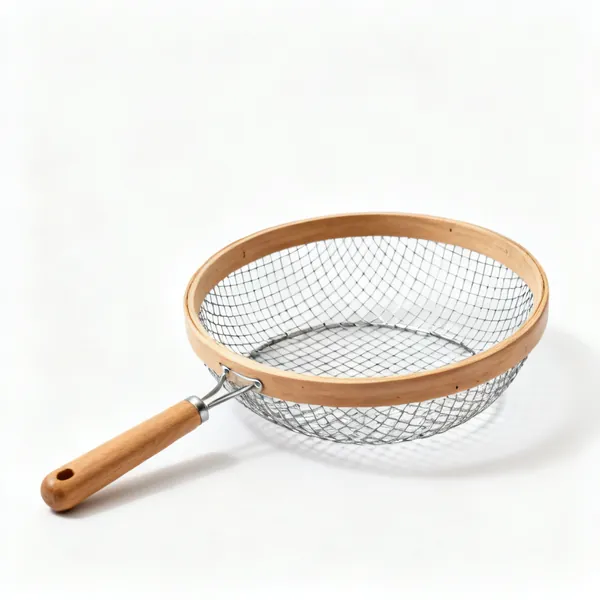
  • A round garden sieve riddle with a wooden rim and a steel wire mesh base

    Garden sieve

    A mesh riddle for producing fine compost to cover seed, and for removing stones from planting soil. Seed covered with lumpy compost germinates unevenly because the depth varies across the tray.

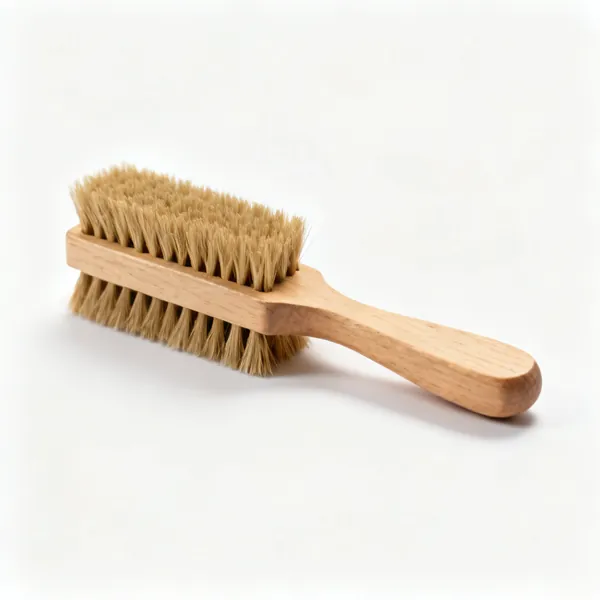
  • A small wooden handled bench brush with stiff natural bristles

    Bench brush

    Clears spilled compost off a potting bench and out of trays. It matters because compost left on a bench holds moisture and grows the moss and fungus gnats that then get into the trays.

Choosing planting tools

Match the tool to the size of the root, and buy a trowel whose handle will not part company with its blade.

The hole should fit the roots

A planting hole wants to be about twice the width of the root ball and no deeper than the root ball is tall. Deeper is actively harmful: the plant settles as the loose soil beneath it compacts, and the stem ends up buried.

This is why planting tools are narrow and marked with depths rather than large and general. A tool that makes the same hole every time is what makes a row of plants sit at the same level.

Twice as wide
Room for roots to spread into loosened soil, which is where the first season's growth happens.
Never deeper
Loose soil under a root ball compacts and the plant sinks. Firm ground under it, loose around it.
Depth marks help
A graduated trowel or bulb planter repeats a depth. Judging by eye gives a row that looks uneven.

What separates a good trowel from a bad one

Trowels fail in one place: where the blade meets the handle. A pressed steel trowel with a folded tang riveted into a plastic handle will loosen and then snap, usually the first time it is used as a lever on a stone.

What to look for is a single piece of forged or cast metal running through the handle, or at minimum a solid tang running its full length. Stainless releases soil more easily; carbon steel takes a sharper edge for cutting roots.

One piece or full tang
The blade to handle joint is the only part that fails. Everything else lasts decades.
Stainless for clay
Soil releases from it far more readily, which in heavy ground is the difference you notice most.
Sharpen the edge
A trowel with a filed edge slices small roots instead of dragging them. Nobody does this and it works.
Depth graduations
Etched, not printed. Printed markings are gone within a season.

Handling seedlings without killing them

A seedling is damaged by being held by the stem and by having its root hairs torn. Hold a leaf instead: a plant can grow a new leaf and cannot grow a new stem.

The tools for this are deliberately small and blunt. A widger slides under a root ball and lifts it out whole, and a dibber makes a hole the seedling drops into so the roots never have to be pushed through soil.

Hold a leaf
Never the stem. A crushed stem is fatal and a lost leaf is not.
Lift, do not pull
A widger or a small dibber under the root ball. Pulling a seedling out strips the root hairs off.
Make the hole first
The roots should be placed into an existing hole, not pushed into soil to make one.
Firm gently, then water
Water settles soil around the roots better than pressing does, and does not compact it.

Bulbs are about depth and quantity

Most bulbs go in at about three times their own height, and planting a hundred of them means the tool matters more than for any single plant. A bulb planter that cuts a clean plug and releases it reliably is worth the difference over one that jams.

In turf, a plug tool is the only tidy option, because it lifts the turf out intact and puts it straight back. A trowel in a lawn leaves a scar that is visible for the rest of the season.
Three times the height
A 50mm bulb goes 150mm deep. Too shallow and it comes up blind or gets eaten.
Plug tools in turf
The turf goes back exactly where it came from. A trowel leaves a visible scar for months.
Check the release
A long handled planter that does not eject its plug cleanly will make a hundred bulbs miserable.
Point upward
Most bulbs have an obvious flat base. Planted upside down they mostly recover, and later.

Keeping planting tools working

These tools live in soil and get put away wet, which is the main reason they wear out. Soil holds moisture against steel and pits it, and a pitted trowel drags in the ground so every hole takes longer.

Clean them, dry them, and if there is a wooden handle give it oil once a year. This is thirty seconds a session and it is the difference between tools that last a decade and tools that last two years.

Scrape and dry
Wet soil on steel pits it. The pitting is what makes an old trowel feel like hard work.
Oil wooden handles
Once a year with linseed. Dry ash splinters, and a split handle cannot be repaired.
Bright paint or tape
Small tools put down in a border disappear. A stripe of colour finds them again.
Store off the floor
The shed floor is the dampest part of the shed, and small tools are the ones left on it.

Frequently asked questions

What hand tools do I need for planting?
A trowel, a hand fork, a dibber and a bulb planter cover almost everything. Add a widger for pricking out seedlings and a transplanting trowel for anything in a pot. That is a complete planting kit and it costs less than one powered tool.
How deep should a planting hole be?
About twice the width of the root ball and no deeper than the root ball is tall. Digging deeper is a common mistake: the loose soil underneath compacts, the plant settles, and the stem ends up buried, which causes rot at the collar.
What is a dibber used for?
Making a narrow hole for seedlings, bulbs and cuttings by displacing soil rather than removing it. Because nothing has to be backfilled the roots go into an existing hole, which avoids pushing them through soil and stripping the root hairs off.
What is a widger?
A narrow spoon shaped tool for pricking out seedlings. It slides under a root ball and lifts it out whole, so the roots are never pulled. It also eases a seedling out of a cell tray without having to squeeze the tray or grip the stem.
How do I choose a good trowel?
Look at where the blade meets the handle, because that is the only part that fails. A one piece forged or cast trowel, or one with a solid tang running the full length of the handle, will last decades. A folded pressed tang riveted into plastic will not.
Are stainless steel garden tools better?
For planting in heavy or clay soil, yes, because soil releases from stainless far more easily and it does not rust. Carbon steel takes and holds a sharper edge, which helps if you are cutting through small roots. Stainless is the easier choice for most gardeners.
How deep do bulbs go?
About three times the height of the bulb, so a 50mm bulb sits roughly 150mm deep. Too shallow and it may come up blind, dry out or be dug up by animals. A bulb planter with depth markings makes this repeatable across a hundred bulbs.
How do I plant bulbs in a lawn without ruining it?
Use a bulb planter, which cuts and lifts a plug of turf and soil intact so it can go straight back afterwards. Within a fortnight the plug is invisible. A trowel leaves a torn scar in turf that stays visible for the rest of the season.