Disclosure

Hand tools for mechanics

The hand tools a mechanic reaches for, all 37 grouped by the job: turning fasteners, gripping and pulling, measuring, and getting a seized fastener out. Most of the kit exists to undo something without destroying it.

21 are marked essential: you will hit a job you cannot finish without them.

Part of the full hand tools list, 73 tools in 11 groups.

Turning fasteners 11

The core of the kit. Everything here grips a nut or bolt head, and the amount of the head it grips is what decides whether the fastener survives.

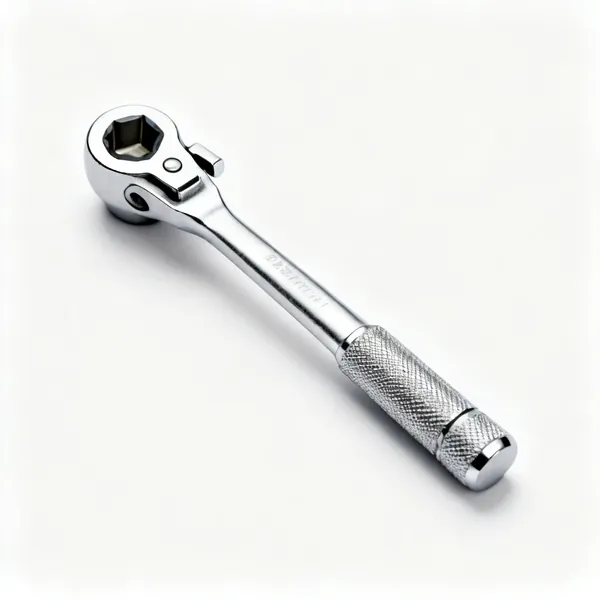
  • A chrome ratchet handle with a knurled grip, reversing lever and square drive headEssential

    Ratchet handle

    A reversible square drive that turns a socket in one direction and freewheels back, so the tool never leaves the fastener. Tooth count matters more than it sounds: a 72 tooth head needs only five degrees of swing to catch.

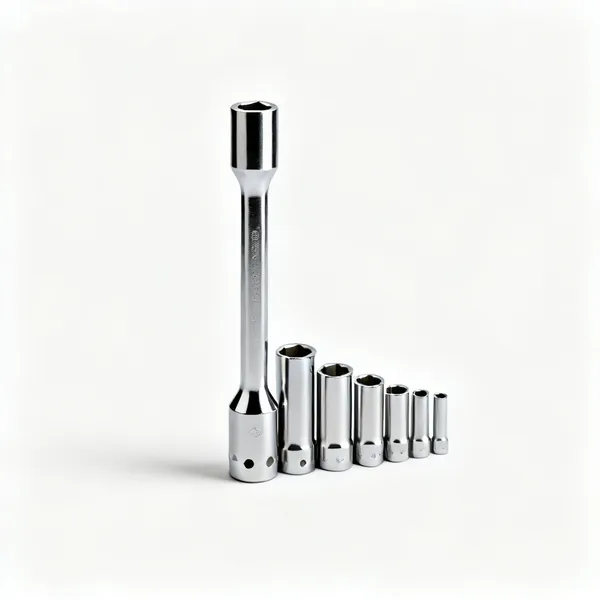
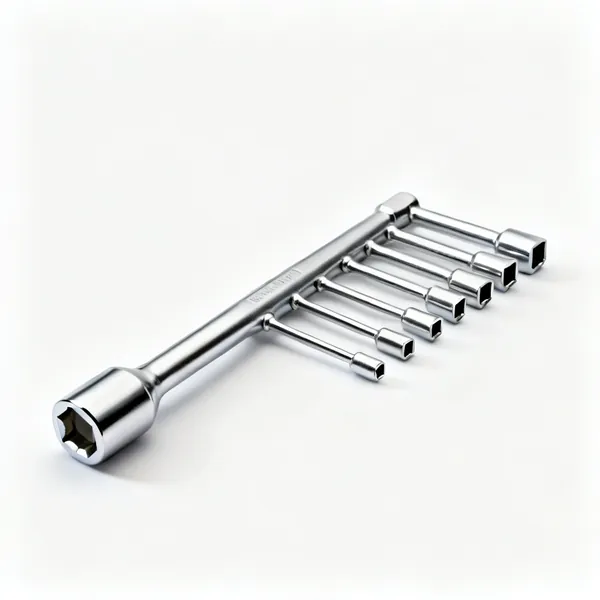
  • A set of chrome six point sockets of graduated sizes standing upright in a rowEssential

    Six point sockets

    Hexagonal cups that surround a fastener and load all six flats at once. That full contact is why a socket undoes a tight nut a spanner would round off, and why six point beats twelve point on anything seized.

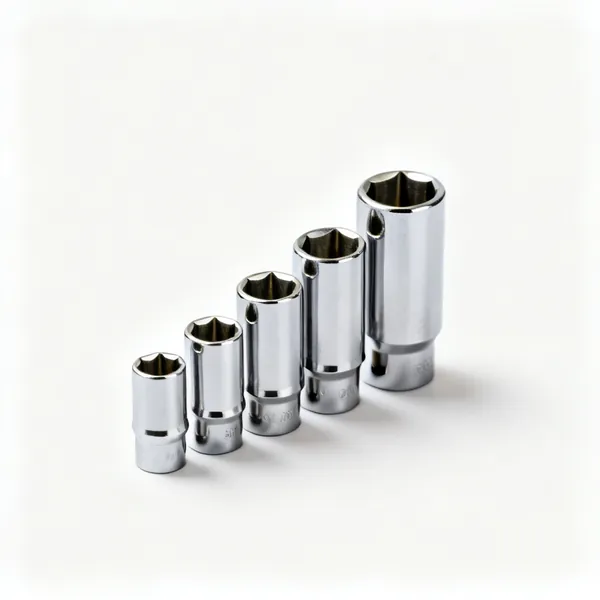
  • Deep sockets: A set of long deep chrome sockets of graduated sizes standing upright in a row

    Deep sockets

    Extended sockets that reach a nut sitting part way down a long stud, where a standard socket bottoms out on the thread before touching the flats. Common on exhaust studs, shock towers and battery clamps.

  • A set of chrome combination spanners with an open jaw at one end and a ring at the otherEssential

    Combination spanners

    An open jaw at one end and a ring at the other in the same size. The ring does the tightening because it surrounds the fastener, and the open end goes where nothing can be slid over the top, such as a brake pipe union.

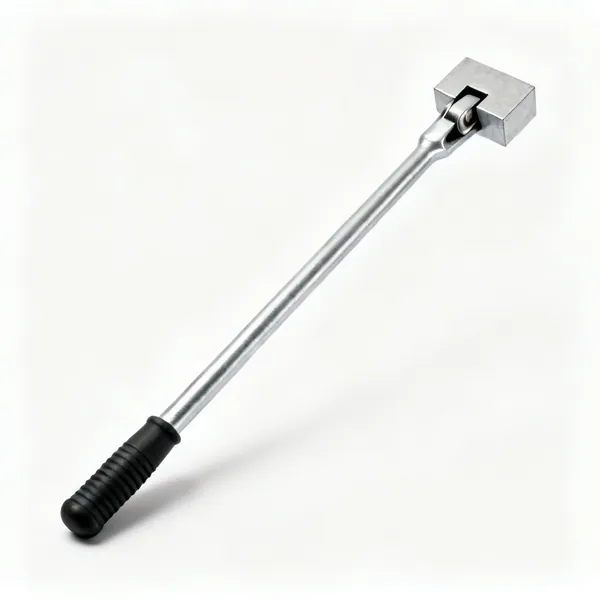
  • A long steel breaker bar with a hinged square drive head and a rubber gripEssential

    Breaker bar

    A long solid handle with a hinged square drive and no ratchet mechanism at all, so nothing internal can shear when you put your weight on it. Crack the fastener with this, then finish with the ratchet.

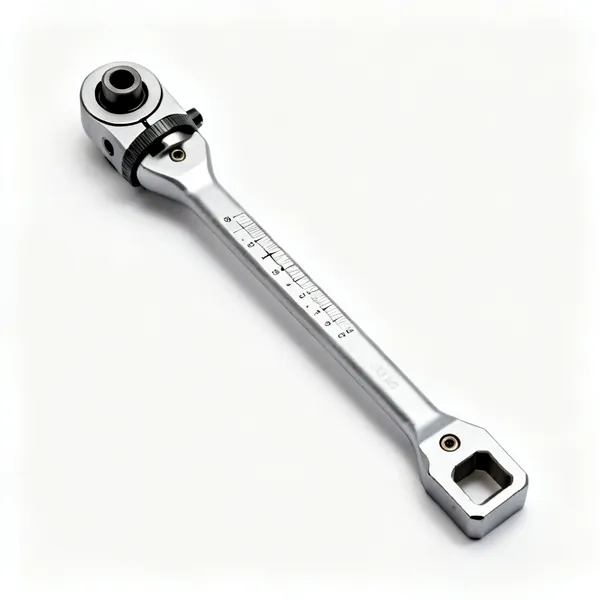
  • A click type torque wrench with a calibrated scale on the handle, adjustment collar and square driveEssential

    Torque wrench

    A calibrated wrench that clicks when a set torque is reached, so wheel nuts and head bolts get the figure the manual states. A measuring instrument rather than a tool: store it wound back to its lowest setting.

  • A set of chrome socket extension bars of different lengths with square drive endsEssential

    Extension bars

    Straight bars between ratchet and socket, reaching a bolt down inside an engine bay. Every extension adds flex and loses feel, so use the shortest that reaches rather than stacking three together.

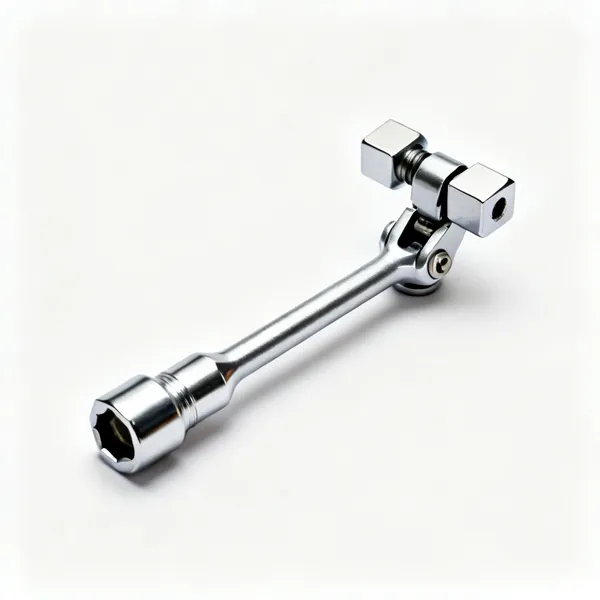
  • A chrome socket universal joint with a hinged double pivot and square drive ends

    Universal joint

    A hinged coupling that lets a socket turn at an angle to the ratchet, for a bolt you cannot line up on. It loses torque and can flop about, so it is a last resort rather than a first choice.

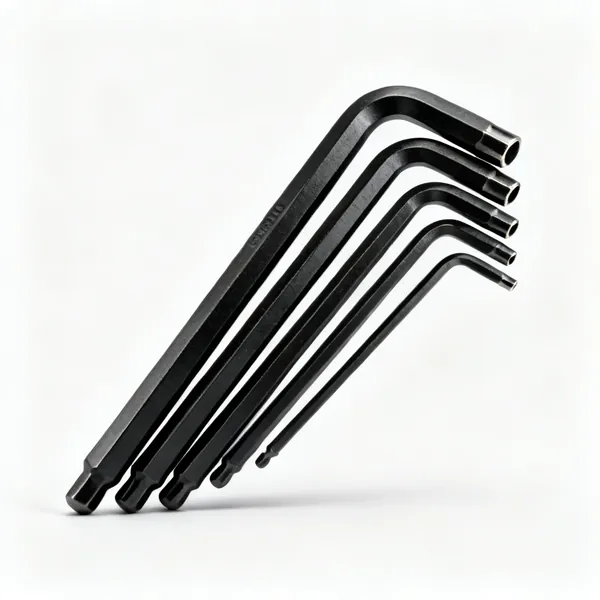
  • Hex key set: A set of black hex allen keys of graduated sizes fanned out in a rowEssential

    Hex key set

    L-shaped hexagonal bars for socket head fasteners, which hold brake calipers, sump plugs and interior fittings on many cars. Ball ends on the long arm let you reach a bolt at a slight angle.

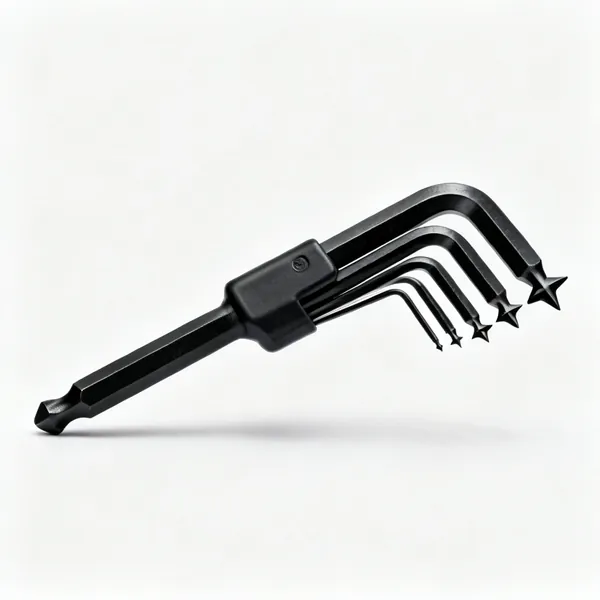
  • Torx key set: A set of black torx star keys of graduated sizes fanned out in a rowEssential

    Torx key set

    Six-lobed star keys, now on more car fasteners than hex is. The lobes transmit torque with almost no outward force on the head, which is why manufacturers moved to them and why they rarely slip.

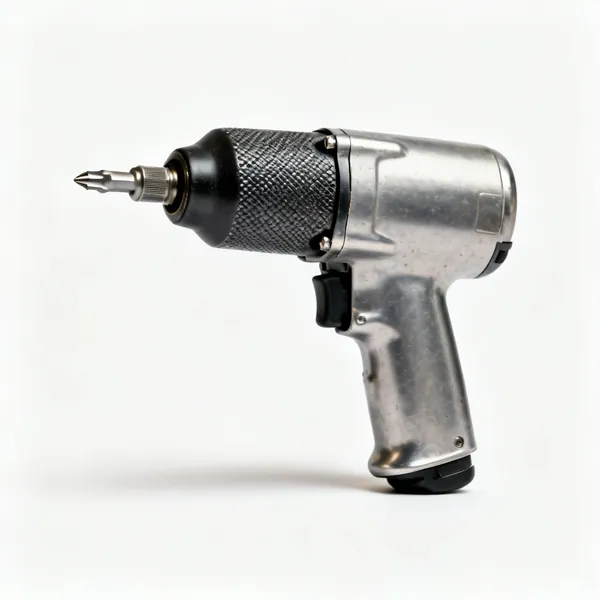
  • A hand impact driver with a heavy knurled steel body, struck cap and screwdriver bit fitted

    Hand impact driver

    Struck with a hammer, it converts the blow into a sharp twist while pressing the bit hard into the screw. That combination is what shifts seized cross-head screws on brake discs and gearbox casings without wrecking the head.

Gripping, holding and pulling 10

For everything that is not a hex fastener: hoses, clips, bearings, pins and the parts that are pressed rather than bolted together.

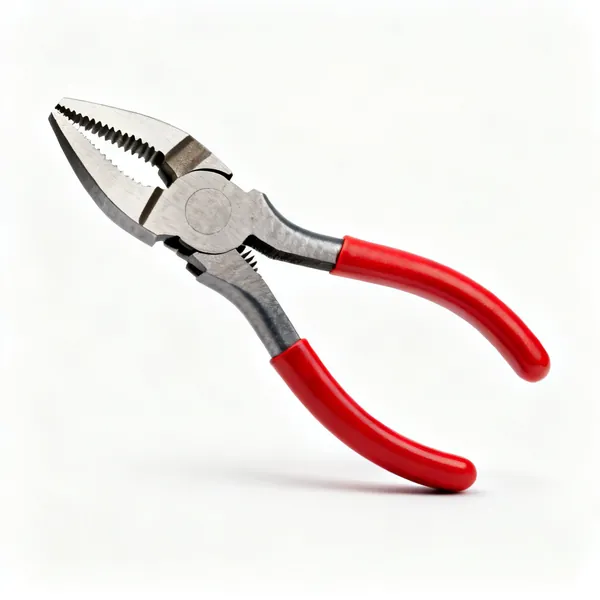
  • A pair of combination pliers with serrated flat jaws, a curved gripping section and red insulated handlesEssential

    Combination pliers

    Flat serrated jaws, a curved pipe grip behind them and a cutter at the back. The tool you pick up without thinking, and the one that pulls a stubborn clip or twists a wire when nothing specialised is to hand.

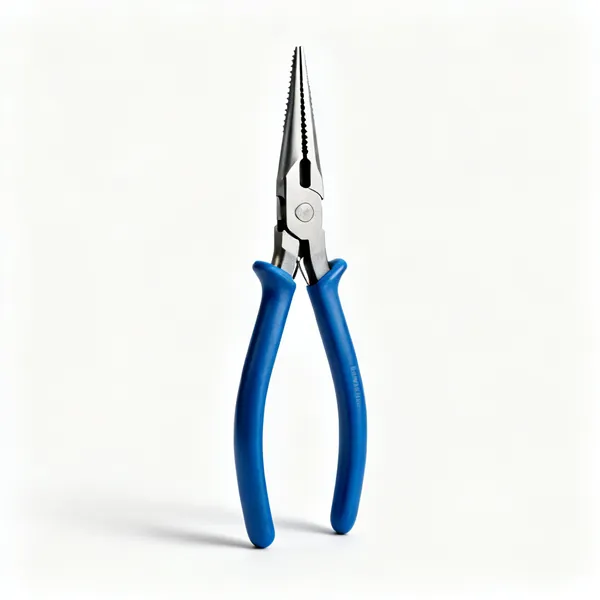
  • A pair of long nose pliers with slim tapering serrated jaws and blue insulated handlesEssential

    Long nose pliers

    Tapered jaws that reach into a loom or behind a dashboard to retrieve what your fingers cannot. The narrow section flexes under load, so they hold and place rather than grip hard.

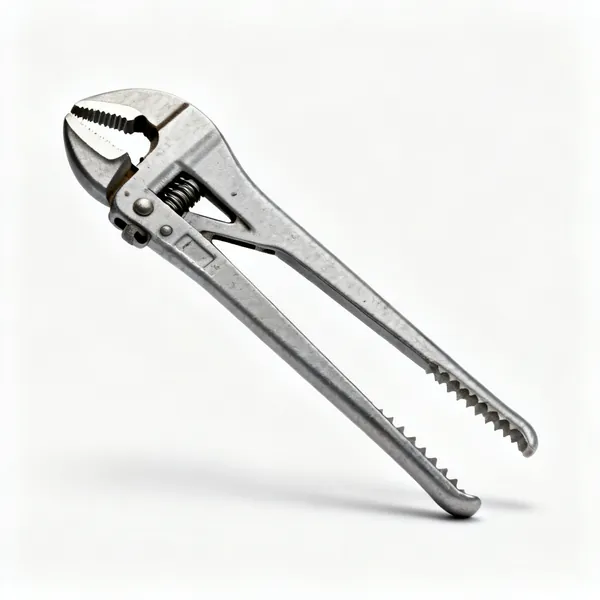
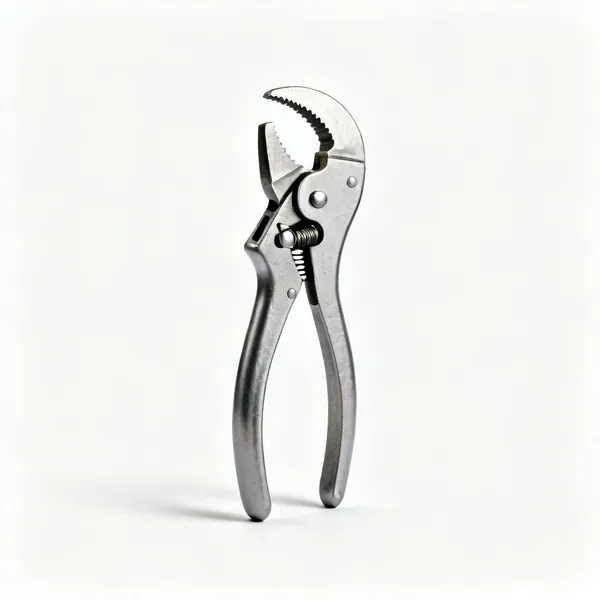
  • Water pump pliersEssential

    Water pump pliers

    Slip-joint pliers whose jaws stay parallel across a wide range, gripping a hose union or a large nut. The serrated jaws mark whatever they hold, so they belong on things being replaced rather than reused.

  • Locking pliers: A pair of locking mole grip pliers with a curved serrated jaw and adjusting screw in the handleEssential

    Locking pliers

    Clamp onto a part and stay there under spring pressure, freeing both hands. Under a car they act as a third hand on a spinning stud, and they will turn a sheared bolt stub that no socket can grip.

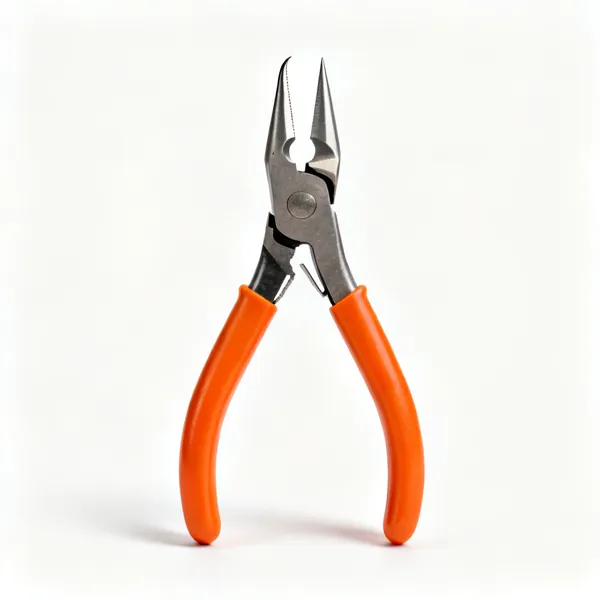
  • A pair of circlip pliers with fine bent pointed tips and orange handles

    Circlip pliers

    Fine pointed tips that expand or compress a retaining ring in its groove. Internal and external types work in opposite directions, and using the wrong one launches the clip somewhere you will not find it.

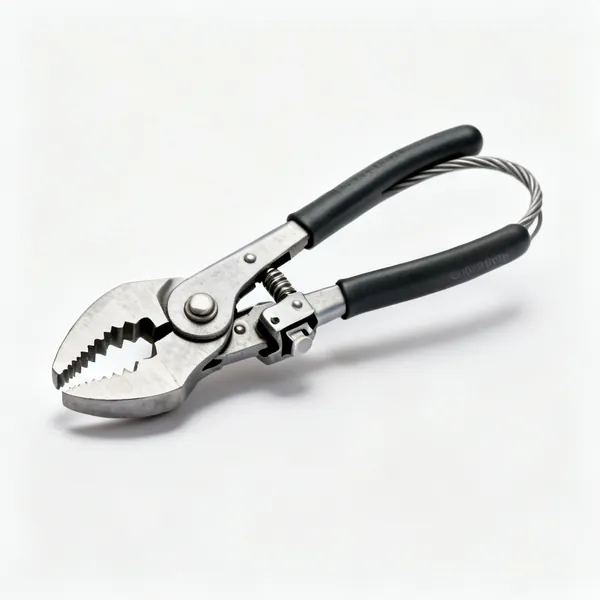
  • A pair of hose clip pliers with notched jaws, flexible cable and locking ratchet

    Hose clip pliers

    Jaws notched to hold a spring hose clip open, with a locking catch so it stays open while you slide the hose off. It replaces the usual method, which is two screwdrivers and a coolant shower.

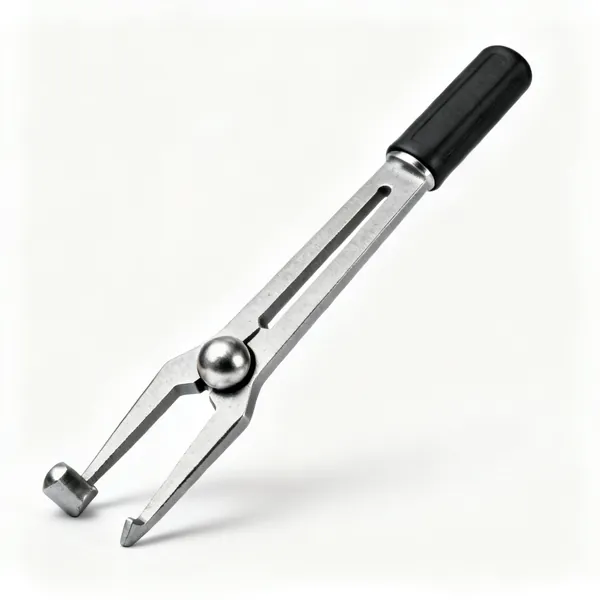
  • A forked ball joint separator tool, a steel two pronged wedge with a struck end

    Ball joint separator

    A forked wedge driven between a ball joint and its arm to break the taper. Fast and destructive to the boot, so it suits a joint being replaced and not one you intend to reuse.
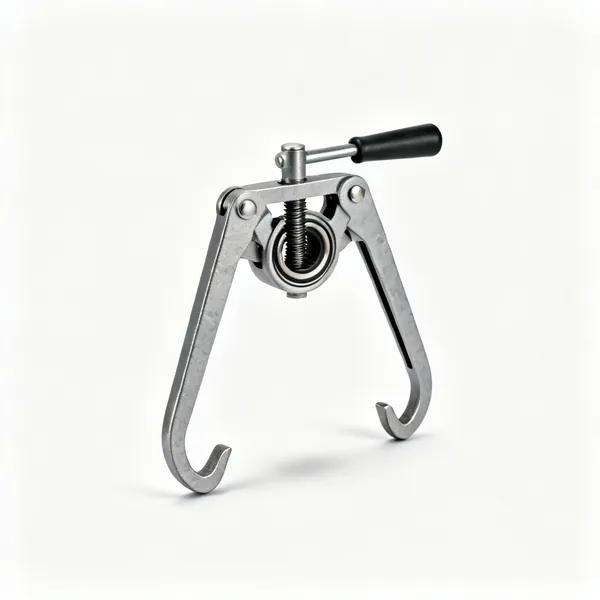
  • Two leg puller: A two leg bearing puller with hooked arms and a central threaded forcing screw

    Two leg puller

    Hooked legs behind a pulley or bearing with a centre screw that draws it off square. Levering instead cocks the part on the shaft and damages both, which is the failure this tool exists to prevent.
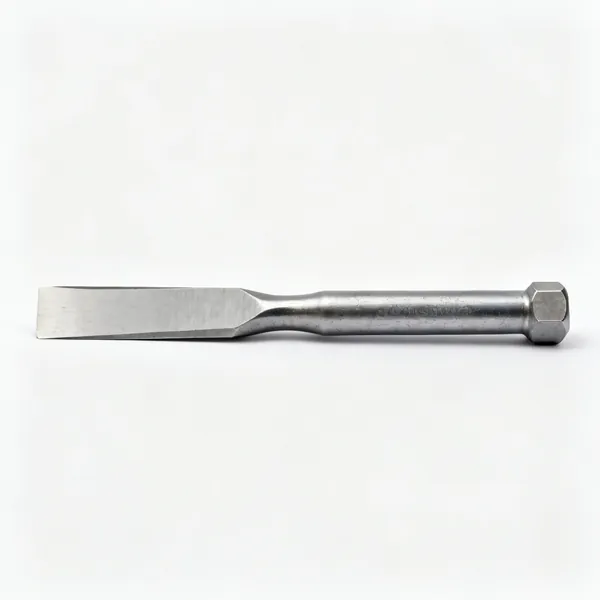
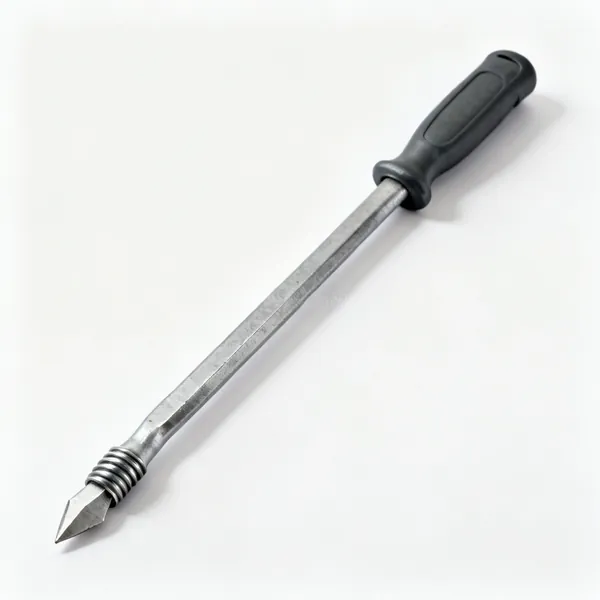
  • A steel pry bar with a rolled chisel tip and a moulded grip handleEssential

    Pry bar

    A hardened bar with a rolled or angled tip for levering a component into line. Under a car it persuades a suspension arm to meet its bolt hole, which is a job with no elegant alternative.

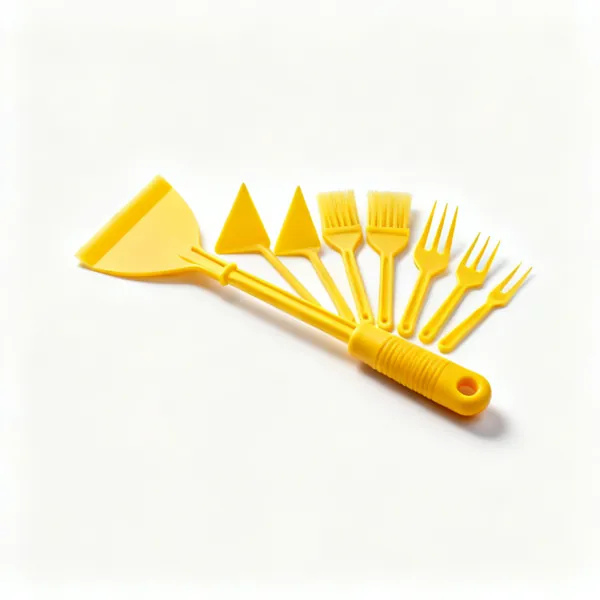
  • Trim removal set: A set of yellow nylon trim removal tools in assorted wedge and fork shapesEssential

    Trim removal set

    Nylon wedges and forks that release interior clips without marking the panel. A screwdriver does the same job while leaving a permanent dent in the plastic beside it, which is why these are worth the small cost.

Measuring and checking 8

Clearances, thicknesses and pressures. These are the tools that tell you whether a part is worn out or still within tolerance.

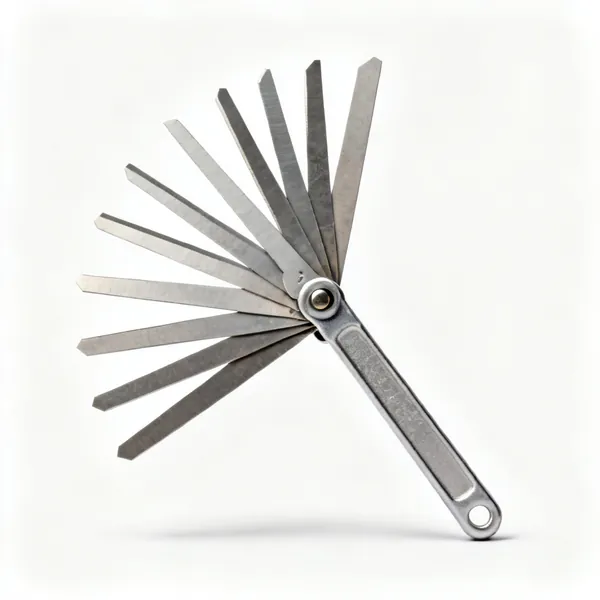
  • A set of feeler gauges, a fan of thin steel blades of graduated thickness on a pivotEssential

    Feeler gauges

    A fan of steel leaves in graded thicknesses, slid into a gap to measure it. Valve clearances, spark plug gaps and end float are all read this way, and the correct feel is a light drag rather than a push.

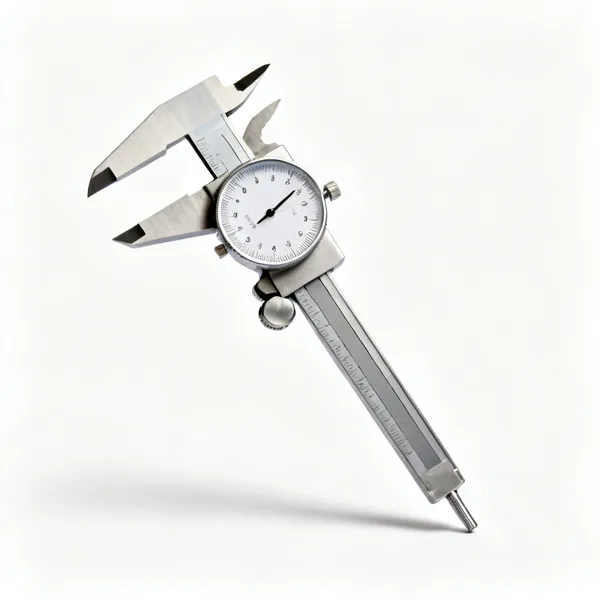
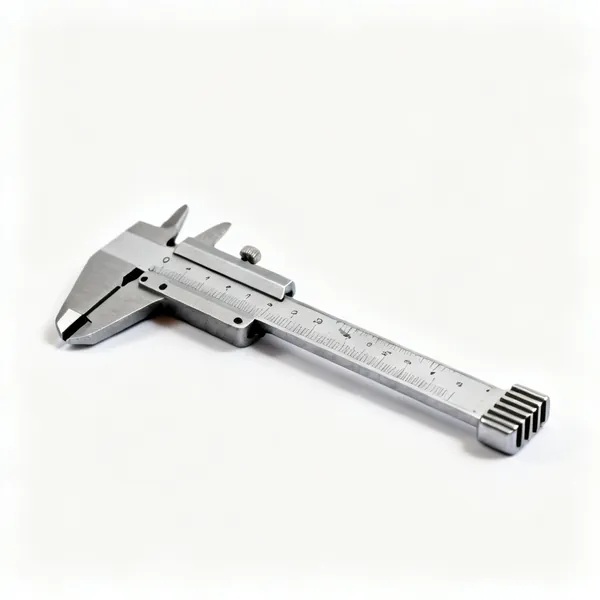
  • A stainless steel vernier caliper with a dial gauge, outside jaws and depth rodEssential

    Vernier caliper

    Measures outside, inside and depth to a hundredth of a millimetre. It answers the everyday questions: brake disc thickness, bolt diameter, and whether a pad still has material left on it.

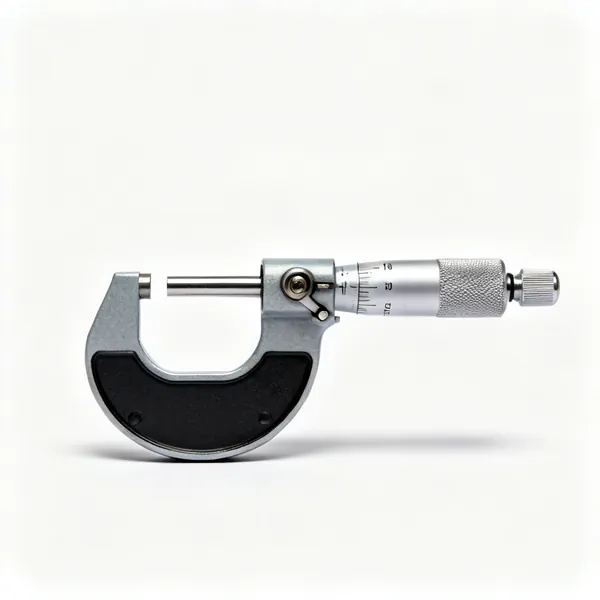
  • Micrometer: Thimble scale and ratchet knob

    Micrometer

    A precision screw gauge reading to a thousandth of a millimetre across a narrow span. For engine work it is the only tool that will tell you whether a crank journal is within its wear limit or needs regrinding.

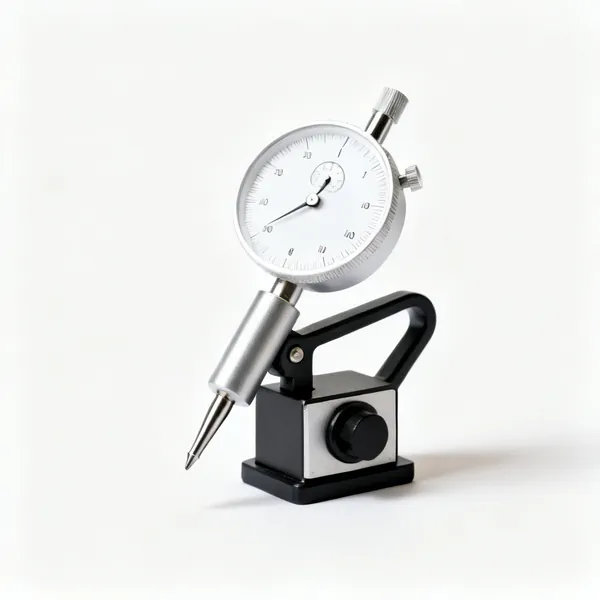
  • Dial indicator: A dial test indicator gauge with a round white dial, plunger tip and magnetic base

    Dial indicator

    A plunger-driven dial reading movement to a hundredth of a millimetre, mounted on a magnetic base. It shows runout and end float, which is how you distinguish a warped disc from a worn wheel bearing.

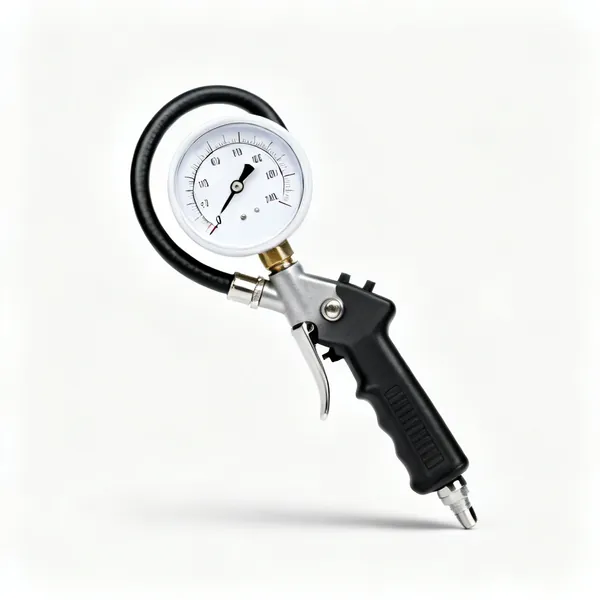
  • A dial tyre pressure gauge with a round white face, flexible hose and chuck fittingEssential

    Tyre pressure gauge

    A dial or digital gauge that reads pressure accurately, unlike most forecourt airlines. Pressure affects braking, wear and fuel use, and it is the fastest check on the car that anyone can make.

  • Brake wear gauge: A small steel brake pad and disc wear gauge with a sliding scale and stepped measuring end

    Brake wear gauge

    A small stepped or sliding gauge that reads remaining friction material and disc thickness through the wheel. It turns a guess made by torchlight into a number you can compare against the limit.

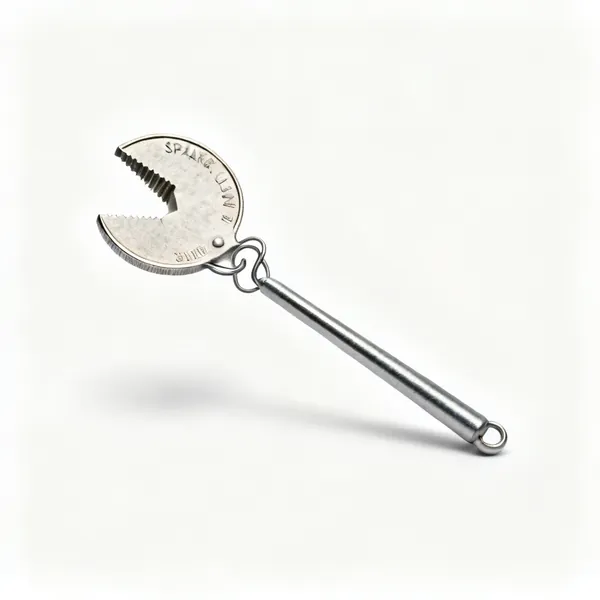
  • A spark plug gap tool, a round coin shaped steel gauge with a tapered edge and wire loops

    Spark plug gap tool

    A disc or wire gauge that both measures a plug gap and bends the earth electrode to correct it. Wire gauges are the accurate ones, because a flat blade cannot follow the curve of a worn electrode.

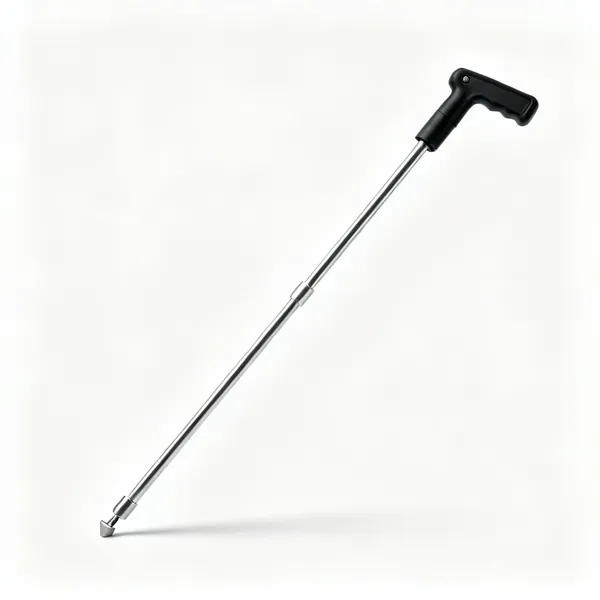
  • A telescopic magnetic pickup tool with a slim extending metal shaft and small magnet tipEssential

    Magnetic pickup tool

    A telescopic wand with a magnet on the end, for the bolt that has fallen into the engine bay. Every mechanic drops something down the back of an engine, and the alternative is dismantling more to reach it.

When the fastener fights back 8

Rust, rounded heads and stripped threads. These tools exist because the previous four groups sometimes are not enough.

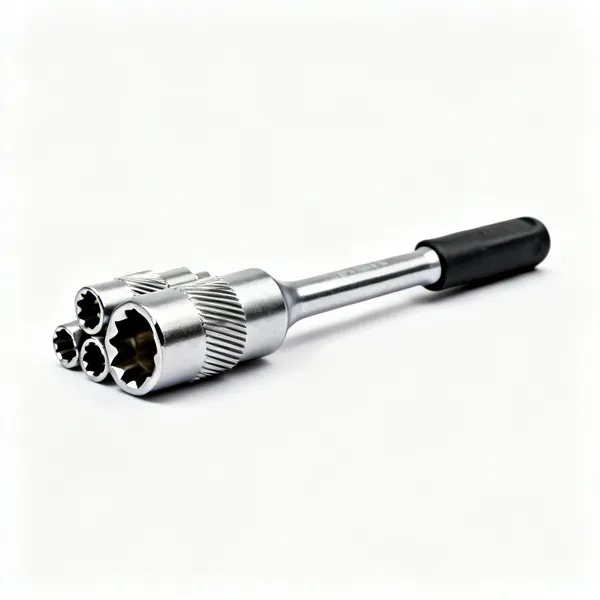
  • A set of bolt extractor sockets with internal reverse spiral fluted gripping profilesEssential

    Bolt extractor sockets

    Sockets with a reverse spiral flute that bites harder the more you turn, gripping a rounded head no ordinary socket will hold. The one thing to know is that they grip by deforming the head, so it is a single use on that bolt.

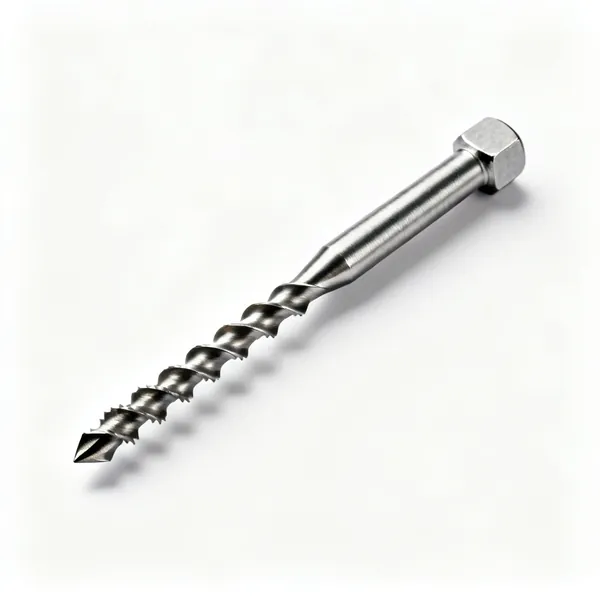
  • Screw extractor set: A set of screw extractors, tapered spiral fluted steel bits of graduated sizes

    Screw extractor set

    Left-hand tapered spirals wound into a pre-drilled hole in a snapped bolt to wind it out. Drilling exactly on centre is what makes it work, so a centre punch and a pilot drill matter as much as the extractor.

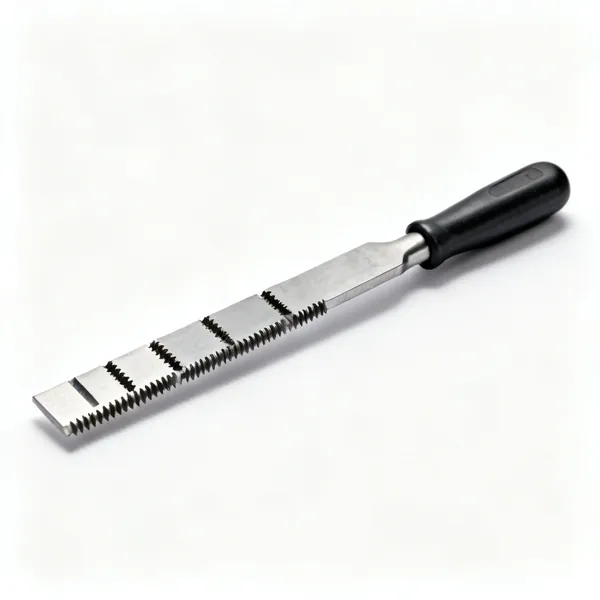
  • Thread restorer file: A thread restoring file, a steel bar with different thread pitch profiles cut along each edge

    Thread restorer file

    A steel file with eight pitch profiles along its edges, drawn along a damaged thread to reform it. Faster than chasing with a die and it works on a stud still fitted to the car, which a die cannot reach.

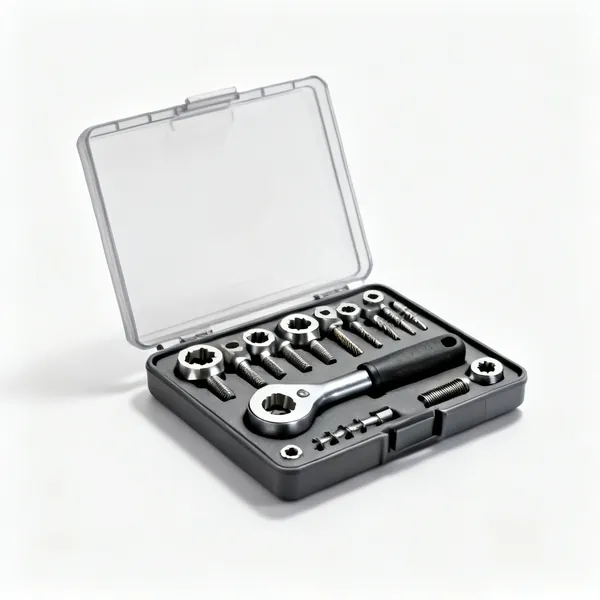
  • A tap and die set with taps, split dies and a tap wrench arranged in a case

    Tap and die set

    Cuts a new thread or cleans a corroded one. Most of its use in a garage is chasing rust and old thread lock out of a hole so a bolt reads its true torque rather than fighting the debris.

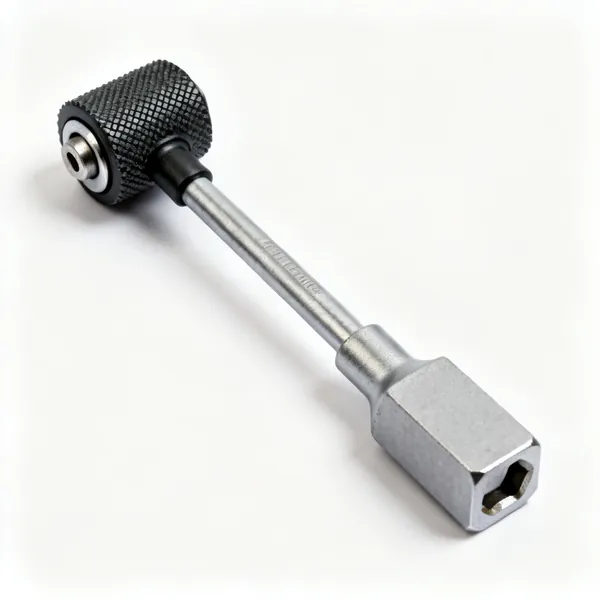
  • A stud remover tool with an eccentric knurled roller cam and square drive socket body

    Stud remover

    An eccentric roller or collet that clamps a plain stud without a hex to grip. It winds out an exhaust manifold stud in one piece, where locking pliers usually shred the thread and leave you drilling.

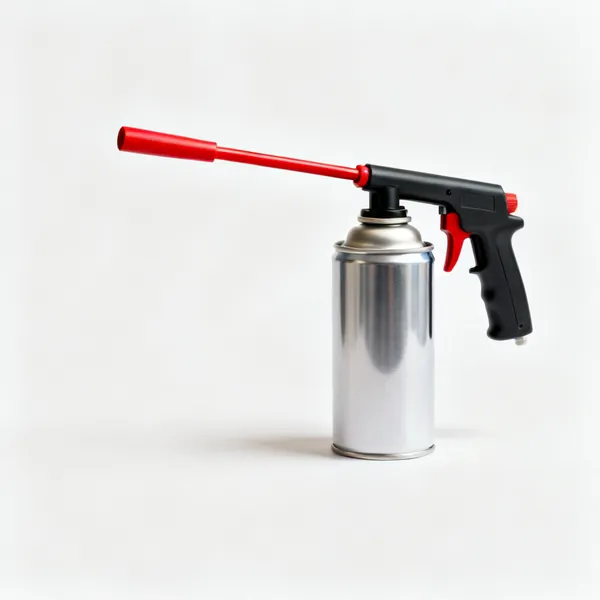
  • A spray can of penetrating oil with a red extension nozzle attachedEssential

    Penetrating oil

    A thin capillary oil that creeps into a rusted thread and breaks the bond. Time is the active ingredient, so overnight beats any amount of extra leverage applied five seconds after spraying.

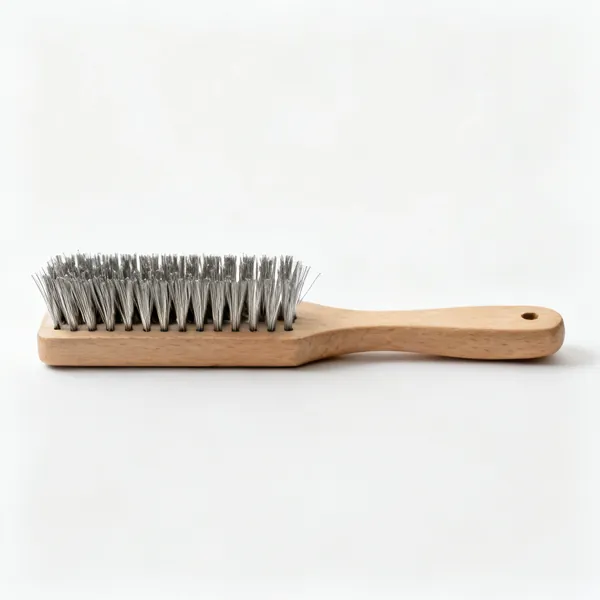
  • A hand wire brush with rows of stiff steel bristles and a wooden handleEssential

    Wire brush

    Stiff steel bristles that clear rust and scale off a thread or a mating face. Cleaning before assembly is what lets a torque figure mean anything, since grit under a head absorbs the load you are measuring.

  • A steel cold chisel with a flat wide cutting edge and a struck hex body

    Cold chisel

    A hardened flat chisel struck to split a seized nut off its stud or shear a rusted bracket. Crude and final, which is exactly what you want on a part that is coming off in pieces anyway.

Building a mechanics hand tool kit

Buy in the order the jobs demand, and buy the fastener-turning tools properly. Those are the ones that ruin parts when they fail.

Sockets before spanners

A socket surrounds a fastener and grips all six flats. A spanner grips two, or four on a ring end. That difference decides whether a tight nut comes undone or rounds off, so where a socket will fit, use one.

Six-point sockets grip better than twelve-point, because each face carries more of the load. Twelve-point exists so you can find purchase every 30 degrees instead of every 60, which matters in a confined space. On anything seized, six-point every time.

Six point
Maximum contact on the flats. The right default, and the only sensible choice on a rusted fastener.
Twelve point
Twice as many engagement positions, less grip. For tight access where a full swing is impossible.
Deep sockets
For a nut on a long stud, where a standard socket bottoms out on the thread before it reaches the flats.

Which drive size for what

The square drive on a ratchet comes in three sizes on a car, and each has a range it is right for. Using a big drive on a small fastener means you cannot feel the resistance, and snapping a bolt is easy. Using a small drive on a big one means breaking the tool.

One-quarter inch handles interior trim, sensors and small brackets. Three-eighths does most engine bay work. Half inch is for suspension, crank bolts and wheel nuts, and it is where a breaker bar belongs.

1/4 inch
Up to about 10mm. Low torque, fine feel, fits where nothing bigger will.
3/8 inch
The workhorse. Roughly 8mm to 19mm, and the drive most engine bay jobs live on.
1/2 inch
Suspension and wheels. Enough section to take a breaker bar without twisting.

Torque is a specification, not a feeling

Plenty of fasteners on a modern car have a stated torque figure, and some are torque-to-yield, meaning they stretch permanently and must be replaced rather than reused. Guessing is how head gaskets fail and how alloy threads strip.

A click-type torque wrench is a measuring instrument. Store it wound back to its lowest setting, never use it to undo anything, and treat a drop on a concrete floor as a reason to have it checked.

Tighten only
Undoing with a torque wrench can load it well past its range and put the calibration out.
Wind it down
Left on a high setting the spring takes a set, and the readings drift low.
Angle matters too
Many modern bolts specify a torque then a further turn in degrees, which needs an angle gauge, not a bigger pull.

Getting a seized fastener out

Rust welds a fastener to its thread, and force alone usually shears it. The sequence that works is penetrating oil and time, then shock rather than steady pull, then heat, and only then more leverage.

Shock is the underrated step. Several sharp taps on the head of a bolt with a hammer break the corrosion bond in a way that pulling harder does not, which is the whole principle behind a hand impact driver.

Soak first
Penetrating oil overnight beats any amount of extra leverage applied dry.
Shock next
Sharp taps crack the rust bond. Pulling harder just stores energy in the bolt until it snaps.
Then heat
Expansion breaks the seal, but keep it away from fuel lines, brake lines and anything plastic nearby.

Where to spend and where not to

Spend on anything that transmits torque to a fastener, because when it fails it takes the fastener with it. A cheap socket that rounds a nut has cost you an hour and possibly a drilling job. A cheap ratchet that skips under load will also take skin off your knuckles.

Save on the things whose failure is merely inconvenient. Trim tools, brushes, drain pans and funnels do the same job whatever they cost.

Buy well
Sockets, ratchets, spanners, torque wrench, extractors. The failure mode is damage to the car, not just the tool.
Buy cheaply
Trim levers, funnels, drain pans, brushes, magnetic trays. Nothing is at risk if they are ordinary.
Buy singly
A 200 piece set is priced on count. You will use around forty of the pieces, and the forty are better bought properly.

Frequently asked questions

What hand tools does a beginner mechanic need?
A 3/8 inch ratchet with a six-point socket set, a combination spanner set, a breaker bar, a torque wrench, screwdrivers including Torx and hex, combination and long-nose pliers, and a trolley jack with axle stands. That covers servicing, brakes and most bolt-on repairs.
Should I buy metric or imperial spanners?
Metric for anything built in the last forty years outside the United States, and for most American cars since the 1980s too. Older American vehicles, and some trailer and agricultural fittings, still need imperial. Buy metric first and add imperial only when a job demands it.
Do I really need a torque wrench?
For wheel nuts, cylinder heads, suspension bolts and anything into aluminium, yes. Those fasteners have specified figures because too little lets them loosen and too much strips the thread or stretches the bolt. For a bracket or a splash guard, feel is fine.
What is the difference between six point and twelve point sockets?
A six-point socket contacts all six flats of the fastener with more surface on each, so it grips harder and is far less likely to round a tight nut. A twelve-point fits every 30 degrees instead of every 60, which helps in confined spaces at the cost of grip.
How do I remove a bolt with a rounded head?
A bolt extractor socket, which has a reverse spiral flute that bites harder as you turn. Failing that, weld or braze a nut on, or drill it out and use a screw extractor. Never keep trying larger sockets, because each attempt removes more of what is left to grip.
What is a breaker bar for when I own a ratchet?
Leverage and survival. A breaker bar is a solid handle with no ratchet mechanism, so there are no pawls to shear under a long hard pull. Use it to crack a fastener loose, then swap to the ratchet to spin it out.
Are cheap socket sets worth buying?
The problem is not that they break, it is that the soft steel deforms and lets the socket slip on the flats, rounding the fastener. That converts a five minute job into a drilling job. Buy a smaller set of decent sockets rather than a large cheap one.
What size sockets do I use most on a car?
On metric vehicles, 10mm, 13mm, 15mm, 17mm and 19mm cover the large majority of bolts you will meet, with 8mm and 12mm close behind. If you buy individually rather than as a set, start with those.